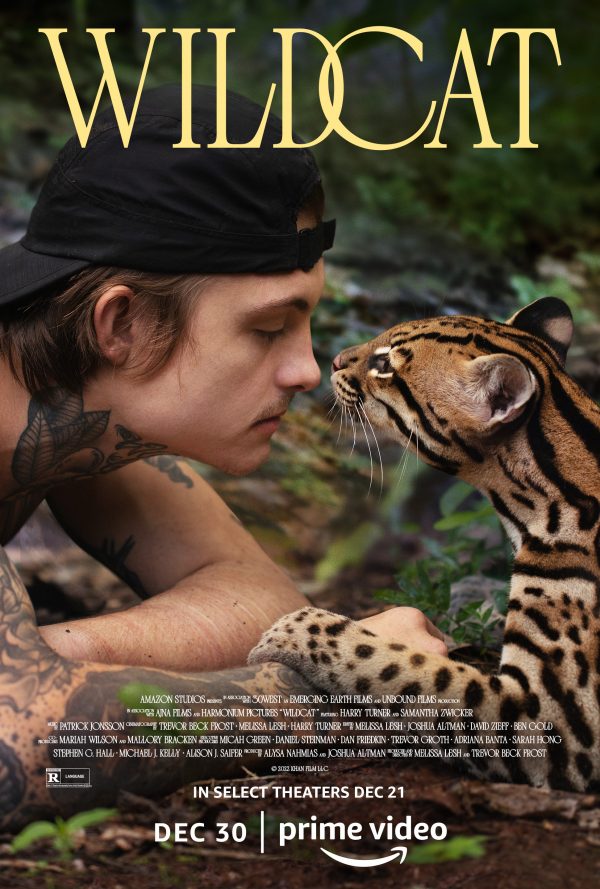
“Wildcat” (2022). Cast: Harry Turner, Samantha Zwicker, Jayden Turner, Mark Turner, Colette Turner, Khan, Keanu. Directors: Trevor Frost and Melissa Lesh. Web site. Trailer.
Once in the rainforest, he was taken with the sheer beauty of his new environment. He even landed a job rescuing orphaned wildlife, working with conservationist/scientist Samantha Zwicker, who eventually became his partner. Harry was particularly passionate about a program to prepare abandoned ocelots for return to the wild, a project that gave him a purpose and a new reason for living. He sought to teach the rescued cats how to survive in the wild, independent of human care and support. And, given his experience in the wilds of the battlefield, he was well suited to the task. Simultaneously, though, it gave him a chance to provide much-needed nurturing to the wild beasts, something that helped him heal his own wounds.
The benefits of this experience helped Harry to get over the pain he experienced during the war. The fact that he was able to help his feline friends, Khan and Keanu, enabled him to overcome the anguish he experienced in response to the death of Afghan citizens who were killed right in front of him, innocents for whom he was unable to do anything. These memories haunted him severely and for a long time afterward, but his efforts at helping the jungle cats provided him much comfort in coming to terms with those wartime tragedies – and confirmed that he was indeed able to be of service to those in need.
When distraught former British soldier Harry Turner traveled to the Peruvian rainforest to end his life, he found new purpose as a wildlife restoration trainer for abandoned ocelots, as depicted in the uplifting new documentary, “Wildcat.” Photo by Trevor Frost, courtesy of Amazon Studios.
However, even with the fulfillment and healing this experience provided, Harry still struggled with his mental health demons at times, especially when the challenges of helping the ocelots became too great. This was most apparent when it came time to cut the attachment cord. While Harry knew that this inevitability would eventually surface, he found it difficult to let go. Ironically, at the same time, he became exasperated whenever the cats refused to let go of him, leaving Harry feeling as though he had failed at achieving his ultimate goal of being able to train them for survival on their own in the wild.
The distress of these events put a strain on Harry’s relationship with Samantha. She struggled to provide comfort and support as the progress at restoring his mental health began to unravel. In addition to their professional and romantic partnership, Samantha also served as a de facto therapist to help him get back on his feet. But there was only so much she could do, and, as their relationship continued to deteriorate, these developments threw circumstances into serious jeopardy, both for their future together and for Harry’s psychological well-being, not to mention the continued viability of their wildlife restoration program.
Harry wasn’t the only one battling personal demons in this scenario. Samantha’s struggle to help Harry was an attempt to reconcile her feelings toward her late father, who battled alcoholism. Through her relationship with Harry, she could relate to the pain of her dad, someone she desperately wanted to help but couldn’t. The parallels between Harry and Samantha’s father were uncanny, too; when Harry was able to heal himself, his compassionate side surfaced, much like what happened to Samantha’s father when he wasn’t drinking. But the specter of backsliding always lingered. Thus the way these situations mirrored one another provided Samantha with an opportunity to address an old hurt, particularly when it came to the question of holding on or letting go – not unlike what Harry faced when it came to his relationship with his feline companions.
Working with abandoned ocelots to return them to the wild, conservationist/scientist Samantha Zwicker and her star “pupil,” Keanu, work toward a return to jungle life in “Wilcat.” Photo by Trevor Frost, courtesy of Amazon Studios.
“Wildcat” is thus a story that goes beyond what one would find in a typical nature film. It operates on multiple levels with numerous parallels between the lives of the individuals and between the respective circumstances of man and beast. This takes things to a more profound level, one that provides viewers with an array of meaningful lessons and messages, one whose impact extends beyond its mere surface trappings and that stirs the spirit in myriad ways.
Considering how the lives of Harry and Samantha unfolded prior to their jungle experience, they were both ripe for a fresh start, and the Peruvian rainforest provided them with the perfect venue to begin anew. For Harry, it gave him a new purpose in life, something that he needed in the wake of his difficult time in Afghanistan, and it came at a time when he wondered if such a prospect was even possible. Somewhere deep down inside his consciousness, he must have believed in such a possibility, even if it wasn’t readily apparent to him. However, when the opportunity surfaced, he had the wherewithal to recognize what it meant, and he ran with it, setting him off on a meaningful and productive path for his future. It not only gave him a chance to contribute something worthwhile, but it also provided him with the means to heal himself in the wake of his wartime experience.
As adorable as they might look, ocelots are wild beasts of the jungle, some of whom need to be trained on how to survive there when abandoned, as seen in “Wildcat,” the new documentary from directors Trevor Frost and Melissa Lesh, now available for streaming online. Photo by Trevor Frost, courtesy of Amazon Studios.
For Samantha, meeting Harry provided her with an opportunity to address the unresolved feelings she held toward her father. On some level, it’s possible that she believed in a need to draw to her the conditions required to take on that task, something she might not have been aware of at the outset of this experience. It gave her the chance to decide on whether it was preferable to hold on or let go, both in terms of her unanswered questions about her dad and her feelings about her future with Harry.
In this sense, the overarching conditions present in this story serve as mirrors for what Harry and Samantha both felt and believed. The world around them thus reflected what they were feeling, and it provided the means to address those emotions. It gave them an ideal environment for learning valuable lessons about life and about themselves. Who would have thought that a remote rainforest could provide such perfectly tailored resources for personal growth and development?
To a great degree, the suitability behind this is related to the innate sense of connection binding these individuals to their circumstances and environment. Harry and Samantha, for example, are fittingly bound to one another in terms of what they need to get out of this scenario. Likewise, Harry’s connections to Keanu and Khan provide him with what he needs to embark on a new direction in life, to heal himself and to overcome the pain he endured when he was unable to help those in need in Afghanistan. And, on a grander scale, the work that Harry and Samantha undertook in Peru connected them to the wider world and its needs for conservation, wildlife protection and environmental sustainability. These ties may not be obvious at first glance, but they’re all there nevertheless, and they’ve all been brought about through the beliefs held by those involved in this collaborative co-creation.
In finding a new purpose for his life, former British soldier Harry Turner teaches abandoned ocelots how to safely return to the wilds of the Peruvian rainforest in the stirring new documentary, “Wildcat.” Photo by Trevor Frost, courtesy of Amazon Studios.
What’s most important here, though, is the sense of compassion that has been evoked, an outcome again attributable to the beliefs of those involved. It’s amazing how many different ways that quality is manifested here, too. From the care Harry shows toward his ocelots to the concern Samantha shows toward Harry to the benevolence that Harry and Samantha exhibit toward our collective world, there’s ample kindness to be had for all in a situation like this. For the cynics out there, this is definitive proof positive to the contrary, and it’s something we can never have enough of, especially these days.
When one is spiraling downward and hopes for the future look dim, it may seem that there’s no coming back from one’s troubles. So it was for Harry Turner, who ultimately proved that need not be the case, as this documentary so eloquently depicts. This intimate look at a complex, troubled individual, what drives him, what nearly destroyed him and what enabled his redemption tugs at the heart strings in many ways, especially in its ample footage of the positively adorable felines and their intuitive bonds with their human mentor. The picture’s gorgeous cinematography and emotive score add much to this film’s heartwarming narrative, though its length is arguably somewhat excessive given the scope of the subject matter (and could have easily benefitted from some judicious editing). Nevertheless, directors Trevor Frost and Melissa Lesh have compiled an uplifting, candid chronicle of this inspiring though sometimes-painful story, one that gives hope where it’s absent and provides even the most downtrodden among us with new reasons to carry on. As one of the National Board of Review’s Top 5 Documentaries of 2022, this stirring tale is well worth a view. The film is available for streaming online.
As this film so aptly illustrates, there’s a “wildcat” in each of us yearning to break free and live the lives we were meant to live. But bringing those unbridled, impulsive versions of ourselves to the surface takes a firm commitment to beliefs that make such outcomes possible. Should we follow through on that, though, we have an opportunity to open those doors to a vibrant new future. Just ask Harry and those jungle cats of his – and then go out and roar for yourself.
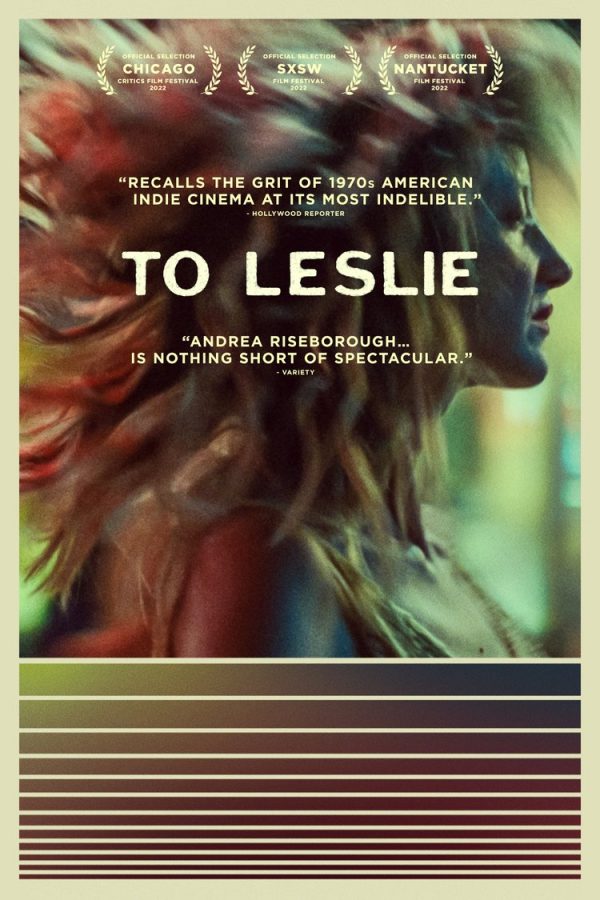
“To Leslie” (2022). Cast: Andrea Riseborough, Allison Janney, Stephen Root, Owen Teague, Marc Maron, Andre Royo, James Landry Hébert, Catfish Jean, Matt Laurian, Mac Brandt, Tom Virtue, Lauren Letherer, Kourtney Amanda, Arabella Grant, Sewell Whitney, Drew Youngblood. Director: Michael Morris. Screenplay: Ryan Binaco. Web site. Trailer.
Now older (but not necessarily wiser), Leslie looks for a fresh start. She asks James if she can come stay with him while she gets her act together, a plan that, at his insistence, includes getting sober. However, despite her assurances to the contrary, she’s soon up to her old tricks – sneaking drinks, stealing money from her son and one of his friends, and partying with the neighbors – essentially going back on all the promises she made. It’s not long before she hits the road to return to her old hometown in west Texas, all in hopes that she’ll find some sympathy to her plight, despite the many bridges she burned before leaving there.
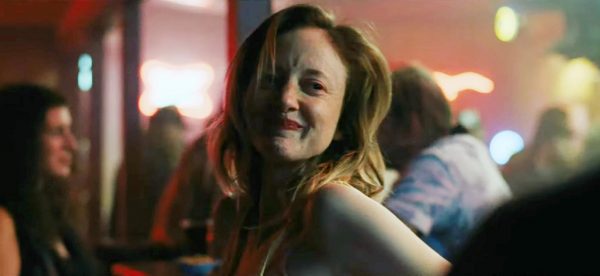
Texas lottery winner Leslie Rowlands (Andrea Riseborough) may seem to have it made with her unexpected windfall, but a little too much celebrating leaves her destitute and in need of recovery, as seen in the new fact-based drama, “To Leslie.” Photo courtesy of Momentum Pictures.
Leslie is reluctantly taken in by Nancy (Allison Janney) and Dutch (Stephen Root), who took care of James when she was no longer capable of doing so. Nancy and Dutch give her a stiff warning that she’s out if she relapses into her old ways, which, not unexpectedly, happens rather quickly, leaving her homeless once again. The way things are going, it seems like she’ll never break this cycle.
When one bottoms out, the best one can hope for is the appearance of a Samaritan, and, fortunately for Leslie, one shows up in the personage of Sweeney (Marc Marron), the owner of a local motel. He takes pity on her and gives her a job, as well as a room to call home. But, even with such generous benevolence, Leslie still doesn’t learn her lesson, backsliding every time it seems she’s starting to get her act together. It also doesn’t help that Leslie comes under more than her share of relentless criticism from others, including Sweeney’s friend Royal (Andre Royo), another hard luck case who Sweeney took in years ago and who constantly says she can’t be trusted, and Leslie’s judgmental parents, Helen (Lauren Letherer) and Raymond (Tom Virtue), who spew ample venom based on everything their friends Nancy and Dutch tell them.
But there comes a point when Leslie finally wakes up and sees who is truly in her corner. It inspires her to plunge herself into her work and to realistically start turning things around, including an inspiring new undertaking that could fill her with a genuine sense of personal pride and fulfillment – that is, if others will let her. Can she do it?
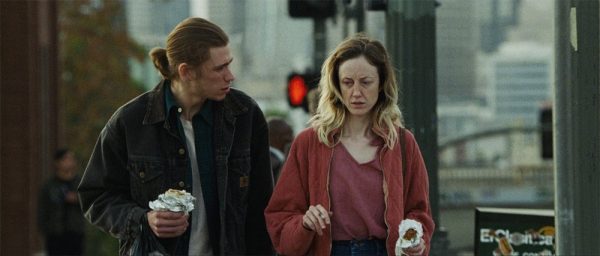
In an attempt to get back on her feet after a hard fall, Texas lottery winner Leslie Rowlands (Andrea Riseborough, right) seeks much-needed accommodation with her adult son, James (Owen Teague, left), in director Michael Morris’s debut feature, “To Leslie.” Photo courtesy of Momentum Pictures.
Consider Leslie’s situation, for example. She may have never experienced the kind of powerlessness she undergoes here, and she might not have ever been the beneficiary of the kind of heartfelt compassion she receives from Sweeney. Likewise, Nancy, Dutch, Helen and Raymond, among others, may have never had an opportunity to engage in meaningful forgiveness, remaining mired in a relentlessly scornful pattern typified by continually berating those who are having difficulty getting back on their feet. These dynamics, however, make it possible to transform both of the foregoing outcomes. These co-created experiences may not be the most palatable way to go through such scenarios, but they may nevertheless be “ideal” in terms of the conditions they afford to make such opportunities attainable.
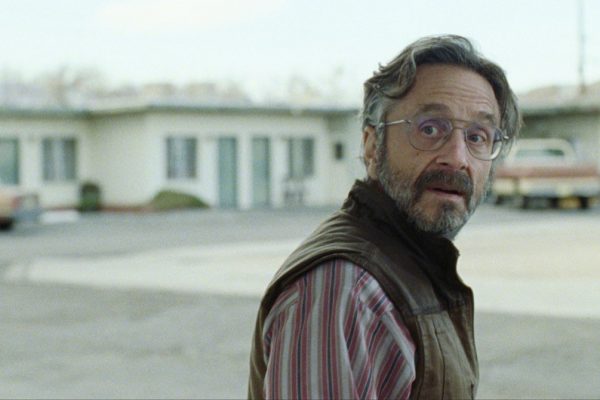
Motel owner and compassionate Samaritan Sweeney (Marc Maron) is a sucker for hard luck cases, routinely helping out those most in need of assistance, as seen in director Michael Morris’s debut feature, “To Leslie,” now available for streaming online. Photo courtesy of Momentum Pictures.
Some might see such situations as pointless and needlessly arduous, but, if they yield the opportunities to learn these valuable life lessons, can one truly say they’re without merit? Likewise, when one examines the circumstances prevailing in the lives of these characters, they may be seen as hopeless and unchangeable. However, should these individuals have a change of heart as a result of these conditions, they all have an opportunity to learn the power of redemption, a truly rewarding and empowering experience, one that they can carry forward in their lives and employ elsewhere should comparable conditions ever arise again. There’s certainly something to be said for that.
Moreover, the wisdom that comes from these insights significantly increases the likelihood of not repeating such past errors. When we go through painful experiences like these, they tend to leave indelible marks on our psyches and consciousness, imprints that tend to steer us away from backsliding and recurrences. Indeed, we can choose different paths for ourselves; addiction and unwavering prejudice need not be fixed fates, provided we alter the beliefs that brought them into being and prompt us to chart new courses. Here’s to Leslie, as well as to those who were once unwilling to give her a break, on the new paths they forge.
The story in “To Leslie” may be a familiar one, but there are enough elements to distinguish it from other pictures about the pains of addiction and recovery to make for a compelling watch. What works best in director Michael Morris’s debut feature are the performances of the superb ensemble cast, including Janney, Root, Maron, Royo and Teague. But the most notable attribute of this release is the positively outstanding portrayal of Riseborough, handily the best of her career. The film’s fittingly atmospheric soundtrack and ethereal cinematography significantly enhance the actions on screen and effectively capture the mood of the narrative underlying its fine screenplay. To be sure, the pacing could stand to be stepped up somewhat at times, and some story elements become slightly repetitive, particularly toward the end of the first hour. But, considering the picture’s many assets, it’s easy to see how this offering has been named one of the National Board of Review’s Top 10 Independent Films of 2022. Catch this one online.
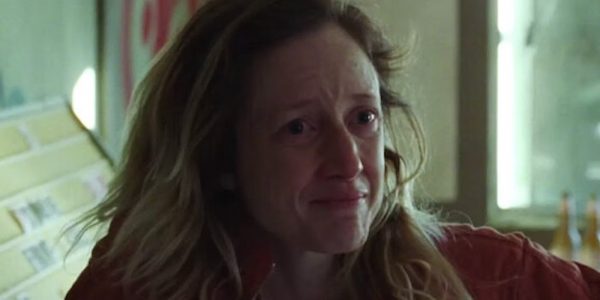
Bouncing back from adversity is difficult, but Texas lottery winner Leslie Rowlands (Andrea Riseborough) struggles to do so in the new fact-based drama, “To Leslie,” now available for streaming online. Photo courtesy of Momentum Pictures.
It’s impossible to talk about this film without focusing on Riseborough’s performance, which has, regrettably, become quite a point of contention. As a superb portrayal that has been largely overlooked throughout this movie awards season (save for an Independent Spirit Award nomination for best lead acting performance), it was truly gratifying when Riseborough’s name was called as an Oscar nominee for best lead actress. Yet, in the wake of that announcement and several high-profile snubs in this category, there are those who have leveled claims of impropriety against the awarding of her nomination for this little-known film, specifically with regard to campaigning efforts to promote her bid. Some have even suggested that, if improprieties are indeed uncovered, Riseborough could be disqualified. However, just because the film and the actress’s performance have flown below the radar, that doesn’t mean impropriety has to be involved. In fact, Riseborough has had many Hollywood heavy hitters backing her candidacy, including fellow best actress nominee Cate Blanchett. What would a fellow competitor stand to gain by openly and glowingly supporting an opponent?
I’m not sure what’s behind this controversy. It could be sour grapes. It could be an attempt to torpedo Riseborough’s chances now that she has been given an opportunity to take home the big prize. But, given the fact that a little-known film performance has been able to make a successful breakthrough, does that automatically and necessarily suggest that something improper has occurred here? If that were the case, then one could just as easily apply that principle against other lesser-known performers and films that manage to attain Oscar nomination recognition, such as, for example, Paul Mescal’s performance in “Aftersun” (yet no one has even hinted at anything like that where this nomination is concerned). Indeed, has no one ever heard of the concept of the underdog? Unexpected nominations, for better or worse, occur almost every year, so why has this situation been so suspiciously singled out? The claims against Riseborough’s nomination strike me as being just as spurious as the contentions of the detractors themselves, and that, to me, seems like the real impropriety here.
It’s that time of year again, the release of my lists of best and worst films of the year. In my previous blog entry, I looked at 2022’s finest. But now it’s time to turn the tables.
Thankfully, 2022 was a better year for movies than either of 2020 or 2021 (pandemic considerations notwithstanding). I was pleased to have screened a wealth of fine pictures in theaters, at festivals and online. However, despite that, 2022 still had more than its share of overrated, overhyped releases that, in my opinion, were erroneously labeled “masterpieces.” And that’s part of what this blog entry examines (though some others were just plain bad in their own right). I know some readers will disagree with me on some of these choices, but please don’t throw anything at your computer or smart phone screens; it’s just my opinion, not the end of the world.
In the interest of full disclosure, I did not see every movie released in 2022 (who realistically could?), but I have seen nearly all of the major contenders (although there are a few I’ve yet to see given that they have not gone into widespread release as yet). In addition, as per custom, this blog and its more upbeat predecessor do not address documentary offerings; films in that genre will be covered in a separate blog entry in the near future.
So, with that said, here are my Bottom 10 films of 2022, followed by my list of 10 dishonorable mentions and a list of disappointing offerings. Hold on to your hats.
Bottom 10 Countdown
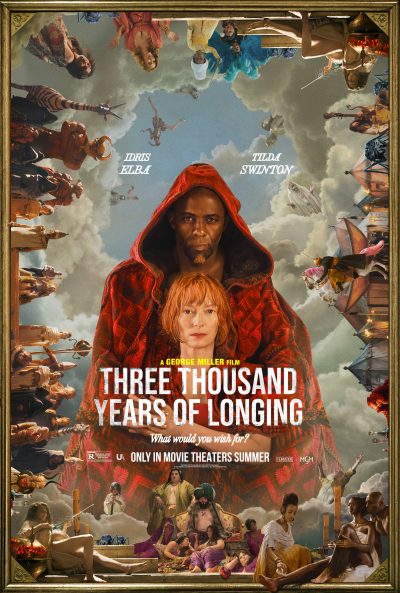
10. “Three Thousand Years of Longing” (Australia/USA) Web siteTrailer
It’s truly astounding how a film dealing with magical, mystical subject matter can turn out to be as boring and unfocused as this offering is. However, that’s exactly what’s happened with renowned director George Miller’s latest, a meandering, talky, tedious tale about an aging single reclusive narratologist (Tilda Swinton) who has an unexpected encounter with a djinn (Idris Elba) while attending a literary conference in Istanbul. Having liberated the magical being from a long incarceration in a bottle, he promises to grant her three wishes, something she’s reluctant to act on, given her profound familiarity with the cautionary tale nature of such scenarios. As a result, much of the film ends up centering on the djinn’s recounting of stories from his life while his liberating benefactor questions him about what those experiences have meant to him. The process consequently plays like a Barbara Walters Special only far less interesting. While there are modest attempts at probing more in-depth subject matter, such as the significance of story and what it means in shaping and characterizing the nature of our existence (a la the observation of poet Muriel Rukeyser who noted that the universe is made up of stories, not of atoms), these notions are left largely underdeveloped, becoming lost in an ongoing parade of tales spun by someone who comes across like a magical male counterpart of Scheherazade. To its credit, the picture serves up some interesting special effects, a small helping of humorous bits, and fine lead performances by Elba and Swinton, though their talents are largely squandered here as they attempt to salvage material seriously in need of being significantly retooled and substantially rewritten. It’s a major disappointment given the parties involved in this work, one that makes it easy to see why this offering was relegated to a late summer season release, a notorious new movie graveyard.
The Bollywood style of filmmaking has, arguably, become a distinct genre all its own, characterized by long, visually dazzling movies filled with action sequences on steroids, the inclusion of hyper-energized music video segments (regardless if relevant to the story), and glamorously designed costumes, hair and makeup. It’s definitely an acquired taste and eminently commercial, but it’s not exactly something one could characterize as epic, groundbreaking cinema. Which is why I’m stunned by all of the attention and awards season buzz that’s been showered on this over-the-top offering, one that’s fairly typical of releases in this genre. In this hypothetical “what if” tale about a fictitious meeting between a pair of Indian freedom fighters (N.T. Rama Rao Jr., Ram Charan Teja) who struggled against brutal British colonial rule (but who never actually met in real life), writer-director S.S. Rajamouli takes viewers on a whirlwind action-adventure saga that’s preposterous, predictable, clichéd, at times juvenile, and, above all, exhausting by the time one reaches the end of its 3+-hour runtime. The trite dialogue, corny narrative, cheesy CGI effects (particularly the film’s wild animals) and monodimensional characters (most notably the big bad Brits who come across more like caricatures than villains) are all laughable, almost as much as the film’s fight sequences, which play like scenes from the “John Wick” and “Matrix” franchises with a dash of martial arts flicks like “Crouching Tiger, Hidden Dragon” (2000) thrown in for good measure. In fact, were it not for the seemingly incessant runtime, this might qualify as one of those good “bad” offerings for a group movie night, though the film becomes tiresome about an hour in and can’t adequately sustain that sense of high camp for more than 180 minutes. In its defense, the picture’s choreography in the musical sequences is commendable (if at times it’s like watching a protracted aerobics class), and the costumes, art direction and set design are all noteworthy (save, of course, for a shattered marble railing in one scene that looks like the Styrofoam from which it appears to have been made). Given all of the foregoing, however, I’m truly perplexed why this release has been singled out from all of the other films in this genre as the beneficiary of such generous awards season recognition (perhaps other than the fact that it has been a huge box office hit worldwide, which may well have something to do with that). But is that milestone enough to drive the ample bestowing of such accolades from the Golden Globe, Critics Choice and National Board of Review competitions? (Thankfully, the Oscars gave it only one nomination, and the BAFTAs shut it out completely, restoring such much-needed reason to this process.) Remember, popcorn may qualify as a great snack, but it certainly does not a meal make.
8. “The Banshees of Inisherin” (Ireland/UK/USA) Web siteTrailer
Writer-director Martin McDonagh’s dark comedy-drama is one of those films that leaves me (and probably many other viewers) scratching my head, making me sincerely wonder what all the fuss is about. In this fable-like Irish folk tale about two longtime friends (Colin Farrell, Brendan Gleeson) whose relationship suddenly reaches an impasse, they struggle to come to terms of where things go from there in the aftermath of this scenario. There’s just one problem here: the picture’s razor-thin premise with its virtually nonexistent back story doesn’t provide enough basis for why the dissolution of this friendship occurs and then escalates to a tale of inexplicable desperation and truly bewildering retributive self-abuse. Indeed, we seem to know more about the setting of the story – a small island off the western Irish seacoast during the waning days of the new republic’s 1922-23 civil war – than we do about its characters, their relationship and their motivations. To compound matters, the narrative stretches out far too long, taking a seeming eternity to unfold with no particularly satisfying payoff, punctuated by lame attempts at humor that mostly fail to land. To its credit, this offering features fine performances by its two principals, as well as superb portrayals by Kerry Condon and Barry Keoghan in supporting roles, all of whom garnered Golden Globe, Critics Choice, Screen Actors Guild, BAFTA and Academy Award nominations in the acting categories (as well as a Golden Globe win for Farrell and National Board of Review honors for Farrell and Gleeson). There’s also much to be said for its gorgeous cinematography and atmospheric Carter Burwell original score, itself an Oscar, BAFTA and Globe Award nominee. However, it’s truly mind-boggling to understand how this film has earned its many questionable accolades, including best picture, director and screenplay honors among its 9 Oscar and Critics Choice nominations, 10 BAFTA nods and 8 Golden Globe bids (including three wins). This exasperatingly dull, slow-paced effort falls woefully short of the fine work the filmmaker achieved in previous films like “Three Billboards Outside Ebbing, Missouri” (2017) and “In Bruges” (2008) (not to mention its lack of the snappy on-screen chemistry that Farrell and Gleeson achieved in that earlier off-beat comedy), accomplishments that make this release come across as a great disappointment by comparison. In fact, at the risk of overstatement, “Banshees” could have been edited down to a short, and it still likely would have been a letdown. Catch this one at your peril; at the very least, it’s now available for online streaming and on cable TV, so you shouldn’t have to venture out and cough up box office prices if you really want to watch it.
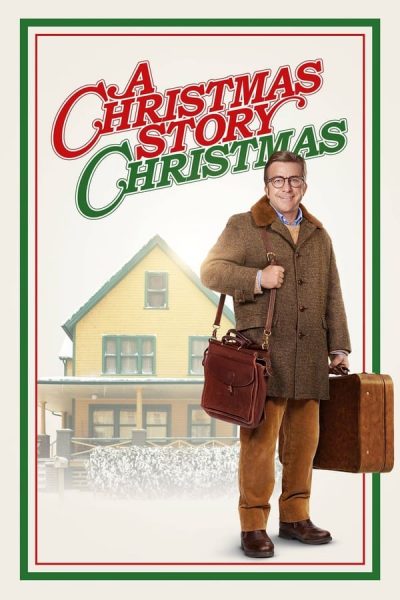
7. “A Christmas Story Christmas” (USA/Canada/Mexico/Hungary) Web siteTrailer
In the interest of full disclosure (and at the risk of sounding like Ebenezer Scrooge), I must confess that I have never been a big fan of this offering’s perennial and much-beloved holiday predecessor (1983), as I saw it as a vehicle that aimlessly meandered and struggled too hard to elicit laughs. But the problems faced by the original can’t begin to compare to those of this ill-conceived sequel, a plodding and even more meandering release that’s just not funny and is far too derivative for its own good. It’s easy to see why this is a project that went straight to streaming, because it never would have stood a chance in theaters, despite whatever goodwill and good cheer the holiday season might have been available to generously (and undeservedly) shower upon it. In short, director Clay Kaytis’s third feature outing misses the mark across the board with its lame narrative and even lamer attempts at humor, which come too few and far between to be detectable. “A Christmas Story Christmas” once again proves the old Hollywood adage about not remaking classics or attempting to produce sequels of them; they rarely work, as is very much the case here – a project that never should have left the drawing board.
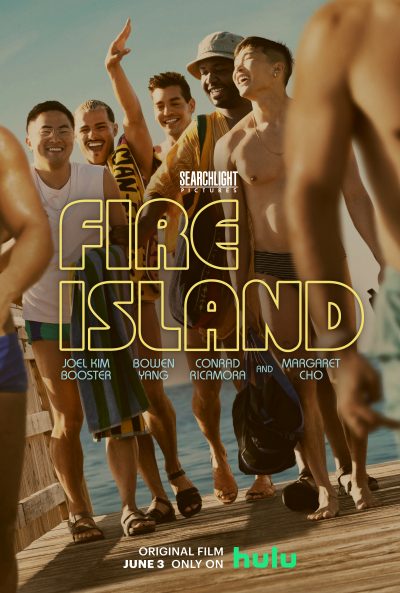
If you’re looking for a predictable, formulaic, episodic gay rom-com full of clichéd stereotypes, then this is the movie for you. The opening act of director Andrew Ahn’s summertime road trip tale about a troupe of shallow party boys (most of whose characters are seriously underdeveloped) to the infamous queer resort off the coast of Long Island is so cloying that the temptation to shut it off is almost impossible to ignore. With laughs few and far between and an overall approach that plays more like an introduction to the gay lifestyle for uninitiated heterosexual audiences than a bona fide piece of legitimately engaging LGBTQ+ cinema, viewer patience is seriously tried almost from the outset, despite its baffling Independent Spirit Award nod for best first screenplay. That’s especially true for gay audience members who’ve themselves seen (and probably experienced firsthand) material like this countless times before. While there’s an anemic attempt to infuse some depth into the story during the second half with its nods to Jane Austen’s Pride and Prejudice, it’s not enough to salvage a project whose initial release obviously tried to tap into the Gay Pride Month demographic in hopes of milking it for all its worth. Given the wealth of better gay-themed movies out there (such as Bill Sherwood’s far superior “Parting Glances” (1986) with its numerous less forced Fire Island references), it’s easy to understand how this one bypassed theaters and went straight (no pun intended) to streaming. Yikes!
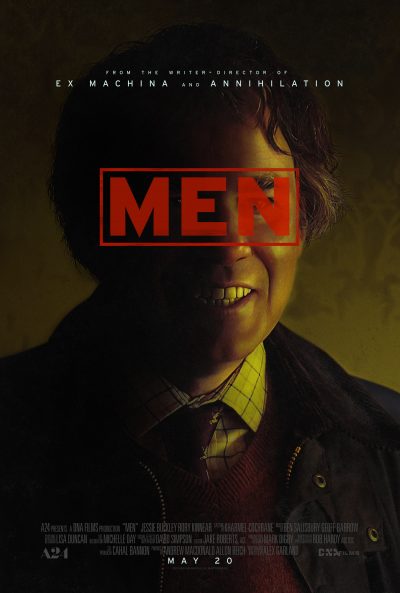
Talk about a letdown! Writer-director Alex Garland, who established himself as an exceedingly gifted new filmmaker in “Ex Machina” (2014) and “Annihilation” (2018), really dropped the ball in this utterly ridiculous mess of a movie. The picture’s ultimately obvious, heavy-handed premise isn’t especially original or revelatory, and, no matter how much the film is dressed up in artful cinematography, a gorgeous production design and other polished technical accomplishments, it’s not enough to hide the fact that this is a blatant cinematic misfire from someone who’s truly capable of much, much better. This latest offering in the smart horror genre about a widowed London divorcee (Jessie Buckley) who retreats to the country to recover from the inexplicable suicide of her husband (Paapa Essiedu) manages to maintain a certain degree of suspense in the first hour, but it seriously loses it thereafter, mixing pretention, a rambling narrative and plot developments that are wholly laughable (its closing sequence evoked more chuckles than I’ve uttered at many recent comedies). This is such an awful offering, in fact, that the only reason I didn’t give it a lower score is because of its initial edgy creepiness, its admirable production values and the laudable performance of Buckley, who somehow manages to keep this release somewhat respectable (at least until the absolutely ludicrous final act). Here’s hoping that the director has managed to purge himself of the innately obligatory clunker that nearly every talented filmmaker has within him/her at some point in his/her career, because that’s certainly what this celluloid travesty represents.
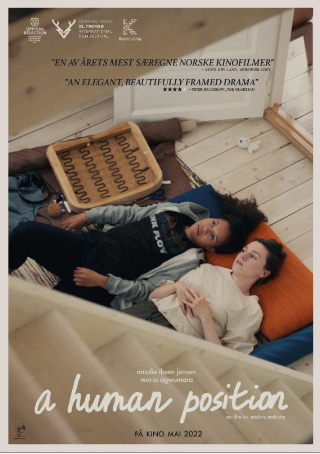
Billed by some as “a love letter to the banality of life,” this truly pointless offering could have just as easily been billed as “a love letter to the banality of pretentiously esoteric filmmaking.” Writer-director Anders Emblem’s second feature follows the life (if you can call it that) of a bored journalist (Amalie Ibsen Jensen) living in the Norwegian seaport of Ålesund, reporting mostly on fluff pieces and minor news stories. She lives a reasonably comfortable life with her girlfriend (Maria Agwumaro) while recovering from an undisclosed medical procedure, spending much of her free time refurbishing chairs, doting on her cat and playing board (or is it bored?) games. But, when she stumbles upon a story involving the unexplained disappearance of a foreign asylum seeker, her work gives her life new meaning – or so the film’s production notes claim. The fact is, there’s really no telling that anything has changed with this revelation, given that the picture’s tone and style remain just as flat and uninteresting at this juncture as they do at the outset and throughout the entire duration of this tedious slog. The protagonist’s deadpan performance is a genuine snooze, and the film’s countless overlong incidental exterior shots supply enough needless cinematic padding to try the patience of even the most tolerant viewer. But, above all, given how banal real life truly can be, do we honestly need a longwinded cinematic tribute to it? This one is easily skipped – a phenomenal waste of time and energy. Don’t waste yours watching this.
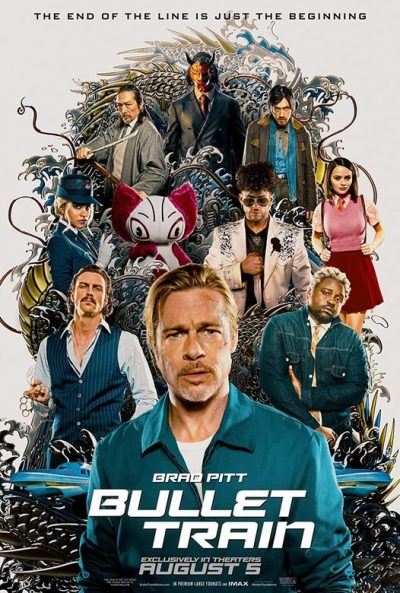
I’ll be blunt about this one – I absolutely hated it. If you’ve seen the modestly amusing trailer for director David Leitch’s latest, you’ve seen all you need to see. This overlong, ridiculously convoluted train wreck (obvious pun intended) lost my interest about 20 minutes in, and I never got it back during its 2+ hour runtime. While seemingly attempting to be a playful action comedy in the spirit of movies like “Red” (2010), “Kingsman: The Secret Service” (2014) and the “Deadpool” franchise, “Bullet Train” instead comes across as gratuitous, nasty and mean-spirited, more like the “John Wick” offerings or the works of Quentin Tarantino, pictures that desperately stretch the meaning of “funny.” This cinematic mess tries way too hard to generate laughs but falls flat at virtually every juncture, failing to stick any of its landings. And that’s a huge disappointment given the stellar cast, including leading man Brad Pitt, whose comedic talents are wasted on a script that gives him precious little to work with. The result is a feeble, exhausting, tiresome attempt at a summertime thrill ride that tells a story not worthy of caring about, filled with repulsive characters, wholly improbable events and underwhelming special effects. In fact, the only thing positive I can say about this disaster is that, fortunately, I survived to tell about it.
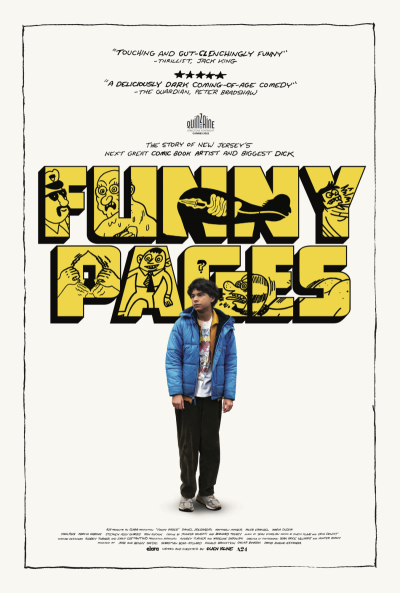
If ever there were a film that would leave you scratching your head in bewilderment, this is it. Writer-director Owen Kline’s debut feature is a pointless, aimlessly wandering piece of cinematic crap that serves no purpose and has no redeeming artistic value (which, technically, could qualify it as porn, though, in this case, without the sex). Billed as a comedy (quite a stretch if there ever were one), this coming of age story about an aspiring prodigal underground cartoonist (Daniel Zolghadri) has little to do with coming of age or cartoons. Instead, it runs through an endless list of episodic incidents involving the protagonist and an unhinged mentor (Matthew Maher), most of which veer off into a series of unrelated, disjointed tangents characterized by voluminous amounts of yelling, violence, property damage, insults and random interactions with quirky supporting players. It seems like the filmmaker is going for some sort of ultra-edgy humor and allegedly insightful sociological statements here, but the wayward route taken to attempt to achieve those supposed objectives amounts to little more than off-putting, unbridled repulsion. Indeed, how this unmitigated garbage got green-lighted is truly beyond me. What’s even more startling, though, are the accolades it has received, including nominations from the Independent Spirit Awards competition and the Cannes Film Festival, as well as a win from the National Board of Review. This is one of those movies that genuinely leaves me wondering “What were they thinking?” when it comes to those who dreamed up the idea, those who were willing to bankroll it and those who have gone on to lavish it with wholly undeserved praise. By all means, pass this one up – and give it a wide berth at that.
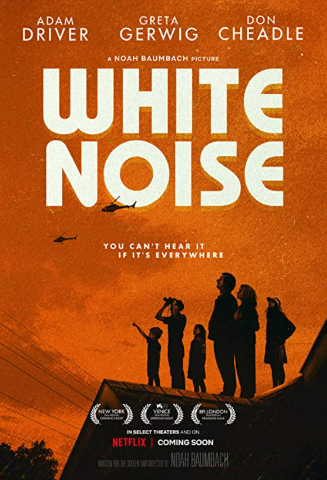
Well, I’ll give writer-director Noah Baumbach credit for one thing – the title accurately describes the character of this stupendously terrible film. This absolute trash heap of a movie is astonishingly bad, even by misfire standards. I lost interest about 10 minutes in and never got it back, primarily because I couldn’t figure out what the hell was going on (a problem that lingered for the duration of the picture, unfortunately). Its mix of pseudointellectual, condescending dialogue, miserably failed attempts at both smart and screwball humor, less-than-subtle symbolism as an allegory for the COVID pandemic, and utter inability to engage viewers in a story that struggles to fuse comedy, drama, sci-fi, mystery, horror and a meditation on life’s big questions is mind-bendingly awful. In many ways, it tries to come across as 2022’s answer to “Don’t Look Up” (2021) but fails stunningly at capturing the incisive, biting satire and breakneck pacing of that fine offering. And what’s with the ridiculous, overlong supermarket music video that plays over the closing credits? What’s that all about? While I must admit that I have not read the 1985 novel that served as the source material for this work (and having heard that the film is supposedly quite faithful to the book), I can honestly say I’m glad I’ve never wasted my time on that, either. Indeed, I truly wish I could say something positive about this cinematic tripe, but there’s nothing to compliment, a statement I almost never make about anything I watch. I especially feel sorry for the cast that got stuck in this trainwreck, especially Adam Driver, who, despite his Golden Globe nomination for this performance, really needs to start picking better scripts (he also appeared in “Annette,” my worst film of 2021). But, then, after seeing this, I could just as readily say the same thing about the filmmaker, who needs to forget this project, walk away from it and look to get his career back on track.
Dishonorable Mentions
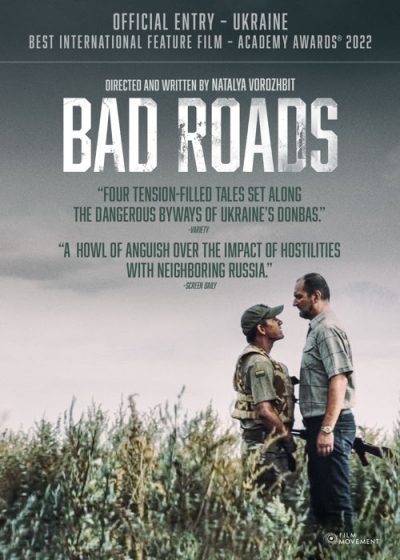
11. “Bad Roads” (“Plokhiye dorogi”) (Ukraine) Web siteTrailer
The indignities of war can be horrendous, if not downright repulsive. And, while it’s important that these atrocities are not overlooked, the way in which their stories are told matters greatly. That’s where writer-director Natalya Vorozhbyt’s debut feature regrettably drops the ball. This collection of loosely linked vignettes set during the civil war in the Donbas region of Ukraine shortly after the Maidan Uprising presents a series of stories depicting the physical, psychological and social impact of the conflict on the area’s citizens, much of it in restrained but unflinching detail. The problem, however, rests with the specific material chosen for these vignettes. Of the four narrative threads, the first is the most compelling, credible and engaging, even if it drags somewhat in spots. The remaining three, however, suffer from a variety of issues: the second one is dull and largely pointless, and the fourth is bizarre and at times laughably silly. But the most troubling is the third, which is positively sick, twisted and perverted, even if it manages to keep from becoming overly gratuitous in telling a story that seems to have little to do with the conflict itself and that merely provides the stage for an episode of manipulation porn. What’s more, the film overall does little to shed much light on the war itself, choosing instead to focus on the individual tales for which the conflict serves as little more than a backdrop. Given that this offering was primarily made for a Ukrainian audience, perhaps the filmmaker decided that locals were already familiar enough with the kinds of issues covered here and felt that they didn’t need to be belabored in the movie’s narrative. But, for those on the outside looking in, it feels like there’s a lot of back story missing that doesn’t enhance the individual tales told in the picture’s overarching content. And, as for what’s being shown here, it’s not patently obvious that we really need to see it, no matter how realistic it might be in capturing stories typical of the subject matter upon which they’re based. In these days of the current Ukrainian conflict, it’s natural to want to be supportive of the nation’s people, culture and society in the face of the oppressive circumstances prevailing there, but that doesn’t mean everything that comes out of that region should automatically be given a pass because of its source of origin, and that’s certainly the case where this film is concerned.
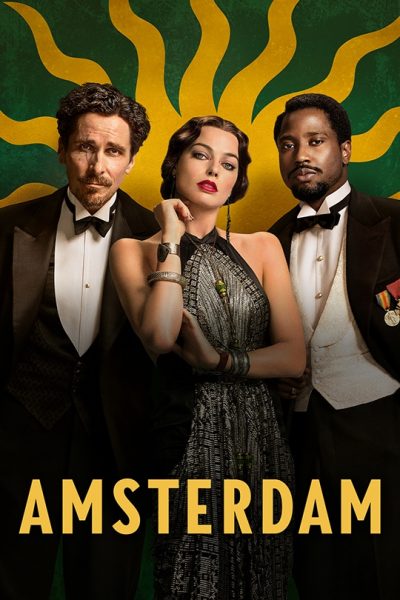
Given this picture’s much-maligned reputation, one might legitimately wonder why anybody would want to watch it. For me, doing so was more of an exercise in curiosity than anything else, to see if it really is as bad as everyone has been saying it is. However, unfortunately, after sitting through it and severely testing my resolve to stay awake, I’m sad to report that it lives up to every bit of what’s been said about it. It’s hard to believe that a writer-director as talented as David O. Russell, who has created such impressive works as “Flirting with Disaster” (1996), “The Fighter” (2010) and “American Hustle” (2013), could create something so far off the mark as this wayward offering. Yet this convoluted puzzle of a movie, which comically attempts to tell a fact-based story about the exposure of a nefarious conspiracy theory, hopelessly fails by never finding its stride, a product of its unfocused script. While the subject may be one worthy of exploration (though this particular scenario isn’t especially compelling or overly revelatory, at least as it’s presented here), the film never latches on to the right tone or approach to tell it. The picture’s attempt to do so through a half-hearted stab at a screwball comedy doesn’t work, either, mainly due to poor pacing and humor that just never sticks its landings. All of this is unfortunate, too, given the film’s excellent production design, exquisite BAFTA-nominated costume design, superb original score and fine stellar cast (Christian Bale, Margot Robbie, John David Washington, Robert De Niro, Rami Malek, Chris Rock, Michael Shannon, Mike Myers, Andrea Riseborough, Alessandro Nivola, Anya Taylor-Joy, Zoe Saldana, Matthias Schoenaerts, Taylor Swift and a host of colorful character actors), most of whom are sadly given little to work with. As a result, what was once considered one of the most anticipated releases of the year turned out to be one of 2022’s greatest critical failures, not to mention one of its biggest box office bombs. But, then, that’s not entirely unexpected from a film that loses its viewers early on in the story and never manages to retrieve them. Those who are genuinely (or, perhaps more accurately, morbidly) curious about this cinematic fiasco can catch it online or on cable TV if one is really interested, but keep your pillows handy, and be sure to pack a lunch.
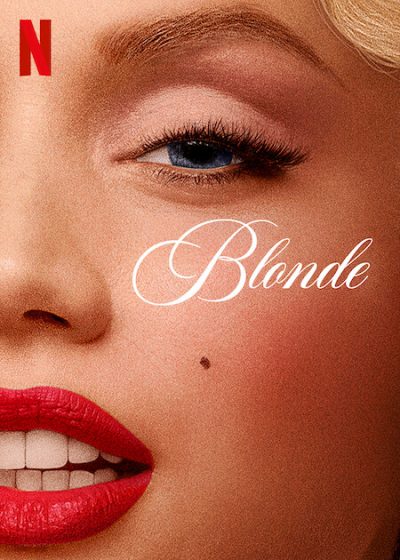
Put simply, Marilyn Monroe deserves better than this. Writer-director Andrew Dominik’s adaptation of Joyce Carol Oates’s biographical novel about the life of the Hollywood icon is little more than an excessively overlong exercise in exploitation porn. While the film is not meant to be a literal biography of its subject, it nevertheless conveys an impression to the contrary and focuses almost exclusively on the pain and suffering Marilyn experienced at the hands of men of power, as well as distant, abusive and troubled family members. Even though the film seemingly wants to avoid presenting a sanitized version of Marilyn’s story, it often goes too far in doing so, overcompensating and crossing lines of taste that shouldn’t have been so graphically broached (no wonder it received an NC-17 rating). And, with its 2:47:00 runtime, the picture grinds these themes into the ground, becoming progressively more tawdry and sensationalist in the process. To its credit, the production features some fine black-and-white cinematography, but it resorts to so many other different styles of photography and storytelling (some of them downright silly) that it’s difficult to fathom exactly what the filmmaker was going for. The casting of Ana de Armas in the lead role was a questionable choice, too, as she wavers back and forth between scenes where she positively nails the material and others where she comes across looking like a parody of herself (her inexplicable and undeserved Golden Globe, Screen Actors Guild, BAFTA and Oscar nominations for best lead actress notwithstanding). There are a few segments – such as the chilling opening sequence – where the film genuinely captivates, and the picture’s fine supporting cast (most notably Adrien Brody and Bobby Cannavale) helps to shore up some of this offering’s weakest spots. Still, I couldn’t help but wonder after screening this, is this how we really want to remember Marilyn? I sure as hell don’t. And the film’s eight well-earned Razzie Award nominations, unfortunately, would seem to bear this out.
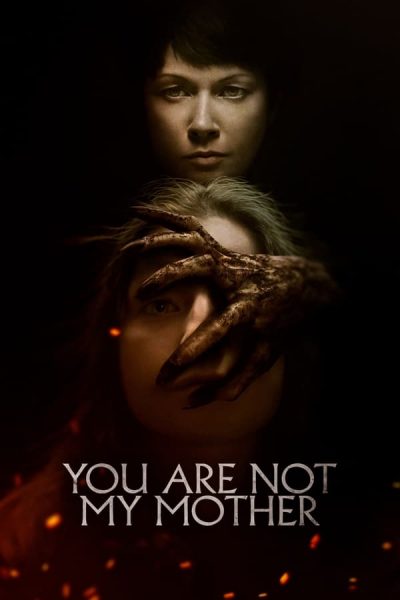
Gosh, who knew that horror stories based on Irish folktales could be so boring and predictable? Well, if one were to see director Kate Dolan’s debut feature, they could find that out for sure. As a vehicle that would probably work better as a film short, this sleepy story of a teen (Hazel Doupe) whose mentally ill mother (Carolyn Bracken) begins acting especially strangely is needlessly stretched out, padded with all kinds of extraneous material that’s not particularly scary, creepy, sinister, intense or interesting. And, when the big reveal finally comes, the story is eminently predictable from that point forward, with nothing coming as a surprise. What’s more, the narrative focuses more on the mental illness element than the supernatural, making this seem more like a domestic drama than a bona fide horror flick. Skip this one; you won’t regret it.
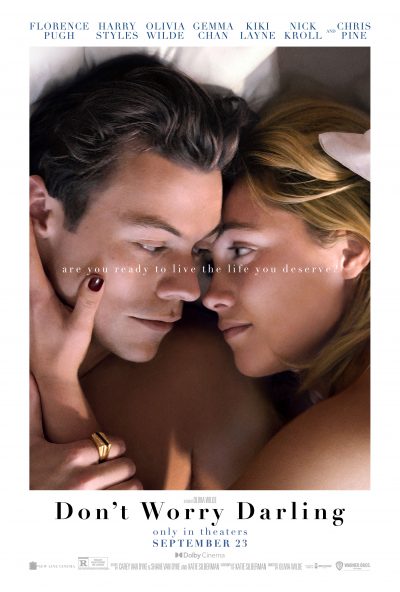
Well, I’ll say this much for this one – I’m glad I didn’t pay theater ticket prices for it. Director Olivia Wilde, who made such an impressive feature debut with the high school buddy comedy “Booksmart” (2019), has definitely stumbled with her sophomore (or is it sophomoric?) outing. This mishmash of science fiction, social commentary and mystery/fantasy is too long, too ill-defined, and, at times, more than a little too obvious in its message and metaphors. In this heavy-handed portrayal of 1950s idealized American life, it quickly becomes apparent that many aspects of it are a little too on the nose while simultaneously incorporating obvious anachronisms, immediately tipping off viewers to the fact that this is not a real place nor an authentic historical re-creation. That back-handed revelation seems to be somewhat casually glossed over, however, as the picture continues to try convincing the audience otherwise with only occasional references to the contrary, a practice that needlessly stretches out the story and becomes rather repetitive in the process. A number of elements seem to be included for sheer cinematic indulgence, too, such as an inordinate number of inexplicable sequences that look like an homage to the June Taylor Dancers. To its credit, this offering does have its share of strengths, such as its superb art direction and production design, gorgeous cinematography, terrific soundtrack, and capable performances by Florence Pugh and by the director in a supporting role. Nevertheless, there’s too much redundancy and extraneous material left in here, something that I sense is more attributable to the screenplay than to the director’s efforts. Wilde is a more adept filmmaker than what is apparent here, and that would seem to be more the fault of the script than the person behind the camera. Also, there are ample aspects that appear to be “derived” from other films, including “The Stepford Wives” (1975), “Ex Machina” (2014), “Minority Report” (2002) and “The Matrix” franchise. I’m not sure who’s responsible for so much egregious “borrowing,” but it, too, becomes obvious and annoying after a while, prompting one to ask, “What movie am I actually watching here anyway?” Unfortunately, there’s truly enough wrong with this release to recommend it, so I’d heartily suggest taking a look at “Booksmart” instead to see what this director is genuinely capable of.
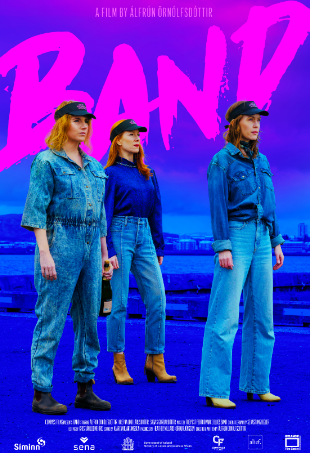
So is this real or real fake? It’s hard to tell when watching this “documentary” about an all-female pop group trying to make it big at middle age with their own style of Björk-esque Icelandic performance art/rock music. Writer-actor-director Álfrún Örnólfsdóttir, one of the would-be aspiring artists, who slips back and forth in front of the camera, tries to chronicle a story where it’s difficult to know where genuine ambition leaves off and bona fide spoof begins, making it difficult for viewers to know what to believe is “real” and what’s made up. That deliberate ambiguity puts this offering in a category by itself, but it’s hard to know when viewers are supposed to laugh or lament. If it’s genuine, it tells a pathetically sad story of a woeful group of performers; if it’s not, it’s an overly silly mockumentary that often tries too hard and wears out its welcome rather quickly. But, as it drones on and on, it’s unlikely anyone is going to care, even by the end of its relatively scant 1:27:00 runtime. Indeed, sometimes trying too hard to prove one’s cleverness proves nothing, as is very much the case here.
17. “Samichay: In Search of Happiness” (“Samichay”) (Peru/Spain) Web site
It’s one thing for a movie to strive for greatness; it’s something else to try too hard in achieving it. That’s the case with director Mauricio Franco Tosso’s debut feature about a destitute Andean subsistence farmer (Amiel Cayo) living with his daughter (Raquel Florentina Saihua Huainasi) and mother-in-law (Agustina Aurelia Cougar Ccallo). He struggles to make ends meet, his only potential source of income being his undernourished cow, Samichay (which, in Quechan, translates as “in search of happiness”), on whom he places high hopes for birthing a fine young calf, something that’s unlikely to happen given her health. But he soldiers on, despite these conditions and a way of life that’s slipping away. The film thus examines the question of tradition vs. progress, as well as a man trying to hold on in the face of change. Unfortunately, the premise here is rather thin, and the narrative feels padded to cover that shortcoming, relying on qualities like its beautiful black-and-white cinematography to cover the film’s central failing. But, despite such attempts at polishing the tarnish and considering this work’s serious need of editing, this is a story that could probably be whittled down to a short quite handily. Instead, the use of artsy techniques to mask what is a simple tale dressed up in a feature-length package just doesn’t work. The result is a fundamentally boring offering that aspires to nobility with a phony, inflated, euphemistic sense of loftiness that, sadly, rings patently hollow.
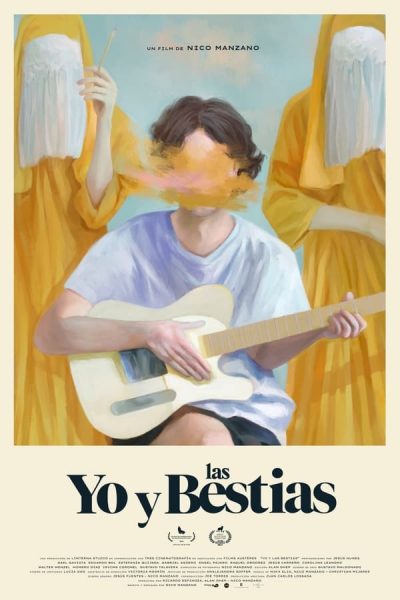
18. “Me and the Beasts” (“Yo y las Bestias”) (Venezuela) Web siteTrailer
Though billed as a deadpan comedy, director Nico Manzano’s debut feature prompts few laughs and leaves viewers mostly perplexed as to its message, purpose and intent. In telling the story of a musician (Jesus Nunes) who quits his band over performance schedule disagreements to pursue a solo career, the film follows his frustrating exploits in trying to establish himself. Artistically, he feels fulfilled with the music he’s composing, thanks in large part to the assistance of a pair of oddly dressed “beasts” (though “muse” would probably be a more fitting word choice) (Gael Gaviota, Eduardo Bol). However, when it comes to bringing his creations to market, he runs into constant roadblocks, some brought on by poor choices and others due to the corrupt business practices and government policies in place in the downward spiraling Venezuelan economy. The result is a mix of hopefulness and frustration that keeps him from reaching his potential. Regrettably, the picture itself never reaches its potential, either, keeping viewers at bay with clumsy narrative and screenplay choices that generally just don’t work. It feels at times as if the film is an underdeveloped feature, while at other times it comes across as a padded short, filled with far too many incidental, extraneous story elements and awkwardly orchestrated pacing that’s tediously protracted. Its attempt at social allegory falls flat, too, never developing this aspect of the story as clearly and compellingly as it might have. In fact, perhaps the only saving grace here is the music itself, which is often totally mesmerizing; indeed, a concert film of the picture’s original compositions would probably have been far more preferable to what the filmmaker has come up with. In the end, a complete retooling is in order here to make its story and symbolism more engaging, entertaining and tolerable.
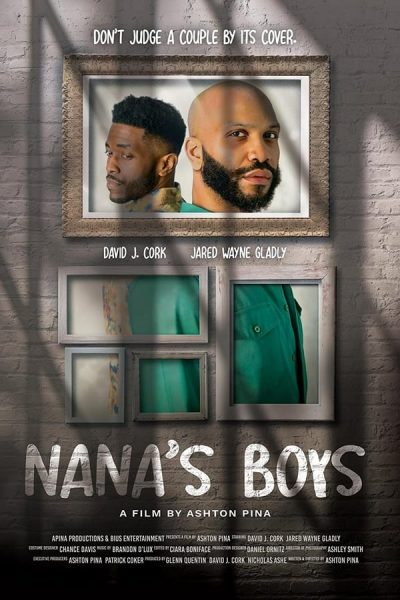
Breaking up is hard to do (or so they say). In any event, that’s something no one would get from watching this largely improbable offering about an African-American gay male couple (David J. Cork, Jared Wayne Gladly) whose relationship is teetering on the brink. When a sudden and massive explosion not far from their New York apartment unexpectedly throws the partners into a mandatory lockdown, their confinement leaves them to confront one another, a process full of revelations that accelerates their assessment of their circumstances and hastens a decision about how to proceed. In all sincerity, it’s a story that seems to have its heart in the right place, but, unfortunately, the writing is so implausible and unconvincing that it’s difficult to believe that this is a couple potentially on the verge of collapse, despite the alleged sensitivity it’s trying to convey. The characters sound more like they’re reciting scripted dialogue than engaging in believable conversation, and they often behave more like they’re on a date than wrestling with the course of their future. In many ways, this comes across like a more dramatic, reworked gay version of “Scenes from a Mall” (1991), only with fewer characters and staged in a more confined space (and not as compelling as its predecessor, which itself struggled to capture viewer engagement). Writer-director Ashton Pina’s debut feature truly plays like a first-time effort, one sorely in need of a hefty dose of realism, not to mention a little less overacting and a soundtrack that doesn’t sound like it was pulled from a made-for-cable TV movie. Sadly, situations like this are often messy and ugly, and their depiction shouldn’t be glossed over with the kinds of polite, make-nice tropes that riddle the narrative and screenplay here, painful though that truth may be.
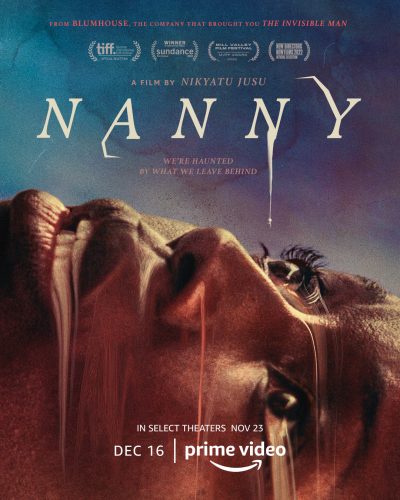
When it comes to making a movie (especially one in the suspense, thriller or horror genre), there’s a big difference between “nuanced” and “obscure.” And, when it comes to writer-director Nikyatu Jusu’s debut feature, it’s an offering that more often embodies the latter than the former. This tale of a Senegalese immigrant nanny (Anna Diop) caring for the young daughter (Rose Decker) of an upscale New York couple (Michelle Monaghan, Morgan Spector) follows her pursuit of starting a new life in America, a venture intruded upon by an array of strange, sporadic, inexplicable, underdeveloped hallucinations, nightmares and other paranormal experiences in what amounts to one of the most muddled, unsuspenseful thrillers I’ve ever screened. Indeed, this film’s attempt to elevate what’s supposed to be a horror offering to a purported higher level of artistry and sophistication largely falls flat due to glacial pacing, disjointed and extraneous story threads, overly subdued and unexplained imagery, and a largely predictable, underwhelming payoff that just doesn’t merit the time and attention it requires to make sense of it all. While the picture features some imaginative cinematography and editing, along with a capable lead performance by Diop, it’s nevertheless sorely lacking when it comes to a compelling narrative and cogently written script. Despite its Independent Spirit Award nomination for the Someone To Watch Award, its National Board of Review designation as one of 2022’s Top 10 Independent Films and its Sundance Film Festival Dramatic Grand Jury Prize, “Nanny” fails on countless fronts. But I suppose that shouldn’t come as any surprise these days given the unremarkable state of this once-venerated film genre. Horror films just ain’t what they used to be, and this one again proves just that.
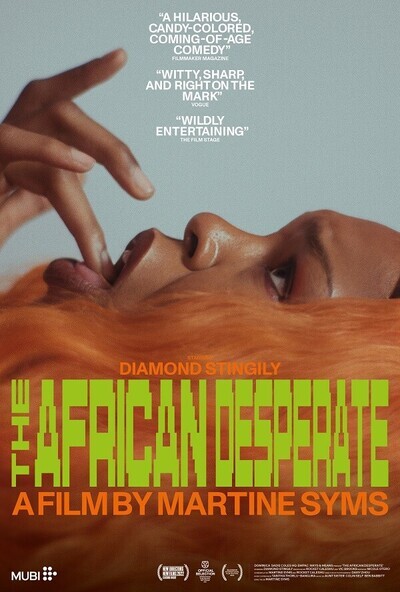
Lampooning a supposedly revered sacred cow often provides great fodder for insightful satire and raucous comedy. And, at the outset of writer-director Martine Syms’s debut feature, the filmmaker seems to be off to an auspicious start. In this tale of an African-American woman (Diamond Stingily) seeking to complete her MFA degree at a prestigious private college in rural Upstate New York, the picture launches with a wicked skewering of the pretention underlying university-level fine arts education. The dumbfounding stream of consciousness pseudointellectual observations of the degree candidate’s ivory tower professors – who end up quibbling amongst themselves during their student’s dissertation defense – is incisively hilarious, exposing these alleged erudite blowhards as the supercilious, superficial frauds they truly are. Unfortunately, despite this brilliantly crafted initial setup, the picture woefully declines from there, not really knowing where it wants to go. Much of the ensuing narrative is devoted to a drug-infused celebration in honor of the new master’s degree holder, but it’s so rambling in nature that it becomes irrelevant and uninteresting. That problem is further compounded by the picture’s uneven, ill-defined development of the protagonist’s character, leaving audiences often wondering exactly who she is. Indeed, given the foregoing, one can’t help but speculate, why does this “story” even exist? Admittedly it’s presented with some inventive cinematography and a lively, colorful production design, with a capable performance by Stingily. But, as this offering limps toward its lame, unimpressive conclusion, it grows ever more trying, a huge drop-off from its superb start. Maybe it’s because that’s all this release had going for it to begin with, and what followed was merely an ill-advised
ttempt to stretch out that concept into a feature-length production. That’s too bad because, with further development, this Independent Spirit Award John Cassavetes Award nominee might have been a sidesplitting romp. As it stands now, however, it’s little more than a great opening sketch followed by a lot of would-be comedic flotsam.
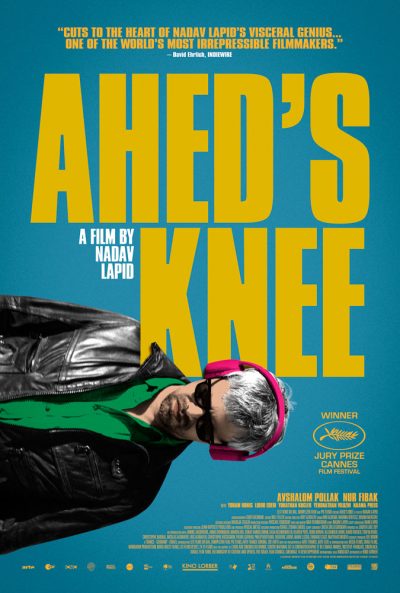
When a perpetually disgruntled, self-absorbed, middle-aged Israeli filmmaker (Avshalom Pollak) attends a screening of one of his films at a public library in a remote desert locale, he uses the opportunity to protest the government’s increasingly aggressive and intrusive censorship of the arts. He particularly objects to having to fill out paperwork specifying the limited scope of subjects he’ll be able to cover in his post-screening Q&A session, especially since his failure to comply will keep him from getting paid for the presentation. But, as significant as these concerns are, they’re generally not covered in much depth until far into the film, one whose opening half is dominated by a wealth of irrelevant incidental material and pointless music video-style segments, much of it filmed with needlessly jarring camera work and punctuated with shots of landscapes, people and the sky, most of which add nothing to the narrative. When the film finally manages to get on track, it truly becomes intensely engaging (albeit somewhat preachy, though understandably so). However, by then, it’s too late to effectively salvage the project, as viewers are likely to be thoroughly confused and uninterested by this point. What’s more, there are several intriguing but vastly underdeveloped story threads here that, because of a lack of attention to them, could have just as easily been left out. It’s obvious that this offering’s protagonist is essentially the alter-ego of controversial director Nadav Lapid, making this film more of a personal catharsis than anything else (though that doesn’t mean audiences have to sit through it). It’s also ironic that this production is so unabashedly angry at some of those government-backed entities that bankrolled this very project (talk about biting the hand that feeds you). Indeed, it’s unfortunate that this 2021 Cannes Film Festival Jury Prize winner and Palme d’Or nominee never manages to pull things together to tell a cohesive, well-made story, as it appears it genuinely has something of merit to say – that is, if you can find it.
“Corsage” (Austria/Germany/Luxembourg/France) Web siteTrailer
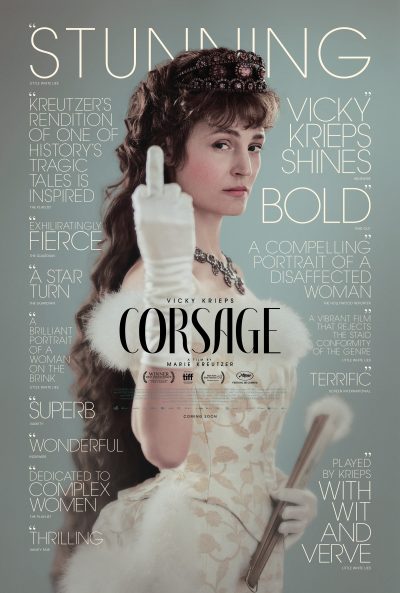
An old saying wisely maintains “Don’t believe everything you read in the newspapers.” It’s an expression aptly accompanied by a contemporary counterpart that says “Don’t believe everything you see in the movies.” That’s especially true for historical biopics, such as this fictionalized account of a year in the life of Empress Elisbeth of Austria (1837-1898) (Vicky Krieps), a film that incorporates events that are complete and total fabrications. While writer-director Marie Kreutzer makes no attempt to conceal the fictitious nature of this Cannes Film Festival Un Certain Regard Award nominee, the fusion of elements that faithfully reflect the character of the real-life figure with this movie’s outright tall tales seriously muddies the waters, creating a mélange of misinformation that many viewers (especially those unfamiliar with the life of the protagonist) are nevertheless likely to interpret as gospel truth. On top of that, the film clumsily mixes Nineteenth Century elements with Twentieth Century influences, particularly in the soundtrack (I’m sure Empress Elisabeth was a big fan of the Rolling Stones’ As Tears Go By). While the narrative sincerely aims to spotlight the severe restrictions placed on women of the era (symbolized here by the compulsive fashion requirement of wearing a corset (or a “corsage,” as they say in German)), the credibility underlying that point is often undercut by the liberties the story takes when it comes to portraying the events and culture of the time. Also, in its attempt to present a detailed character study about the often-restless, unpredictable monarch, this BAFTA and Independent Spirit Award nominee for best foreign film tries to tackle too many of the empress’s eccentricities, personal attributes and social outlooks, frequently yielding a meandering storyline that jumps around far too much for its own good. These thematic ambitions could have just as easily been addressed by playing it straight rather than veering off into fabricated fantasies and needless truth stretching, deviations that undermine the legitimacy of the picture’s intents. To its credit, the period piece production values are exquisite, and the film provides an excellent showcase for Krieps, winner of the Cannes Film Festival Un Certain Regard best actress award. But there are so many other aspects of this release that are just plain “off” that it’s difficult to recommend it as anything that should be taken seriously, a disappointment in light of the underlying heartfelt statement that it’s attempting to make.
“Doctor Strange in the Multiverse of Madness” (USA) Web siteTrailer
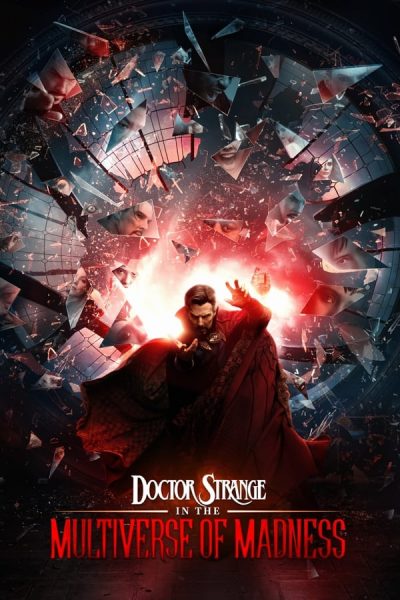
While I don’t completely agree with Martin Scorsese’s contention that Marvel movies aren’t cinema, this offering could arguably add fuel to the fire supporting that viewpoint. The second installment in the “Doctor Strange” series is, quite honestly, a hot mess in so many regards, a major disappointment from its predecessor and a movie in which it’s easy to lose interest. With a storyline that requires viewers to possess considerable foreknowledge of the characters, other Marvel movies and numerous other narrative elements (particularly with regard to the cable TV series Wandavision), as well as a number of plot elements that go unresolved and the inclusion of developments that grow progressively sillier with each passing frame, director Sam Raimi’s latest becomes increasingly boring, ridiculous and disjointed the further one gets into it. What I find most insulting, however, is the shameless way this offering has been employed more as a jumping off point for other upcoming vehicles in the Marvel Universe than as a standalone work of its own, a lynchpin in the perpetuation of this continuing body of work that amounts to little more than a vehicle for promoting future Marvel productions. Despite the film’s fine cinematography and art direction and a few choice moments of comic relief, I gave up on this one with about a half hour left. Except for diehard comic book nerds, who will undoubtedly love this offering no matter what, most other viewers could save themselves a lot of time and tedium by not waiting as long as I did to bail by just skipping this one entirely.
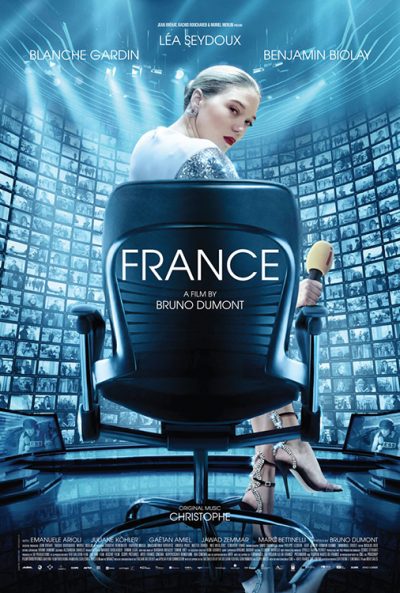
If ever there were a film that embodies the notion of “Life sucks and then you die,” this would be it. Writer-director Bruno Dumont’s latest, a depressing, cynical comedy-drama, takes the concept of weltschmerz to an entirely new level. That includes not only the content of the film’s narrative, but also the agony that’s inflicted upon audiences viewing this irritatingly slow, unfocused slog. Told from the perspective of an immensely popular French TV journalist (Léa Seydoux) who has everything that everyone supposedly wants – fame, fortune, wealth, beauty – the film follows her triumphs and tragedies, all of which leave her feeling eminently empty and depressed. Some of it is personal, some professional, and nearly always in matters of integrity, meaning and fulfillment, conditions whose absence leave life affording us precious few joys. In some ways, the film could also be seen as a metaphor for the current state of society, most notably that of France (the nation) as reflected through the experiences of France de Meurs (the protagonist). Ultimately, the foregoing may be all well and good in theory, but it’s sorely lacking where the execution of this 2021 Cannes Film Festival Palme d’Or nominee is concerned. Dumont truly seems to be striving for something here, but it ends up feeling more like “reaching” in the end. This overlong, often-vague, frequently repetitive, generally lost cinematic exercise truly is one well worth passing up.
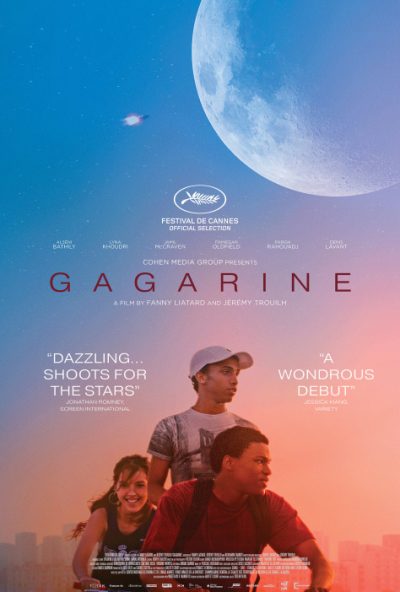
When a rundown housing project on the outskirts of Paris is slated for demolition, its predominantly low-income immigrant residents face forced eviction and relocation. But one occupant resists. As an aspiring astronaut, 16-year-old Youri (Alseni Bathily) tries to save the complex of high-rises named in honor of Russian cosmonaut Yuri Gagarin, the first man in space and the youngster’s namesake, who once paid a hero’s visit to the site in the wake of his historic flight. But, when the clock runs out, Youri must scramble to survive as the project’s only remaining resident. It’s at this point, though, when the picture loses its way, turning somewhat preposterous. And, the longer it goes on, the more the film turns surreally preposterous, mixing fantasy and reality in a fuzzy, disjointed way, leaving viewers wondering how the two actually mesh. The result is an unsatisfying disappointment, almost as if directors Fanny Liatard and Jérémy Trouilh ultimately didn’t know where to take their debut feature. That’s regrettable, given that their production seems to start off with a promising premise that loses its legs part way through. It’s commendable to dream for the stars, but you have to have a flight plan in place before you launch, something that’s sorely lacking here.
Upon completing my screening of this indecipherable, preposterous cinematic offering, I couldn’t help but come away from it asking myself, “What the hell did I just watch?” Writer-director Antonia Campbell-Hughes’s debut narrative feature is so “nuanced” as to be utterly vague and patently incoherent. I probably gave this one more than sufficient benefit of the doubt while watching it, awaiting a payoff (or even a half-hearted rational explanation) come movie’s end, but no such luck. The rambling, improbable screenplay of this fuzzy tale about a car accident victim (Cosmo Jarvis) who becomes inexplicably fixated about a younger uninjured survivor from the same incident (Rhys Mannion) makes virtually no sense, jumping from one ostensibly random situation to another without seeming rhyme or reason, much of it padded with repetitive extraneous shots of the rural windswept Irish landscape. What’s more, it’s puzzling why this offering was selected as a featured presentation for an LGBTQ+ film festival, given that there are precious few references to the sexuality of the protagonist or the subject of his fascination or to the gay community at large. It truly boggles my mind how reviewers have praised this incomprehensible exercise in ill-conceived, poorly executed celluloid self-indulgence. Avoid this one at all costs.
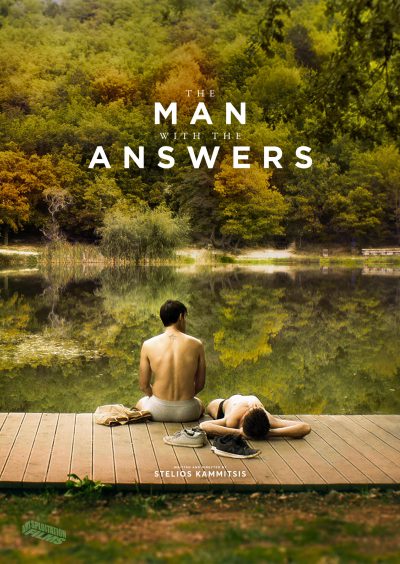
“The Man with the Answers” (Greece/Italy/Cyprus) Web siteTrailer
The title of this film may be the man with the “answers,” but I found it left me with more questions than anything else. This undercooked gay romance/road trip tale suffers from a significant lack of character development and narrative direction, consisting primarily of a series of disjointed, mostly unexplained events strung together by an episodic, meandering script. This road trip through Europe, extending from Greece to Italy to Germany, provides the backdrop for a slow-simmering relationship between two opposites – a reckless free-spirited German student (Anton Weil) and an uptight, über-responsible former Greek diving champ (Vasilis Magouliotis). While the “answers” that arise during their journey always seem perfectly suited to meeting the duo’s needs, they come about so synchronistically that they often defy believability – and frequently provide the requisite conflict that drives the on-again/off-again nature of the protagonists’ relationship. And that, of course, naturally raises the question of whether these “answers” truly are answers at all. But, given the lack of explanation for and development behind all this, the end result is a story that seems lazy and all too convenient in its execution. Director Stelios Kammitsis’s sophomore effort is more sophomoric than anything else, showing that the evolution of this filmmaker’s career is going to need a lot more spit and polish if it’s going to take off.
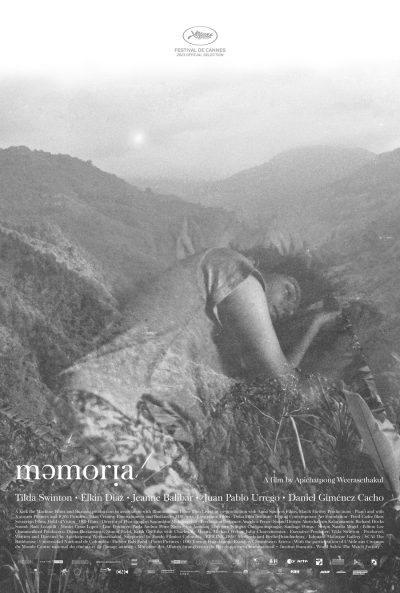
“Memoria” (Colombia/Thailand/France/Germany/Mexico/Qatar/UK/China/Switzerland) Web siteTrailer
It reaches...and reaches...and reaches...yet its grasp never attains fulfillment, leaving viewers feeling as though they’ve been toyed with for more than two hours for a payoff that’s only modestly satisfying at best. Director Apichatpong Weerasethakul’s latest has its moments of visual and audio appeal, but its protracted, heavily padded, thin, meandering narrative, coupled with half-baked character development, is a frustrating follow for even the most patient of viewers. Its exceedingly tiresome still shots (of which there are many) alone push audiences to plead for getting on with it already. Those well-versed in the paranormal and metaphysical will find this an especially dull watch, given that the filmmaker’s objective is apparent quite early on, yet the picture leaves its spectators haplessly bound to sit through the flotsam that leads to a conclusion containing few surprises and little satisfaction. “Memoria” has somehow found a fan base among the arthouse crowd, but, to be blunt, lofty pretention and contrived artistry do not translate to profound insight, and this a decidedly overinflated balloon desperately in need if being popped. And none of this takes into account the peculiar distribution plan that has accompanied this picture’s release, one that has made it extremely difficult to find and watch (though, given the result, maybe that’s a good thing). Indeed, how this one managed to walk away with awards like the Chicago Film Festival’s Gold Hugo for Best Feature and the Cannes Film Festival Jury Prize (along with a Palme d’Or nomination) is truly beyond me. And to think I was actually looking forward to seeing this for months...
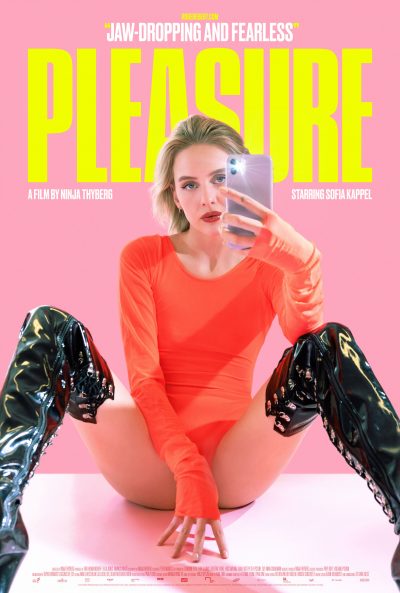
OK, so I’m prepared to be branded a clueless male when it comes to my assessment of writer-director Ninja Thyberg’s debut feature about women in the porn industry, but I’ll go on the record and out on a limb to say I just didn’t get much of what this offering is trying to say. As a treatise on the objectification and degradation of women in a male-dominated industry, yes, it makes that point loud and clear, with deliberate, unbridled candor. But it does so in a story involving a young protagonist (Sofia Kappel) who willingly leaves her home in Sweden and relocates to Los Angeles with the intent of wanting to become the next big female porn star. Doesn’t that scenario speak to an ambition that she voluntarily wishes to pursue? What’s more, she freely agrees to do challenging and shocking scenes involving violence and humiliation only to try and back out of them after starting to shoot. I can’t help but wonder, what did she expect going in to these projects? It’s as if she were utterly clueless, the personification of naïvete, making me wonder, how could she have possibly agreed to those terms if she had the ambition but no idea of what she was getting herself into? It’s not that I don’t sympathize with her feelings or what she’s subjected to, but her intention and reaction under these circumstances just don’t jibe for me, making me wonder what exactly did the filmmaker have in mind here. This is a question made all the more puzzling considering how the protagonist’s story ultimately plays out. Fault the writing here, given a haphazardly constructed story and screenplay, along with a lack of back story to explain how it all came together to begin with. Moreover, Kappel simply isn’t up to the task of carrying out the role, lacking the acting chops, charisma and (at the risk of sounding sexist) requisite physical attractiveness to pull off the part of a supposedly drop-dead gorgeous porn star. And, in a story involving titillating subject matter, the simulated porn is itself, frankly, dull – not the least bit provocative, troubling or the slightest bit sexy but more disjointed, clinical and tedious. This one represents a missed opportunity to make some kind of meaningful statement (even though the central premise of the picture’s narrative is anything but groundbreaking, new or particularly revelatory). How this one captured a host of honors and nominations at film festivals and awards competitions, such as the Sundance Film Festival and the Independent Spirit Awards, is beyond me. Skip it.
I suppose there’s a story somewhere inside this medical drama/horror offering, but I’ll be damned if I can find it. Writer-director Alex Thompson’s second feature outing is a plodding, dull, unfocused jumble in which viewers wait patiently for something to happen and nothing ever does. When a brilliant young medical resident (Namir Smallwood) suffers a breakdown after losing a patient, he transfers to a small town hospital for a second chance, upon which he becomes obsessed with the mysterious symptoms of a respiratory patient (Sidney Flanigan). What follows is an unorganized collection of vague (and unscary) surreal images, tiresome dialogue laden with detailed medical jargon, unexplained and implausible plot developments, and a story that ultimately goes nowhere, one that even requires an explanation at the end by one of the characters to inform the audience of what supposedly just happened. “Rounding” is a phenomenal waste of time that fails to live up to any of its hype – or potential.
Where do I begin with this one: Simply put, BAFTA and Critics Choice Award-nominated director Gina Prince-Bythewood’s latest offering is a wholesale mess in so many regards that I couldn’t wait for this overlong slog to end. In the course of frequently checking my watch, I was subjected to 2+ hours of sloppy writing attempting to conceal fuzzy factual accuracy, despite the film’s unapologetic contention that it’s a historic epic set in an alternate historical timeline. (Huh? That’s kind of like claiming someone is almost a virgin or just a little pregnant.) On top of this, the endless saga is peppered with too many extraneous subplots that detract from the primary narrative, silly story elements that don’t make sense, far too many repetitive war dances, corny dialogue, frequently gratuitous and credibility-stretching fight sequences, and a disappointing performance by multiple award nominee Viola Davis, who tries to come off as a badass African-American female version of John Wick. The finished product thus ends up playing like a project put together by a committee of creatives. To its credit, the picture includes some little-known legitimate historical material that some might find disconcerting, a few noteworthy and heartfelt scenes in the home stretch run, and modestly entertaining touches of comic relief, but that’s small compensation for everything else this one gets wrong. I’m sure politically correct viewers will eat this one up, especially when it comes to addressing matters of female leadership and empowerment, but I also can’t help but wonder how any enlightened woman could look at this and say that the secret to being a better individual is to act more like a male macho schmuck (like that’s something aspirational). Because of all this, I’m truly at a loss to understand what so many critics see in this release, such as those from the National Board of Review, who named it one of 2022’s Top 10 Films. Even as a pure entertainment vehicle, it just doesn’t measure up compared to many of the other action-adventure offerings out there. Catch this one on streaming – and only if you have nothing better to do.