

Wednesday, October 7, 2020
Check out the Dudes!
Tune in for the latest edition of Bring Me 2 Life radio's newest broadcast, Afternoons With The Dudes, now available by clicking here. Join host Selo Closson, yours truly and a great group of guys for an insightful discussion about how men can get better in touch with their feelings.


Wrapping Up Reeling
Reeling 38, Chicago’s International LGBTQ+ Film Festival, recently completed its 2020 edition in its first-ever all-virtual format. With movie houses just now beginning to reopen due to the COVID-19 pandemic, this alternative approach made it possible for the festival to go forward, and it worked remarkably well, enabling viewers to screen a variety of films while remaining safe at home. In fact, in some ways, this is a viable approach well worth considering for future events, one that makes it possible to offer the festival’s films to a wider audience and providing flexible viewing conditions, benefits not necessarily available when presented in theatrical venues.

Because of this new format, I was able to screen a greater number of films than I have in the past. In total, I watched 18 feature offerings, most of which were above average to excellent. Below are my reviews of the releases I watched, some of which truly had me … reeling.
“Cicada” (U.S.) Score: 4.5/5 (****+)
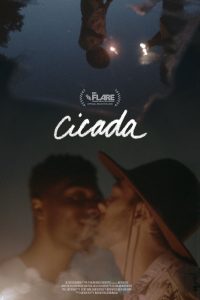
A heart-wrenching look at how two gay male partners (Matthew Fifer, Sheldon D. Brown) in an interracial relationship work together at solving their respective past traumas and how the power of love can significantly aid and smooth the process. This fact-based dramatic love story, written and directed by protagonist Fifer, is peppered with inventive and whimsical touches of comic relief and featuring an excellent ensemble cast (especially Cobie Smulders as a kooky unconventional therapist) and moves viewers deeply, earning every single bit of empathy that it draws out of audiences. Easily one of the most endearing and honest love stories I’ve ever seen, sexual orientation aside. Don’t miss this one – my top pick from the festival.
“The Capote Tapes” (U.S./U.K.) Score: 4/5 (****)
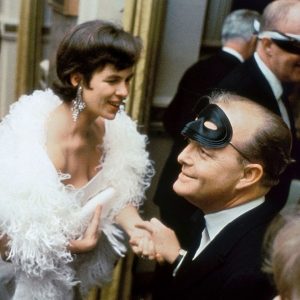
Flamboyant, openly gay author Truman Capote may not have been especially prolific, but he wrote several noteworthy, well-respected works. However, when excerpts of what was supposed to be his crowning achievement – the novel Answered Prayers about the dirty little secrets of New York high society based on the lives of a number of his “friends” – he became a pariah of sorts, losing contact with many of those close to him and triggering a speedy downward spiral in his health and well-being. In this new documentary, excerpts of recorded interviews with many of his friends and colleagues and new interviews with those who knew him and studied his work shed light on the enigmatic icon, his life and his writing, particularly with regard to his final and unfinished work. Included are archive segments featuring Lauren Bacall, Candice Bergen, George Plimpton, Norman Mailer, Lee Radziwill, Harper Lee, William F. Buckley and Capote’s partner Jack Dunphy, along with new conversations with author Jay McInerney, journalist Sally Quinn, Vogue editor André Leon Talley and talk show host Dick Cavett, among others. Director Ebs Burnough’s debut feature presents a captivating look at a talented, troubled and towering figure.
“Ema” (Chile) Score: 4/5 (****)
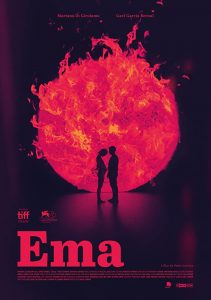
Acclaimed Chilean director Pablo Larraín’s latest offering explores the exploits of a free-spirited bisexual dancer (Mariana Di Girolamo) and the lengths she’ll go to in order to regain access to the troubled adopted son (Cristián Suárez) that she and her husband (Gael García Bernal) hastily gave up in the wake of the child’s bizarre antisocial behavior, a trait the youngster shares with his mother. Easily Larraín’s most experimental release, “Ema” is sometimes inscrutable yet always captivating, especially in its compelling dance and erotic sequences, a visually delightful, troubling and arousing palette. This one won’t suit everyone, but, for those who enjoy watching envelope-pushing cinema, this one will be right up your alley.
“Galore” (Netherlands) Score: 4/5 (****)

When plus-size Dutch drag queen Lady Galore (Sander den Baas) decides to undergo gastric bypass surgery to help improve the state of her health, she wonders whether the change in her body size and shape will affect how others have come to identify her. Will the persona she’s so carefully crafted disappear with the pounds she’s about to lose as a result of her procedure? Or will she be able to reinvent herself and maintain the level of visibility and popularity she’s already attained? This intimate documentary about her journey into a new life provides an intriguing look at a charismatic and caring individual who fights for dignity, self-respect and recognition for herself and her community, even through all the changes and challenges she undergoes. An inspiring and uplifting true life tale from directors Dylan and Lazlo Tonk.
“Give or Take” (U.S.) Score: 4/5 (****)
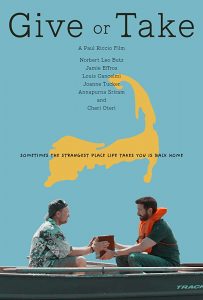
When the estranged adult son (Jamie Effros) of a deceased late-blooming gay man returns home to Cape Cod to settle his affairs and make provisions for his father’s surviving partner (Norbert Leo Butz), the trip raises issues of love, loss and self-reflection for all concerned in this sensitive tale of trauma, healing and forgiveness. While the film has a tendency to become occasionally repetitive in the second half, writer-director Paul Riccio’s debut feature treats its subject matter tenderly yet honestly and forces its characters to come to terms with who they are, for better or worse. A well-made effort for a small independent production that skillfully incorporates gay themes without dwelling on them or bombarding audiences with rhetoric.
“Single Street” (“Singel 39”) (Netherlands) Score: 4/5 (****)

Though slightly formulaic in nature, this otherwise-delightful Dutch alternative rom-com from director Frank Krom tells the story of a lonely heart surgeon (Lies Visschedijk) who becomes best friends with her gay male neighbor (Waldemar Torenstra). As the two grow closer, it’s apparent that their friendship runs deep, but, when talk of making a baby enters the picture, matters grow complicated, especially when changes of heart enter the picture. This breezy, witty tale could have handled a few aspects differently, but it aptly shows that love need not always conform to conventional expectations, a message we could all stand to hear a little more often than we do.
“Tahara” (U.S.) Score: 4/5 (****)

When the unusual fusion of teen sex comedy meets coming out/coming of age tale meets Jewish humor, you’ve got director Olivia Peace’s debut feature, “Tahara,” a delightfully humorous spin on a tried-and-true formula long overdue for the infusion of fresh new influences. While the picture admittedly suffers from some occasional pacing problems (due to several overlong, overly talky scenes), the overall result is a laugh-out-loud funny romp that skewers taboo material and the film’s source genre on a variety of fronts in a variety of ways. The picture’s inventive use of animation and claymation and excellent ensemble cast (especially protagonists Madeline Grey DeFreece and Rachel Sennott) add further charm and whimsy to an already-clever narrative, making for an enjoyable time at the show. Fun, fun, fun!
“Cocoon” (“Kokon”) (Germany) Score: 3.5/5 (***+)
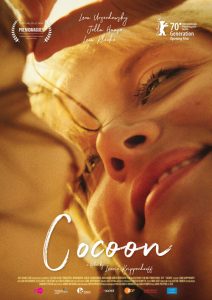
When a shy, nerdy Berlin teen (Lena Urzendowsky) who breeds caterpillars as a hobby begins to discover her budding lesbian identity, she starts to blossom like the butterflies who are morphing inside their cocoons. While the film has a tendency to meander in spots, the picture’s overall story and script are largely spot-on, rich in nuance, symbolism and subtle humor, all the while taking the narrative in some pleasantly unexpected directions. A tauter screenplay would have allowed this one to truly shine, but, as it is, it takes flight pretty well enough on its own. A soaring sophomore effort from director Leonie Krippendorff.
“Goodbye Mother” (“Thua Me Con Di”) (Vietnam) Score: 3.5/5 (***+)
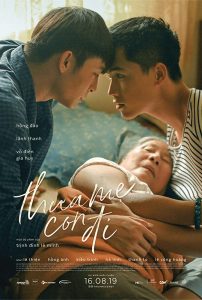
This tender comedy-drama-love story about a Vietnamese emigre-turned-U.S. citizen (Lanh Thanh) who returns home for a family ceremony with his gay lover (Vo Dien Gia Huy) in tow touches on all the right themes when it comes to the challenges of coming out in a culture strongly resistant to the idea. Many sweet moments, many bittersweet moments and a number of unexpected surprises give shade and coloring to this sometimes-awkward, sometimes-uncomfortable, often-humorous tale. Admittedly there are a few too many secondary story threads running through the narrative that tend to bog down the flow (especially in the final act), but, in general, director Trinh Dinh Le Minh’s sophomore effort is a touching, warm-hearted offering about love, romance, togetherness and the things that both lift them up and weigh them down.
“Dramarama” (U.S.) Score: 3/5 (***)
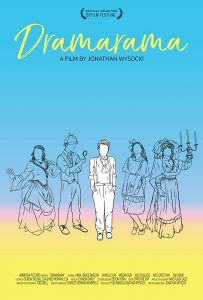
When a closeted gay teen (Nick Pugliese) contemplates coming out at a farewell party for his drama club high school classmates (Anna Grace Barlow, Nico Greetham, Megan Suri, Danielle Kay) as they leave for college in 1994, the evening turns into a free-for-all of emotions, both good and bad, for the entire group. While the exchanges do have their wickedly funny moments, the laughs are a little too few and far between (and sometimes a little too forced) to make this story work, especially when the conversations get bogged down by sniping, petty squabbles, and heavy emotional (and, sometimes strangely enough, religious) discussions. The supreme eloquence of the teenage cast members also seems a bit incongruous for their characters, as they speak with an articulation, erudition and wit that seem well beyond their years, especially in light of the naïvete that also emerges. And, as for that coming out issue, what seems like it’s going to be the central thrust of the narrative is all too often relegated to the back burner, reconciled to almost-superfluous secondary treatment. In short, director Jonathan Wysocki’s debut feature comes across like a well-intentioned, pleasantly nostalgic, autobiographical stroll down memory lane, but it’s one that’s probably a little too “inside” to be fully understood and appreciated. Nice try, but no awards here.
“No Hard Feelings” (“Futur Drei”) (Germany) Score: 2.5/5 (**+)
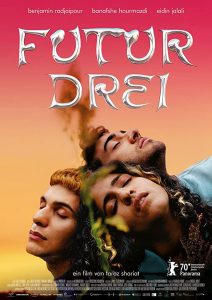
When a German-born son of Iranian immigrants (Benny Radjaipour) befriends a refugee brother (Eidin Jalali) and sister (Banafshe Hourmazdi) from his family’s homeland, a tentative but passionate romance develops between the two young men in the face of an uncertain future. This tale of love, acceptance, fitting in and finding oneself has its insightful moments of tenderness, emerging wisdom and righteous empowerment on multiple fronts. Unfortunately, uneven pacing, the use of experimental montages that don’t always work, and a variety of story elements that, regrettably, lose something in translation or end up superfluous intrude upon the aspects of the film that do work, creating an uneven mix overall. It’s intriguing to see a story that attempts to deal with a segment of society that has largely gone overlooked; it’s just a shame that director Faraz Shariat’s debut feature didn’t handle it better than it did.
“The Strong Ones” (“Los Fuertes”) (Chile) Score: 2.5/5 (**+)

While it may provide little-known insights into an unfamiliar culture and footage of a venue that’s not a readily recognizable film setting, this Chilean gay male romance features a narrative that’s about as trite and predictable as they come. The “forbidden love affair that can’t last” has been done so many times over the past four decades that it’s become tired and clichéd at this point. Even if this offering represents groundbreaking material by Chilean cinema standards, the story follows this formula to the letter so faithfully that there’s virtually nothing in it that one doesn’t see coming from a mile away. In fact, the most interesting aspects of the film lie in its secondary stories, its gorgeous cinematography and its symbolic (though underused) thematic visual allusions. Gay cinema has taken its time getting beyond stories as familiar and well worn as this, and releases like this from director Omar Zúñiga Hidalgo unfortunately tend to bog down the progress the genre has made in striking out in new directions. This one, instead, just strikes out.
“Drawn Back Home” (U.S.) Score: 2/5 (**)
When a thirty-something gay man (Paul Michael Thomson) returns to the small town that he fled because of his parents’ intolerance, he reunites with his long-lost best friend (Mickey O’Sullivan) for a reunion that carries deeper ramifications, leaving him with a big decision about his future. While the “home is where the heart is” narrative is indeed sweet and touching, its execution here is undermined by wooden acting, stilted writing, inconsistent character development, clichéd editing, occasionally laughable cinematography and a stunningly preposterous lack of chemistry between the protagonists. The heart of director Thomas Awrey’s debut feature may be in the right place, but that sentiment is so badly overshadowed by all of the film’s other problems that it’s not allowed to shine as well as it otherwise might have. Salvaging this offering may have been possible, but only with a sorely needed script rewrite, better casting and an overhaul of the production logistics. A missed opportunity, for sure.
“A Skeleton in the Closet” (“Todos tenemos un muerto en el placard o un hijo en el closet”) (Argentina) Score: 2/5 (**)

As the title implies, there’s definitely a closet here, but what exactly constitutes the skeleton inside it leaves much to the imagination (and, if it’s what I think it is, it doesn’t send a terribly empowering or affirming message, either). Director Nicolás Teté’s domestic drama about a twenty-something gay man (Facundo Gambandé) trying to find himself when he pays a visit to his overly polite family in his small but less-than-open-minded hometown after years in Buenos Aires is all over the map with a variety of story threads, many of them linked with pointless filler that serves as little more than padding or bridges between segments. The characters aren’t especially interesting, nor are their rather predictable, clichéd dilemmas. Add to that a truly annoying background score that sounds like something out of a made-for-cable TV movie, and you’ve got a mix that makes one want for an ending (and the one viewers get isn’t especially satisfying, either). Next...
“Stone | Fruit” (U.S.) Score: 2/5 (**)
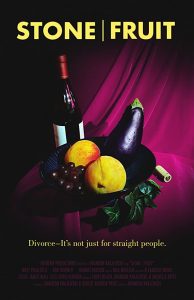
There’s witty repartee and then there’s unnatural banter, and, when it comes to this comedy-drama about a divorcing gay male couple (Rob Warner, Matt Palazzolo) spending one last weekend together to achieve closure about their decision, it’s definitely a grandiloquent exercise of the latter. This failed attempt at saying something meaningful about the ending of a relationship tries way too hard, with over-the-top dialogue that’s so pretentiously overwritten that it’s genuinely difficult to sit through the opening hour. Admittedly, writer-director Brandon Krajewski’s debut feature gets better further into the story, but it’s not enough to save this slog, even if you’re able to make it that far into the film. What ultimately plays like an evening with the queens matching wits at a gay bar doesn’t do this subject justice, and that’s an even bigger shame than the painful decision faced by the picture’s two parting protagonists.
“Are We Lost Forever” (Sweden) Score: 1.5/5 (*+)
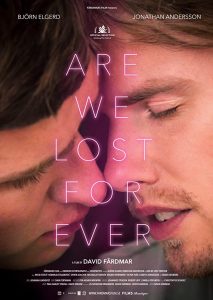
Director David Färdmar’s tedious, whiny slog through the breakup of a gay male couple’s on-again/off-again, on-again/off-again, on-again/off-again relationship and what happens when each partner (Jonathan Andersson, Björn Elgerd) meets someone new tries the patience of even the most earnest moviegoer. The film’s often-circular script, protracted shots of oh-so-sincere emoting, occasionally ridiculous dialogue and a positively detestable protagonist make viewers long for the ending that seems forever in coming. Indeed, just because breakups can be painful, that doesn’t mean we must have a ringside seat to watch every exhausting moment of the action unfold. Pick another movie instead.
“Family Members” (“Los miembros de la familia”) (Argentina) Score: 1/5 (*)
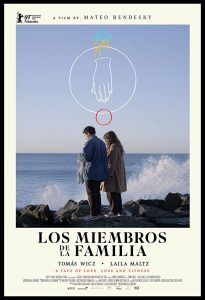
Despite some modestly interesting characters and occasionally intriguing ideas, director Mateo Bendesky’s rambling, minimalist, surreal drama-comedy (a term I’d use very loosely) never (and I do mean never) finds any meaningful traction. While billed as a coming of age/coming out tale with a metaphysical twist (dressed up in a largely snide, smarmy package), this utterly strange, totally directionless mess ambles along toward a hoped-for payoff that’s never reached. Don’t waste your time.
“Luz” (U.S.) Score: 1/5 (*)

What begins as a cellmate friendship turns into a prison romance in which the separated partners (Ernesto Reyes, Jesse Tayeh) must cope with their circumstances when paroled at different times, a situation that becomes further complicated once both are in the outside world again. Unfortunately, despite this mildly intriguing premise, director Jon Garcia’s overlong offering gets bogged down in subplots that are never fully developed and/or descend into the depths of predictability. I couldn’t wait for this one to end and to see what neat, tidy wrap-up it would employ before the credits rolled (something my eyes were already doing throughout much of the film’s second half).
Copyright © 2020, by Brent Marchant. All rights reserved.
Because of this new format, I was able to screen a greater number of films than I have in the past. In total, I watched 18 feature offerings, most of which were above average to excellent. Below are my reviews of the releases I watched, some of which truly had me … reeling.
“Cicada” (U.S.) Score: 4.5/5 (****+)
A heart-wrenching look at how two gay male partners (Matthew Fifer, Sheldon D. Brown) in an interracial relationship work together at solving their respective past traumas and how the power of love can significantly aid and smooth the process. This fact-based dramatic love story, written and directed by protagonist Fifer, is peppered with inventive and whimsical touches of comic relief and featuring an excellent ensemble cast (especially Cobie Smulders as a kooky unconventional therapist) and moves viewers deeply, earning every single bit of empathy that it draws out of audiences. Easily one of the most endearing and honest love stories I’ve ever seen, sexual orientation aside. Don’t miss this one – my top pick from the festival.
“The Capote Tapes” (U.S./U.K.) Score: 4/5 (****)
Flamboyant, openly gay author Truman Capote may not have been especially prolific, but he wrote several noteworthy, well-respected works. However, when excerpts of what was supposed to be his crowning achievement – the novel Answered Prayers about the dirty little secrets of New York high society based on the lives of a number of his “friends” – he became a pariah of sorts, losing contact with many of those close to him and triggering a speedy downward spiral in his health and well-being. In this new documentary, excerpts of recorded interviews with many of his friends and colleagues and new interviews with those who knew him and studied his work shed light on the enigmatic icon, his life and his writing, particularly with regard to his final and unfinished work. Included are archive segments featuring Lauren Bacall, Candice Bergen, George Plimpton, Norman Mailer, Lee Radziwill, Harper Lee, William F. Buckley and Capote’s partner Jack Dunphy, along with new conversations with author Jay McInerney, journalist Sally Quinn, Vogue editor André Leon Talley and talk show host Dick Cavett, among others. Director Ebs Burnough’s debut feature presents a captivating look at a talented, troubled and towering figure.
“Ema” (Chile) Score: 4/5 (****)
Acclaimed Chilean director Pablo Larraín’s latest offering explores the exploits of a free-spirited bisexual dancer (Mariana Di Girolamo) and the lengths she’ll go to in order to regain access to the troubled adopted son (Cristián Suárez) that she and her husband (Gael García Bernal) hastily gave up in the wake of the child’s bizarre antisocial behavior, a trait the youngster shares with his mother. Easily Larraín’s most experimental release, “Ema” is sometimes inscrutable yet always captivating, especially in its compelling dance and erotic sequences, a visually delightful, troubling and arousing palette. This one won’t suit everyone, but, for those who enjoy watching envelope-pushing cinema, this one will be right up your alley.
“Galore” (Netherlands) Score: 4/5 (****)
When plus-size Dutch drag queen Lady Galore (Sander den Baas) decides to undergo gastric bypass surgery to help improve the state of her health, she wonders whether the change in her body size and shape will affect how others have come to identify her. Will the persona she’s so carefully crafted disappear with the pounds she’s about to lose as a result of her procedure? Or will she be able to reinvent herself and maintain the level of visibility and popularity she’s already attained? This intimate documentary about her journey into a new life provides an intriguing look at a charismatic and caring individual who fights for dignity, self-respect and recognition for herself and her community, even through all the changes and challenges she undergoes. An inspiring and uplifting true life tale from directors Dylan and Lazlo Tonk.
“Give or Take” (U.S.) Score: 4/5 (****)
When the estranged adult son (Jamie Effros) of a deceased late-blooming gay man returns home to Cape Cod to settle his affairs and make provisions for his father’s surviving partner (Norbert Leo Butz), the trip raises issues of love, loss and self-reflection for all concerned in this sensitive tale of trauma, healing and forgiveness. While the film has a tendency to become occasionally repetitive in the second half, writer-director Paul Riccio’s debut feature treats its subject matter tenderly yet honestly and forces its characters to come to terms with who they are, for better or worse. A well-made effort for a small independent production that skillfully incorporates gay themes without dwelling on them or bombarding audiences with rhetoric.
“Single Street” (“Singel 39”) (Netherlands) Score: 4/5 (****)
Though slightly formulaic in nature, this otherwise-delightful Dutch alternative rom-com from director Frank Krom tells the story of a lonely heart surgeon (Lies Visschedijk) who becomes best friends with her gay male neighbor (Waldemar Torenstra). As the two grow closer, it’s apparent that their friendship runs deep, but, when talk of making a baby enters the picture, matters grow complicated, especially when changes of heart enter the picture. This breezy, witty tale could have handled a few aspects differently, but it aptly shows that love need not always conform to conventional expectations, a message we could all stand to hear a little more often than we do.
“Tahara” (U.S.) Score: 4/5 (****)
When the unusual fusion of teen sex comedy meets coming out/coming of age tale meets Jewish humor, you’ve got director Olivia Peace’s debut feature, “Tahara,” a delightfully humorous spin on a tried-and-true formula long overdue for the infusion of fresh new influences. While the picture admittedly suffers from some occasional pacing problems (due to several overlong, overly talky scenes), the overall result is a laugh-out-loud funny romp that skewers taboo material and the film’s source genre on a variety of fronts in a variety of ways. The picture’s inventive use of animation and claymation and excellent ensemble cast (especially protagonists Madeline Grey DeFreece and Rachel Sennott) add further charm and whimsy to an already-clever narrative, making for an enjoyable time at the show. Fun, fun, fun!
“Cocoon” (“Kokon”) (Germany) Score: 3.5/5 (***+)
When a shy, nerdy Berlin teen (Lena Urzendowsky) who breeds caterpillars as a hobby begins to discover her budding lesbian identity, she starts to blossom like the butterflies who are morphing inside their cocoons. While the film has a tendency to meander in spots, the picture’s overall story and script are largely spot-on, rich in nuance, symbolism and subtle humor, all the while taking the narrative in some pleasantly unexpected directions. A tauter screenplay would have allowed this one to truly shine, but, as it is, it takes flight pretty well enough on its own. A soaring sophomore effort from director Leonie Krippendorff.
“Goodbye Mother” (“Thua Me Con Di”) (Vietnam) Score: 3.5/5 (***+)
This tender comedy-drama-love story about a Vietnamese emigre-turned-U.S. citizen (Lanh Thanh) who returns home for a family ceremony with his gay lover (Vo Dien Gia Huy) in tow touches on all the right themes when it comes to the challenges of coming out in a culture strongly resistant to the idea. Many sweet moments, many bittersweet moments and a number of unexpected surprises give shade and coloring to this sometimes-awkward, sometimes-uncomfortable, often-humorous tale. Admittedly there are a few too many secondary story threads running through the narrative that tend to bog down the flow (especially in the final act), but, in general, director Trinh Dinh Le Minh’s sophomore effort is a touching, warm-hearted offering about love, romance, togetherness and the things that both lift them up and weigh them down.
“Dramarama” (U.S.) Score: 3/5 (***)
When a closeted gay teen (Nick Pugliese) contemplates coming out at a farewell party for his drama club high school classmates (Anna Grace Barlow, Nico Greetham, Megan Suri, Danielle Kay) as they leave for college in 1994, the evening turns into a free-for-all of emotions, both good and bad, for the entire group. While the exchanges do have their wickedly funny moments, the laughs are a little too few and far between (and sometimes a little too forced) to make this story work, especially when the conversations get bogged down by sniping, petty squabbles, and heavy emotional (and, sometimes strangely enough, religious) discussions. The supreme eloquence of the teenage cast members also seems a bit incongruous for their characters, as they speak with an articulation, erudition and wit that seem well beyond their years, especially in light of the naïvete that also emerges. And, as for that coming out issue, what seems like it’s going to be the central thrust of the narrative is all too often relegated to the back burner, reconciled to almost-superfluous secondary treatment. In short, director Jonathan Wysocki’s debut feature comes across like a well-intentioned, pleasantly nostalgic, autobiographical stroll down memory lane, but it’s one that’s probably a little too “inside” to be fully understood and appreciated. Nice try, but no awards here.
“No Hard Feelings” (“Futur Drei”) (Germany) Score: 2.5/5 (**+)
When a German-born son of Iranian immigrants (Benny Radjaipour) befriends a refugee brother (Eidin Jalali) and sister (Banafshe Hourmazdi) from his family’s homeland, a tentative but passionate romance develops between the two young men in the face of an uncertain future. This tale of love, acceptance, fitting in and finding oneself has its insightful moments of tenderness, emerging wisdom and righteous empowerment on multiple fronts. Unfortunately, uneven pacing, the use of experimental montages that don’t always work, and a variety of story elements that, regrettably, lose something in translation or end up superfluous intrude upon the aspects of the film that do work, creating an uneven mix overall. It’s intriguing to see a story that attempts to deal with a segment of society that has largely gone overlooked; it’s just a shame that director Faraz Shariat’s debut feature didn’t handle it better than it did.
“The Strong Ones” (“Los Fuertes”) (Chile) Score: 2.5/5 (**+)
While it may provide little-known insights into an unfamiliar culture and footage of a venue that’s not a readily recognizable film setting, this Chilean gay male romance features a narrative that’s about as trite and predictable as they come. The “forbidden love affair that can’t last” has been done so many times over the past four decades that it’s become tired and clichéd at this point. Even if this offering represents groundbreaking material by Chilean cinema standards, the story follows this formula to the letter so faithfully that there’s virtually nothing in it that one doesn’t see coming from a mile away. In fact, the most interesting aspects of the film lie in its secondary stories, its gorgeous cinematography and its symbolic (though underused) thematic visual allusions. Gay cinema has taken its time getting beyond stories as familiar and well worn as this, and releases like this from director Omar Zúñiga Hidalgo unfortunately tend to bog down the progress the genre has made in striking out in new directions. This one, instead, just strikes out.
“Drawn Back Home” (U.S.) Score: 2/5 (**)
When a thirty-something gay man (Paul Michael Thomson) returns to the small town that he fled because of his parents’ intolerance, he reunites with his long-lost best friend (Mickey O’Sullivan) for a reunion that carries deeper ramifications, leaving him with a big decision about his future. While the “home is where the heart is” narrative is indeed sweet and touching, its execution here is undermined by wooden acting, stilted writing, inconsistent character development, clichéd editing, occasionally laughable cinematography and a stunningly preposterous lack of chemistry between the protagonists. The heart of director Thomas Awrey’s debut feature may be in the right place, but that sentiment is so badly overshadowed by all of the film’s other problems that it’s not allowed to shine as well as it otherwise might have. Salvaging this offering may have been possible, but only with a sorely needed script rewrite, better casting and an overhaul of the production logistics. A missed opportunity, for sure.
“A Skeleton in the Closet” (“Todos tenemos un muerto en el placard o un hijo en el closet”) (Argentina) Score: 2/5 (**)
As the title implies, there’s definitely a closet here, but what exactly constitutes the skeleton inside it leaves much to the imagination (and, if it’s what I think it is, it doesn’t send a terribly empowering or affirming message, either). Director Nicolás Teté’s domestic drama about a twenty-something gay man (Facundo Gambandé) trying to find himself when he pays a visit to his overly polite family in his small but less-than-open-minded hometown after years in Buenos Aires is all over the map with a variety of story threads, many of them linked with pointless filler that serves as little more than padding or bridges between segments. The characters aren’t especially interesting, nor are their rather predictable, clichéd dilemmas. Add to that a truly annoying background score that sounds like something out of a made-for-cable TV movie, and you’ve got a mix that makes one want for an ending (and the one viewers get isn’t especially satisfying, either). Next...
“Stone | Fruit” (U.S.) Score: 2/5 (**)
There’s witty repartee and then there’s unnatural banter, and, when it comes to this comedy-drama about a divorcing gay male couple (Rob Warner, Matt Palazzolo) spending one last weekend together to achieve closure about their decision, it’s definitely a grandiloquent exercise of the latter. This failed attempt at saying something meaningful about the ending of a relationship tries way too hard, with over-the-top dialogue that’s so pretentiously overwritten that it’s genuinely difficult to sit through the opening hour. Admittedly, writer-director Brandon Krajewski’s debut feature gets better further into the story, but it’s not enough to save this slog, even if you’re able to make it that far into the film. What ultimately plays like an evening with the queens matching wits at a gay bar doesn’t do this subject justice, and that’s an even bigger shame than the painful decision faced by the picture’s two parting protagonists.
“Are We Lost Forever” (Sweden) Score: 1.5/5 (*+)
Director David Färdmar’s tedious, whiny slog through the breakup of a gay male couple’s on-again/off-again, on-again/off-again, on-again/off-again relationship and what happens when each partner (Jonathan Andersson, Björn Elgerd) meets someone new tries the patience of even the most earnest moviegoer. The film’s often-circular script, protracted shots of oh-so-sincere emoting, occasionally ridiculous dialogue and a positively detestable protagonist make viewers long for the ending that seems forever in coming. Indeed, just because breakups can be painful, that doesn’t mean we must have a ringside seat to watch every exhausting moment of the action unfold. Pick another movie instead.
“Family Members” (“Los miembros de la familia”) (Argentina) Score: 1/5 (*)
Despite some modestly interesting characters and occasionally intriguing ideas, director Mateo Bendesky’s rambling, minimalist, surreal drama-comedy (a term I’d use very loosely) never (and I do mean never) finds any meaningful traction. While billed as a coming of age/coming out tale with a metaphysical twist (dressed up in a largely snide, smarmy package), this utterly strange, totally directionless mess ambles along toward a hoped-for payoff that’s never reached. Don’t waste your time.
“Luz” (U.S.) Score: 1/5 (*)
What begins as a cellmate friendship turns into a prison romance in which the separated partners (Ernesto Reyes, Jesse Tayeh) must cope with their circumstances when paroled at different times, a situation that becomes further complicated once both are in the outside world again. Unfortunately, despite this mildly intriguing premise, director Jon Garcia’s overlong offering gets bogged down in subplots that are never fully developed and/or descend into the depths of predictability. I couldn’t wait for this one to end and to see what neat, tidy wrap-up it would employ before the credits rolled (something my eyes were already doing throughout much of the film’s second half).
Copyright © 2020, by Brent Marchant. All rights reserved.
Friday, September 25, 2020
‘Blackbird’ wrestles with matters of life and death
“Blackbird” (2019 production, 2020 release). Cast: Susan Sarandon, Sam Neill, Kate Winslet, Mia Wasikowska, Rainn Wilson, Lindsay Duncan, Bex Taylor-Klaus, Anson Boon. Director: Roger Michell. Screenplay: Christian Torpe. Web site. Trailer.
We’re all aware that our lifetimes are finite in nature and that they will one day come to an end. But, as our lives unfold, many of us become progressively more concerned with how that end will ultimately come about. Will it be on terms of our own choosing? Or will we relegated to circumstances that are out of our control? And how much input will we have in determining the details of the process? Those are among the questions raised in the moving new end of life drama, “Blackbird.”
Life for aging ALS patient Lily (Susan Sarandon) has become a shadow of what it once was. The fiercely independent free spirit, who could easily be the poster child for the causes of choice and free will, has led a rich, remarkable, experience-filled life on her terms. However, with the advance of her illness and failing physical state, she’s seen that existence shrink considerably. She’s lost the use of an arm, her breathing has become labored and her sense of balance has grown precarious. She still insists on being as self-sufficient as possible, often refusing help from others, like her dutifully patient, ever-well-meaning physician husband, Paul (Sam Neill). But, even with such strong-willed determination, Lily sees the writing on the wall and realizes that she’s only weeks away from being confined to a network of life-sustaining equipment that, in her view, will only prolong her suffering. For someone with her temperament, that’s worse than a death sentence.
With such a clear awareness of her circumstances, Lily decides to take action. She’s determined to bring matters to a conclusion on her terms, no matter what others may think or what the law may say. She thus sets plans in motion to make her exit in the way she wishes to leave.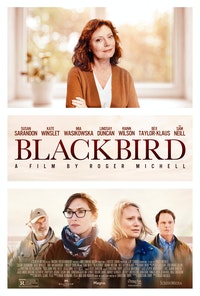
In essence, Lily plans a celebration of life for herself and her family. She summons her nearest and dearest to her Connecticut seashore home over Thanksgiving weekend for what she wants to be a loving, fun-filled gathering that marks one last time for sharing long-standing traditions, heartfelt sentiments and joyful good times. And, at the conclusion of that time together, having said her goodbyes and with Paul’s assistance, she plans to quietly slip away, letting go of her pain and courageously moving on to whatever grand adventure awaits her next.
Lily sees the weekend as a time of great expectations. Yet, despite the best laid plans, it also has the potential for emotionally charged upset and debates about the wisdom of her decision, despite agreements made in advance to keep the mood positive and prevent those issues from arising. Nevertheless, considering what’s at stake and what’s about to transpire – a weepy and trying time fraught with possible legal consequences – there’s a good chance that Lily’s plans may not unfold as hoped for. Add to that the revelation of long-hidden secrets and previously unexpressed emotions, and you’ve got a volatile mix that the well-intentioned patient may not want – and that she may have never seen coming.
Gathering for the weekend are those who have long been in Lily’s life: her elder daughter, Jennifer (Kate Winslet), a privileged, uptight perfectionist who always wants to do the right thing and mercilessly insists that others do the same; her flighty, ungrounded younger daughter, Anna (Mia Wasikowska), whose mysterious disappearances and erratic behavior always keep the family guessing; Jennifer’s husband, Michael (Rainn Wilson), an impish, playful sort who tries to deflect conflict but ultimately has difficulty keeping a lid on his frustration; Anna’s on-again/off-again lesbian partner, Chris (Bex Taylor-Klaus), an old soul in a young body who frequently provides much-needed wisdom in the midst of chaos; Lily’s teenage grandson, Jonathan (Anson Boon), a chip off his free-spirited grandmother’s shoulder; and Lily’s oldest friend from college, Liz (Lindsay Duncan), a kindred spirit who has been with her through all the good times and remains fiercely loyal even in the face of death.
Over the course of the weekend, Lily has an opportunity to spend time with each of those in attendance, saying what’s gone unsaid and seeking to wind up any remaining unfinished business. The attendees also have an opportunity to share time with one another, expressing their feelings and having a chance to address outstanding issues. It’s a time for being spontaneous and uninhibited, such as celebrating an early Christmas, something that Lily realizes she’d be in no shape to properly enjoy if she chose to postpone her self-inflicted demise for a month. And it’s also a time to wax philosophically about issues like taking chances, breaking rules, exercising one’s power of choice, and knowing when to hold on – and to let go.
It’s an experience that proves remarkably rewarding, devastatingly difficult and curatively purging, all at the same time. It gives everyone an opportunity to take away from it exactly what he or she needs. And it’s something that ultimately will touch everyone in ways never thought possible. But, then, none of that would have happened were it not for their willingness to exercise their powers of choice and free will, and isn’t that what life is ultimately all about?
As I have written on a number of occasions, choice and free will are among our most precious birthrights, and we should make every effort to value them, using them judiciously in the ways we lead our lives. However, all too often, we disavow these attributes, claiming that we’re unable to exercise them or, even worse, contending that they don’t even exist. Such practices significantly diminish our lives, leading to existences that are unfulfilling and full of regrets, truly sad outcomes to be sure. Which is why the example Lily sets is so valuable, showing us the importance of our capacities for choice and free will in our lives, even in matters as weighty as how we die.
How we make use of these aspects of our lives depends greatly on our thoughts, beliefs and intents, the cornerstones of the conscious creation process, the philosophy that maintains we draw upon the power of these metaphysical tools in shaping the reality we experience. They drive what happens, framing the nature of our existence and everything within it. And, if we want that experience to be all it can, we had better be careful how we wield that power. Do we want a life that consists of what fulfills us? Or do we capitulate to the dictates of convention, even if it’s not what we want, simply because we’ve allowed ourselves to believe we have no choice in the matter?
Lily has lived her life under the assumption that she’s in the driver’s seat. She has long decided what she wanted. She has followed her heart, even if it’s not the path that others would take or whether they would approve of them. In fact, she’s not about to let trifles like the law dictate how she lives her life – or leaves it behind. To do otherwise in any of these contexts would go against her very nature, her true, authentic self. And she’s not about to stop now, even as her journey approaches its end. As she comes upon what is perhaps the most important event of her life, she’s patently unwilling to go through it on terms that don’t suit her.
As Lily reflects back on her life over the weekend, she reminisces about the many vivid, colorful experiences she’s had during her time on the earthly plane. She speaks fondly of the chances she took, unafraid to bend or break the rules to provide herself with the satisfaction she sought. She relishes her sexual adventures, her enjoyment of art and music, her drug experiences, her times as a wife and mother, and much, much more. Together those elements have woven a rich tapestry of experience, one characterized by experimentation, fulfillment and a willingness to courageously dismiss her fears. This combination has made for a truly heroic journey, one that we should all seek for ourselves during the time we’ve got.
Lily hopes that her decision to stage this final farewell will not only bring her what she wants, but that it will also set an example for those closest to her. She sees it as an opportunity to celebrate the life she has led, an experience she hopes others can appreciate and adopt for themselves to add more joy to their lives. She looks at her daughter Jennifer, for instance, and sees someone who has everything going for her but doesn’t enjoy it because of her neurotic demeanor. Moreover, she’s concerned that Jennifer’s constant worrying and niggling attitude are diminishing her quality of life, an outlook that Lily fears could be rubbing off on her grandson, filling his head with foolish notions and pointless preoccupations at a highly impressionable time in his life. Consequently, Lily doesn’t hesitate to make her opinions known on these fronts, hoping that they’ll have an impact in reshaping the beliefs that Jennifer and Jonathan hold. This becomes pointedly (and hilariously) apparent during the family’s impromptu Christmas gift exchange in which Lily gives each of them presents that poignantly reflect her views, hoping that they’ll make her viewpoint more than abundantly clear.
Of course, if we truly want such a satisfying life for ourselves, we need to discern what makes it worth living and what doesn’t. And, to that end, we need to be able to determine what’s worth keeping and what to release, particularly when it comes to what no longer serves us, even if that means our very physical existence. Lily has a keen sense about this, and, when she comes to realize that her failing physical state is preventing her from living the life she wants, she knows what she needs to do. With no likely prospect of recovery in her future, she consciously decides to avoid the probability that seems unavoidable. She thus embraces beliefs that make such an outcome possible and will subsequently bring it into being.
Despite good intentions and seemingly clear foresight, however, that doesn’t mean everyone involved in this co-creation will whole-heartedly share Lily’s aims. After all, those attending the farewell weekend are about to lose their beloved wife, mother and friend. As supportive as they might want to be, there’s still a sense of hesitancy lingering in their thoughts and beliefs. Can they really go along with Lily’s plan, no matter how much they love her? And, even if they fundamentally disagree with her decision, can they keep up a sufficiently credible front to reassure her otherwise?
Nevertheless, as difficult as all of the foregoing may seem, and even with a vague awareness of others’ doubts, Lily is determined to push ahead. She knows the time has come. But, even with that knowledge, over the course of what’s to be her final holiday celebration, she wants to remain committed to living in the now, fully engaged in the moment and all it has to offer. And that’s wise advice for all of us, especially in light of how preoccupied so many of us are when it comes to the way we live our lives, overly concerned with a past that’s come and gone or a future that has yet to arrive. Lily wants to immerse herself in the warmth and love around her at the time, while simultaneously expressing gratitude for what she has and having no regrets for what she doesn’t. With the end nearing and the time remaining to enjoy her life running out, she wants to make the most of every moment left while she still has the chance, an enviable example to follow.
The right to die is one of those topics that tends to divide society along rigidly defined lives, and that’s very likely going to be the case with a film like “Blackbird.” Director Roger Michell’s touching, thought-provoking, deeply moving drama, an American remake of the Danish offering “Silent Heart” (“Stille hjerte”) (2014), examines the dynamics within a family wrestling with this notion while honestly and lovingly addressing the heartfelt feelings associated with such a profound and intentional choice. While a few story elements don’t work quite as well as they probably could have, most of the narrative is handled sensitively and realistically, all brought to life by the superb performances of its stellar ensemble, particularly Sarandon, Neill, Wasikowska and Duncan. This release will obviously disturb some viewers, but others will be deeply moved – and fervently reminded that what we do with our lives (especially in the now) is up to us and no one else’s business. The film is available for online streaming and in limited theatrical release.
It should be noted that “Blackbird” has been the victim of some unfair criticism, that it’s yet another manipulative movie about a dying protagonist, an admittedly overworked cinematic theme. However, characterizing “Blackbird” as a picture about a dying protagonist oversimplifies what it’s seeking to address. It’s not a story about a character dying but about a character’s right to die, a topic that needs to be examined and debated much more fully than it has been. With the exception of a few films like “Whose Life Is It Anyway?” (1981) and the made-for-cable offering “You Don’t Know Jack” (2010), the right to die has been something of a taboo subject. But, as we should all be aware, death is indeed part of life, and how we approach it shouldn’t be a subject that’s hushed up or only spoken about in whispers in dark corners. We should all have the right to determine the conditions of our departure if we choose to do so, and pictures like this help to draw the subject into sharp focus. They should be applauded for their candor and forthrightness in helping to make it possible for us to move on to our own next grand adventures in the ways we seek.
As we approach death, a time when we often find ourselves at our most vulnerable, we may well feel disempowered and lacking in self-worth. Those conditions are bad enough in themselves, but, when we add to that indignities that magnify the state we’re in, we might feel even more despairing, compounding the woeful circumstances we’re already experiencing. Is that how we really want to spend our last days? Or do we want to create conditions that will uplift us and allow us to make peace with ourselves during such a trying time? Achieving such an outcome may push us to take charge of the situation, forcing us to be strong and resolute at a time when doing so could be fundamentally difficult. But, if that’s the price we must pay, then we must steel our resolve to realize the fulfillment we seek, no matter what others may think. It’s our life that’s at stake, and we have a fundamental right to live it the way we desire, even (indeed especially) in its precious final moments.
Copyright © 2020, by Brent Marchant. All rights reserved.
Monday, September 21, 2020
Check Out The Cinema Scribe
Tune in for the latest Cinema Scribe segment on Bring Me 2 Life Radio on its new day, Tuesday, September 22, at 2 pm ET, available by clicking here. And, if you don't hear the show live, catch it later on demand.

Friday, September 18, 2020
This Week in Movies with Meaning
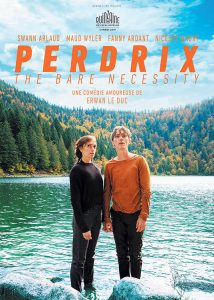
Reviews of "Mr. Soul!", "Eternal Beauty" and "The Bare Necessity," as well as two film festival previews, are all in the latest Movies with Meaning post on the web site of The Good Media Network, available by clicking here. 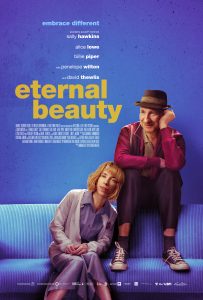


Tune in for the return of Movies with Meaning on The Good Media Network's Frankiesense & More broadcast, now in its new video format on YouTube, available by clicking here, or by visiting the network's Facebook video page. Join host Frankie Picasso and yours truly as we discuss the state of the film industry and review 8 new films. Tune in for some lively movie talk!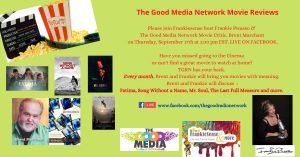




Thursday, September 17, 2020
‘Eternal Beauty’ sheds light on the search for ‘normal’
“Eternal Beauty” (2019 production, 2020 release). Cast: Sally Hawkins, David Thewlis, Penelope Wilton, Billie Piper, Morfydd Clark, Alice Lowe, Paul Hilton, Spencer Deere, Robert Pugh, Natalie O’Neill, Elysia Welch, Boyd Clack, Rita Bernard-Shaw, Robert Aramayo (voice), Nicholas Lumley. Director: Craig Roberts. Screenplay: Craig Roberts. Web site. Trailer.
Throughout our lives, we’re often bombarded by statements, observations and criticisms associated with what constitutes “normal.” But what is that exactly? It’s often considered something ordinary and everyday, yet it frequently gets elevated to a standard that’s essentially unattainable, prompting us to wonder what good it would be then. Finding our way through such a perplexing maze can become a challenge even under the best of conditions, but it’s especially frustrating for someone with special circumstances, as illustrated in the engaging new character study, “Eternal Beauty.”
Life can be difficult when we don’t know what to make of it. Just ask Jane (Sally Hawkins), a middle-aged Welsh woman who drifts through life trying to figure it out. That’s a challenge, given that she suffers from schizophrenia and doesn’t know what to grab onto – or even how to do so. As a consequence, she aimlessly ambles from situation to situation, some seemingly “normal,” some delightfully humorous and others dangerously dark. She’s unable to discern which set of circumstances is “right,” either for her personally or for what she believes constitutes the greater scheme of things. And, as she wanders through this uncertain and sometimes-surreal landscape, her frustration with not being able to determine how to handle herself or the direction of her life becomes painfully obvious.
Jane’s circumstances represent more than an inability to cope; that comes with the territory of a larger issue – not being able to fundamentally figure out how life works or what’s best for her. Because of that, she stumbles through her daily existence, looking for the right fit. One could call this an extreme exercise in trial and error, but, when nothing seems to work, onlookers view Jane’s routine with a mixture of sadness, pity, anger and disdain, depending on who’s doing the observing. Their reactions and recommendations often complicate matters, as they’re largely unable to offer helpful advice. They sometimes even make matters worse by spewing uninformed criticism based on a lack of understanding of the underlying issue that Jane is experiencing, making her circumstances that much worse as she attempts to sort out that input in addition to everything else.
[caption id="attachment_11757" align="aligncenter" width="350"] Jane (Sally Hawkins), a middle-aged schizophrenic patient, seeks to figure out how life works in the new character study, “Eternal Beauty,” now available for first-run online streaming. Photo courtesy of Samuel Goldwyn Films.[/caption]
Jane’s existence is characterized by incidents and phenomena whose verifiability is sometimes dubious at best. She’s frequently beset by what appear to be hallucinations. She often makes statements and expresses opinions rooted in what seems to be questionable information. And she routinely receives phone calls from a mystery man (Robert Aramayo) who comes across as a possible past lover seeking reconciliation. It’s indeed difficult to verify how much of this is “real,” be it for everyone or just for her. The doubt cast by such unsubstantiated manifestations certainly raises issues for Jane, as well as those who care about her well-being.
Those standing by and watching Jane as she attempts to live her life can’t help but wonder how she ended up in such a state. Some, like her sister, Alice (Alice Lowe), and her doting father, Dennis (Robert Pugh), desperately want to understand and help her sort matters out. Others, such as her mother, Vivian (Penelope Wilton), her brother-in-law, Tony (Paul Hilton), and her other sister, Nicola (Billie Piper), are surprisingly hostile, demonstrating little patience for her erratic, unpredictable behavior and her cryptic, sometimes-caustic statements. And others, such as her psychiatrist (Boyd Clack), perfunctorily follow established, standardized protocols, regardless of whether they’re effective or suitable for Jane’s needs. But all of those responses, to one degree or another, don’t get to the bottom of Jane’s circumstances – or answer the fundamental underlying question raised in this paragraph’s opening sentence.
Some clues are offered in flashbacks to Jane’s youth, when her younger self (Morfydd Clark) suffered a series of setbacks – most notably being left at the altar and a failed effort at competing in a beauty pageant. The emotional devastation she suffered was truly profound. But, the closer one looks, the more one also sees that the kinds of responses to her behavior that are routinely thrust upon her now were present in her past as well. The impatience and intolerance typical of Vivian and Nicola, for example, are apparent in both of their younger selves; the behavior of Jane’s mother and her sister’s younger self (Natalie O’Neill) at times was downright cruel and, on occasion, nearly as unpredictably volatile as that of their target, suggesting that this mental health condition may run in the family. At the same time, Jane was not without well-meaning allies, again her father and Alice’s younger self (Elysia Welch), but their attempts at helping her then were about on par as they are now.
[caption id="attachment_11758" align="aligncenter" width="350"]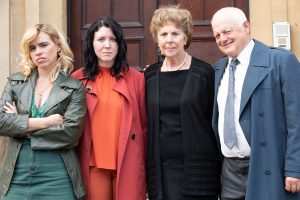 A family with a schizophrenic daughter/sibling seeks to provide help with her condition but with varying degrees of success, as sisters Nicola (Billie Piper, left) and Alice (Alice Lowe, second from left) and parents Vivian (Penelope Wilton, second from right) and Dennis (Robert Pugh, right) discover for themselves in the new character study, “Eternal Beauty.” Photo courtesy of Samuel Goldwyn Films.[/caption]
However, even though these conditions from the past may have contributed to the development of Jane’s circumstances as an adult, they don’t appear to tell the whole story, and that’s apparent through her present behavior and her ostensible inability to figure out how to sort everything out. As she seeks to determine what circumstances constitute “normal” for her, whether or not she can find love (as she attempts to do in a wildly unpredictable relationship with a fellow mental patient and would-be aging rock musician, Mike (David Thewlis)) and how to find a suitable semblance of happiness in her life, Jane ponders the possibilities, acting upon them with varying degrees of success. And, through it all, she continues to deal with the assistance and recommendations offered by others, regardless of whether they offer any meaningful help.
To her credit, Jane seems to possess a special wisdom that those unafflicted with mental health issues appear to lack. In part, it accounts for some of her irritatingly acerbic remarks (and clearly explains the defensive reactions that others sometimes have to her spot-on observations). But, if Jane herself would only come to realize that she has this gift, it might help her to turn things around in her life. It just might provide her with answers to the core questions she’s unable to address by attempting to employ more conventional means, the kind the rest of us ordinarily rely on but that are wholly inadequate for her. And that could set her on a path to the satisfaction and fulfillment that have eluded her all of her life.
The overarching question in this story is, “What constitutes ‘normal’?” Is there some kind of standard that applies to everyone? And, if so, why does Jane have so much trouble conforming to it? Why aren’t the suggestions and treatments offered by others doing any good? Wouldn’t that suggest, then, that the one-size-fits-all notion doesn’t work? Is it thus possible that a more variable, personally relative standard is more accurate, more realistic?
[caption id="attachment_11759" align="aligncenter" width="350"]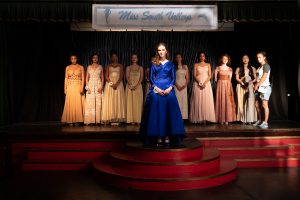 The younger self of middle-aged schizophrenic patient Jane (Morfydd Clark, center) competes in a beauty pageant, one of a number of incidents that contributed to the onset of her condition, in the new character study, “Eternal Beauty.” Photo courtesy of Samuel Goldwyn Films.[/caption]
For decades now, the principle that has come front and center in the metaphysical/New Thought community is the notion that we each create our own reality. Whether this concept is couched in terms of conscious creation, the law of attraction or even a simple belief in the idea that “life is what you make of it,” the underlying mechanics behind it are the same – that we draw upon the power of our thoughts, beliefs and intents in shaping the existence we experience, regardless of the form that reality ultimately takes, for better or worse. Indeed, if it’s something that can be employed to manifest an existence considered “normal” or “mainstream,” then couldn’t the same be said to materialize an outcome that’s outside of those parameters, one that’s “different” or “alternative”? Logically it would seem so, and, if that’s the case, then Jane’s experience would appear to offer an example of that notion at work.
Of course, given that Jane seems to have difficulty relating to the people and circumstances around her, one might legitimately ask, “Why would anyone want to create such an existence?” The challenges involved in that might be seen as overly daunting. Onlookers may view it as sad or tragic. And the creator of such a reality may have to endure endless frustration due to an inability to relate to his or her own circumstances in comparison to everyone else. It could be seen as a case of trying to squeeze the proverbial square peg into a round hole. Yet here’s Jane doing just that, so the question once again becomes, “Why?”
The underlying reasons for why we create the existence we do is, of course, no one’s business but our own. In many cases like this, it often involves materializing the conditions necessary to experience certain life lessons, no matter how unconventional they may be. It’s all part of the growth and development of our greater selves, to learn things that can only be achieved by undergoing such alternative life paths. Admittedly, this may not be the most ideal course, but, if it gets us what we want and need, then it naturally follows we’d pursue these circumstances to achieve the desired results.
[caption id="attachment_11760" align="aligncenter" width="350"]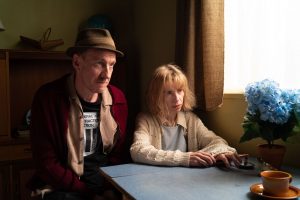 Middle-aged schizophrenic patient Jane (Sally Hawkins, right) tries her hand at romance with an aging would-be rock musician, Mike (David Thewlis, left), in director Craig Roberts’s second feature, “Eternal Beauty.” Photo courtesy of Samuel Goldwyn Films.[/caption]
In line with that, such experiences make clear that alternative approaches to life like this are just as viable and valid as those considered more conventional. Strange as they may seem to some of us, they may be perceived as perfectly suitable to those living through them. In fact, those traversing these different paths may look upon what the rest of us experience as just as “inadequate.” Experiencers of the alternative may indeed find that their realities enable them to “get into their oils,” a Welsh expression used routinely in the film that roughly means “finding oneself in one’s element,” no matter what that may constitute. As Jane searches for her “oils,” she may discover that an alternative lifestyle that those around her might readily eschew proves highly suitable for her, even if she’s alone in her convictions.
In presenting this view, the film thus provides us with a new outlook – indeed, perhaps even a new understanding – of what someone like Jane is genuinely experiencing. It suggests that she’s not actually enduring a mental illness but that she’s attempting to navigate her way through an alternate approach to reality creation that differs markedly from those around her. Some might be quick to contend that the setbacks she underwent in her youth and, potentially, the impact of family genetics on her physical being may offer “proof” of her “disease.” And it’s entirely possible that these influences may have played a role in helping to shape what she’s going through. Yet they may have also manifested as part of the larger experience she’s now attempting to maneuver through, that they’ve served as “tools” to help bring about the ends she seeks. So, with that in mind, Jane’s experience may actually prove valuable in helping us to better appreciate what those in her condition are actually undergoing and why – and to help us find more effective ways to interact with them that don’t disparage or mischaracterize them, their circumstances or what they’re ultimately attempting to achieve for themselves. This could shed a whole new light on them, us and the nature of reality itself.
Based loosely on the fact-based experiences of a woman known as “Calamity Jane,” this intense character study depicts a protagonist struggling to cope with her existence in an engaging and honest manner but without ever passing judgment on her life and behavior. The film never pleas for pity nor seeks to ridicule, but it quietly encourages us to consider possibilities that may have never crossed our minds before, and it does so more by “showing” than “telling” in its efforts to shape our views and perspectives. Despite a meandering opening segment – one that’s designed to drive home the relentless frustration Jane experiences (but that nevertheless still goes on a little too long) – the picture otherwise capably presents a candid depiction of what we call mental illness, without ever resorting to clichés, excesses or false impressions. Hawkins turns in yet another superb performance as the troubled protagonist, with fine support from Thewlis, Wilton and Clark. Director Craig Roberts’s second feature, now available for online streaming, represents an ambitious effort with a profound underlying message, one with the potential to radically reshape our outlooks on existence, mental well-being and what we consider “normal.”
Understanding the nature of our existence is often a life-long challenge. We often like to think we have it figured out, only to have our assessments torpedoed. And that process can be made all the more frustrating by continually examining it through the lens of what’s supposedly “normal.” We routinely second-guess ourselves, believing we must somehow hold ourselves up to some kind of established (though ultimately arbitrary) standard, only to discover (over and over) that “normal” is a relative quality for each of us, based on our beliefs and what we use them to create in our lives. Maybe we’d all be a lot better off if we just skipped ahead to that notion in the first place, holding to it, no matter how much each of our respective views of what constitutes “normal” differ from one another. We might well find that doing so leaves us a lot happier in the end. And isn’t that what “normal” is ultimately all about?
Copyright © 2020, by Brent Marchant. All rights reserved.
Subscribe to:
Posts (Atom)