It’s that time of year again, the release of my lists of best and worst films of the year.
Thankfully, 2022 was a better year for movies than either of 2020 or 2021 (pandemic considerations notwithstanding). I was pleased to have screened a wealth of fine pictures in theaters, at festivals and online. However, despite that, 2022 still had more than its share of overrated, overhyped releases that, in my opinion, were erroneously labeled “masterpieces” (some of which made their way onto my “worst” list). With that said, though, I’d like to start out on a more positive note, featuring my “best” list in this blog, the first of two devoted to addressing my assessments of the year’s cinematic offerings. But don’t worry – that “worst” list will be along soon enough.
In the interest of full disclosure, I did not see every movie released in 2022 (who realistically could?), but I have seen nearly all of the major contenders (although there are a few I’ve yet to see given that they have not gone into widespread release as yet). In addition, as per custom, this blog and the one to soon follow do not address documentary offerings; films in that genre will be covered in a separate blog entry in the near future.
So, with that said, here are my Top 10 films of 2022, followed by my list of 10 honorable mentions and a list of noteworthy offerings.
Top 10 Countdown
10. “Breaking” (f/k/a “892”) (USA) Web site Trailer Blog
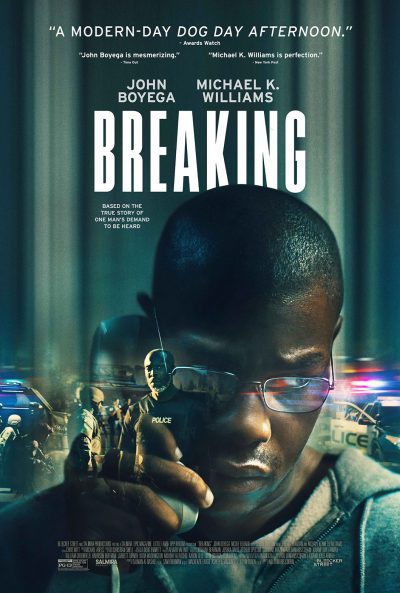
Justice ignored is indeed justice denied. What’s more, it’s an open invitation to things easily getting out of hand as the tension behind this is dialed up to an exaggerated level. That’s precisely what happens in this taut, fact-based drama about Iraq War veteran Brian Brown-Easley (John Boyega), whose VA disability benefits got lost in the bureaucracy and left him homeless and desperate – so much so that he took drastic measures to inform the public about his situation and that of many of his peers. Director Abi Damaris Corbin’s second feature outing (f/k/a “892”), reminiscent of the classic epic “Dog Day Afternoon” (1975), is a riveting, albeit disturbing, watch from start to finish, casting a long shadow of shame on those who lack the decency and humanity to care for those who made the effort to care for us. The picture’s stellar ensemble cast, which captured the 2022 Sundance Film Festival Award in this category, is superb across the board, featuring the best portrayal ever turned in by Boyega (who has come a long way from his “Star Wars” outings) and an excellent performance by the late Michael K. Williams in one of his final roles. This Sundance Dramatic Grand Jury Prize nominee is by no means an easy film to screen, but it’s one that anyone interested in seeing justice served should watch – and take action about to see that it’s not denied again.
9. “Emily the Criminal” (USA) Web site Trailer Blog
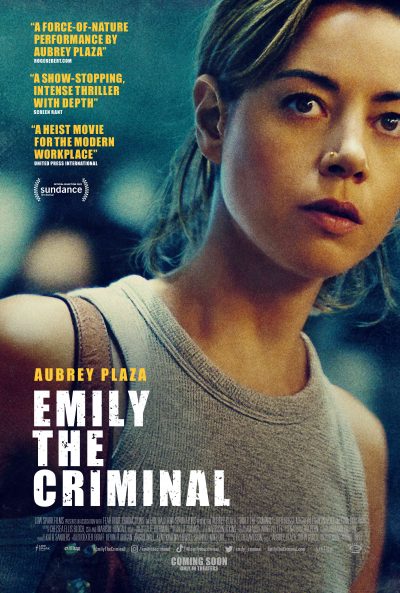
Given the level of graft and corruption in contemporary society, it often seems like the only way to get ahead is to cheat, even if it means breaking the law. The age-old wisdom of working hard, playing by the rules and being fair seems “quaint” to many, especially among many of today’s young adults, who feel as though they’ve been saddled with insurmountable debt from dubious lending practices like those associated with burdening student loans. But what is one to do when the old rules simply don’t work and a new solution is needed to break out of financial bondage? Those are the questions raised in this taut new thriller about a young woman (Aubrey Plaza) torn between following her principles and being practical in the face of staggering odds working against her. Writer-director John Patton Ford’s debut feature addresses these issues head-on in a straight-up drama about what desperation can prompt us to do when we feel we’re running out of conventional options. The film provides a superb showcase for Independent Spirit Award nominee Plaza as the beleaguered protagonist, who finds it surprisingly easy to turn to what many older viewers might see as a series of questionable and unethical choices, despite the fact that she often sees no other way out of her circumstances – and the troubling path that they set her on for the future. Some may see some of the narrative’s developments as a little far-fetched, but one simultaneously can’t help but wonder what would we do if we found ourselves in the title character’s shoes. This surprisingly thoughtful offering dressed up in a somewhat conventional crime drama, the recipient of four Independent Spirit Award nominations (including best first feature), makes for an intriguing fusion of genres that will have you on the edge of your seat for its economical and always-engaging 1:37:00 runtime. Don’t sell this one short; it may not be widely known, but it’s well worth a look.
8. “Triangle of Sadness” (Sweden/France/UK/Germany/Turkey/Greece) Web site Trailer Blog

Is turnabout fair play? That’s a good question, one that’s put to the test in this outrageously hilarious sociopolitical satire from writer-director Ruben Östlund. Drawing upon themes explored in previous works like “Force Majeure” (2014) and “The Square” (2017), the filmmaker explores what happens when the über-privileged passengers aboard a luxury yacht find the tables turned on them, placing them in circumstances where those they once callously and willfully disrespected suddenly find themselves having an undeniable upper hand. But will those who were once oppressed draw from their unfortunate experiences and treat the nouveau downtrodden with dignity and compassion, or will they morph into newly emerging versions of those they previously spitefully detested? In addition to matters of money and power, the characters in this sidesplitting farce also wrestle with issues related to gender, physical beauty and social influence and how they wield their influence in these areas in their relationships with others, including both peers and those of different class status. The symbolism employed to convey these notions can be a little heavy-handed at times, but it’s always decidedly clever in its implementation, making the picture’s message readily known but without being too on the nose. Also, some of the bits – as funny as they are – occasionally go on a little too long, a quality easily apparent given the film’s unusually protracted runtime of 2:27:00, uncharacteristically long for a comedy. Nevertheless, so much of what takes place here works so well that it’s truly hard to find fault with the Palme d’Or winner from the 2022 Cannes Film Festival (the event’s highest honor), as well as the multiple nominations it received in the Golden Globe, Critics Choice, BAFTA and Academy Award competitions, including an Oscar nod for best picture. This is the kind of film that one might not suspect to be quite so uproarious upon entering the theater, but it definitely delivers the goods, much in the same way that the Oscar-winning offering “Parasite” (2019) did. And, if you found that funny, you’re sure to find more of the same here.
7. “After Yang” (USA) Web site Trailer Blog
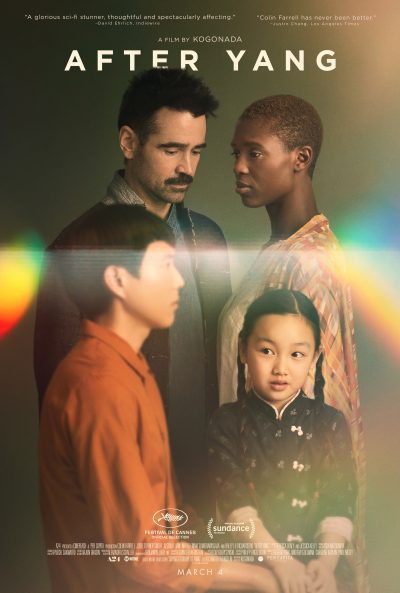
How often does a movie seek to address the big questions of life? Well, if you’re the filmmaker Kogonada, the answer to that question would appear to be “every time.” Like his previous beautiful and ambitious release “Columbus” (2017), the director has followed up with an even more beautiful and ambitious project in “After Yang.” Based on the short story “Saying Goodbye to Yang,” this thoughtful and emotive cinematic meditation follows the efforts of a San Francisco couple (Colin Farrell, Jodie Turner-Smith) of the future in trying to save the family’s malfunctioning trans-sapien teenage “son,” Yang (Justin H. Min), an AI who was brought into the household to act as a cultural mentor and role model to their young adopted Chinese daughter, Mika (Malea Emma Tjandrawidjaja). But, as those valiant attempts to save Yang progress, parents Jake and Kyra begin to discover that there is more to their surrogate child than they ever realized, raising intriguing questions about what it means to be human (or even sentient for that matter). Countless recollections bring those considerations to the fore and give both characters and viewers alike pause to examine and reevaluate outlooks that may have once been rigid but can now be looked upon in a more fluid light. With fine performances all around, stupendously gorgeous cinematography (a Kogonada hallmark) and a lovely background score, “After Yang” evokes a profound array of moods, from joyful to sad to reflective, leaving one supremely touched by the experience. These are qualities that earned the film two Independent Spirit Award nominations, a Cannes Film Festival Un Certain Regard Award nod and the Sundance Film Festival Alfred P. Sloan Feature Film Prize. There are occasional pacing issues, and a few of the ideas raised are left less than resolved (most likely intentionally), but overall this is a truly stirring experience, one whose impact will linger long after the lights come up.
6. “Scarborough” (Canada) Web site Trailer
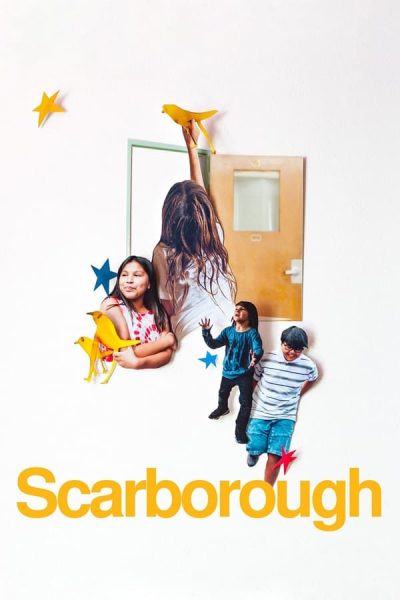
Living life on the edge may not breed much hope for the future, yet it’s amazing how often those who struggle under such conditions manage to hold out expectations for its arrival. Such is the message of this incredibly stirring release about the lives of a group of occupants of the Toronto neighborhood of Scarborough, a low-income section of the city that’s home to many immigrant and working class residents. This often-gritty, sometimes-heartwarming, occasionally heartbreaking coming of age tale focuses on the lives of four kids and their parents, all of whom become acquainted through their interaction at a literacy center run by a compassionate facilitator (Aliya Kanani) who does her best to provide as much assistance and support as her resources will allow. The result is a realistic but supremely touching film that exudes a spirit and magic of its own, reaching out to viewers, drawing them in and never letting them go until the lights come up. That’s quite an accomplishment for a picture with a runtime of almost 2:20:00, one that moves by at a steady pace that never sags or grows tiresome. Directors Shasha Nakhai and Rich Williamson have turned out a truly remarkable debut offering deserving of its eight 2021 Canadian Screen Awards (on 11 total nominations), including best picture, first feature, actor, supporting actress, director, adapted screenplay, casting and sound editing. This was without a doubt my favorite offering from the Milwaukee Film Festival, a picture truly deserving of a general release for the hope it instills even when things are at their bleakest.
5. “The Inspection” (USA) Web site Trailer Blog
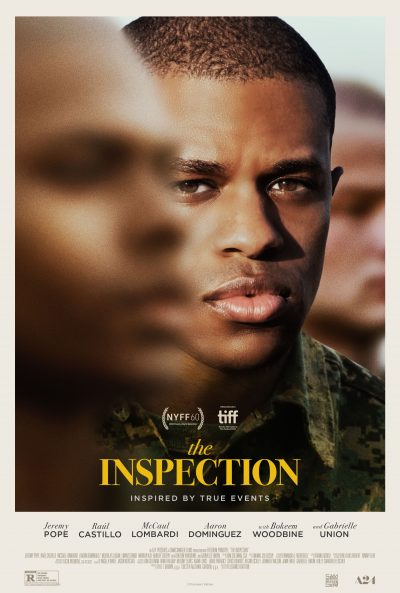
Finding one’s family may not always occur where one most likely expects it. For many of us, that typically comes with our blood relations. But sometimes circumstances arise that prevent that from happening, as is the case for a twentysomething gay Black man (Jeremy Pope) who has been on his own since age 16 when his close-minded single mother (Gabrielle Union) forced him out onto the streets to fend for himself. And, after years of bouncing around aimlessly, he decides to try getting his act together by joining the Marines, a seemingly unlikely choice but one that unwittingly helps him find what he’s been looking for all along. Writer-director Elegance Bratton’s fact-based debut narrative feature tells a compelling story of acceptance among those from whom it might least be expected and its absence where one would think it should most likely be present. The film’s superb Independent Spirit Award-nominated performances by Pope and Union, along with fine supporting portrayals turned in by other members of the excellent ensemble cast (most notably Bokeem Woodbine and Raúl Castillo), truly give this picture its razor-sharp edge and its touching moments of heartfelt compassion, an unusual mix of elements in the same story, to be sure. In several regards, “The Inspection” also echoes groundbreaking themes first addressed in “Moonlight” (2016), though with slightly different but nevertheless equal significance. Admittedly, the production could probably benefit from a little more back story development and slightly brisker pacing in the first half-hour, but those are truly minor shortcomings in the greater scheme of things where this film is concerned. For its efforts, the production earned three Independent Spirit Award nominations (including best first feature), a Golden Globe Award nod for Pope’s lead actor performance and recognition from the National Board of Review as one of 2022’s Top 10 Independent Films. If this film is any indication of what we can expect in future works from this director, I can’t wait to see what else he comes up with next.
4. “Living” (UK/Japan/Sweden) Web site Trailer Blog
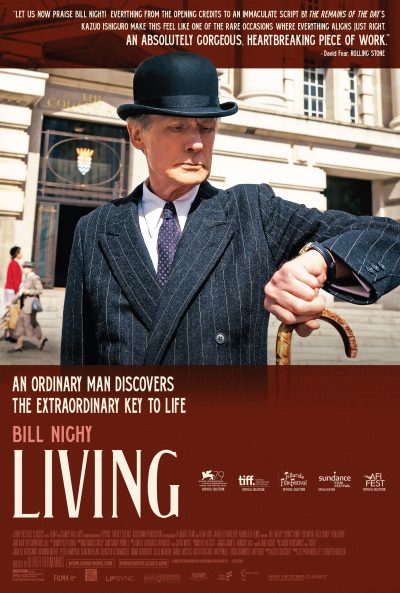
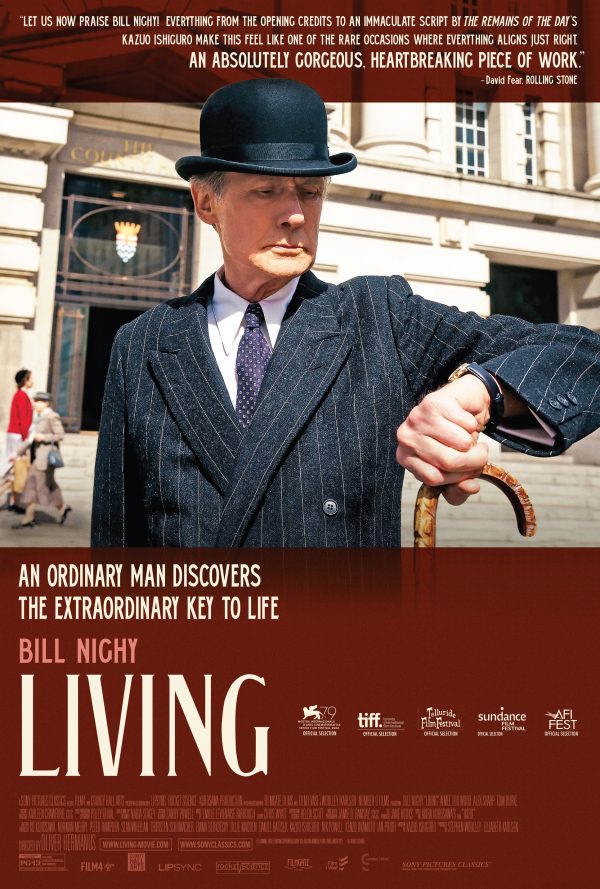
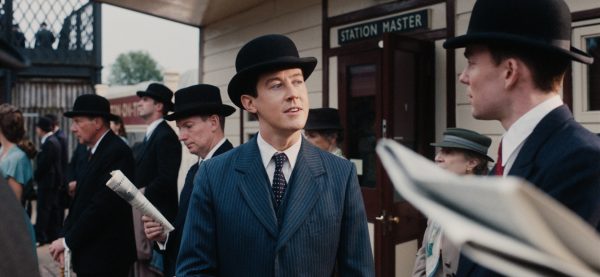
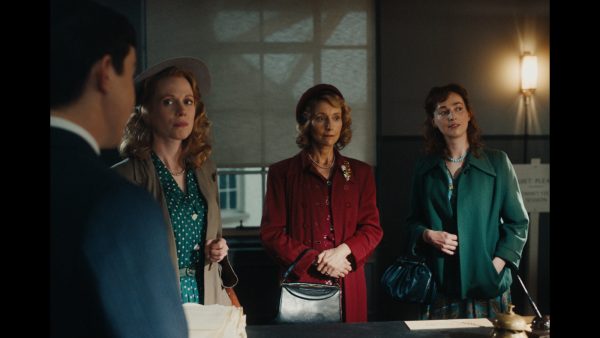
Based on the film “Ikiru” (1952) by acclaimed Japanese director Akira Kurosawa, this English adaptation of that work by filmmaker Oliver Hermanus faithfully re-creates the touching story presented in that picture in a setting a world apart from the original. When an aging button-down bureaucrat (Bill Nighy) who has spent an unimaginative life following rules, regulations and protocols receives a terminal cancer diagnosis, he quietly desires to make the most of what time he has left. But there’s just one problem: Having spent a lifetime playing it safe, he doesn’t know how to enjoy his existence or imbue it with a meaningful sense of fulfillment. He experiments with different means to bring this about, essentially leaving his daily routine behind and worrying his family and colleagues that he has mysteriously abandoned the routine he has long carried out with clocklike precision and predictability. But, no matter what “radical” steps he takes, he still feels unsatisfied. What will it take to bring about that result? That’s what this earnest searcher looks for as time is rapidly running out. While the storytelling style here may initially seem somewhat scattered, episodic and unconventional, there comes a turning point where the reasons for this become apparent, leading viewers to a new level of understanding in what proves to be a truly moving and heartfelt final act, an approach often used by Kurosawa and lovingly reproduced in this fitting cinematic homage. This is the kind of movie that will appeal most to those of a certain age (i.e., those approaching their own finish lines), and it’s one that will almost certainly grow on viewers the further they get into it, even if it doesn’t garner widespread general appeal. The standout aspect of this production, of course, is Nighy’s stellar Oscar-nominated performance, one of many awards season accolades that has, thankfully, finally yielded ample, well-deserved recognition for this long-overlooked actor. It’s a portrayal backed by a fine supporting ensemble cast, gorgeous cinematography, and the excellent adapted screenplay of Kazuo Ishiguro, who previously distinguished himself in such works as “The Remains of the Day” (1993) and “Never Let Me Go” (2010) and has captured three awards season nominations for this script. And don’t be surprised if this BAFTA Award nominee for best British film and National Board of Review Top 10 Independent Film award winner evokes a few tears along the way, a sure sign that the inspiring and emotive message of this offering is truly getting through, successfully presenting audiences with insights into the true meaning of living.
3. “Till” (USA) Web site Trailer Blog
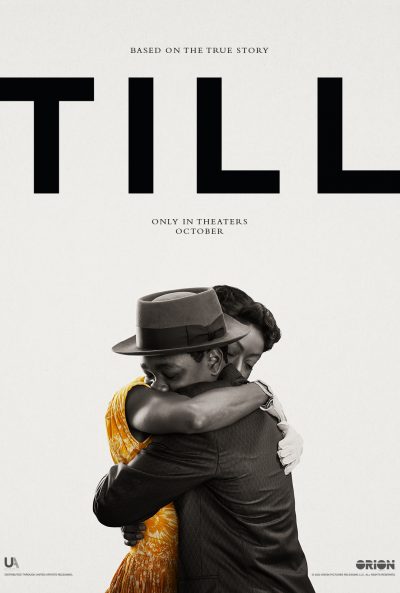
Rarely does a film come along that captures and fuses feelings of outrage and heartache as effectively as “Till” does. Writer-director Chinonye Chukwu’s third feature outing breaks things wide open in her compelling take on the tragedy of African-American Chicago teenager Emmett Till (Jalyn Hall), who was lynched and brutally murdered while visiting relatives in Mississippi in 1955 for whistling at a White woman. This fact-based offering vividly depicts the brutality and injustice of what happened (faint of heart viewers be warned) while simultaneously chronicling the efforts of Till’s courageous mother, Mamie (Danielle Deadwyler), to protect and champion the civil rights of minorities. As one of the seminal moments in the struggle to protect those who were most vulnerable at a time when many in society were content to otherwise look the other way, this release shows how a fiercely loving and devoted mother forced the complacent to see what was really happening – and creating a grass roots groundswell for change in the process. The film gets just about everything right (save for a musical score that doesn’t quite seem to align with the subject matter), including in the superb period piece production values, writing that fittingly captures the mood and themes of this story, and, most notably, the performances, particularly those of Deadwyler, Hall, Whoopi Goldberg and other cast members. Regrettably, this National Board of Review Top 10 award winner has not received nearly the amount of recognition that it deserves, especially for Deadwyler, whose National Board of Review Breakthrough Performance Award and best actress nominations in the BAFTA, Screen Actors Guild and Critics Choice Award contests can’t make up for her shameful snub for an Oscar nomination in the same category. Nevertheless, this is a truly important film, one that genuinely lives up to all of its billing and as one of the best offerings of 2022. By all means, please see this one.
2. “The Fabelmans” (USA) Web site Trailer Blog
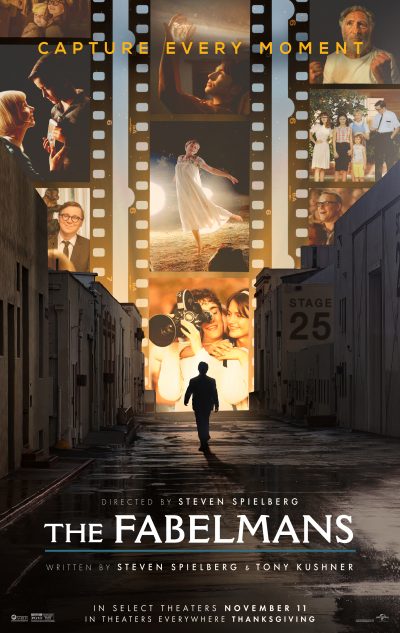
Writer-director Steven Spielberg’s less-than-veiled autobiographical coming of age story is easily his most personal film and one of his best efforts in recent years. In a production where he faithfully follows the storyline of his own youth in which just about the only thing that has been changed is the characters’ names, he chronicles the upbringing of an aspiring young auteur (National Board of Review Breakthrough Performance Award winner Gabriel LaBelle) who developed a passion for filmmaking when virtually everyone else around him thought he was just aggressively pursuing a hobby. In telling this story, Spielberg examines the many aspects of life that touched him and influenced his work, such as the support of his concert pianist-turned-reluctant-housewife mother (Oscar nominee Michelle Williams) and his onetime-showman Uncle Boris (Oscar nominee Judd Hirsch), the impact of antisemitism as the only Jewish kid in the neighborhood, and the strife of marital discord between his mother and father (Paul Dano) and an interloping family best friend (Seth Rogen). It’s also one of the best pictures about moviemaking that I’ve ever seen, rivaling works like François Truffaut’s “Day for Night” (1973). As with many of Spielberg’s later films, this one, too, is a tad long in spots and occasionally somewhat episodic. But the polished storytelling and fine performances of the cast (especially Williams and an all-too-brief appearance by Hirsch) allow this effort to shine as one of the best releases of 2022, the recipient of seven Academy Award nods (including best picture), as well as a boatload of nominations and honors in the Golden Globe, Critics Choice, Screen Actors Guild, BAFTA and National Board of Review contests. As movies go, this is one of the best at illustrating how dreams really can come true.
1. “The Whale” (USA) Web site Trailer Blog
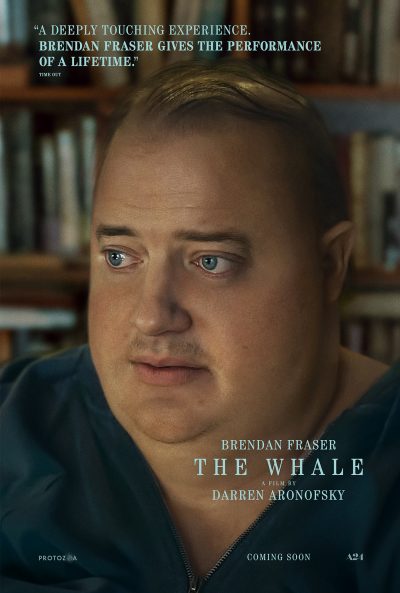
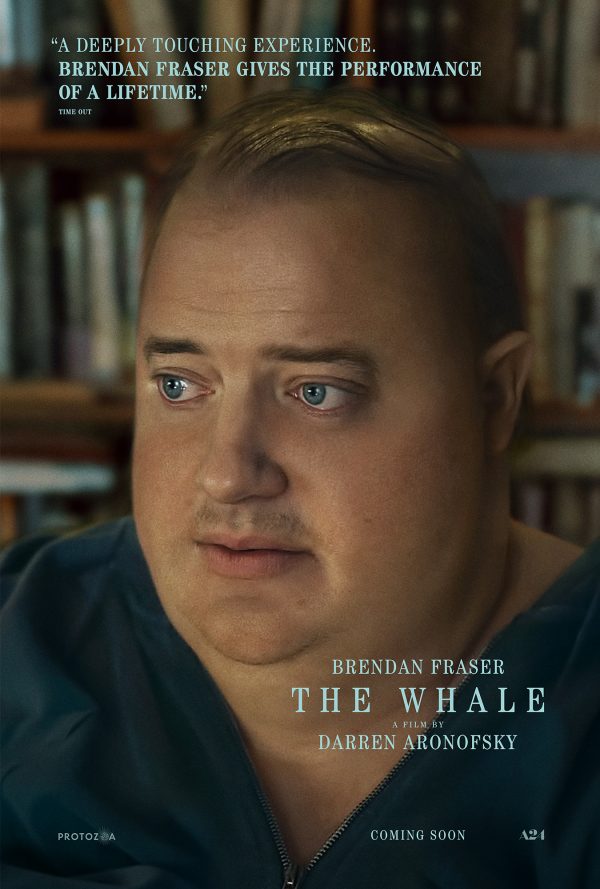
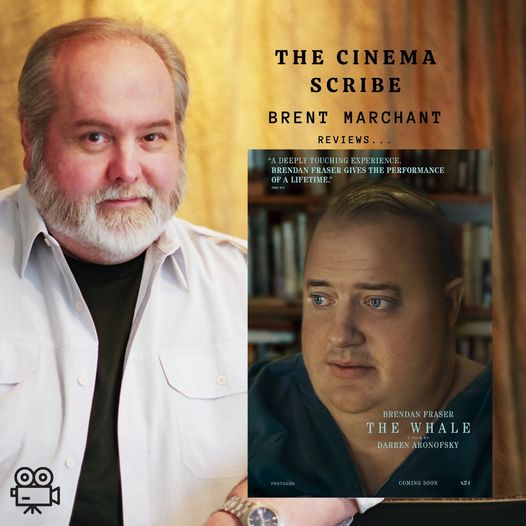
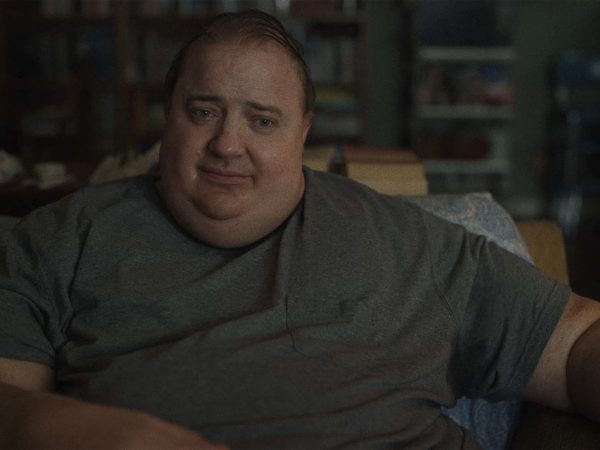
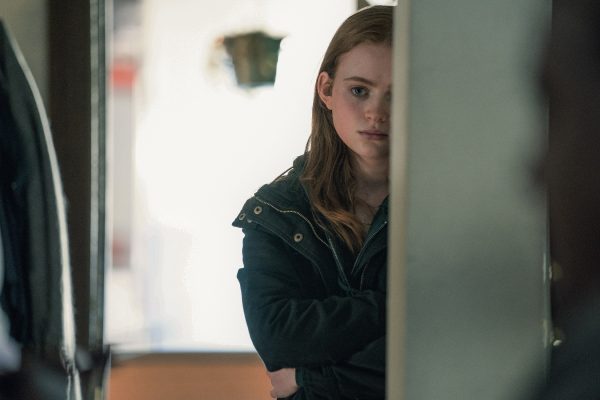
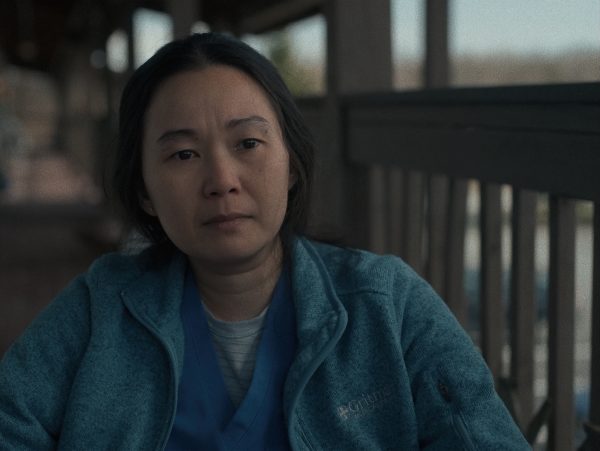
The old saying about glass houses and not throwing stones seems fittingly apropos here, both for the characters in this story and the ever-so-cynical critics who have so unfairly and recklessly flung their condescending bile-laden assessments toward this offering. Director Darren Aronofsky’s latest tells the heartbreaking and heartwarming tale of a 600-pound gay man (Brendan Fraser) whose health is quickly failing and now struggles to make up for past misgivings and to work out long-lingering self-worth issues during what time he has left, neither of which come easily and often seem insurmountable. At the same time, however, we also see a character who frequently and genuinely manages to see the best in people, despite having often been the object of cruel, unapologetic ridicule while being needlessly hard on himself. It’s an uplifting outlook that few of us are able to imagine, let alone sustain, but, having been on the receiving end of both the good and the bad in others, he chooses to look for the best and to believe that such a benevolent attitude is our natural tendency, despite seeming evidence to the contrary. Now if he could only come to embrace the same view for himself. This thoughtful, insightful picture gives us much to contemplate (something many mercilessly ignorant, shallow-minded reviewers seem to have failed to grasp), reminding us to make the most of our beliefs during the short time we have in our lives. Admittedly, there are some segments in which the dialogue is somewhat awkward and stilted (even though the rationale behind this is ultimately revealed, even if a bit odd when initially introduced). But this modest shortcoming is more than made up for by the film’s superb ensemble cast (arguably the best I’ve seen this year), with stellar performances by Fraser (truly deserving of this year’s best actor honors) and a fine crew of supporting players, including Sadie Sink, Hong Chau, Samantha Morton and Ty Simpkins. I truly feel sorry for those who have missed the message behind this excellent offering, but, then, if they’ve never walked in the shoes of someone like the protagonist, I suppose that’s understandable. For those who have been there, though (like myself), this is a moving tale that easily draws out the compassion in others – provided they have it to give in the first place (something I have to wonder about given some of the reviews I’ve read). If it’s something that the cynics have never had to contend with before, then maybe they’ll learn something from watching this release. Thankfully, there are those who appreciate what the film has to say, as evidenced by Fraser’s Critics Choice Award for best actor, as well as the many nominations that he, co-star Hong Chau and screenwriter Samuel D. Hunter have picked up in the Golden Globe, Critics Choice, Screen Actors Guild, BAFTA and Academy Award contests. See this one.
Honorable Mentions
11. “To Leslie” (USA) Web site Trailer Blog (to come)
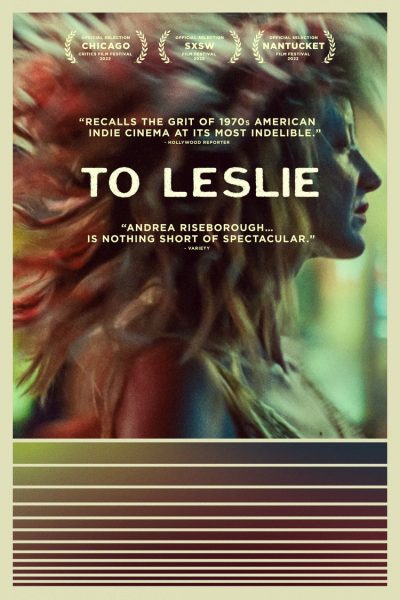
Winning the lottery should be a cause for celebration. Unfortunately, sometimes that celebrating can be taken too far, as chronicled in director Michael Morris’s fact-based debut feature about a woman (Andrea Riseborough) who won big and lost it all while circling the bottom of a bottle. Those losses included not only her winnings, but also her possessions, friends and family, as well as whatever reliability and credibility she may have had. With virtually nothing left, she’s forced into returning home to the small west Texas town where she grew up to start over and face her demons, some of which arose before her windfall. The film’s story may be a familiar one, but there are enough elements to distinguish it from other pictures about the pains of addiction and recovery to make for a compelling watch. What works best here are the performances of the superb ensemble cast, including Allison Janney, Stephen Root, Marc Maron, Andre Royo, Owen Teague, and, most notably, Riseborough, whose outstanding, largely overlooked lead portrayal is handily the best of her career, an achievement that has deservedly, if belatedly, earned her an Oscar nod and Independent Spirit Award nomination in this category. The film’s fittingly atmospheric soundtrack and ethereal cinematography significantly enhance the actions on screen and effectively capture the mood of the narrative underlying its fine screenplay. To be sure, the pacing could stand to be stepped up somewhat at times, and some story elements become slightly repetitive, particularly toward the end of the first hour. But, considering the picture’s many assets, it’s easy to see how this offering has been named one of the National Board of Review’s Top 10 Independent Films of 2022. Catch this one online, and immerse yourself in a truly moving story.
12. “She Said” (USA) Web site Trailer Blog
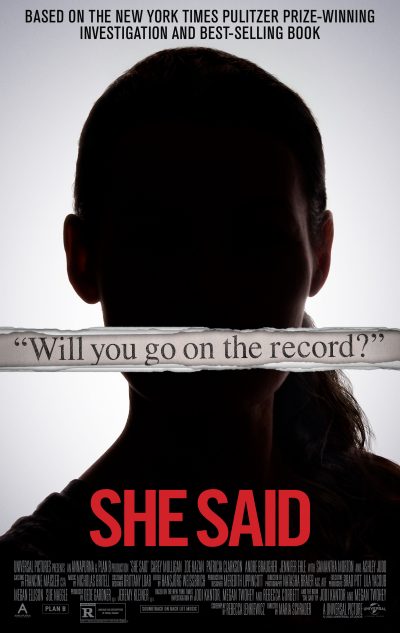
Movies about journalism can be somewhat problematic (especially these days in this age of growing media mistrust). Which is why these films really and truly work best when they play it straight, focusing on the facts in a no-nonsense, straightforward way, with no grandstanding or exaggerated histrionics, and that’s one of the innate strengths of this latest offering in this genre. Based on the Pulitzer Prize-winning New York Times investigation and best-selling book of the same name, “She Said” provides a fact-based recounting of the efforts of reporters Megan Twohey (Golden Globe and BAFTA nominee Carey Mulligan) and Jodi Kantor (Zoe Kazan) to uncover and document the blistering sexual misconduct allegations leveled against high-powered Hollywood producer Harvey Weinstein. The duo’s reporting helped lead to Weinstein’s eventual conviction and the launching of the #MeToo movement aimed at exposing a clandestine culture of sexual abuse against women throughout the entertainment industry and beyond. And, as a onetime-practicing journalist myself, I appreciate the unencumbered approach the filmmaker has employed here. However, just because the film takes a rather direct approach in telling its story, that doesn’t mean it’s without its compelling moments of emotional heft, particularly in the testimony of the victims, including some, like actress Ashley Judd, who appear in the film playing themselves. Director Maria Schrader may not draw upon anything overly inventive here, and the film is admittedly a tad too long, but it nevertheless chronicles the reporting process clearly, concisely and unburdened by technical jargon or gaps in explaining the legal and journalistic consequences involved, thanks largely to its superb Critics Choice and BAFTA Award-nominated adapted screenplay. It also features a fine ensemble cast, most notably Mulligan (in one of her finest performances) and Jennifer Ehle and Samantha Morton in significant (and, unfortunately, completely overlooked) supporting roles. While some have called this work “pedestrian” and “plodding,” I respectfully disagree with those characterizations and would readily put it alongside works like “All the President’s Men” (1976) and “Spotlight” (2015), movies that detractors of this picture have contended are far superior when, in fact, they’re all mostly on par. This offering genuinely deserves a fair shake, something it regrettably has not received to the degree it deserves (thanks to its often-unfair torpedoing by cynical critics and misogynist trolls). It brings to life an important story that was long in the offing and that has, thankfully, had a lasting, deep, culture-shifting impact.
13. “Leonor Will Never Die” (Philippines) Web site Trailer Blog

For creative types (especially writers), sometimes it’s all too easy for the lines between reality and their work to become blurred. Where does one leave off and the other begin? Indeed, can someone become so absorbed in a project that perspective becomes lost? And what does this mean for those who care (and worry) about the artist? Those are the dynamics at play in this quirky, thoughtful comedy-drama about a retired once-successful screenwriter (Sheila Francisco) who has experienced her share of heartache during her life and has now fallen on hard times during what are supposed to be her golden years. She longs to complete an unfinished work, an action film reminiscent of those frequently made in the Philippines in the 1970s, with elements similar to those also found in classic martial arts and Blaxploitation pictures of the era. However, while in the midst of writing, she experiences a freak accident that leaves her in a coma – and her consciousness in the middle of her script as one of its central heroic figures, a sudden, unexpected appearance that befuddles the characters she created. But, as her adventure plays out in her mind, her family and friends can only look on and wonder what, if anything, they can do for her – that is, until these two different worlds somehow manage to become intertwined with one another. And, as these two parallel yet interwoven stories play out, a curious mix of synchronicities, kooky laugh-out-loud moments and metaphysical insights into the nature of existence all begin to emerge (sometimes simultaneously), providing viewers with much to ponder and plenty to chuckle over. Writer-director Martika Ramirez Escobar’s multiple-layered debut feature is an absolute delight, one that tells a hilarious yet perceptive tale, a challenging narrative combination to pull off as successfully as it is here. It’s an accomplishment comparable to what was achieved in such other 2022 releases as “Everything Everywhere All at Once” and “Strawberry Mansion.” What’s more, this offering is a campy yet lovingly reverential homage to the cheesy action flicks it so capably and intentionally mimics in terms of its clichéd camera work, trite dialogue and sloppy technical elements (like out-of-sync vocal dubbing). Admittedly, the film begins to drag a little in the home stretch, but, as a very deserving winner of the Sundance Film Festival World Cinema Dramatic Special Jury Award and an Independent Spirit Award nominee for best international film, this is must-see viewing for those who appreciate unexpectedly profound subject matter served up with a healthy slathering of unrepentant kitsch.
14. “Argentina, 1985” (Argentina/UK/USA) Web site Trailer Blog
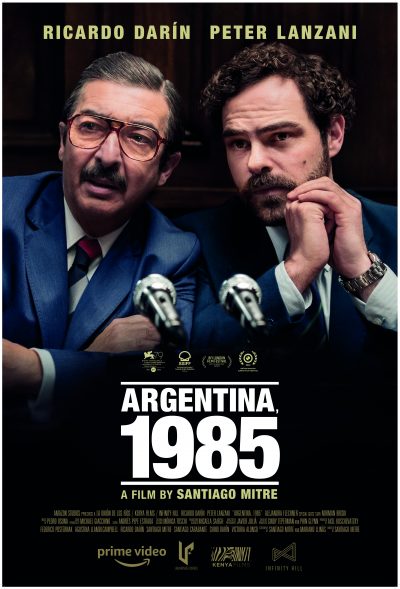
Seeking justice is certainly a noble pursuit, especially when the transgressions calling for it have been particularly egregious. But it can also become a rather precarious undertaking when conducted under conditions that carry potentially serious consequences, such as retribution, vocational ruin and even death threats. So it was in Argentina in the mid 1980s, when the newly restored democratic government sought to prosecute military and civic officials from the previous regime for crimes against humanity, including kidnapping, torture, rape and genocide. These allegations were leveled against authorities who viciously and gratuitously violated their mandates in seeking out possible insurgents, essentially establishing a fascist police state in which suspicions were elevated to a grotesquely exaggerated level, one that was pervasively sadistic and brutal, affected countless individuals, and spanned the entire country for a decade. But the prosecutors (Ricardo Darín, Peter Lanzani) appointed to carry out this task were reluctant to take it on given the possible ramifications they could face and the tight time frame under which they would be working. Still, there was justice to be had, and its fulfillment was crucial to fostering a stable future for the new Argentinian republic, especially given the extent of the harm and need for the nation to heal. Writer-director Santiago Mitre’s latest presents a thorough, capably told account of this courageous venture, with a solid screenplay and fine performances that effectively depict the dangers, ironies and nuances involved in this tightrope-like endeavor, as well as the personal impact on its principal figures. This National Board of Review and Golden Globe Award winner could stand a little tightening in spots, and some of the background music doesn’t always fit. But, in all, this engaging, attention-grabbing BAFTA, Critics Choice and Oscar nominee successfully avoids legal jargon and excessively detailed political considerations while revealing much about one of the most compelling judicial proceedings since Nuremburg, one that, unfortunately, reiterates the same cautionary message to have come out of that landmark event – “Never again.”
15. “Official Competition” (“Competencia official”) (Spain/Argentina) Web site Trailer Blog
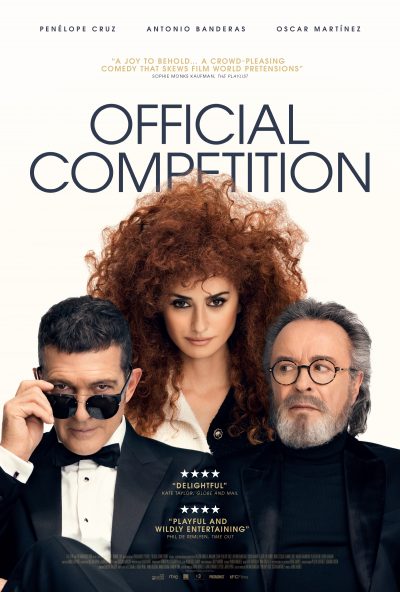
Oh, to be a revered film industry artist. It affords so many opportunities for meaningful creative expression – especially when one is full of oneself. So it is for a trio of collaborators – one director (Penélope Cruz) and two rival actors (Antonio Banderas, Oscar Martínez), all of whom have personal and professional agendas, styles all their own, and egos the size of Europe – as they struggle to make a movie financed by a wealthy, 80-year-old pharmaceutical company executive (José Luis Gómez) who’s more concerned with the legacy that he’s leaving than producing great cinematic art. As they’re thrown together for this project, they seek fulfillment in their respective milieus, even if it means stepping on one another’s toes and pulling scams to achieve their desired ends. And, through it all, viewers are treated to the principals’ innocuous, pseudo-profound wisdom about creativity, life, humility and hubris. Writer-directors Mariano Cohn and Gastón Duprat, along with screenplay colleague Andrés Duprat, have cooked up a deliciously wicked dark comedy/satire that skewers the movie industry, the arthouse film community and the festival circuit with wry, hilarious wit and sight gags, splendidly played out by Cruz, Banderas and Martínez, all of whom turn in some of their best-ever work here. The masterfully written script delivers the goods with perfect understatement and just enough believable insincerity yet raucously nasty bits to make everything work just about perfectly. There’s a slight tendency for the pacing to drag at the outset, but, in light of everything else it offers, who cares? For those who enjoy their comedy with a sharp edge accompanied by hefty doses of unbridled comeuppance, this one is for you.
16. “Black Panther: Wakanda Forever” (USA) Web site Trailer
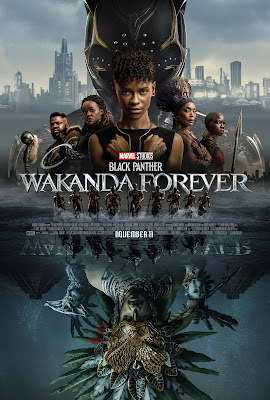
At the risk of overstatement, it’s hard not to be blown away by writer-director Ryan Coogler’s “Black Panther: Wakanda Forever.” This is a vast improvement over its predecessor offering (2018), if not the best picture to ever come out of the Marvel Universe. It’s the kind of film that shows comic book movies can indeed go beyond action sequences and endless explosions to offer viewers something more meaningful and substantial, a result capable of silencing critics like filmmaker Martin Scorsese, who blanketly contend that these releases are without artistic merit. What’s more, this second outing in the franchise has undoubtedly saved it from oblivion after losing its lead character in the wake of its initial outing with the untimely death of protagonist Chadwick Boseman. In addition to telling a compelling story, this film provides a credible bridge to the future while fittingly serving as a respectful tribute to its fallen star, one that honors the actor in a way that the movie industry unfortunately never did. Its tactful, reverential treatment of this issue is sure to evoke an emotional response, if not a few tears, in a truly loving but not maudlin way. Beyond that, the narrative and character development in this installment are also a significant cut above the original, telling a more engaging story with deftly nuanced themes that make its predecessor look comparatively simple. It also features fine performances by its ensemble cast, particularly Letitia Wright, Lupita Nyong’o, Danai Gurira, and, most notably, Angela Bassett in an impressive Golden Globe and Critics Choice Award-winning portrayal, a role that could earn her an Oscar, as well as honors in the Screen Actors Guild and BAFTA Award competitions. But what’s most impressive is the film’s handling of its principal themes, delving into concepts that action-adventure offerings rarely, if ever, do, and certainly not as capably addressed as here (making pictures like “The Woman King” appear somewhat amateurish by comparison). To be sure, there are a few elements that might have been handled better (the picture is a little too long, it underutilizes the talents of Winston Duke, and there are a few too many James Cameron-esque graphic and cinematic attributes reminiscent of “Avatar” (2009) and “The Abyss” (1989)), but these are minor shortcomings in comparison to everything else the picture has to offer. Of course, it’s impossible to talk about this release without noting that it probably wouldn’t have the same onscreen impact were it not for the tragic offscreen story that has sadly accompanied it, though the filmmakers truly deserve praise for their sensitive handling of this matter without giving in to cheap exploitation or sensationalism, results that may very well not have occurred in lesser-skilled hands. It’s truly comforting to see that the “Black Panther” franchise has managed to weather this storm and to do so as well as it has. Wakanda Forever indeed.
17. “Bros” (USA) Web site Trailer Blog
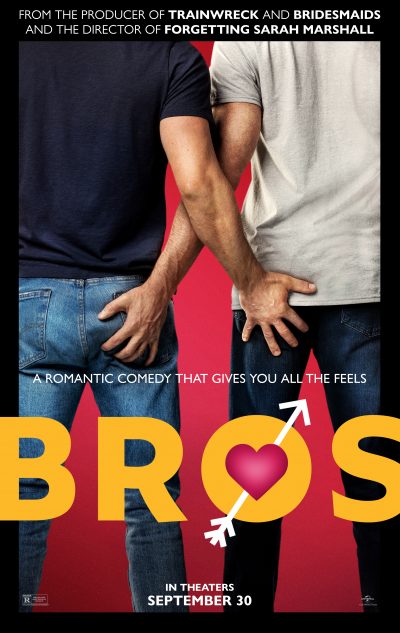
Who knows why relationships work or fail? That’s especially true when it comes to gay male partnerships, which often come and go like the wind and whose permanence or fleeting nature frequently rests on the unlikeliest of considerations. But sometimes they somehow manage to survive, despite their conundrums, quirkiness and seemingly deceptive dysfunctionality. Such is the case in director Nicholas Stoller’s brilliant Critics Choice Award-nominated romantic comedy about a pair of apparently mismatched partners (Billy Eichner, Luke Macfarlane) who wade their way through the murky, uncharted waters of same-sex romance, a sort of gay male version of “Annie Hall” (1977). In some ways, this picture employs an adapted version of a rather tried-and-true formula of boy-gets-boy/boy-loses-boy/boy-gets-boy-back-after-a-series-of-extracurricular-flings, an approach that has earned the film its share of criticism. However, given the ways in which that basic narrative is dressed up with snappy, often-hilarious writing, ample situational and sight gags, and just the right amount of heart-tugging, inspirational drama (without becoming schmaltzy or overly preachy), the picture generally succeeds across the board. Virtually all of the humor is positively spot-on, and it’s served up in an easily relatable way such that one need not be a card-carrying member of the LGBTQ+ community to grasp the jokes. The film also features an array of appearances by gay and gay-friendly icons like Harvey Fierstein, Debra Messing and Kristin Chenoweth, a variety of cameo appearances by big name Hollywood stars, and a host of gay, lesbian, bisexual and transgender performers. It’s also worth noting that the film’s principal producer/distributor, Universal Pictures, deserves a hearty round of applause for taking a chance on material like this. Indeed, the backing of a romantic comedy involving alternative lifestyles by a mainstream studio is truly groundbreaking in the movie industry, and one can only hope that this savvy move by a major player opens the door to greenlighting future projects of a similar nature. Sensitive viewers should be aware that there is some explicit sexual content in this release, but, considering the comic nature of much of it, it’s hard to envision not evoking laughs from even the most conservative audience members. Given the picture’s critical acclaim, it’s a shame it was overlooked at the box office and that it has been underrepresented in awards season nominations, especially when it comes to its writing. Yet, despite these shortfalls, it was truly refreshing to see a film that knocked it out of the park in 2022 as well as this one did.
18. “Broker” (“Beurokeo”) (South Korea/Japan) Web site Trailer Blog

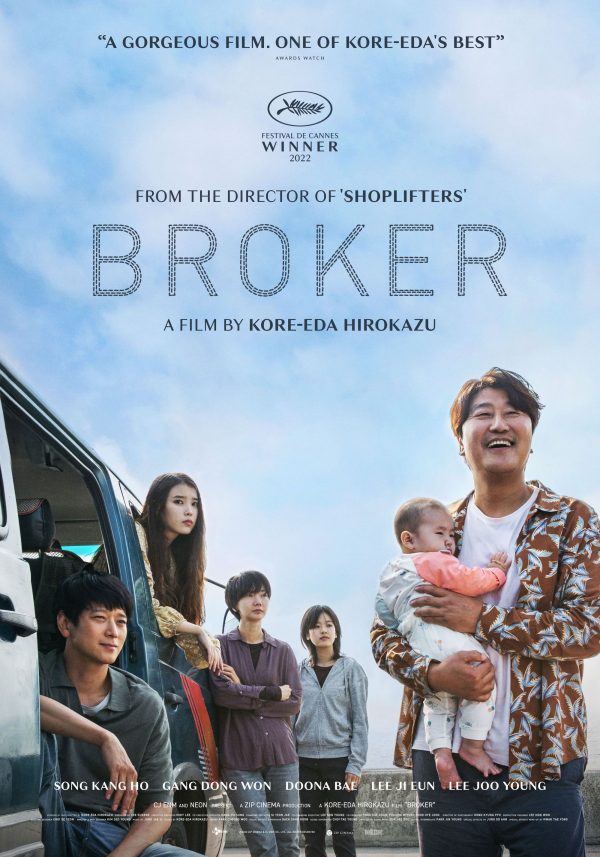
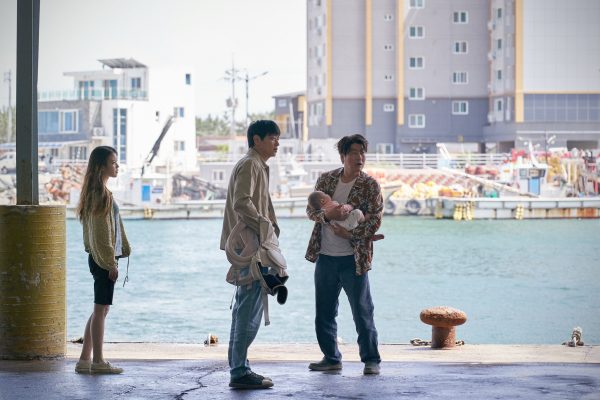
When we look to get the best out of life for ourselves, we often need to “broker” a deal to fulfill that goal. Which is precisely what an unlikely group of seemingly unrelated happiness seekers do in this heartbreaking and heartwarming new comedy-drama from acclaimed writer-director Hirokazu Kore-eda. While the Cannes Film Festival Palme d’Or winner initially hooks viewers with a scenario involving a literal interpretation of the word that comprises its title – those who deal in black market babies – it skillfully moves on to explore how we attempt to get what we want out of life by brokering circumstances to our advantage, whether or not infants are part of the equation. In taking this unexpected turn, the story shows how such endeavors can have both their unsavory qualities, as well as heartfelt, sincere intentions (their inherently questionable actions and manipulative practices notwithstanding). The filmmaker accomplishes this by deftly weaving gentle humor, genuine emotion and a moving soundtrack into the narrative, taking the edge off the primary troubling story thread and adding a sense of warmth that tenderly humanizes the picture’s overall direction. Thus what may be perceived initially as a dark and sinister tale tactfully guides audiences down a different (and heart-tugging) path. This is perhaps one of Kore-eda’s best and most personal offerings, featuring a well-crafted script and what is arguably a cast of Korean all-stars (most notably Cannes Film Festival best actor winner Song Kang-ho) who deliver touching and delightful performances. There are admittedly a few points in the picture where the pacing sags a bit, but they’re more than made up for by its many strengths, making for a surprisingly satisfying watch, one of the most heartening releases of 2022.
19. “Chrissy Judy” (USA) Web site Trailer Blog (to come)
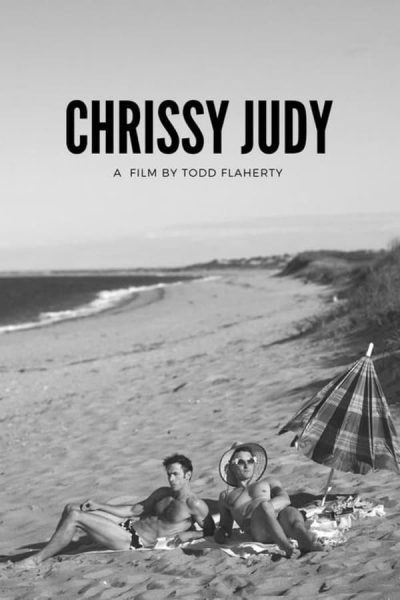
Are BFFs really forever? We might like to think so, but, given the inevitability of change, such permanence might be too much to hope for – and a source of tremendous disappointment. So it is for Judy Blewhim (Todd Flaherty) and Chrissy Snowkween (Wyatt Fenner), a struggling drag queen sister act. When they’re not performing in little-known clubs in New York and on Fire Island, the besties party their way across Gotham and its environs, living a life of fun and frolic. But, when Chrissy unexpectedly announces that she’s moving to Philadelphia to live with her boyfriend (Kiyon Spencer), the decision throws life into chaos for Judy, both in terms of her personal life and performing career, changes that don’t sit well with her. So what’s next? And how will this all affect their friendship? Such is the high drama that unfolds in this deliciously funny debut feature from writer-director Todd Flaherty. The film’s crisp screenplay, gorgeous black-and-white cinematography and fine performances by its excellent ensemble cast combine to make for a compelling, enjoyable watch, a project that in many ways plays like a gay version of a Woody Allen film. It touches on themes that many offerings in this genre seldom explore, such as gay male friendships, personal responsibility and living life outside the club scene. Also, while the picture includes many familiar LGBTQ+ community elements, it successfully avoids presenting them as clichés and stereotypes, often by taking those recognizable components and turning them on their ear. In light of all this, “Chrissy Judy” proved to be a very pleasant surprise (and my favorite offering) from the Reeling International LGBTQ+ Film Festival. Check this one out for a good time at the movies.
20. “Servants” (“Sluzobnici”) (Slovakia/Romania/Czech Republic/Ireland) Web site Trailer Blog
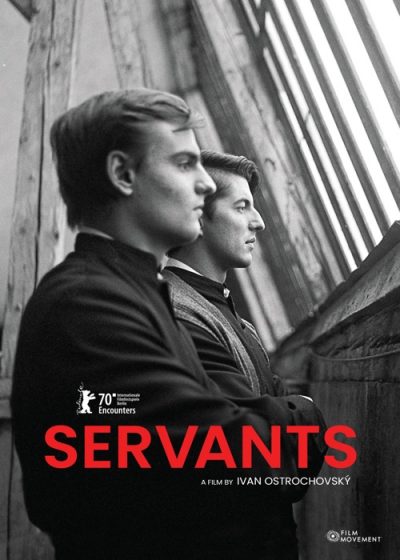
Chilling and thoughtful, director Ivan Ostrochovsky’s second narrative feature spins an edge-of-your-seat tale while simultaneously delivering an insightful meditation on what it means “to serve,” as well as presenting a workshop on outstanding camera work. Set in 1980 totalitarian Czechoslovakia, the film follows the gripping struggle of a group of students and administrators in a Bratislava seminary who are being pressured to cooperate with a Catholic organization that has agreed to side with Communist Party dictates to prevent the circulation of “subversive” ideas, all the while wrestling with their own hearts about doing what is morally and spiritually correct. Failure to go along with these requirements could result in seminarians being expelled and drafted into the military or, even worse, the permanent closure of the facility. This high-stakes morality play is a tale told in the shadows, one perfectly suited to the picture’s magnificent black-and-white cinematography, which alone is worth the price of admission. The eloquent framing of each shot and the filmmaker’s masterful execution of the picture’s mise-en-scène element are among the finest I have ever witnessed, and they enhance the storytelling by skillfully embellishing the actions playing out on screen. Some may find the pacing somewhat sluggish, but this deliberately employed tactic significantly adds to the slowly simmering narrative, upping the tension as events unfold. What I most liked about this offering, however, is the deft handling of the themes that underlie the principal storyline, adding a level of depth that takes the film to an entirely different level. It’s unfortunate that “Servants” has not received wider play or recognition, but, now that it’s available on home media and for streaming online, here’s hoping it garners the attention it genuinely deserves.
Noteworthy (in alphabetical order)
“Babylon” (USA) Web site Trailer

“Babylon” is the kind of movie that most viewers are either going to love or hate. I, for one, am one of those who’s squarely in the middle. Writer-director Damien Chazelle’s outrageous, often-hilarious, visually dazzling epic about the early days of Hollywood and the excesses that typified an emerging industry during the Roaring ʼ20s (and the attempts to rein them in during the increasingly conservative ʼ30s) tells the stories of a number of rising on-screen and off-screen stars seeking to make their way while wrestling with personal and professional demons, as well as the advances (and challenges) in using the new cinematic technologies of the era. In some regards, I like to think of this opus as one that draws from a variety of vastly different cinematic influences, most notably the curious combination of Peter Bogdanovich’s “Nickelodeon” (1976) and Paul Thomas Anderson’s “Boogie Nights” (1997), with, of course, the musical aspects from Chazelle’s own “La La Land” (2016) (despite the inherently more tawdry – and more engaging – nature of this project). Because of the narrative’s extensive breadth in terms of time frame, characters, themes and story threads, it’s not surprising to see how this offering would clock in with a runtime of 3+ hours (though there certainly are segments, such as the film’s 30-minute opening party sequence, that could have been scaled back without losing anything). With that said, however, the picture is surprisingly well paced for one of this length, thanks to the vivid visuals, superb production design, and excellent performances of a great ensemble cast, including Margot Robbie, Brad Pitt, Diego Calva, Li Jun Li and Jovan Adepo, along with fine supporting roles by Jean Smart, Tobey Maguire and Eric Roberts, among others. However, considering everything that’s been crammed into this arguably overstuffed package, there are some shortcomings worth noting, such as occasionally undercooked character development and a number of visual excesses that more than push the boundaries of acceptable taste for a mainstream film (their inclusion as a nod to the picture’s title notwithstanding). Nevertheless, as this release also clearly shows, we wouldn’t have the industry that’s grown, evolved and matured over the years were it not for the ragtag pioneers of this period, despite their individual challenges and their succumbing to the temptations present in this often-dirty business. In my view, “Babylon” is certainly deserving of much of the recognition it has earned, even if some of its content may at times seem questionable or misplaced. The film has been nominated for a wealth of honors in this year’s awards competitions (including three Oscar nods), having already taken home one statue in each of the Golden Globe and Critics Choice Award competitions. No matter what, though, there’s no denying that this is quite the cinematic rollercoaster ride, something for which movies themselves are often the ideal vehicle.
“Before, Now & Then” (“Nana”) (Indonesia) Web site Trailer
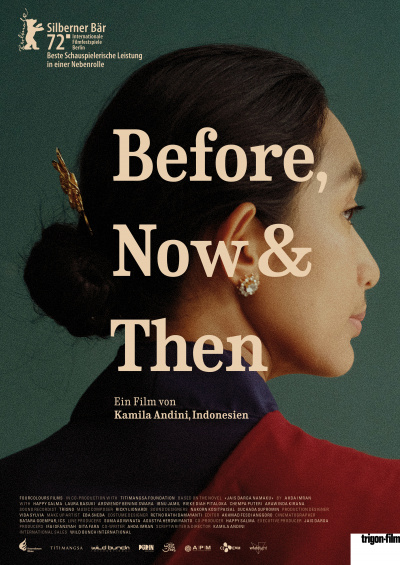
The search for happiness can be an elusive one, especially when confronted by challenges on multiple fronts, even for those who ostensibly appear to be superficially contented and well off. Such is the fate of a seemingly comfortable middle-aged housewife (Happy Salma) in 1960s Indonesia, whose first husband (Ibnu Jamil), a military officer, mysteriously disappeared and whose second spouse (Arswendy Bening Swara), a plantation owner, is having a less-than-veiled affair, all of which is set against the country’s political unrest of the period. It’s a scenario further complicated by her willingness to capitulate to her circumstances and by the secrets she keeps from virtually everyone. Surprisingly, though, when her husband’s mistress (Laura Basuki) moves in with the family, the two women strike up an unlikely friendship, one that leads to some difficult but unexpectedly pleasant developments. Writer-director Kamila Andini’s latest feature outing tells a slowly unfolding but ever captivating tale with surprises awaiting around every corner. The deeply heartfelt performances of Salma and Basuki reach out and grab viewers throughout, portrayals all the more enlivened by the film’s mesmerizing soundtrack, gorgeous cinematography, and inventive, revelatory surreal dream sequences. Admittedly, the pacing at times could be a little more up-tempo, but this is a small price to pay for an otherwise thoroughly engaging watch, one of the 2022 Chicago Film Festival’s surprise charmers.
“El Houb” (“The Love”) (Netherlands) Web site Trailer Blog (to come)
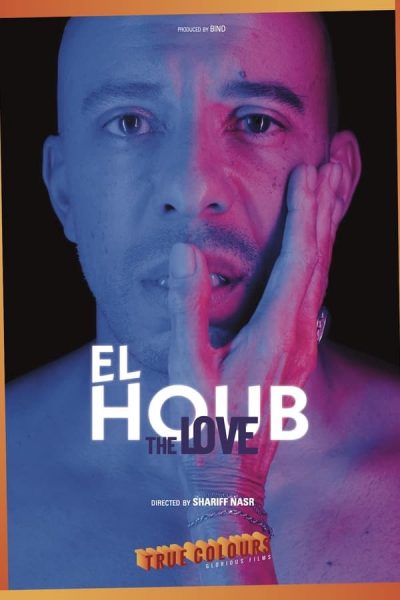
What happens when enough is enough? For a closeted gay Moroccan man (Fahd Larhzaoui) living in Amsterdam, spending his life constantly looking over his shoulder and dodging questions about marriage from his family and community have truly tried his patience. And, when his father (Slimane Dazi) accidently discovers him with his Ghanaian boyfriend (Emmanuel Boafo), the incident sets off a firestorm with his parents and younger brother (Sabri Saddik). But it also represents an opportunity to finally get things out in the open once and for all, a process where he symbolically locks himself in a closet in his family home and refuses to leave until the matter is resolved. Events unfold along thematic lines during the lockdown, told through tense conversations and augmented with flashbacks, surrealistic sequences and interactions with the protagonist’s younger self (Shad Issa), encounters that benefit both the elder self and his 10-year-old counterpart. This inventive storytelling approach unearths revelations that apply not only to the beleaguered son, but also to his other family members and his loving partner, who sets a courageous example by severing relations with his relatives when those relationships no longer work. Writer-director Shariff Nasr’s debut narrative feature makes an impressive, albeit controversial, statement about knowing when to hold on and when to let go to tradition, culture and even ties to kindreds where those toxic bonds no longer serve us, regardless of the cause behind such dissolutions, but especially among those forced to endure intolerable conditions related to one’s sexuality and lifestyle. The sequence of events may come across as somewhat meandering at times, but, given the confusion and frustration in play here, who’s to say that one could remain completely rational when undergoing such as analysis. Any deficiencies in this are skillfully concealed by the picture’s excellent cinematography and production design, as well as the superb performances of its fine ensemble cast. “El Houb” represents a noteworthy start for a filmmaker who obviously has much to offer, a career that I can’t wait to see develop and unfold.
“Everything Everywhere All at Once” (USA) Web site Trailer Blog
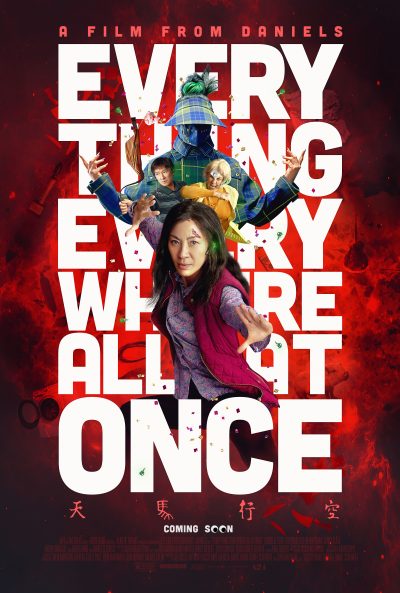
How well do “you” know the version of yourself (sometimes called “the localized you”) with which the majority of us are most familiar? Chances are most of us aren’t even aware of any of our other selves, but those well versed in metaphysical circles have a good sense about our innate multidimensionality, and making audiences aware of this phenomenon is what this manic comedy-drama is all about. When the beleaguered owner of a laundromat (Michelle Yeoh) is beset by issues with her husband (Ke Huy Quan), father (James Hong) and daughter (Stephanie Hsu), as well as an irascible IRS agent (Jamie Lee Curtis), it seems, as the title would appear to imply, that everything hits all at once. But that’s nothing compared to what happens when she’s unexpectedly contacted by a different “version” of her spouse who informs her that he’s been looking for her for a long time to help resolve an issue with a growing evil in the multiverse, a task she’s supposedly best suited to address but with which she’s completely unfamiliar. However, as her awareness grows, this new adventure begins opening doors for her in unexpected ways, not only in the universe in which she dwells, but also in those in which other versions of herself reside. The result is an insightful and hilarious exploration of some heady philosophical and moral concepts, punctuated by stunningly clever visual effects, huge laughs, uproarious send-ups of a variety of other films, and dynamite performances by Yeoh and Curtis. Nevertheless, despite these fine assets and its many awards season wins and nominations (including 11 Oscar nods), the film goes on far too long, telling a story that could have easily been trimmed by about a half-hour, primarily by eliminating some bits that overstay their welcome (such as take-offs of martial arts movies that start out funny but grow tiresome after a few too many run-throughs). This offering from directors Dan Kwan and Daniel Scheinert (“the Daniels”) is certainly an ambitious and inventive release, but it’s unfortunate that the filmmakers didn’t know when to stop. It’s indeed worth a look, but it’s regrettable that those responsible for the picture didn’t have the wherewithal to “kill their darlings” and quit while they were ahead.
“Glass Onion: A Knives Out Mystery” (USA) Web site Trailer
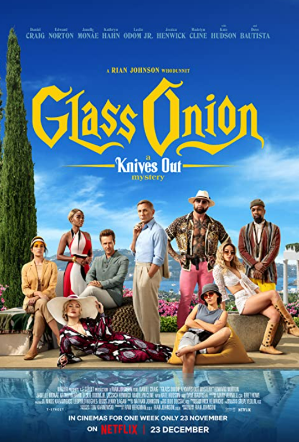
The whodunnit genre has been a movie industry staple for ages, so coming up with a fresh take on it is essential, and this “sequel” to the box office hit “Knives Out” (2019) does a commendable job at that, with wily Louisiana Detective Benoit Blanc (Daniel Craig) making a return visit to the big screen. When a group of old friends gathers for a murder mystery weekend at the palatial Greek island estate of a wealthy acquaintance (Edward Norton), Messr. Blanc makes an unexpected appearance, despite having received what seems to be an official invitation to attend. His presence kicks off a string of events that takes everyone – including the host – by surprise, leading viewers and invitees down a rabbit hole of laughs and suspense, one somewhat reminiscent of the cult classic “The Last of Sheila” (1973). I’ll admit I had my doubts about this one going in, having not been a terribly huge fan of the film’s “predecessor.” However, writer-director Rian Johnson’s second outing in this series is a pleasant surprise, with gorgeous cinematography, a beautiful production design, and delightful performances by its fine ensemble cast, particularly by Craig, Norton and National Board of Review award winner Janelle Monae. And, for its efforts, the picture was named one of the NBR’s Top 10 Films and the winner of Critics Choice Awards for best comedy and acting ensemble, as well as an Oscar nominee for best adapted screenplay. Perhaps my biggest issue with the picture is its title, which is more than a little misleading: Other than the presence of Detective Benoit, there are absolutely no other connections to this film’s predecessor, so viewers expecting to see any relation to “Knives Out” in this release will be sorely disappointed. While I can understand that the inclusion of the tagline may have been viewed as a necessary marketing tactic to hook viewers, it does a disservice to both moviegoers and to the Detective Benoit character, who is obviously being tapped as the foundation for a new franchise, one whose only connection to “Knives Out” apparently has to do with the return of the sleuth from the first film in the series. If the filmmakers and distributors of this franchise truly want to build out a string of movies based on this character, perhaps a more fitting (and more accurate) title would have been something like “Glass Onion: A Benoit Blanc Mystery.” After all, as any good detective knows, when it comes to solving a crime, “The truth will out.” And, in the case of a movie along those lines, it should start with the title.
“Good Luck to You, Leo Grande” (UK/USA) Web site Trailer
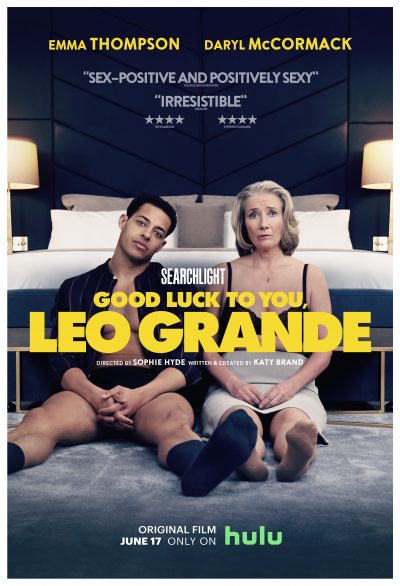
Sex is one of those topics that many of us still have a lot of trouble not only talking about, but also freely acting upon. So it is for a retired, widowed religious education teacher (Golden Globe nominee Emma Thompson) who wants to experiment and experience much of what she has missed out on most of her life while she still has the chance, a decision she acts on by availing herself of the services of a hunky young sex worker (Daryl McCormack). But, when the time comes to get busy, she finds herself uptight, tongue-tied and unable to let herself go, something her hired gun helps her work through over the course of several sessions together. In essence, he becomes her therapist as much as her escort, counseling her on the merits of embracing pleasure and shedding the inhibiting practices of her past, lessons that she, in turn, employs in helping him to resolve issues of his own. The dynamics of this unusual relationship are intimate, therapeutic and often funny, making for a diverse and emotive viewing experience. While director Sophie Hyde’s fourth feature outing can be a tad stagey at times (this vehicle would make a great stage play), screenwriter Katy Brand’s script is generally crisp, engaging and insightful, and the chemistry between the film’s two BAFTA-nominated leads is captivating, especially in the variety of moods involved in their dialogues and interactions. “Leo Grande” may not have generated much fanfare (its four BAFTA nominations notwithstanding), but this online release is certainly deserving of whatever attention it receives, serving up a bundle of laughs, heartfelt moments and a fresh perspective on sexuality, one that could potentially have a rejuvenating impact on those in need of reevaluating their views on this topic before it’s too late.
“The Moon & Back” (USA) Web site Blog (to come)
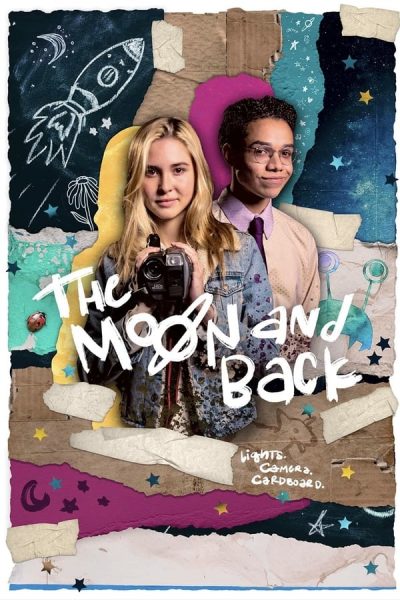
Coming of age can be difficult enough, but, when we lose someone who has been a source of valuable guidance in the midst of that process, the result can be shattering. Under conditions like that, it can be easy to lose one’s way. So it is for Lydia (Isabel May), a distraught high school senior who feels adrift after losing the father (Nat Faxon) she adored. And those who care for her and try to steer her back on track – her mother (Missi Pyle), her guidance counselor (P.J. Byrne), a neighbor (Roman Michael) and a variety of friends (Miles Gutierrez-Riley, Molly Jackson, Taiv Lee) – seem unable to help. But, when Lydia stumbles upon an original sci-fi movie screenplay that her father wrote, the discovery finally sparks her interest in tackling something productive. She decides to make a film based on the unproduced work, but her enthusiasm is challenged when she finds out just how difficult such an undertaking can be. In doing so, she learns that, at some point, coming of age means letting go and striking out on one’s own – even leaving behind the source of inspiration who helped her get so far. Writer-director Leah Bleich’s charming comedy-drama provides viewers with a refreshingly distinctive take on material typical of this genre, providing just the right amount of heart tugs but without overdoing it, all the while serving up both laughs and serious moments that successfully avoid the clichés often found in stories like this. The narrative manages to stay on track quite well, despite a few meandering lulls, keeping the storytelling crisp and economical. And, given the excellent, incisive, edgy character development here, this offering strikes me very much as being the kind of movie that “Lady Bird” (2017) was striving to be but could never quite get right because of all its overly cutesy quirkiness. Indeed, “The Moon & Back” is a fun, pleasant, enjoyable little diversion, but it’s by no means a lightweight, just what a film of this stripe should be.
“Murina” (“Moray Eel”) (Croatia/Brazil/USA/Slovenia) Web site Trailer Blog
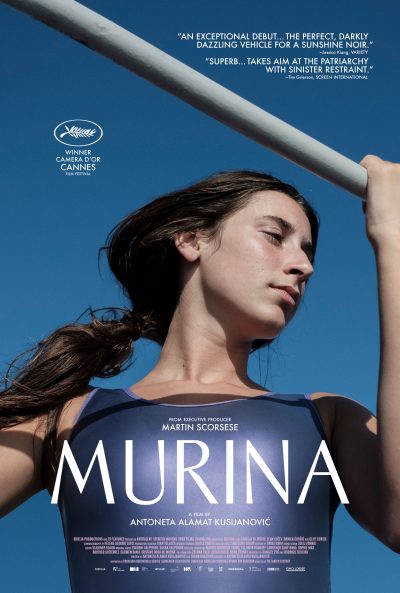
Adolescence is a time for finding oneself, especially when it comes to our sense of personal power. That’s rarely easy, but it can be especially difficult for a teenage girl trapped in a household with a chauvinistic father, a condition not uncommon in many traditional Eastern European households. Such is the fate of a quiet but independently minded Croatian adolescent (Gracija Filipovic) who longs for freedom from under the thumb of her domineering dad (Leon Lucev) and capitulating mother (Danica Curcic). But the potential for profound change arises when a wealthy old friend of her father (Cliff Curtis) pays a visit to their coastal fishing village, one that could transform her life and that of her mother, provided they have the courage to act on it. Director Antoneta Alamat Kusijanović’s debut feature from Executive Producer Martin Scorsese presents an intense, intimate character study of an individual’s search for empowerment in the face of oppressing odds and confusing circumstances that, like the clandestine behavior of the moray eels she and her father routinely hunt, deceptively conceal much of what’s actually going on. This 2021 Cannes Film Festival Golden Camera Award winner for best first feature and three-time Independent Spirit Award nominee (including best first feature and Filipovic’s breakthrough performance) simmers slowly but builds tension well, engaging viewers handily, despite some repetitive narrative elements and occasional “atmospheric” camera work whose deliberate murkiness goes a little overboard in metaphorically depicting the intended character of the story. A number of films with themes similar to those explored here have emerged from this region in recent years, such as “Hive” (2021) and “God Exists, Her Name is Petrunya” (2019). That’s an indication that there’s a need for the expression of these notions, and, thankfully, filmmakers have successfully risen to the occasion, making the world more aware about conditions for women desperately in need of reform.
“Olga” (Switzerland/Ukraine/France) Web site Trailer Blog
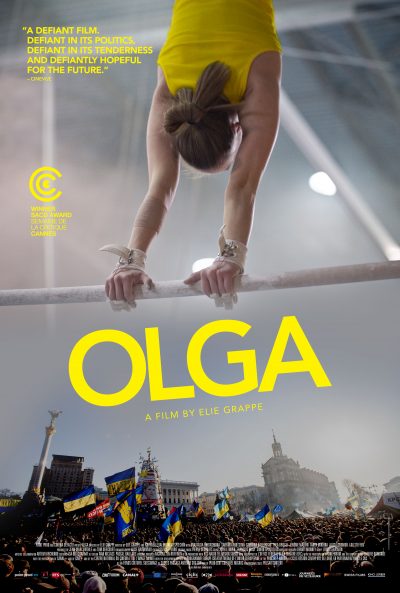
What’s one to do when caught between the fulfillment of personal achievement or taking a stand for a larger cause? What’s more, what’s one to do when the available choices are compounded by complications that make it difficult to decide and subsequently act? Such is the conundrum for a talented 15-year-old gymnast (Anastasia Budiashkina), the daughter of a Ukrainian mother (Tanya Mikhina) and a Swiss father, training for the 2014 European Championships in Switzerland while the deadly Maidan Revolt rages in her homeland. Should she remain afar and continue with her training, or should she return to Ukraine to join the fight with her investigative journalist mother and activist best friend/former teammate (Sabrina Rubtsova)? It’s a lot to consider for someone of any age, but, for a gifted adolescent, it’s an exceedingly exasperating choice, especially when she’s also forced to address the additional issues of jealous teammates, injury and deciding which country to devote her loyalty. Writer-director Elie Grappe’s debut feature walks a perilous, tension-filled tightrope in telling a taut, compelling story that successfully fuses the political thriller and sports drama genres, featuring a superb lead performance by Budiashkina, herself a former Ukrainian gymnast. Admittedly, there are a few under-explained gaps in the narrative that detract from the flow of the story, and some of the atmospheric cinematography definitely could have been improved upon in some scenes. However, when it comes to the elements that matter most, it’s easy to see how this offering captured the SACD Prize at the 2021 Cannes Critics’ Week and also earned nominations for the film festival’s Golden Camera Award and Critics’ Week Grand Prize. “Olga” may not have attracted a lot of attention in its initial theatrical release, but it should have and definitely deserves to now that it’s available for streaming. Give it a look – you won’t be disappointed.
“Queen of Glory” (USA) Web site Trailer Blog
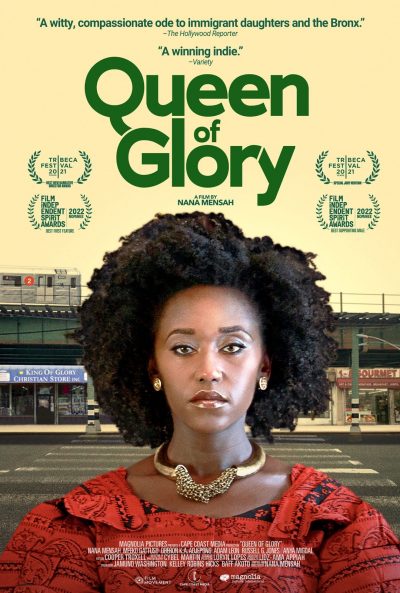
To paraphrase an old adage, you can take someone out of their native culture, but you can’t take the native culture out of that person. So it is for a young Ghanaian doctoral student/scientist (Nana Mensah) attending Columbia University who has endeavored to become Americanized, distancing herself from what she sees as her folksy, homespun roots, including the attitudes and practices of many of her über-Christian family members. She’s also made plans to move to Ohio with her boyfriend (Adam Leon) and start a brand new life of her own. All of those plans get sidetracked, however, by her mother’s sudden death, leaving her to sort out matters related to mom’s funeral and her estate, which includes her home and a business – a saccharin-encrusted Christian bookstore. Needless to say, this leaves the beleaguered protagonist in a pickle – does she follow her dreams or remain loyal to her roots (particularly when family members engage in more than a little less-than-subtle arm-twisting)? Actor-writer-director Mensah’s delightfully wry comedy tickles the ribs with wickedly funny humor that the often-thwarted ambitious among us (especially those of us who come from overbearing families) can readily appreciate, frequently with vibes reminiscent of films like “Shiva Baby” (2020), “Home for the Holidays” (1995) and “The Forty-Year-Old Version” (2020). And, for its efforts, “Queen of Glory” earned two 2021 Independent Spirit Award nominations for best first feature and the supporting performance of Meeko Gattuso as an ex-con bookstore employee, one of many colorful supporting players in the film. A few sequences feel a little drawn out, but this is a film with its heart – and funny bone – in the right place, making for an agreeably amusing watch.
“Strawberry Mansion” (USA) Web site Trailer Blog
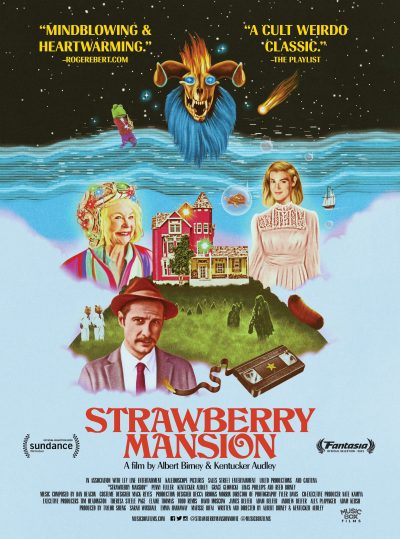
Wow, this is without a doubt one of the most inventive releases I’ve seen in a long time. This little-known sci-fi gem from directors Kentucker Audley and Albert Birney serves up a funny, thoughtful meditation on the nature of existence, the intrusiveness of attempted mental manipulation and the perils of unbridled greed, all wrapped up in a delightful, visually sensational package. It’s also one of the most romantic stories I’ve screened in ages, conveying genuine, heartfelt emotion without ever becoming schmaltzy, a rare accomplishment in general and something rarely seen in this genre. The film’s scrupulous attention to detail in the production design and writing is absolutely astounding, and its inventive, clever creativity sparkles but without ever becoming exceedingly excessive. There’s a lot to like in this Sundance Film Festival NEXT Innovator Award nominee, as well as a lot that gives viewers pause for thought. And, aside from a slight tendency to stretch things out a little too long in the final act, there’s really not much else to criticize here. This one may not appeal to everyone, but, for those who value cinematic innovation without becoming tedious, annoying or implausible, this one is for you.
“Tár” (USA) Web site Trailer Blog
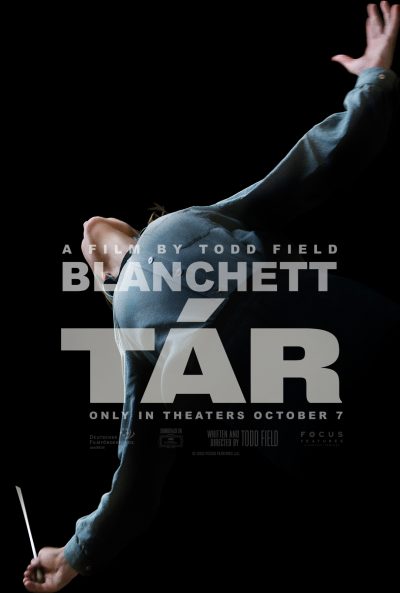
Unquestionably this is one of the most unusual offerings of 2022. And, while much of writer-filmmaker Todd Field’s latest – his first directorial effort in 16 years – succeeds, there are sequences that could definitely use some work, especially at the outset of this somewhat overlong release. This tale of a brilliant, compulsively driven maestra (Cate Blanchett) manages to muster its share of dramatic tension and artistic exuberance, but it also leaves its share of loose ends and unclear motivations, making viewers wonder why events unfold as they do (and even more so about why they should care). It’s a body of work that also leaves open the question of whether this is innately a grand tragedy of comeuppance or a tongue-in-cheek exercise in pretention (again, something more to make audiences wonder why they should care). But perhaps the biggest irritant is the picture’s annoying and tiresome tendency (especially early on as the story is establishing itself) to break into protracted, insular discussions about classical music (and the business of it) that sound more like classroom lectures (or professional gossip) than bona fide credible dialogue. Much to its credit, the film features what is perhaps one of Blanchett’s best-ever screen performances (the winner of Golden Globe and Critics Choice Awards), a finely tuned ramping up of the escalating pathos the further one gets into the narrative and a positively superb classical music score. And, for its accomplishments, “Tár” has earned an array of awards and nominations, most notably six Oscar nods (including best picture). Is that enough to save the film, though? I’d provisionally say yes, but, if none of this sounds like it would appeal to you, I’d recommend that you give this one a pass and rent one of the protagonist’s many other fine releases instead.
“Utama” (“Our Home”) (Bolivia/Uruguay/France) Web site Trailer
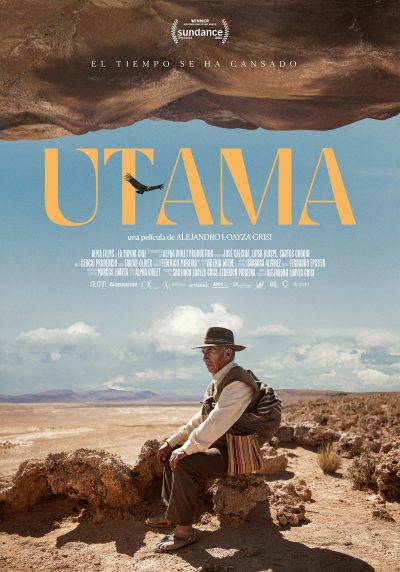
Knowing when to hold on and when to let go can be fraught with difficult, emotionally charged choices. So it is for an aging farming/ranching couple (José Calcina, Luisa Quispe) in the Bolivian highlands, where they have been facing an unusually long and devastating drought that threatens their way of life, not to mention their very existence. In their attempt to hang on, life becomes increasingly difficult, forcing them to consider their options, especially when their grandson (Santos Choque) visits and puts the question to them directly. Director Alejandro Loayza Grisi’s debut feature tells an intensely meditative heart-tugging tale photographed with stunningly gorgeous cinematography, backed by the fine performances of Calcina, Quispe and Choque, all in their premiere roles. There are some noticeable issues with the subtitling, and the pacing in the second half can be somewhat sluggish at times, but the picture gets far more right than not. And, for its efforts, this thoughtfully insightful offering captured the 2022 Sundance Film Festival Grand Jury Prize in the World Cinema – Dramatic competition. This fine release is well worth a look, especially in a world where the cycle of death and rebirth has become such a profound element in environmental, cultural and spiritual circles, aspects of life that ultimately touch us all.
“The Whaler Boy” (“Kitoboy”) (Russia/Poland/Belgium) Web site Trailer Blog
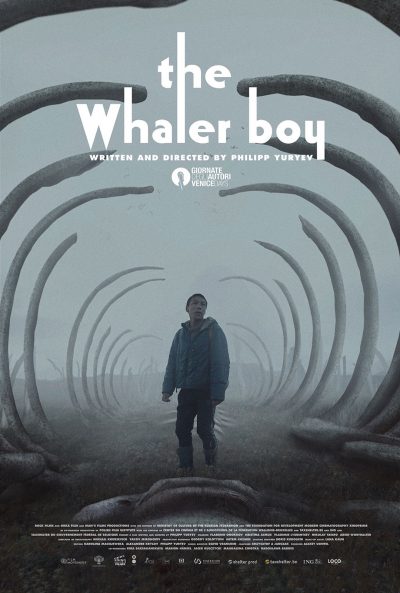
Coming of age is a universal human process that virtually everyone goes through, no matter where they live and under what conditions. So it is for Lyoshka (Vladimir Onokhov), a 15-year-old who lives with his grandfather (Nikolay Tatato) in a whale hunting village in the Chukotka region of eastern Siberia along the shores of the Bering Strait. Like many of the men in his community, which has a pronounced dearth of women, he’s a red-blooded sex-starved male whose only contact with the opposite sex is through the performers on erotic video chat sites. And, like many young men in his peer group, he’s captivated with what he sees as his hormones flourish. He’s particularly smitten with a woman who goes by the screen name HollySweet999 (Kristina Asmus), a flirtatious blonde with whom he naïvely believes he’s made a genuine personal connection. And, because of that, he’s determined to meet her by somehow crossing the narrow nearby strait and making his way to her in, of all places, Detroit, a destination he erroneously believes he can reach with speed and ease. In bringing this story to life, writer-director Phillip Yuryev’s debut feature skillfully blends aspects of multiple genres and narrative formats, including elements of road trip tales, cross-cultural stories and personal transformations, along with adventures in sexual awakening, loss of innocence and rediscovered gratitude. The picture’s expertly penned script captures and conveys a variety of moods, from refreshingly whimsical to delightfully humorous to deadly serious and even deftly surreal, making for a viewing experience that’s always engaging, never dull and generally free of flotsam. In tandem with this, though, sensitive viewers should be aware that the director rarely holds anything back, including rather explicit depictions of sexuality and graphic footage of an actual whale hunt, story elements that some might find offensive or disturbing. There is also a slight tendency for the story to drag a bit toward the end. These matters aside, however, “The Whaler Boy” is an inventive take on a formula format that could easily have become trite, clichéd and melodramatic if left in lesser skilled hands, but, thankfully, that’s not the case here. This enjoyable little-known gem is well worth the time.
Copyright © 2022-2023, by Brent Marchant. All rights reserved.