Reviews of "Official Competition," "Endangered" and "Nude Tuesday" are all in the latest Movies with Meaning post on the web site of The Good Media Network, available by clicking here.


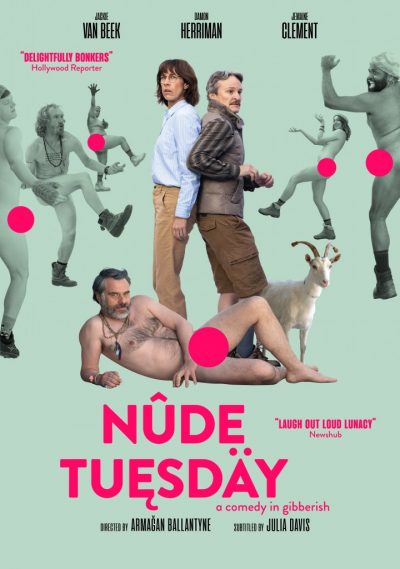



Reviews of "Official Competition," "Endangered" and "Nude Tuesday" are all in the latest Movies with Meaning post on the web site of The Good Media Network, available by clicking here.
“Nûde Tuęsdäy” (“Nøken Tĩsdøĝ”) (2022). Cast: Jackie van Beek, Damon Herriman, Jemaine Clement, Ian Zaro, Charlie Preston Crayford, Byron Coll, Yvette Parsons, Chris Bunton, Chris Parker. Director: Armağan Ballantyne. Screenplay: Jackie van Beek. Story: Jackie van Beek and Armağan Ballantyne. Subtitle Writers: Ronnie Chieng, Celia Pacquola and Julia Davis. Web site. Trailer.
It’s been said that talk is cheap. And, unfortunately, when it’s treated as such, its value is often weakened and, consequently, undermined. That can prove problematic, even fatal, in significant applications, such as self-expression and the conveyance of important or meaningful information. The implications of this can carry tremendous impact, especially when it comes to things like relationships, particularly those of a high personal nature, as is the case in the raucous new sophisticated silly sex comedy, “Nûde Tuęsdäy” (“Nøken Tĩsdøĝ”).
When things go south in the bedroom, maintaining a relationship can be challenging, even for those who have been together for a while. So it is for longtime married couple Laura (Jackie van Beek) and Bruno (Damon Herriman), a suburban working class duo with two kids. Laura is preoccupied with her job at an advertising agency, keeping up the household and attempting to treat a chronic female problem that has caused her to lose virtually all interest in sex. Bruno, meanwhile, goes about his business as a salesman at a plumbing fixture retailer and doing his best to be a good dad, but those responsibilities have done nothing to diminish his libido. His wife’s lack of desire, however, thwarts him at every turn, leading him to partake in one cold shower after another.
Because of these opposing attitudes, Laura and Bruno seem to keep talking past one another, not really hearing what the other has to say, especially when it comes to their love life. This is reflected in the film’s dialogue, which is spoken, quite literally, in gibberish, with English “translations” shown in subtitles. This clever linguistic element thus serves to reinforce the frustration the spouses are feeling. Laura believes she’s being pestered for something for which she has no time, energy or desire. Bruno, in the meantime, feels he’s being deprived of something that should be a normal part of a healthy relationship. Of course, as these circumstances demonstrate, that relationship has become anything but healthy.
So what are Laura and Bruno to do? There are solutions out there, but they don’t appear to have explored any of them, given their respective lack of interest and effort. But one possible remedy emerges when they receive an anniversary gift from Bruno’s unapologetically outspoken mother – an all-expense-paid visit to an erotically focused couples retreat in the wilderness. Laura and Bruno are initially unsure about whether to avail themselves of this unexpected present, but they soon relent and decide to give it a shot for what it’s worth. Little do they know what they’re getting themselves into.
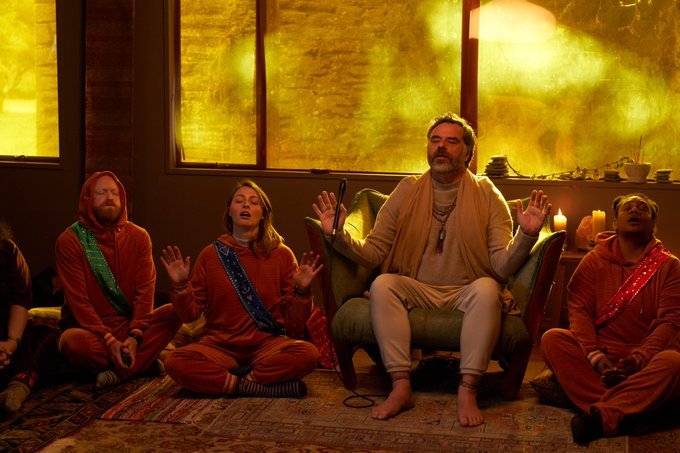
Upon arrival at the retreat, Laura and Bruno feel like the proverbial fish out of water. They meet an array of colorful couples who are involved in all manner of different relationships. They find heterosexual, bisexual and gay partners who have teamed up in various commitment configurations with differing numbers of participants. They’re all generally enthusiastic about their participation in the event, thanks in large part to the facilitation of an enigmatic but self-absorbed, whacked out sex guru, Bjorg (Jemaine Clement). But Laura, and, to a lesser extent, Bruno, are reluctant to join in the activities, given their highly unconventional nature, such as a series of outlandishly hilarious exercises that positively slay libidinous group encounters and esoteric New Age gatherings. The uptight couple is even asked to select a farm animal mascot to provide them with sensual “inspiration” to help them get their sex life and relationship back on track.
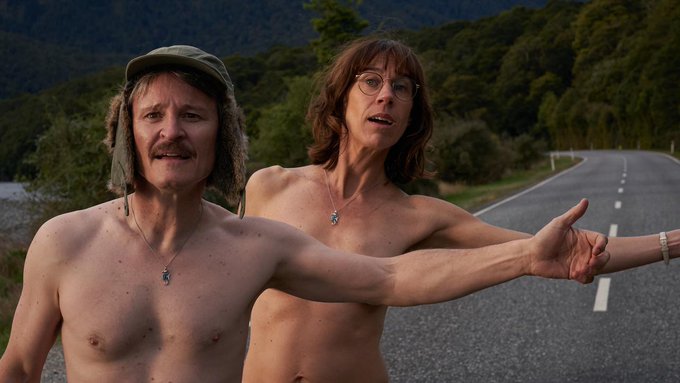
As time passes, Laura and Bruno begin to warm to their circumstances, a process in which they learn new things about themselves and their marriage. Inhibitions fall away, but not necessarily in expected ways, again, often with sidesplitting outcomes. But what will this mean for their future? That remains to be seen, particularly in light of their participation in the retreat’s marquee event, Nude Tuesday. Clarity may at last be possible – or so they hope.
Communication is fundamental to the success of any relationship, be it of a creative, business or romantic nature. Yet all too often this is where these affiliations begin to suffer and break down. Ideas aren’t expressed as clearly as they could be – or at all – leading to an assortment of problems. Frustration frequently emerges, leading to a distancing that’s not entirely unexpected. And, before the partners to these arrangements are aware of it, things dissolve, an often-regrettable (and avoidable) outcome.
So what causes this breakdown in communications? It frequently rests with the partners not being able to adequately express themselves. At the heart of this is an inability or unwillingness to sufficiently put their beliefs into words. And that underlying failing carries bigger implications, because our beliefs form the basis of the reality we experience thanks to the conscious creation process, the philosophy that maintains these resources produce those results. When our beliefs are inadequately conveyed to those we depend on in such collaborations, they become innately misinterpreted, leading to disconnects that can set us on the path to problems and eventual dissolutions. How sad is that, particularly when such outcomes can be prevented?
Such situations are characterized by the aforementioned act of talking past one another. When each partner in a relationship is ill equipped to articulate what he or she wants, misunderstandings of the beliefs underlying them result, producing circumstances that the parties are likely to find unsatisfactory. As noted above, this can lead to frustration and, eventually, animosity and resentment.
This naturally begs the question, “Can these scenarios be avoided?” The answer, thankfully, is a resounding yes, but it takes a concerted effort to bring it about. Key to this is finding the means to express our beliefs as clearly and effectively as possible. But, before that can happen, we must first make an attempt at precisely identifying what those beliefs are to begin with, a capability at which many of us may be deficient, particularly if we’re unaware of the conscious creation process and its ramifications. Thus making ourselves aware of this school of thought and its basic principles is a good starting point. And, with such an awareness in hand, we can then move on to identifying the specific beliefs we hold and what they’re intended to manifest.
Once these steps are put in place, the relationship parties can then compare notes. With each collaborator making his or her wishes plainly known so that the other understands what’s being sought, the partners can then move toward devising a solution that meets both of their needs and desires. This makes possible successful acts of co-creation, where everybody has the potential to come up a winner.
This process probably seems self-evident to most of us, as it essentially outlines the means to reach effective compromise. However, it’s astounding how often we fail to attain such a result. In most of these cases, failure is usually attributable to not putting the foregoing groundwork into place. Instead, we look on in confusion, unable to fathom how our fellow collaborator doesn’t seem to grasp where we’re coming from or what we want. Again, this prompts the aforementioned frustration, animosity and resentment, qualities that lead to breakdowns in communication and, ultimately, the undertaking in which we’re mutually engaged.
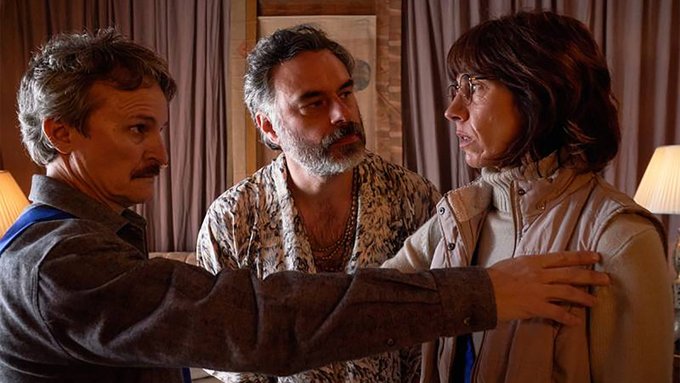
Laura and Bruno epitomize this scenario. Given Laura’s mindset with everything she has going on in her life, she’s unable to understand why Bruno is insensitive to her needs and can’t control his testosterone-driven urges. By contrast, Bruno is unable to fathom Laura’s unwillingness to engage in an activity that he sincerely believes is supposed to be an integral aspect of a healthy relationship. Their needs and the beliefs that underlie them apparently aren’t being expressed well enough so that the other can understand them, producing the fundamental disconnect that the couple is experiencing, an outcome that illustrates what can result when our beliefs are not given adequate articulation.
In its own way, the retreat is an attempt to compensate for the failure of previous efforts at reaching compromise. Unconventional though it may be, the event could be seen as a manifestation designed to draw out the beliefs that Laura and Bruno have not adequately expressed through more typical means. And, to an extent, that proves to be true, though, somewhat surprisingly, the retreat sheds light on revelations in the couple’s respective beliefs that they were unaware of going in. This raises the specter that what Laura and Bruno each thought they knew about their beliefs at the outset was intrinsically flawed, that they were clinging to assessments that did not provide them with a clear picture of their actual beliefs.
When such revelations emerge, we may be dumfounded at what we discover. However, if we’re to truly get what we want out of life, we have to operate from a position of truth, especially where our beliefs are concerned, given their power and function. These developments may knock us for a loop, and we might lament some of the consequences that come from them. But, if such a venture leads us to a place of happiness and fulfillment that potentially exceeds our expectations, isn’t that worth it?
That’s what Laura and Bruno could be preparing to discover for themselves. Getting there may take them out of their comfort zone, but, considering that their situation hasn’t been terribly comfortable for quite some time, then one could argue that the process represents time and effort well spent. And who knows what that could yield!
The foregoing is not meant to suggest that this film is all seriousness and heavy-handed psychological drudgery. Far from it. However, it’s heartening to see a film with subject matter like this making an effort to provide viewers with something more than what they typically find from movies in this genre. That’s why I have termed this offering “a sophisticated silly sex comedy.” To most, that might sound like a contradiction in terms, yet that’s precisely what this hilarious release from Down Under is all about. Director Armağan Ballantyne’s second feature follows the raucously funny misadventures of a sexually stagnated couple as they attempt to revive the erotically amorous aspect of their marriage, and it does so with inventive touches in the dialogue and sight gags, setting it apart from many other contemporary comedies, particularly those of this kind. Admittedly, the film starts to run out of gas in the final half hour, and its otherwise-frenetic pacing sags a bit when the narrative starts to turn more serious and sentimental. However, there’s a lot more going on with this ambitious offering than one might expect, especially in the laughs department. It’s quite a feat to take material that might ordinarily be considered crass or low brow and make it funny with a surprising degree of style and sophistication. Give this one a chance; you just may walk away with a sore funny bone.
“Nûde Tuęsdäy” deserves special recognition for its imaginative linguistics, using gibberish as the basis of the dialogue. To the ear, the “language” of the film sounds like an amalgam of various European tongues, most notably Dutch and Scandinavian dialects. But the humor behind this fabricated language comes out strongest in the subtitles, which are positively uproarious. The impact of their humor benefits tremendously from the split-second delay that comes between hearing the lines spoken and reading their content, providing an ongoing series of “aha!” moments as the translations appear on screen. Of course, it certainly helps that the subtitles are brilliantly written. Moreover, they play such a vital role in the character and success of the film that their writers have been deservedly given their own writing credits, something I’ve never before seen accorded to the creators of screen captions. According to director Ballantyne and actor-writer van Beek, the subtitle crew was given tremendous leeway in coming up with their material, and that unfettered creativity shows in the boundary-pushing result.
Incidentally, the use of gibberish in the film is so pervasive that it even turns up in the “lyrics” of cover versions of several musical numbers. Viewers are sure to chuckle when they hear the gibberish versions of songs like the Talking Heads’ Road to Nowhere (itself a wryly fitting choice in light of the picture’s subject matter), the Zombies’ Time of the Season and the Phil Phillips romantic standard Sea of Love. Indeed, budding screenwriters and soundtrack composers could learn a lot from the innovation at work in this offering.
Finding this film may take a little effort, at least at the moment. It’s currently playing theatrically Down Under, and it’s showing up on the film festival circuit elsewhere. However, I wouldn’t be surprised to see a North American release come along at some point given the highly favorable response this picture has received from movie critics. That could go a long way toward eventually getting this worthwhile offering onto screens and/or streaming services in the US and Canada, something well worth waiting for.
“We have a failure to communicate” is frequently trotted out when situations calling for cooperation begin breaking down. How ironic it is that we’re often able to identify the source of this problem without being able to rectify the source of the trouble itself. And that’s where these matters can fall apart – and needlessly so. However, with some effort to better express ourselves and articulate the beliefs that underlie where we’re coming from, this so-called failure needn’t be an issue at all, and such an adjustment could help us to forestall difficulties in areas like our dreams, wishes, relationships and – dare I say it – sex lives. And, if that’s not something worth making an effort for, I don’t know what is.
Copyright © 2022, by Brent Marchant. All rights reserved.
“Endangered” (2022). Cast: Sáshenka Gutiérrez, Carl Juste, Oliver Laughland, Patrícia Campos Mello, Joel Simon, Enrique Tarrio. Archive Footage: Omar Jimenez. Directors: Heidi Ewing and Rachel Grady. Web site. Trailer.
The freedoms that a democracy enjoys depend heavily on having watchdogs on duty to protect and preserve those precious liberties. And, in many instances, that responsibility typically falls to the press, particularly one that has been imbued with the ability to operate freely and without interference. This is most notably true in the US, where the First Amendment to the Constitution guarantees this right. It’s a principle that has consequently inspired media organizations in other countries, too, especially those located in nations where those outlets have had to struggle to do their jobs under the thumb of severe government scrutiny and restrictions. But now this institution has increasingly come under fire, threatening its existence and, by extension, much, much more, as the incisive new HBO documentary “Endangered” so poignantly illustrates.
Because of its sacred charge, journalism has long been regarded as a noble profession, particularly when its practitioners have performed stellar jobs in uncovering crime and corruption that threaten the public’s well-being, as was the case, for example, with the Washington Post investigation in exposing the Watergate scandal. It’s a profession that has typically been regarded in high esteem, especially for those who toil away at it for underwhelming recognition and often-substandard pay. But those who do this work generally feel compelled to forge ahead with it in order to get to the truth, a passion that transcends these measures of worth.
In recent years, however, that has all begun to change, for a variety of reasons. Declining revenues and the rising costs of doing business have caused many media outlets (especially newspapers) to close down or consolidate, leaving the public with fewer (or sometimes even no) such organizations in their geographic areas, as happened, for instance, in Youngstown, OH, with the closure of its daily newspaper, The Youngstown Vindicator. And, with fewer sources of news and information overall, that has meant less diversity and breadth in the coverage of everyday events, with some stories going completely unaddressed and others being presented with decidedly singular perspectives. Some media organizations have even pounced on these conditions as an opportunity to tinge their reporting with their own particular slants, be they left-leaning or right-wing, thereby intentionally skewing the principle of objectivity that’s supposed to be the media’s guiding mantra. This, in turn, has led to the proliferation of pontificating and even so-called “fake news.” It’s left the public increasingly wondering who to trust.
Given this shift, journalists are increasingly no longer looked upon in the same respected light that they once were. This has been exacerbated by the rampant polarization that has been simultaneously occurring in society at large, with many in the public gravitating to support media outlets that agree with their point of view and vociferously shunning those that do not. It’s as if the media are prompting the public to rally around those organizations that serve as echo chambers for their points of view in blind disregard for the accuracy of what’s being reported. This, needless to say, is not good for democracy.

“Endangered” shines a bright light on these troubling developments. In addition, it shows the increasingly difficult conditions under which journalists have been forced to work, including genuine threats to their livelihoods and personal safety. Public opinion of reporters has noticeably eroded, and many have faced increased harassment from authorities, as seen in archive footage from the on-air arrest of CNN journalist Omar Jimenez, who was escorted away by police simply for doing his job in covering a public protest. So much for the First Amendment.
The resources made available to journalists to do their work have also been scaled back. For example, photographer Carl Juste and his peers at The Miami Herald have had to learn how to get along without access to a news room, a significant adjustment for a major daily newspaper such as this. Imagine trying to do your job without a central location to confer with fellow professionals on matters essential to its execution, especially something as critical as getting out the news. Working remotely is one thing, as the post-pandemic world has shown us, but collaborating on this kind of team effort without the benefit of a central resource hub is something else entirely.
The decline in respect for reporters has also made it more difficult for journalists to cover their assignments. Sources such as government officials have resorted to practices like answering the questions they want to answer rather than answering the questions they’ve been asked, if not completely ignoring such inquiries entirely, an experience Oliver Laughland of the British newspaper The Guardian has undergone in his coverage of American politics. Such tactics aren’t exactly new, but they have become standard operating procedure to such a degree these days that it’s hard not only to get to the truth, but even to get to the gatekeepers of it.
These challenges have had a major impact on the coverage of some of the major news stories of recent years, as documented by frontline footage of these events, some of which has been incorporated in the film. Reporting on incidents like Black Lives Matter protests in response to the George Floyd killing, the handling of the COVID pandemic, the 2020 US presidential election and the January 6, 2021 storming of the US Capitol has routinely been hampered by the presence of defiant anti-press demonstrators, aggressive special police forces, and extremist groups like the Proud Boys and their incendiary chairman, Enrique Tarrio. It’s almost enough to make the average citizen wonder why anyone would want to engage in a seemingly insane line of work like this.

These issues are by no means limited to the US, either. Such hindrances have long been in place in other countries, but the impediments on what journalists in those nations can do have been skyrocketing, with harassment and questionable detention becoming the norm for silencing them. Death threats, for example, have become routine against Mexican journalists like photographer Sáshenka Gutiérrez of the Spanish news organization Agencia EFE, who has been courageously covering protests about the country’s spiraling violence against women. Elsewhere, politicians like Brazilian President Jair Bolsonaro have resorted to blatant retribution and outright libel to discredit reporters like Patrícia Campos Mello of the São Paolo newspaper Folha de S.Paolo for her scathing coverage of his corrupt campaign for office.
Such developments have made the work of activist organizations like the Committee to Protect Journalists (CPJ) that much harder. In daily phone conferences with reporters from around the world, from India to South Africa and everywhere in between, the organization has learned of growing atrocities committed against journalists. However, as now-former CPJ director Joel Simon explains in the film, these incidents reflect the need to remain diligent in the face of such outrageous tragedies. If we fail to act in the face of such growing violence and intimidation, it’s more than just journalists who stand to lose.
What’s perhaps most important in this is what we as a society have come to believe about the nature of the media, for our beliefs shape what unfolds, thanks to the conscious creation process, the philosophy that maintains the power of our thoughts, beliefs and intents determines what ultimately manifests. This raises some important questions, such as how much value do we place on the continued existence of an unfettered, objective press? Do we really need it as a channel for covering stories that have meaningful impact on our daily lives and the health of our economics, politics and culture? Or is it something to which we devote little thought, perceiving it as merely an outlet for sports scores, weather forecasts and celebrity gossip? Think of what kind of world we would have if we believe in that last question. Where would our democracy be then?
Then there’s the question of media bias, another area affected by the impact of our beliefs. Do we really believe, for example, that the press should be nothing more than a source of parroting what we already think? Or do we want a fair and impartial institution that’s going to enlighten us to what we don’t know – and that could potentially affect us in negative ways? Are we truly that unconcerned and apathetic?

Bias also raises the matter of sensationalism and tabloidization, qualities that have been increasingly infiltrating the media for several decades, a topic that, unfortunately, is touched upon only by way of implication in the film. These aspects of the media shouldn’t be overlooked, however, as they, too, are driven by the beliefs we collectively hold about what we expect out of the press. In many ways, these characteristics have arisen out of our desire for media that reflect our views, again often of a polarized nature. The trumped-up dramatics associated with sensationalism and tabloidization are designed to get our attention and draw readers, listeners or viewers to those outlets that embody the exaggerated viewpoints they hold. And it’s another regrettable development in the evolution of the press as it has turned up the shrillness factor in the reporting of the news (if it can even be called that any more). The result is a loss of a reasoned perspective, something else that threatens the preservation of a fair, free, objective press (and, potentially, the freedoms it’s meant to help protect).
“Endangered” primarily focuses on what’s been happening (and likely could happen) in the mainstream press, a longstanding sizable segment of the media community. It depicts the efforts that such outlets have invested in covering the aforementioned major news stories, journalistic undertakings that chronicle the work of reporters who are still genuinely committed to doing their jobs in the time-honored tradition that has long characterized this institution. It’s indeed gratifying to see the film incorporate such material, for it provides a much-needed sense of balance given the increasing bashing that the mainstream press has been subjected to in recent years (and, in some cases, deservedly so, especially in instances where some media outlets have given in to sensationalism and tabloidization).
The news stories that the film has chosen to focus on generally show sincere efforts by the mainstream press in trying to cover them fairly, professionally and responsibly, though I feel that these media outlets got something of a pass when it comes to their reporting on the COVID crisis. What’s shown of that coverage here illustrates the same kind of sincere commitment that was employed in the reporting of the other news stories. But, sadly, the picture largely ignores much of what I believe was exaggerated, fear-mongering coverage that the mainstream press engaged in when reporting on the pandemic, one of the film’s disappointing aspects, in my view. Moreover, that oversight, from my perspective, illustrates just how insidious some of these emerging developments in the journalism community can be. If something so glaring as this can be essentially disregarded, then that means we’re losing sight of what’s going on in the media. The failure to address changes like these could potentially carry serious implications for us all – and not just in the press, but also in society at large.

Considering the immense scope of this subject, it’s admittedly difficult to devote coverage to all of the issues involved in a single film. Among those that receive little or no attention are the rise of corporate influence and agendas on media organizations, the impact of consolidation of media outlets in fewer hands, the rise of alternative media (and the dual-edged sword it represents), and the emergence of media celebrities versus true journalists. Like the aforementioned issues, these developments all have potential impact on what is and what might happen to the press. They merit scrutiny, not only in terms of what manifests, but also in terms of what we expect from them, something that’s a direct result of what we believe the press is supposed to do in providing us with information and in living up to its responsibility as a valiant guardian of the liberties of our society. How will it turn out? A lot depends on us and the value we place on these considerations. To see what transpires, stay tuned – while we still have the opportunity to do so.
Being a journalist isn’t what it used to be, as directors Heidi Ewing and Rachel Grady clearly show in this compelling new documentary. The filmmakers present an unflinching look at what media professionals are increasingly up against in simply doing their jobs and what we all stand to lose if the Fourth Estate is allowed to be further compromised. The compilation of frontline footage of major news stories and the experiences of the four featured journalists paint a distressing picture for the future of this once-noble profession, something not to be overlooked or ignored. To be sure, some of the material could stand to be better organized and more fully developed, and the film’s use of split screen imagery definitely should have been scaled back. However, as a college-trained journalist who worked in the field for years, I find it sad to see what’s become of the profession I so loved – and disheartening to witness how little most of society cares about its decline. Let’s hope this film educates us to this issue so that we don’t live to regret it. The film is available for streaming on HBOMAX and other online platforms.
A longtime fellow journalist and friend of mine wryly observed not long ago that “We no longer have journalism anymore; we have ‘media’ instead.” How profound and incisive those words have unfortunately become. In a society where newspapers, for instance, have come to be regarded more for their value as packing material than as sources of vital news and information, it’s troubling to think about where we might well be headed. Indeed, I’d assert that the value of a free and fair press is essential to the health and well-being of society. But I’d like to take things a step further. While there should be no doubt that the media have an obligation to fulfill the public’s right to know, there should be a corresponding responsibility on the part of the public to ensure this institution’s continued right to exist. To do any less runs the risk of following a truly perilous course, one from which there may be no return.
Copyright © 2022, by Brent Marchant. All rights reserved.
Tune in for the latest Cinema Scribe segment on Bring Me 2 Life Radio, beginning Tuesday July 12, available by clicking here. You can also catch it later on demand on Spreaker, Spotify, Apple, iHeartRadio, Google Podcasts, Castbox, Deezer, Podchaser and Jiosaavn.


“Official Competition” (“Competencia oficial”) (2022). Cast: Penélope Cruz, Antonio Banderas, Oscar Martínez, José Luis Gómez, Manolo Solo, Nagore Aramburu, Irene Escolar, Pilar Castro, Koldo Olabarri, Juan Grandinetti. Directors: Mariano Cohn and Gastón Duprat. Screenplay: Mariano Cohn, Andrés Duprat and Gastón Duprat. Web site. Trailer.
To thine own self be true. It’s solid, sage advice we’d all be wise to heed, especially if we lose sight of it and fall prey to the perils of self-deception, something that can get us into trouble with both ourselves and others. Yet it’s astounding how often we ignore this wisdom and stray off into dangerous territory, full of pitfalls with serious consequences. Such is the case with a trio of self-important rivals struggling to work together on the same project, as seen in the wickedly funny new Spanish dark comedy, “Official Competition” (“Competencia oficial”).
Aging pharmaceutical company executive Humberto Suárez (José Luis Gómez) knows that his remaining days are numbered. At age 80, he waxes philosophically about his life, musing particularly about how he wants to be remembered. He’s eager to be thought of as someone who contributed more to life than just becoming a wealthy capitalist. He believes it’s important to leave a meaningful legacy, and so, with his trusty aide, Matías (Manolo Solo), he mulls over some ideas. Perhaps he could do something to benefit the public, like finance the construction of a bridge, one that would ultimately bear his name for his selfless generosity. But then he decides that’s not lofty enough. Instead, he conjectures, maybe he should do something in the arts, like bankroll a film, a project that would undeniably elevate his profile. And so, with that in mind, he sets out to become a movie producer, an undertaking sure to cement his reputation as an esteemed patron of the arts.
After a lengthy and expensive negotiation to acquire the movie rights to a popular and well-respected novel, Humberto and Matías begin assembling a team to make the picture. Heading up the venture is iconic arthouse filmmaker Lola Cuevas (Penélope Cruz), an enigmatic artiste who has developed a reputation as one of the most revered and sought-after, if somewhat inscrutable, directors in the business. When the flamboyant auteur meets with Humberto, she lays out her vision for the project, one that captivates her benefactor the more she tells him about it, especially when he acknowledges that he hasn’t read the book on which the film is based. She then discusses her plans for casting the movie’s two fraternal protagonists, a pairing consisting of actors Félix Rivero (Antonio Banderas) and Iván Torres (Oscar Martínez). This duo that has never worked together before, but, as two of the hottest and most distinguished actors in the industry, she’s convinced they’re perfect to play the lead roles.

Lola believes Félix and Iván are ideal to play the parts of two rival brothers, in large part because they have different temperaments that suit them perfectly to portray these characters., who are likewise opposite in temperament. However, she doesn’t quite realize how significantly those differences will impinge on their working relationship with one another. Félix is a big, popular movie star, while Iván is a serious actor. Félix relishes attention and unhesitatingly leaps into the limelight, while Iván eschews the rewards of fame and willingly shuns anything that might cheapen the caliber of his work. These polar opposite qualities make for a pairing that is undoubtedly destined to clash – and even more so than the roles themselves call for. And, as rehearsals play out, the conflict between the two actors becomes ever more apparent as they constantly try to one-up one another.
Of course, Lola is not without the means to counteract this rivalry. In fact, some of her methods for shaping the personas of her characters are so bizarre and outrageous that they routinely baffle – if not frustrate and infuriate – her cast members, giving them, in an oddly backhanded way, a point of common interest. This may not be Lola’s primary intent in implementing these practices and exercises, as she believes they’re integral elements of her artistic process. But, if they help to keep Félix and Iván in line and get her the results she wants, she’s not going to protest, either.
And so the process begins – and what an unusual one it is. The film takes viewers through a series of hilarious scenarios where the true natures of these three egocentric personalities come to the fore. Lola presents herself as an allegedly erudite creative who regularly employs cryptic tactics to hone her craft, mold her cast, express herself and pontificate about the essence of art, unaware that much of what she says amounts to vacuous nonsense. Félix comes across as a brazen, self-serving, self-absorbed show-off who likes to believe that he’s capable of doing work better than what he has typically done but who also doesn’t hesitate to set aside that ambition if he can get his needs for fame, money and sex fulfilled more expediently via available shortcuts. And Iván personifies (or so he thinks) the notion that he’s an impeccably serious thespian who doesn’t need all of the trappings of success – and would even go so far as to self-righteously turn down well-earned accolades – if that’s what it takes to preserve such a noble reputation (despite the fact that he secretly craves all of those perks and honors that have repeatedly eluded him). Together they embark on an array of bits that shine a bright light on their true colors, their dysfunctional relationships with one another, and a host of other incidents that skewer the often-self-important character of the arthouse cinema and film festival communities.

And what’s Humberto to make of all this? Well, he has the “privilege” of sitting back and watching how his investment plays out. He’s often stunned by what he sees, such as when he arranges for his daughter, Diana (Irene Escolar), to be cast in a supporting role in the picture, an experience that proves to be eye-opening in more ways than one. But, then, that comes with the territory with this picture, one whose dark humor and satirical narrative tickle the funny bone in myriad sidesplitting ways.
Oh, to be a revered film industry artist! It affords so many opportunities for meaningful creative expression – even if one is full of oneself, as is the case with the trio of collaborators on this new movie project. Lola, Félix and Iván genuinely believe in the veracity of whom they think they are and what they embody as unquestionable, bona fide talents, when, in fact, they are better characterized as the epitome of self-importance and pomposity. It’s unfortunate that they cling to such false views of themselves, given that they all probably possess a modicum of innate talent somewhere deep down inside themselves. The question here, though, is how sincerely do they represent what abilities they actually have? Indeed, are they being authentic or merely posing?
Based on what they’re showing here, it’s arguably more of the latter than the former. Nevertheless, they’re able to get away with this so convincingly because they’ve bought into beliefs about themselves so thoroughly that they have enabled themselves to successfully come across the way they do in the eyes of others. This is the result of the conscious creation process at work, the philosophy that maintains we manifest the reality we experience through the power of our thoughts, beliefs and intents. Their “acts” are so well-rehearsed that virtually no one questions them; onlookers perceive them as fully clothed emperors. And, to their benefit, Lola, Félix and Iván get away with it, even with someone as savvy as Humberto.

Audience members of this film, however, are unlikely to see them in the same way as other characters in the picture do. That’s because viewers are armed with the power of discernment, which enables them to cut through the clutter and camouflage to see the posers for who they truly are. While members of the entertainment industry press, fans of the characters’ films and even Señor Suárez are unable to pierce the obvious artifice, those watching from the comfort of their theater seats or home living rooms can tell right away that they’re being bombarded with carefully crafted piles of bull. It’s indeed a shame that the others can’t do the same. They’re apparently willing to accept what’s being fed them without question. Even Humberto, who has a sizeable financial stake involved here, is content to accept what they say and do at face value, without hesitation.
Because of this charade, Lola, Félix and Iván run the risk of being caught at some point. They have been engaged in their behavior for so long that they no longer even recognize it, having become second nature to them. As long as it gets them what they want, that’s all that matters, regardless of the unforeseen consequences, unintended side effects or lack of self-awareness, a practice known as un-conscious creation or creation by default. At times, though, achieving the desired results may be more difficult than expected, at which point they may have to willfully employ these kinds of tactics, even on one another, something they do repeatedly as their story unfolds. That’s verging on potentially disastrous turf. Healthy competition is one thing, but what could potentially happen here is something else entirely.
In the long run, the trio might actually find that they needn’t engage in such calculated bluster or deception. By tapping into their sense of personal integrity and overcoming their penchant for self-deception, they increase the chances of being true to themselves, particularly in the manifestations they seek to create. This would require them to examine their beliefs (especially those related to self-absorption) to set them on a new path, but that’s not impossible, given that such notions can be quite malleable and open to alteration. As creative types, this should come quite readily to them, too, given their inherent ability to envision new possibilities. After all, if they can do that in front of a movie camera, they should be able to do it in everyday life as well.

Of course, bringing this about would also require Lola, Félix and Iván to take responsibility for their intentions and actions. And, given that they’ve long ducked this obligation, doing so could prove challenging. Are they up to the task? That’s hard to say, especially when faced with incidents when it’s called for, as happens at a critical juncture in the film. How will that unfold? You’ll have to watch the movie to find out.
As Lola, Félix and Iván are thrown together for this project, they seek fulfillment in their respective milieus, even if it means stepping on one another’s toes and pulling scams to achieve their desired ends. And, as they go about this, viewers are treated to the principals’ innocuous, pseudo-profound wisdom about creativity, life, humility and hubris. Writer-directors Mariano Cohn and Gastón Duprat, along with screenplay colleague Andrés Duprat, have cooked up a deliciously wicked dark comedy/satire that skewers the movie industry with wry, hilarious wit and sight gags, splendidly played out by Cruz, Banderas and Martínez, all of whom turn in some of their best-ever work here. The masterfully written script delivers the goods with perfect understatement and just enough believable insincerity yet raucously nasty bits to make everything work just about perfectly. There’s a slight tendency for the pacing to drag at the outset, but, in light of everything else it offers, who cares? For those who enjoy their comedy with a sharp edge accompanied by hefty doses of unbridled comeuppance, this theatrical offering is for you.
Most of us would probably agree that there’s nothing wrong with healthy competition. But, when jealousy, rivalry and self-deception become caught up in the mix, we’re asking for trouble, and it’s a development to which we’re often blinded by the foregoing. This may not be much of an issue in seemingly innocent circumstances, but it can easily become devastating when the stakes rise and the competition morphs into something wholly unhealthy. Lola, Félix and Iván unwittingly provide us with a noteworthy cautionary tale on this score, one to which we’d be wise to pay attention.
Copyright © 2022, by Brent Marchant. All rights reserved.
Reviews of "The Phantom of the Open," "Chernobyl: The Lost Tapes" and "Elvis," as well as a podcast preview, are all in the latest Movies with Meaning post on the web site of The Good Media Network, available by clicking here.


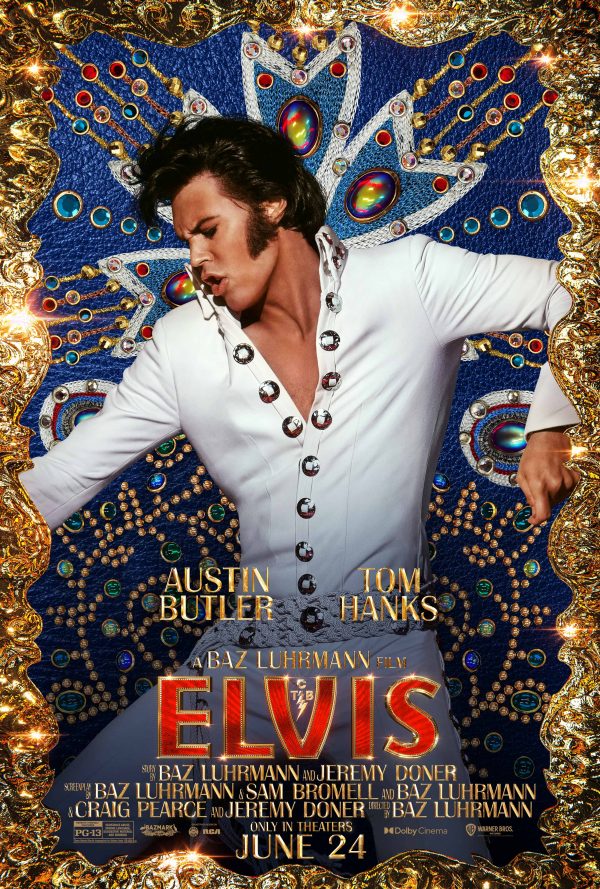
“Elvis” (2022). Cast: Austin Butler, Tom Hanks, Kelvin Harrison Jr., Kodi Smit-McPhee, Olivia DeJonge, Helen Thomson, Richard Roxburgh, David Wenham, Luke Bracey, Dacre Montgomery, Yola, Alton Mason, Shonka Dukureh, Cle Morgan, Nicholas Bell, Chaydon Jay, Tony Nixon. Director: Baz Luhrmann. Screenplay: Baz Luhrmann, Sam Bromell, Craig Pearce and Jeremy Doner. Story: Baz Luhrmann and Jeremy Doner. Web site. Trailer.
Every so often, innovators come along in various fields of endeavor who shake things up and create something unique and inventive, revolutionary conceptions that set their particular milieus of expression on their ear. These creations set new standards for others to emulate or adapt, sometimes even birthing entirely distinct genres different from others that preceded them. In the world of painting, names like Rembrandt and Jackson Pollock come to mind; in writing, icons like William Shakespeare and Ursula K. Le Guin emerge; and in music, the works of Beethoven, Prince and Philip Glass step to the fore. And, when it comes to rock ʼn roll, the king of the genre virtually always springs to mind, the subject of the glitzy new biopic, “Elvis.”
Given how many biographies about Elvis Presley have been made over the years, I had to wonder how much we really needed yet another one. However, director Baz Luhrmann’s new take on the King of Rock ʼn Roll chronicles his story with a highly stylistic approach that hasn’t been as readily apparent in prior productions. Admittedly, the film covers mostly safe territory, presenting Presley’s biography with few new revelations or insights into his life and career. Yet it also places somewhat greater emphasis on certain aspects of the music icon’s life story compared to previous depictions, such as his largely overlooked concerns about social justice issues and his efforts to promote wider awareness of African-American music and artists. In essence, it provides viewers with different degrees of shading and focus that help to distinguish it from earlier efforts.
Interestingly, the film places almost as much attention on the King’s manager, Col. Tom Parker (Tom Hanks), as it does on Presley (Austin Butler). Given how much influence the Colonel had on Presley’s career, it’s hard to separate them. And, from a narrative standpoint, each has a compelling story to tell – Presley with his myriad public personas, from rock ʼn roll bad boy to clean-cut Hollywood film star to larger-than-life Las Vegas stage performer, and the enigmatic Parker with his secretive past, shifty, self-serving manner of dealing, and blustery carnival barker style of management. In some ways, this is as much Parker’s story as it is Presley’s.
The picture’s story line takes a rather rote, highly familiar approach to Presley’s life. Beginning with his challenged childhood in Tupelo, MS, we see a young Presley (Chaydon Jay) growing up in a household largely managed by his mother, Gladys (Helen Thomson), while his father, Vernon (Richard Roxburgh), serves jail time for writing a bad check. Limited income forces mother and son to live in low-income housing in an area predominantly populated by impoverished African-American residents. But that experience exposes young Elvis to the music of his neighborhood peers, something to which he takes an instant liking – and plants the seeds of his future.

Upon relocating to Memphis, TN, at age 13, Elvis continues to develop his interest in music. In the early 1950s, he begins hanging out at nightclubs on the city’s legendary Beale Street strip, where he befriends some of the major African-American musicians of the day, such as B.B. King (Kelvin Harrison Jr.), Little Richard (Alton Mason) and Big Mama Thornton (Shonka Dukureh). Their influence rubs off on him significantly, and that’s reflected in his early recordings, which receive considerable regional radio airplay. His songs soon catch the attention of country musician Jimmie Rodgers Snow (Kodi Smit-McPhee), son of country music legend Hank Snow (David Wenham). The younger Snow, who at the time is touring with his father’s road show, alerts his dad’s manager to the sound of the rising new talent. And that manager, who’s looking to add artists to the road show’s roster of performers, just happens to be Col. Parker.
Before long, Elvis is on the Hank Snow show lineup, quickly rising through the ranks to become the most popular performer on the show card. But Snow is unhappy with Presley’s “lewd” on-stage performances; the youngster’s wildly gyrating hip movements offend his older, more conservative colleague and end up earning him the cheesy, disparaging nickname “Elvis the Pelvis.” Granted, his provocative stage presence develops a reputation for working up crowds into a frenzy (especially among the women, some of whom scream and toss their underwear onto the stage), but Parker does little to restrain his client’s behavior, clearly realizing that’s what sells tickets.
At that point, Snow and Presley part ways, enabling Elvis to become his own headliner. He also manages to land appearances on TV variety shows hosted by the likes of Milton Berle and Steve Allen. However, despite this popularity, his on-stage antics impede him in getting booked to some gigs that hold the promise of greater exposure. It even captures the attention of officials like Sen. James Eastland (D-MS) (Nicholas Bell), who seek to bar this so-called obscene musical menace from the airwaves.
When an altercation erupts at one of Presley’s concert performances, at the advice of Parker, the singer attempts to deflect attention away from the controversy by fulfilling his military service obligation. The move is designed to repackage the rebellious youth as a clean-cut young man, a more mature version of Elvis who it was believed would be more palatable to mainstream American audiences. Revamping his image is also a step to prepare him for a career as a Hollywood actor, one of Presley’s long-cherished dreams. But things don’t quite work out as hoped for on that front; while longing for substantial dramatic roles, he is primarily cast in innocuous romantic comedies that afford him opportunities to sing as well as act. Those lightweight vehicles are largely panned by critics, despite most of them being box office money-makers, at least at first.
As the 1960s unfold, however, circumstances begin to change for Elvis personally, professionally and culturally, and he experiences his share of heartache and disappointment. His mother’s death at age 46 is a crushing blow. The arrival of the British Invasion, headlined by the Beatles, heralds a change in tastes of popular music. The sociopolitical climate of the country becomes increasingly troubling with the assassinations of Rev. Dr. Martin Luther King Jr. and Sen. Robert Kennedy (D-NY), events that affected Elvis deeply. And, as the decade wears on, interest wanes for Presley’s increasingly silly movie projects. True, there are happy moments, such as the King’s marriage to his loving wife, Priscilla (Olivia DeJonge), but Elvis is desperately in need of reinventing himself.
Presley has many ideas for new projects, most notably overseas tours, but, every time he discusses them with Parker, the Colonel steers his client in new directions. Instead, he proposes such prospects as a television special and performing at the opening of the Las Vegas International Hotel, a venue featuring the largest concert stage in the city. Though initially reluctant to pursue these possibilities, once properly sweet-talked by his silver-tongued manager, Presley agrees to both projects.
Presley’s 1968 comeback TV broadcast proves to be a huge hit, putting his name back on the entertainment map. It’s a triumph that introduces him to director/co-producer Steve Binder (Dacre Montgomery) and talent manager Jerry Schilling (Luke Bracey). Impressed with what they were able to do for him, Elvis begins aligning himself with them more closely, as he begins to realize that Parker may not have his best interests at heart. Those suspicions prove correct when Elvis discovers that Parker is secretly railroading him into commitments that he hadn’t formally agreed to, such as an extended performance schedule at the International in lieu of a promise of an overseas tour schedule. He also discovers evidence that Parker has been fleecing him, at times taking up to 50% of the revenues from certain projects.
As all this unfolds, Presley begins experiencing his share of personal problems. His marriage has hit the skids after the revelation of a series of less-than-discreet affairs. Also, given his ambitious work schedule, Presley becomes dependent on prescription medications, an addiction that exacerbates his rapidly failing health and a noticeable (and frequently lampooned) weight gain. And, as the situation deteriorates, his performances suffer. The onetime innovator who managed to make quite a name for himself and become the best-selling rock ʼn roll artist of all time is in serious decline, and not even his remarkable ability to bounce back and reinvent himself appears to be enough to pull him out of this accelerating downfall.
We should all be grateful for the innovators in our lives. The impact they have on our culture is often tremendous, and, sooner or later, that influence frequently trickles down to us as individuals, shaping us in various ways. This could be by way of imitation or, perhaps more importantly, by way of inspiring us to become innovators in our own right, either in the same field of those who influenced us or in other unrelated but nevertheless significant ways. And that’s something we can thank Elvis for, even if he didn’t realize he was having that kind of impact.
So how do they do this? It’s because they believe they can realize their dreams, either overtly or subconsciously. Presley accomplished so much simply as a result of invoking these intangible forces, the building blocks of the conscious creation process, the philosophy that maintains we manifest the reality we experience through the power of our thoughts, beliefs and intents. He may not have been familiar with this particular school of thought, but, considering what he achieved, he was certainly a master of its principles. And, in doing so, he passed along so much to so many others in so many ways.
What’s particularly intriguing about what Elvis accomplished is that he made it look so easy. He always seemed to fall into what he was doing and make it work without needless exertion or Herculean effort. In large part that’s because, on some level deep down inside, he knew what he was doing and believed that he could make it happen. What’s more, he also believed that he could transform himself, reinventing himself when the need arose, as the various phases of his career illustrate. That shows an adeptness to change – and being open to the idea when the need arose – no matter how many fears, limitations or obstacles may arise in connection with such endeavors. Now that’s innovation at work.

To a great degree, this comes about as a result of recognizing where the point of power lies – in the present moment. Elvis always seemed to have a knack for being in the now and drawing from the only point of power over which we have any genuine control. This is not to say that he (or we) didn’t look at the future or the past, but he understood that the present was where the true power resides and successfully made use of it, creating a myriad of moments that we all remember and associate with his ability to innovate.
Of course, this also raises the question, if Elvis was so inventive, why did he succumb to the manipulation of the Colonel and subsequently suffer such an early demise? This, too, has to do with the management of one’s personal power, which, in the case of Presley’s relations with his manager, came down to surrendering too much of it. While Elvis may have been an innovator in terms of his creativity, he was less adept at the management part of the equation and relied on Parker to handle such matters for him. Presley’s belief in the Colonel drove that decision, even if it wasn’t the wisest course where his best interests were at heart. Moreover, once this decision began to influence Presley’s creative choices, such as where his career was headed and what types of projects he wanted to tackle, the foundation of that career began to suffer. If Elvis had had more conviction in his own beliefs in this regard, there’s no telling where circumstances may have taken him. Less stress, less over-exertion in his workload and more satisfaction from fulfilling his own aspirations could well have better suited and sustained him, resulting in fewer deleterious effects on his health and well-being. Unfortunately, we’ll never know for sure, but at least we can enjoy – and be thankful – for what he left us and the impact he had on our art, culture and society. Long live the King.
This latest installment in the Elvis legacy is a solid, reverential, if a bit uneven, offering about the King of Rock ʼn Roll. True to the filmmaker’s characteristic glitzy, high-gloss cinematic style, “Elvis” is decidedly cut from the same cloth as earlier works like “Strictly Ballroom” (1992) and the remake of “The Great Gatsby” (2013), featuring stunning (if at times somewhat overdone) visuals and production values. As for the narrative treatment in this release, the balance between the dual plot threads involving Presley and Parker isn’t always balanced as well as it might have been, and some aspects of Presley’s life are given noticeably short shrift, such as his loving but often-stormy marriage to Priscilla and his struggles with substance abuse. Nevertheless, for a film with a 2:40:00 runtime, it’s remarkably well paced (save for a little sagging in the middle) and never loses viewer attention, thanks in large part to its energetic and vivid visuals. The real standout here, though, is the fine breakout, award-worthy performance of Austin Butler in the lead role, who imbues his take on the character with respectful credibility and successfully avoids making this well-known persona look like a caricature of himself, something that would be easy to do in lesser hands. This release may not be the silver screen epic it aspires to be, but it’s a fine way to spend a weekend afternoon at the theater, one that’s certainly better than much of what this year’s summer movie season has produced thus far.
In a world in need of innovation to address its challenges and provide it with artistic fulfillment, we need more of us to step up and implement this concept to address these issues. Elvis may not have been the one to tackle some of these questions, but his inventive creative spirit – and his willingness to act on it – provides us with a template to draw from in these kinds of endeavors. To some, that may seem like a stretch; to others, that might be exactly the kind of platform that needs to slip into place. No matter how we view it, though, we should appreciate what such an innovative outlook can do for us, whether we’re looking to save the planet or simply come up with some toe-tapping tunes. In either of these undertakings, there’s one common rallying cry we should implement in connection with them both: Rock on!
Copyright © 2022, by Brent Marchant. All rights reserved.

