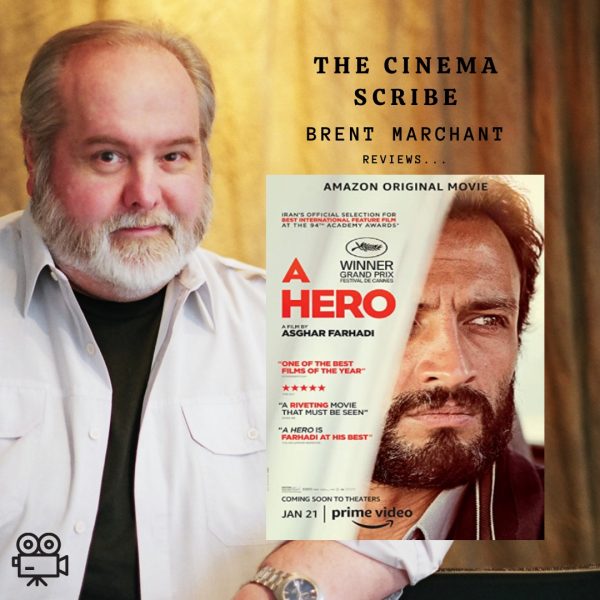
Tune in for the latest Cinema Scribe segment on Bring Me 2 Life Radio, Tuesday, February 22, at 2 pm ET, available by clicking here. And, if you don't hear the show live, catch it later on demand on Spreaker, Spotify, Apple, iHeartRadio, Google Podcasts, Castbox, Deezer, Podchaser and Jiosaavn.
“Mass” (2021). Cast: Jason Isaacs, Martha Plimpton, Ann Dowd, Reed Birney, Michelle N. Carter, Breeda Wool, Kagen Albright. Director: Fran Kranz. Screenplay: Fran Kranz. Web site. Trailer.
Getting past the pain in our lives is an arduous undertaking. It goes without saying that recovering from a terrible tragedy can be exceedingly difficult. Even talking about it can be grueling, especially when unspeakable acts are involved. That’s ironic, too, given that openly vocalizing one’s feelings is often one of the most effective ways of bringing about healing. But, in many cases, that’s what needs to happen at some point if the survivors of such atrocities want to get past them to achieve a sense of closure and perhaps to be able to express forgiveness, elements that provide the basis for the new domestic drama, “Mass.”
Two middle-aged married couples are up against the biggest challenge of their lives. Having unexpectedly shared in an exceptionally traumatic experience, they have spent several years trying to unravel their feelings and to figure out how to pick up the pieces. They’re so numb that they don’t even know where to begin, and that’s kept them from moving forward to address the issues in question. But, realizing they can’t allow themselves to be permanently emotionally paralyzed, they at last begin taking steps to break the deadlock. And, with that, Jay and Gail (Jason Isaacs, Martha Plimpton) and Linda and Richard (Ann Dowd, Reed Birney) initiate the process of finally moving forward with the assistance of an intermediary, Kendra (Michelle N. Carter), to intervene on their behalf.
Kendra arranges for the couples to meet and open a dialogue, one designed to bring their thoughts, feelings and experiences to the surface. After sensitively finessing the conditions under which the four participants will convene, the intermediary arranges for Jay, Gail, Linda and Richard to at last assemble in a meeting room adjacent to a community Episcopal church. Under Kendra’s guidance, parish staff members Judy (Breeda Wool) and Anthony (Kagen Albright) carefully prepare the facilities, not knowing what will unfold when the couples arrive. Given what little they have been told about what’s about to transpire, Judy and Anthony don’t know what to expect, but they clearly sense that it will be trying for all concerned – including those who aren’t directly involved.
Upon the couples’ arrival, they’re escorted into the conference room for their meeting. The tension is undeniably palpable. And, try as they might to put up brave fronts, it’s easy to see the anguish on the four pained faces in the room. But that’s nothing compared to what’s about to come as they finally open up and begin their discussion.
To say more would reveal far too much about the nature of the incident that has brought them together, as well as what’s to follow during their emotionally charged conversation. Suffice it to say they all share in reaching a common outcome. But, as feelings come rushing forth to the surface, the process unleashes a tsunami of previously unexpressed emotions. It’s a case where the couples confront one another and even where spouses challenge one another. It also becomes a situation in which unexpected new alliances form, especially when previously undisclosed revelations and hurts emerge. Such developments thus take matters in directions that no one likely expected when the session began.
So how will it all turn out? That depends on the nature and course of the dialogue, especially when it comes to the specific paths the participants choose to pursue their sought-after closure. It’s a result that everyone – including the audience – wants. But will it be achieved?
Considering what Jay, Gail, Linda and Richard are up against in this film, it’s easy to understand why they haven’t been able to confront the situation – or one another – for years. The excruciating pain that they’re attempting to deal with is so overwhelming and pervasive that they don’t know where to begin. But begin they must if they ever hope to get past the devastation. And that all comes down to what they believe, for their beliefs will determine the direction in which they head thanks to the conscious creation process, the philosophy that maintains we draw upon these resources in shaping our existence.
There are so many beliefs that need to be addressed as this process begins that it’s hard to know where to start: What do the two couples believe they want to achieve through it? How do they go about it (or can they even go about it)? How will they respond once they find themselves in the midst of it? Will it bring about the desired results? And will they be able to carry on afterward? That’s a big list of considerations to address, and the outcomes of all of them depend on whatever belief input the foursome incorporates into it up front. That’s a lot to handle, especially given everything that’s weighing on them emotionally, concerns that invariably can’t be excluded from the mix of everything else that’s being examined.
The first step is creating an environment where the best hoped-for outcome is attainable. That’s a tall order considering that, at the outset, it may be unfathomable to come up with a suitable setting. But difficult is not impossible, and thanks to thoughtful deliberation and professional guidance, the two couples are able to come up with a solution that at least makes the desired result possible. There’s much to be said for that in itself.
In manifesting circumstances like these, there are several significant sets of beliefs that factor into the process. For instance, Jay, Gail, Linda and Richard need to act courageously, dropping their fear-based beliefs as they move ahead. Simultaneously, they must all believe it’s possible to work together, on the same page, in developing the means and methods for bringing about what they seek to achieve, a deliberate act of co-creation. Then they must allow themselves to be open to pushing past limitations, specifically the barriers in their beliefs that have kept them locked in place for so long. This requires that they consider envisioning possibilities that haven’t been tried before, particularly since what they’ve already attempted hasn’t gotten them anywhere.
Those all might seem like obvious and highly practical notions. In fact, one might rightfully ask, why haven’t they sought to implement them before? However, when considering all of the other painful emotional beliefs that are caught up in this mix, it’s understandable that such seemingly commonsense approaches might have been overlooked or purposely set aside. Their preoccupation with their feelings could well have hindered them from taking those steps, keeping resolution – or even the initiation of the process aimed at achieving it – at bay. The fact that they are at last moving ahead is a tremendous accomplishment in itself and one that’s to be highly commended for the quartet’s commitment and bravery.
Ideally, however, as much as the foregoing can set the couples on the road to success, it would be even more helpful if they could take an even grander step – leaving themselves open to new concepts that not only meet but exceed their expectations. Given the burdens they’ve been carrying, any form of relief would naturally be of benefit. However, if they were to consider the possibility that matters could work themselves out beyond the minimum level of probability, they could afford themselves an opportunity for a truly new beginning, one that extricates them from their sorrow and puts them on a path for a fresh start, one that incorporates elements of not only healing and forgiveness but also the prospect of genuine optimism, something they haven’t experienced in a very long time. Now that would be quite a creation. All it takes is appropriate beliefs.
For all of the promise contained in these proceedings, however, the couples must also be cognizant of the possibility that one slip in their beliefs could potentially cause everything to come crashing down on them. Given the emotionally charged influences that are caught up in this process, it wouldn’t take much for one errant belief to creep into the mix and unravel all the progress that has been made, potentially leaving the participants back where they started – or possibly even worse off. With these possible undermining influences lurking in the background, they must be kept in check (or, preferably, purged) to keep the process moving forward. To do otherwise could lead to irreparable backsliding, and what a shame that would be – compounding an already-terrible tragedy from which there may be no coming back, no matter how painstakingly the participants might work to do so. We can only wish them the best – and hope that they avail themselves of what this opportunity affords.
It’s hard to imagine that a film consisting almost exclusively of dialogues and monologues can make for a compelling watch, but such is the case with writer-director Fran Kranz’s debut feature. The pained conversation documented here opens many doors that have long been closed, releasing a deluge of raw emotions while simultaneously paving a path to healing, a truly cathartic experience for anyone who screens it. Although the film starts off slowly and somewhat clumsily (probably by intention but not especially effectively), it soon finds its voice and manages to captivate from that point forward. Credit the film’s carefully crafted screenplay, solid camera work and skillful editing for making engaging viewing out of material that might otherwise be considered dull, talky and visually monodimensional. But the picture’s greatest asset is the stellar acting of its four principals, who turn in riveting performances that stand out both individually and collectively. And, as the story plays out, viewers come to see how the film’s title is a brilliant double entendre that captures the essence of what happened and what the proceeding hopes to achieve.
It’s unfortunate that this offering has not garnered the kind of recognition it deserves (most likely due to its anemic distribution and a dearth of publicity), but it has been receiving ample critical acclaim and well-earned awards season accolades. Thankfully, this moving and powerful release shows that a movie doesn’t need to rely on endless explosions and high-powered special effects to capture and maintain viewer interest while delivering profound insights into the human mind and heart. The film initially played in limited theatrical release last fall and is now available for online streaming.
Despite the picture’s lack of visibility, it has garnered its share of awards season recognition. “Mass” has been named the winner of the Independent Spirit Awards’ Robert Altman Award, which honors excellence in casting. It also earned an ISA nomination for best first screenplay. In addition, the supporting performance of Ann Dowd has been deservedly singled out as a nominee in the Critics Choice and BAFTA Awards competitions.
Unfortunately, it can be all too easy to stay stuck in our grief. The effort to pull ourselves out of it may seem so daunting that many of us might look upon it as hardly worth it. But what kind of life would that be? Saddling ourselves with perpetual sorrow wouldn’t leave us with much worth living for, and that would be an even bigger tragedy than the one that put us in this state. Renewal is possible if we engage in the work – especially where our beliefs are concerned – to provide ourselves with the means for starting anew and at last putting our anguish behind us.
Reviews of "A Hero," "Red Rocket" and "Delicate State," as well as a year-end documentary wrap-up preview, are all in the latest Movies with Meaning post on the web site of The Good Media Network, available by clicking here.
“Red Rocket” (2021). Cast: Simon Rex, Bree Elrod, Suzanna Son, Brenda Deiss, Judy Hill, Brittney Rodriguez, Marlon Lambert, Ethan Darbone, Shih-Ching Tsou, David Maxwell, Parker Bigham, Seward B. Lott, Dustin Hart, Brandy Kirl, Elisa Silva. Director: Sean Baker. Screenplay: Sean Baker and Chris Bergoch. Web site. Trailer.
The temptation to do whatever we want can sometimes be great, especially when the enticements are irresistible. But just because the desire is there, does that mean we should always act on those impulses, particularly when there’s the potential for others to be harmed by what we do? Many of us would justifiably look upon such actions as the height of irresponsibility, our heads spinning and wondering how anyone could be so selfish and inconsiderate. In situations like this, it would seem some hefty life lessons would be in order, the stuff of which provides the basis of the story line in the new dark comedy/cautionary tale, “Red Rocket.”
Mikey Sabre (Simon Rex) has led quite a colorful life. For the past 17 years, the prolific “adult entertainer” and silver-tongued con man has been living the high life in L.A., earning a bundle of cash and hauling in a boatload of awards for his alleged on-screen sexual prowess.
Or so he says.
Those claims are thrown into doubt, because there’s no actual documentation to support them. You see, as the film begins, a disheveled and battered Mikey steps off a bus in his humble hometown of Texas City. He’s apparently broke and down on his luck, so much so that the prodigal porn star has returned home to regroup and get his life back together, primarily because he has nowhere else to go.
Mikey shows up unannounced on the doorstep of his onetime film partner and embittered, estranged wife, Lexi (Bree Elrod), and her mother, Lil (Brenda Deiss). He asks for a place to stay while he looks for work, but Lexi and Lil want nothing to do with him – that is, until he turns on the charm and starts working his polished swindler routine. He talks Lexi and Lil into letting him stay, provided he can pay his way in exchange for the accommodations, a proposal to which he readily agrees, despite having no realistic prospects of finding a job.
Mikey’s unemployability quickly becomes apparent. Having not had a regular job for 17 years, he’s not particularly qualified for anything he applies for. And, when he reluctantly admits what he’s been doing all that time, none of the hiring managers he interviews with have any desire to bring him on board, despite some sheepish curiosity on their part. So, with nothing to lose, he resorts to desperate measures to start bringing in some cash.
After a long absence from his hometown of Texas City, porn star Mikey Sabre (Simon Rex, center) returns home to regroup from a run of bad luck with the aid of his estranged wife, Lexi (Bree Elrod, right), and mother-in-law, Lil (Brenda Deiss, left), in director Sean Baker’s dark comedy/drama, “Red Rocket.” Photo courtesy of A24.
Mikey pays a visit to an old high school acquaintance, Ernesto (Marlon Lambert), to see if he can help out. Ernesto’s mother, Leandria (Judy Hill), is something of a local “godfather” of sorts (and a good friend of Lil), who assists locals with all manner of “favors.” Mikey recalls that Leandria at one time employed a network of street pushers to sell weed for her. When he inquires about this, she confirms that the operation is still in place, one that she now runs with her street-tough daughter, June (Brittney Rodriguez). He asks to join her ranks, a request to which she agrees, albeit somewhat reluctantly. However, when he proves to be quite the salesman, thanks again to his smooth-talking ways, she’s reservedly happy with her decision.
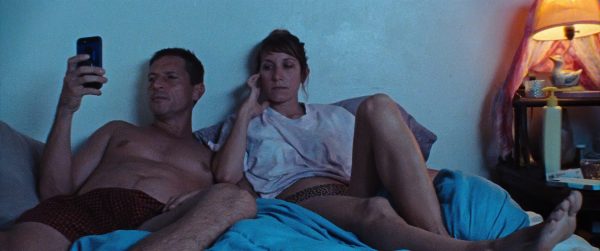
Mikey’s happy with the decision, too, since it quickly leaves him flush with cash. He’s quickly able to cover all of the household expenses for himself, Lexi and Lil, which silences most of their prior apprehensions. He even manages to coax Lexi into letting him back into her bed, a decision that soon leaves her satisfied, too. With doubts dispelled, Mikey appears to get himself back on a fairly firm footing in relatively short order. But will things stay that way?
No matter how well he seems to have recovered from his California misfortunes, Mikey just can’t seem to keep his hand out of the cookie jar. He renews old associations and makes some questionable new ones, all of which threaten to place him back in the same circumstances that forced him to leave L.A.
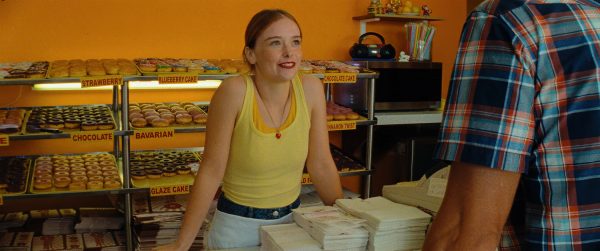
For instance, Mikey begins hanging out with his next door neighbor, Lonnie (Ethan Darbone), an unemployed caretaker for his widowed father (David Maxwell). Lonnie generally seems legit and makes a good running mate for Mikey, but he’s far from innocent, as evidenced by the scams he runs on the side. Then there’s Strawberry (Suzanna Son), a nearly (but not quite) legal flirt who works as a counter clerk at the neighborhood donut shop with whom he strikes up a tawdry physical relationship. Strawberry’s more than willing to avail herself of the former porn star’s advances, especially since she’s more than a little eager to get into the business herself, a career move that Mikey is just as eager to manage.
After years of estrangement, adult entertainer Mikey Sabre (Simon Rex, left) and his onetime co-star-turned-wife Lexi (Bree Elrod, right) pick up where they left off in “Red Rocket.” Photo courtesy of A24.
To successfully pull off these escapades, however, Mikey has to resort to his trademark less-than-honorable ways. He never hesitates to lie, steal, cheat or use others to get his way, regardless of the fallout that may come out of these schemes – and regardless of who may be hurt by them, be it him or others. He thus repeatedly brings new meaning to the word “scumbag” as he leaves a trail of havoc and carnage. The question that soon arises, of course, is, will he be able to save his neck and pull off his “solutions” successfully? And what will that mean for him and all those caught up in his wake?
From the foregoing summary, it should be fairly obvious what’s amiss here. Just look at Mikey’s track record. Most reasonable folks would probably look at him and wonder what he’s thinking. The faulty nature of his outrageous schemes and scams should be patently obvious, yet he engages in these harebrained ventures anyway. So what’s that all about?
The ways our lives unfold depend on our thoughts, beliefs and intents, the core concept underlying the conscious creation process, the philosophy that maintains we draw upon these intangible resources in shaping our reality. Given that Mikey willingly pursues these calamities in waiting, there must be some part of him that genuinely believes he can get away with them, no matter how risky, implausible or foolhardy they may inherently be. And, when things fall apart, he always ends up scrambling to try and land on his feet. Miraculously, sometimes he does. But sometimes he doesn’t.
We tend to get the best results with our creations when we operate from a position of integrity and authenticity, but those qualities would seem to be wholly lacking in Mikey’s case. Considering the nature of what he tries to pull off, one could readily argue that there isn’t a shred of evidence that he possesses these traits to any meaningful degree, if at all. And that’s often born out when circumstances blow up in his face.
Strawberry (Suzanna Son), the nearly (but not quite) legal flirt who works at a neighborhood donut shop has eyes for a former porn star and what he might be able to do for her in the outrageous new dark comedy/drama, “Red Rocket.” Photo courtesy of A24.
However, in a strange sort of way, I’d argue that Mikey actually is being authentic, no matter how foul some of his endeavors might be, because he may be genuinely yet unsuspectingly pursuing these undertakings as a means to learn some valuable life lessons, most notably those involving principles that he’s otherwise totally lacking. As odd as that may sound, placing an emphasis on our deficiencies can be one of the most effective ways to learn about (and, one would hope, to embrace) what’s missing.
For example, Mikey frequently operates from a standpoint of doing whatever it takes to get what he wants and to save his own hide. This is the practice of un-conscious creation, wherein we focus our beliefs exclusively on achieving our objectives with no regard for the associated consequences, including those that impact others around us. Using this as his principal modus operandi, Mikey often realizes what he’s trying to accomplish but leaves a trail of disaster behind him, one that sometimes even catches up with him. His beliefs are exclusively targeted toward what he desires, even if those close to him are harmed, damage that he casually and callously dismisses, rarely without attempting to make amends for them (unless, of course, if it’s in his own best interests). One might legitimately wonder how he can live with himself like this.
Ironically, many of those in Mikey’s life exhibit comparable qualities at times. Despite their chastisement of the protagonist, many of them engage in pursuits that could be seen as just as dastardly as those of the person they so vocally criticize. Indeed, when it comes to getting what they want, they’re often eager to do whatever it takes to see their goals realized, even if they’re not as obvious or animated as Mikey. Indeed, they frequently and unapologetically bring new meaning to the words “self-serving” and “repulsive,” qualities they possess that are often on par with the object of their sanctimonious ridicule.
Former adult entertainer Mikey Sabre (Simon Rex, left) and his next door neighbor/running mate, Lonnie (Ethan Darbone, right), find ways to have fun and get into trouble in the new dark comedy/drama, “Red Rocket.” Photo courtesy of A24.
There’s certainly nothing noble in attitudes like this. However, in their own weird, backhanded way, they’re also an effective means for getting our own attention, especially among those who get soaked by the backsplash of their own wayward materializations. Such splashes of cold water have the potential to make us aware of our actions and their consequences. They thus present us with opportunities to learn those aforementioned life lessons, such as those associated with absent virtues like responsibility and integrity. When we manifest circumstances that can help to make us aware of these concepts, or when we witness others following suit in their own endeavors, these influences just might start to rub off on us. And, when this happens, it could prompt us to begin changing our beliefs, objectives and outcomes. A change of heart like that can go a long way toward setting us on a new life path, one on which we might begin to find ourselves being repulsed by what we may have done in the past. There’s something to be said for that, even if we take the long way around in discovering that.
It’s at times like that when we come to a powerful precipice in our lives. We have an opportunity for redemption, provided we consciously, willingly and deliberately make an effort to change our nature, our beliefs and our lives. At the same time, we can also ignore this opportunity and potentially face the prospect of stagnating, digging ourselves into a deeper hole and amassing a jackpot of karma points that we’ll inevitably have to work through at some point. By failing at the life lessons that present themselves now, we’ll have to take another shot at them later, a process not unlike repeating a grade in school but usually with tougher conditions, higher stakes and bigger consequences.
Do we really want to do that? I sure wouldn’t. The prospect is rather daunting. In light of that, then, it would behoove us to take the message of this cautionary tale to heart. It’s unclear what Mikey is going to do with his own scenario, but maybe his example will inspire us who feel we need to change our ways while we still have the chance.
Adult entertainer Mikey Sabre (Simon Rex, left) goes on quite a rollercoaster ride – both literally and figuratively – with a flirtatious donut store clerk, Strawberry (Suzanna Son, right), in director Sean Baker’s “Red Rocket.” Photo courtesy of A24.
While the tawdry salaciousness of writer-director Sean Baker’s latest may readily offend the sensibilities of many viewers, the film nevertheless serves up a pointed premise with wickedly biting humor thanks to a loathsome but bumbling protagonist who asks for trouble at every turn. The result is a series of edgy, hilarious encounters whose ample, well-earned laughs make up for whatever might come across as patently disgusting, especially in instances when chickens come home to roost. Reminiscent of the filmmaker’s previous works “Tangerine” (2015) and “The Florida Project” (2017), “Red Rocket” presents us with a gritty, uncensored look at the American underbelly, but with more sustained humor this time out, despite a handful of serious moments included for good measure. The film is admittedly a little long, meandering and episodic at times, but those faults are made up for by a captivating, engaging narrative and the fine performances of Simon Rex, Suzanna Son, and the rest of the picture’s ensemble cast, many of whom are not professional actors. This offering definitely won’t appeal to everyone, and sensitive viewers should probably stay away. But, for those who appreciate originality and inventiveness with a blatantly twisted sense of humor and a clear (though not heavy-handed) cautionary message, this “rocket” may just send you into orbit. The film is currently playing theatrically.
Some might find it surprising that a film like this would earn considerable critical recognition, but “Red Rocket” has done just that. The picture earned a Palme d’Or nomination at the 2021 Cannes Film Festival, the event’s highest honor. It was also named one of the National Board of Review’s Top 10 films of 2021. And, in the Independent Spirit Awards competition, the pictured captured nominations for Simon Rex and Suzanna Son as best leading male and best supporting female, respectively.
Reckless behavior may have elements of fun and excitement associated with it, but it also carries potential consequences, some of which could be quite drastic. While we might enjoy some short-term thrills through such experiences, we could also come away from them burdened by significant weights on our shoulders. Do we really want to do that? If not, we’d better wake up to the reality of our circumstances, adopting a sense of integrity and responsibility and adjusting our beliefs and behavior to avoid such calamities before it’s too late.
“Delicate State” (2021). Cast: Paula Rhodes, Charlie Bodin, Glenn Morshower, Cathy Baron. Director: Paula Rhodes. Screenplay: Paula Rhodes. Web site. Trailer.
How does one survive when the world is falling apart? What’s more, how does one accomplish that when simultaneously assuming a significant new responsibility? That’s a rather full plate to handle, and making decisions on how to proceed may be difficult, if not overwhelming. Such are the circumstances faced by a young married couple in the disturbing new speculative drama, “Delicate State.”
Imagine if you were parents-to-be, blissfully happy about the impending blessed event. Such is the case for a young middle class couple, Paula (Paula Rhodes) and Charlie (Charlie Bodin). And, because they want to remember as much as they can about the experience, they decide to record a detailed video diary, a gift they one day hope to share with their young one.
In the diary, Paula and Charlie speak to their unborn child as if he or she were already present. They discuss everything, from their feelings about becoming parents to the naming process to their hopes and aspirations for the future. They exude tremendous joy at the prospects that await them, and it shows in virtually every frame of the vlog. But, in the interest of authenticity, they also hold nothing back, such as their concerns when some potentially problematic issues arise with the pregnancy. Through it all, though, they try to put a happy face on matters as much as possible. Little do they know, however, that these are the least of the problems they’ll face as their story unfolds.
Before long, circumstances outside of the pregnancy begin to change drastically. The expectant parents, who reside in a modest residence in an unspecified American city, become increasingly caught up in the cross-fire of civil unrest. Helicopters hover overhead while disturbing nighttime noises break the peaceful silence of their urban neighborhood. Paula and Charlie are concerned but dismiss it as something that will pass. After all, their everyday life and efforts to provide for the newborn’s arrival take precedence, right?
In no time, conditions seriously escalate, with warnings posted on the front door of their home. What’s more, Paula’s sister, Cathy (Cathy Baron), makes a desperate plea for the couple to evacuate to safety. Even with those stern cautions, though, Paula and Charlie remain committed to staying put, digging in to preserve what they’ve built for themselves. And, through it all, they continue recording the video dairy, all the while believing that they’ll be safe. However, such ostrich-like behavior isn’t enough to protect them when the roadblocks go up, riots break out and warplanes begin firing at ground targets.
With full-fledged civil war soon in effect, Paula and Charlie must hurriedly flee for their lives. But where do they go, what do they do and who can they trust? As circumstances worsen and their resources for survival become increasingly taxed by intensifying conditions on multiple fronts, their future becomes ever more uncertain. And, with the baby’s arrival fast approaching, will they be able to fulfill their promise of safely delivering the child into the world, one in which their very survival is far from guaranteed?
When faced with difficult choices, it may be tempting to select the one that’s most palatable, one that seems it will cause us the least disruption and discomfort. But will that outcome ultimately pan out? We can hope for that as much as we want, but there’s no guarantee it will result. And no matter what we believe, that mindset may lead us down some paths that prove more arduous than we thought.
This is important to bear in mind, considering that our beliefs form the basis of our reality, the product of the conscious creation, process, the philosophy that maintains we draw on these resources in manifesting the existence we experience. But, in implementing this practice, we must retain sight of exactly what those beliefs are, for they will ultimately shape what materializes, generally with remarkable fidelity. And that’s where our beliefs can potentially get us into trouble.
For example, there’s a fine line between holding out hope and wishful thinking. The former is realistic and grounded, largely because it’s optimistic despite an implicit understanding that the desired outcome may not unfold, keeping expectations realistic. It’s essentially a restatement of the notion of hoping for the best while preparing for the worst. The latter, however, tends to be grounded in desperation, where the result is unrealistically deemed a foregone conclusion with no regard for the possibility that outcome might not happen. And, should that occur, the disappointment can be devastating.
The parents-to-be in this story don’t appear to have a good handle on knowing the difference. That’s especially true for Paula, who’s so caught up in her pregnancy that she’s willing to overlook what’s going on around her. It’s as if she and Charlie simply want to wish away the impending conflict because of their personal considerations, but the coming war involves circumstances bigger than they’re able to effectively address. So what are they to do?
While it’s understandable that Charlie and Paula want to successfully deliver their newborn, they can’t ignore what’s transpiring around them. This raises the significance of two important considerations that they must examine – denial and discernment.
Denial is seldom healthy, yet, like everything else we consider in life, it’s a belief – and a powerful one at that. It often digs in its heels and wreaks havoc with our lives and expectations, primarily because it’s based on false assumptions of what’s going on and how those events will affect us. And, the worse conditions get, the stronger our denial beliefs tend to take hold. Unfortunately, as time passes, we tend to see an escalation in the negative impacts affecting us. Before long, we, like Paula and Charlie, may find ourselves overwhelmed and unsure about what to do. At times like that, desperation tends to set in, prompting us to engage in acts based on paranoia and panic, beliefs that frequently make difficult situations even worse.
This spotlights the value of discernment. It’s a valuable tool that can help us to assess our beliefs and resulting circumstances. It helps enable us to circumvent the difficulties that can arise when escape routes are blocked and jet fighters begin firing on our residences. Of course, in order to make use of it, we must take it seriously, no matter how much we might not want to. When we see warning signs emerge, for instance, we must recognize them for what they’re trying to tell us. The official notices posted on the couple’s front door, the impassioned plea made by Paula’s sister and frantic televised news reports are all evidence that we’re trying to tell ourselves something, cautions we should genuinely take seriously.
Nevertheless, the question raised here is, “Will we take them to heart?” The power of denial often makes it easy to dismiss them. What’s more, being able to read these warnings for what they are usually requires us to make use of our intuition, something else that many of us readily disregard out of hand, largely because it involves impressions that often seem illogical and irrational, making them inherently untrustworthy. Indeed, even with such scary calamities going on around us, we may still be skeptical, asking ourselves, “How can these things be happening to us in what is supposed to be an innately civil society?”
While this question may seem patently oblivious under the circumstances, it’s by no means unrealistic given the nature of our prior experience. However, when we’re faced with situations that threaten our safety and well-being – not to mention that of the unborn children who still reside in their mothers’ wombs and are nevertheless susceptible to the fallout of these dangers – this is no time to ask such rhetorical questions. This is something that the residents of Bosnia and Lebanon and Iraq and any number of other nations have no doubt had to ask themselves when bombs started going off overhead and on the streets of their once-tranquil neighborhoods. That’s especially true of the mothers who were carrying innocent unborns at the time of those calamities, a point that director Paula Rhodes sought to illuminate in making this film. Indeed, if it could happen in the urban centers of these other nations, who’s to say it couldn’t happen here as well, especially in a society that has become increasingly polarized and antagonized? What would we do if it were to happen here?
This raises the value of acting practically. And that would include some unconventional acts on our part, such as listening to our intuition, no matter how seemingly outlandish some of its messages might be. They could well play a vital role in protecting us, enabling us to forge beliefs that allow us to devise realistic solutions for survival under unrealistic conditions. It’s a possibility we might not want to face, but addressing it could spell the difference between keeping us – and our offspring – alive at a time when they’re seriously being threatened.
In fact, the simple act of staying alive under such circumstances could have a profound impact that we may not fully appreciate or understand at the time. Children often represent our hope for the future, the ones who will help to shape a better world for our posterity. And being able to see that they have that chance is crucial to that possibility unfolding. It’s something that enables us to have faith in that idea becoming an eventuality. Faith, like denial, is also a belief and, again, a powerful one at that. But, if it’s to have a chance at succeeding, it needs to have a chance at existing in the first place, and that’s where we need to make the effort to see that our hopes have an opportunity to materialize to begin with.
In many ways, this echoes the foregoing discussion about the difference between hoping for the best and wishful thinking. We should genuinely strive to have faith in manifesting a safe and successful outcome. But, to make that happen, we must take a practical and realistic approach, doing whatever it takes to yield that result, to genuinely birth a future (including those who will shape it) in which what we hope to achieve will indeed become fully realized.
After a somewhat slow and slightly unfocused start, writer-actor-director Paula Rhodes’s debut feature soon changes lanes and spins a chilling tale that grows ever-more compelling as it unfolds, leaving viewers on edge as they witness developments taking place in a simulated real-time context, thanks in large part to the vlog approach used in telling this story. The picture brings an added touch of realism to the narrative as it was filmed during the actor-director’s own pregnancy, accompanied by real-life husband Charlie Bodin as the protagonist’s co-star. The result is a startlingly eclectic mix of unnerving terror and relentless hope fused into one story with an all-too-familiar sociopolitical backdrop. Credit the inventive work of this primarily two-person crew and cast in bringing this film to life, handily one of the most unusual releases I’ve seen in some time. It inspiringly gives us hope yet also offers us a potent cautionary tale that we had better take seriously if we expect our society to survive – or otherwise run the risk of lawless, uncontrolled collapse. The film has been playing the film festival circuit but is now also available for streaming on a number of online platforms.
Under seemingly insurmountable circumstances, we may be faced with the hard choice of receding into our shells or taking deliberate action to see our way clear out of the chaos. Neither option may be particularly easy or appealing, but shirking our responsibilities and hiding solves nothing, perhaps even complicating matters further. It calls for courage and conviction, but it also takes being real with ourselves, assessing what we’re up against with resolute honesty and realistic discernment. Let’s hope we rise to the occasion.
Tune in for the latest Cinema Scribe segment on Bring Me 2 Life Radio, Tuesday, February 8, at 2 pm ET, available by clicking here. And, if you don't hear the show live, catch it later on demand on Spreaker, Spotify, Apple, iHeartRadio, Google Podcasts, Castbox, Deezer, Podchaser and Jiosaavn.
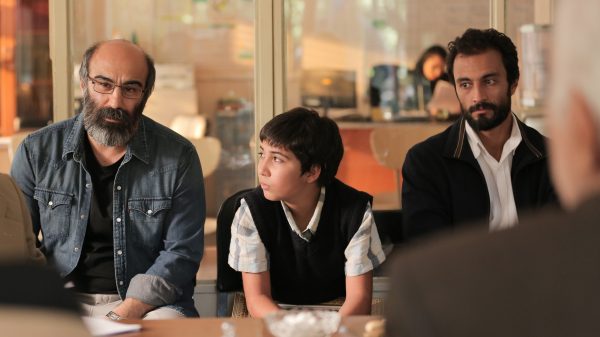
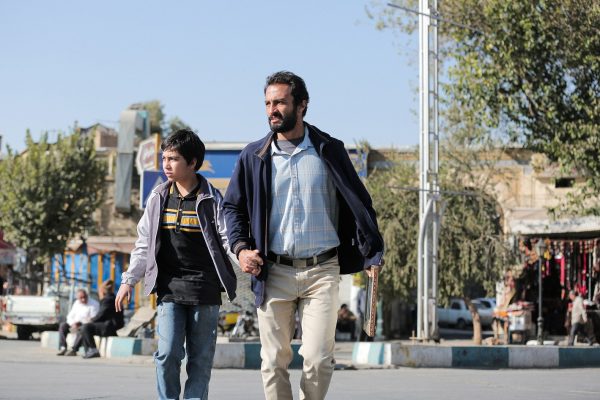
To truly leave a mark on one’s life, it pays to do so with a genuine sense of integrity, one that accurately reflects one’s authentic self. Such is the essence of heroism, the stuff of which legends big and small are made. But, regardless of the magnitude behind these tales, they all have one thing in common – they’re stories rooted in truthfulness, untainted by secondary considerations that can dilute or undermine the validity of the alleged primary intent. Those are among the issues raised in the new Iranian morality play, “A Hero” (“Ghahreman”).
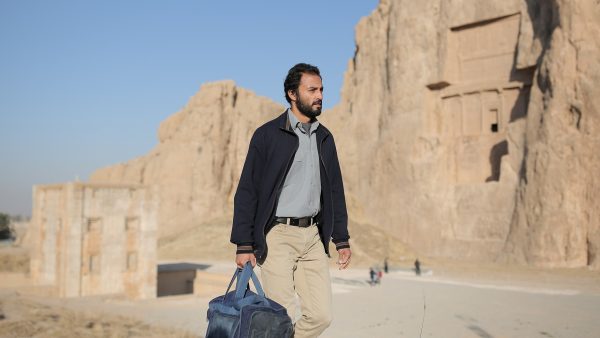
Rahim Soltani (Amir Jadidi) can’t seem to catch a break. The onetime-painter/calligrapher is doing time in prison in Shiraz, Iran for his failure to repay a loan that he was planning to use for starting his own business. However, his creditor, Bahram (Mohsen Tanabandeh), was so displeased with what he saw as Rahim’s fiscal irresponsibility that he brought a lawsuit against him that led to his conviction and jailing. As a result, Rahim now spends his days behind bars, with his only relief from the tedium of prison being occasional short-term leaves to visit his family. He wants out of prison permanently, but the hopes of that happening are slim, despite his good behavior and active efforts aimed at helping improve the quality of prison life for his fellow inmates.
Hopes of changing all that arise while Rahim is on one of his temporary releases. Rahim and his girlfriend, Farkhondeh (Sahar Goldoust), devise a plan that they hope will lead to a potential permanent reprieve. When Farkhondeh finds a lost bag filled with gold coins, Rahim proposes using them to help pay off his debt to Bahram. The coins won’t cover the entire sum, but they represent a sizable portion of it, enough so that Rahim hopes it will show good faith and encourage Bahram to urge officials to invoke leniency toward him.
Unfortunately, Bahram is not persuaded by the offer; it’s all or nothing as far as he’s concerned. Needless to say, Rahim is disappointed at the prospect of having to return to prison when his current leave is up. And, in the meantime, he and Farkhondeh must decide what to do about the coins. Do they keep them or try to return them to their rightful owner? While the temptation to keep them is strong, Rahim decides he should try to give them back to whomever they belong.
Rahim takes steps to reunite the coins with their owner, but, with his leave coming to an end, he’s unable to see his plan through. He entrusts completion of the task to his sister, Malileh (Maryam Shahdaei), and brother-in-law, Hussein (Alireza Jahandideh), with whom he had been staying while on leave. And, almost miraculously, it’s not long before the believed rightful owner (Fatemeh Tavakoli) shows up to collect them. She correctly identifies how and where the coins were lost, even including an accurate description of the bag in which they were found. But, before handing over the coins, the owner asks Malileh for discretion in the handling of this situation, claiming that her easily angered husband knows nothing about them and that she fears retribution from him if he were to find out about their existence, conditions to which Malileh readily agrees. And, with that, the owner takes her coins and leaves.
Not long thereafter, word of the coin retrieval reaches the prison. Officials, including the warden, Mr. Salehpour (Mohammas Aghebati), and cultural activities director, Mr. Salehi (Farrokh Nourbakht), are so proud of the praiseworthy act that Rahim orchestrated that they want to spread the word far and wide about their institution’s hero (not to mention the role their rehabilitation efforts inevitably played in helping to create an individual of such good character). Salehpour and Salehi arrange for media interviews that boast of Rahim’s good deed, including televised re-enactments of the event in question. However, those interviews and re-creations don’t exactly match up with what actually happened, primarily giving Rahim more credit than he actually deserved, accolades he makes no effort to deny.
This is especially true when the possibility of Rahim’s celebrated heroism translating into parole begins looming larger. Rahim longs to be free so he can marry Farkhondeh and once again become a productive, contributing member of society. He also wants to be able to spend more time with his son, Siavash (Saleh Karimaei), an adolescent with a severe stutter and occasional behavioral problems who has been living with his aunt and uncle during his father’s imprisonment. And the possibility of all of that happening is becoming so strong that he can practically taste it.
As word of Rahim’s altruism spreads, the public becomes so taken with his story that he becomes a local celebrity. The praise earns him an open-ended leave from prison and formal recognition by a respected local charity, which raises money to help Rahim pay off his debt. The organization even helps him to secure a job, guaranteeing him an ongoing income.
But, as events continue to play out, questions arise about the validity of Rahim’s story. That’s especially true when he undergoes a screening interview for his new job conducted by a no-nonsense interrogator, Mr. Nadeali (Ehsan Goodarzi), who wants to verify the facts of Rahim’s claims. In particular, Mr. Nadeali is interested in speaking with the owner of the returned coins, but, when Rahim, Malileh and Hussein go looking for her, she’s nowhere to be found, raising all manner of questions about the truthfulness of this supposedly heroic tale. Those matters become further complicated when doubts arise about everything that Rahim claimed to have done in connection with the coins’ retrieval, prompting the entire situation to spiral out of control – and causing the onetime-hero’s reputation to become irreparably tarnished.
Indeed, the circumstances here truly would seem to bear out the notion that no good deed goes unpunished. At the same time, though, does that rule out the possibility of redemption? That remains to be seen, especially when one takes a close look at the specifics involved in scenarios like this. Rahim should be careful not to lose hope; things may yet work out in his favor. He just might wind up a hero after all.
When looking at Rahim’s situation, one can’t help but wonder why circumstances always seem to dump on him. It always appears as though Murphy’s Law is constantly dogging him; if something can go wrong, it invariably does, perpetually making his life difficult. But, upon close scrutiny, one could contend that it’s not entirely surprising that matters turn out as they do. And, for what it’s worth, the causes originate with him and his beliefs, the building blocks of his existence thanks to the conscious creation process, the philosophy that makes this possible.
Even though Rahim routinely proclaims how much he values his integrity, it seems as though there’s an underlying caveat attached to that notion. Indeed, while publicly preening about the benevolence behind his gesture, Rahim also quietly holds on to a secondary intent that isn’t entirely authentic nor compatible with the first: He hopes that his honesty will lead to his parole and his ability to get his life back on track. Now, while there’s nothing inherently wrong with wishing for the emergence of such developments, secretly hoping that his magnanimity will serve as a springboard to their appearance nevertheless taints the supposedly sincere altruism that he professes to believe in. Those beliefs, in turn, are reflected in the reality that subsequently manifests, one in which the purity of the notions he claims to embrace has become blemished by the secondary considerations resident in his consciousness. Indeed, we must truly be careful what we wish for.
This, of course, raises questions about Rahim’s ability to genuinely walk his talk. It’s something that even he subconsciously doubts at times as evidenced by simple gestures like facial expressions. During interviews, for example, Rahim frequently exhibits sidelong glances that suggest he’s being less than truthful about what he’s saying, and those responses begin triggering doubts about his story and its details. Is it any wonder, then, that his claims would come under scrutiny? What’s more, is it any surprise that his experience turns out as it does? It shouldn’t, given the mixture of intents that underlie its creation. After all, that’s how conscious creation fundamentally works.
In light of how events turn out here, one can’t help but wonder how Rahim became embroiled in these circumstances to begin with, all the way back to when he became imprisoned in the first place. If he was being less than honest with himself and others when initially taking out the loan, for example, then is it a surprise that his supposed plans didn’t unfold as hoped for? Then there was the incident when he was unsure about whether or not to return the coins. And, of course, there were the ongoing “accommodations” that he had to make in telling his heroic story as doubts arose about its validity.
This would all suggest that Rahim’s potential inability to be clear with himself about his beliefs and intents could pose an issue for him in accurately manifesting the reality he hopes to achieve. Even more fundamentally, it raises questions about what exactly constitutes the nature of his true beliefs and authentic self. This thus gives Rahim – and anyone else similarly situated – much to ponder. Profound introspection is definitely called for here.
Still, despite the difficulties Rahim has experienced in these areas, he nevertheless appears to retain aspirations about wanting to live the life of a hero. He may feel desperately disappointed with the way things have turned out in this scenario, both in terms of addressing these particular circumstances and fulfilling his overarching objective. But that doesn’t mean other opportunities won’t present themselves to him, especially if he wants to see that objective brought to fruition. He would seem to see heroism as his destiny, what conscious creators refer to as their value fulfillment. But, in order to make that happen, he must conceive of the conditions (and their underlying beliefs) that enable such an outcome. And, as his most recent experience has shown, he must make sure that his beliefs are authentic, unencumbered by considerations that could potentially undermine or distort what he’s hoping to achieve. After all, that’s what a hero should hope for, particularly one seeking redemption.
It’s gratifying that there’s a film from Iranian director Asghar Farhadi that I can at last genuinely recommend. This morality play, typical of many of the filmmaker’s works, weighs the consequences of honorably doing the right thing or personally benefiting from someone else’s apparent misfortune. As Farhadi’s best work, this production engages viewers with its carefully crafted deliberate ambiguity and heartfelt emotion for a protagonist who can’t seem to catch a break. Even with that, though, the film still bears some of the hallmarks that typically undermine this director’s pictures – a narrative that’s a little too obvious, longwinded ethical discussions that could stand some judicious editing, a script that could be improved with greater subtlety – but, thankfully, those issues are far less pronounced here than in his other works. It’s taken Farhadi some time to at last get things right, but, fortunately, he has done it here. We can only hope that he continues along this path in future productions. The film is available for streaming online.
As with many of Farhadi’s other films, “A Hero” has received a number of accolades. At the 2021 Cannes Film Festival, the picture won the Grand Prix Award and the François Chalais Award and received a Palme d’Or nomination, the event’s highest honor. It also captured two awards from the National Board of Review for best foreign language film and best original screenplay. In addition, it earned nominations for best foreign language film in the Critics Choice Award and Golden Globe Award competitions.
Aspiring to become a hero is one of the most noble pursuits in which we can engage. It embodies qualities we’d all like to believe we can possess and exhibit to a world in need of inspiration. But it’s not something to be approached casually or without adequate preparation, particularly when it comes to assessing the attributes a hero must exemplify. It truly is a process of getting real, one in which we need to scrutinize how genuinely we personify the traits that go into validating the exalted designation we seek. That in itself is a heroic act, but, should we ultimately and legitimately attain the sought-after goal, we can take pride in the accomplishment – and become the heroes we’ve always aspired to be.