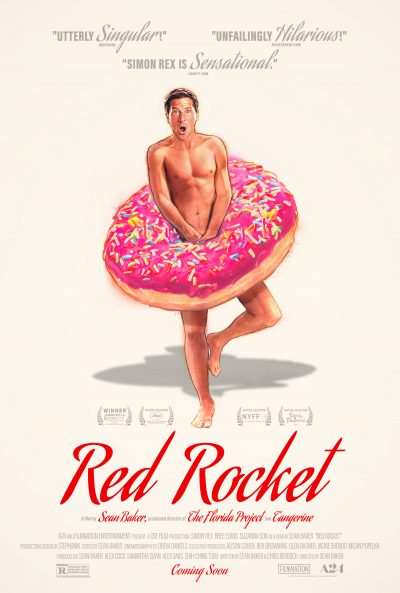
“Red Rocket” (2021). Cast: Simon Rex, Bree Elrod, Suzanna Son, Brenda Deiss, Judy Hill, Brittney Rodriguez, Marlon Lambert, Ethan Darbone, Shih-Ching Tsou, David Maxwell, Parker Bigham, Seward B. Lott, Dustin Hart, Brandy Kirl, Elisa Silva. Director: Sean Baker. Screenplay: Sean Baker and Chris Bergoch. Web site. Trailer.
The temptation to do whatever we want can sometimes be great, especially when the enticements are irresistible. But just because the desire is there, does that mean we should always act on those impulses, particularly when there’s the potential for others to be harmed by what we do? Many of us would justifiably look upon such actions as the height of irresponsibility, our heads spinning and wondering how anyone could be so selfish and inconsiderate. In situations like this, it would seem some hefty life lessons would be in order, the stuff of which provides the basis of the story line in the new dark comedy/cautionary tale, “Red Rocket.”
Mikey Sabre (Simon Rex) has led quite a colorful life. For the past 17 years, the prolific “adult entertainer” and silver-tongued con man has been living the high life in L.A., earning a bundle of cash and hauling in a boatload of awards for his alleged on-screen sexual prowess.
Or so he says.
Those claims are thrown into doubt, because there’s no actual documentation to support them. You see, as the film begins, a disheveled and battered Mikey steps off a bus in his humble hometown of Texas City. He’s apparently broke and down on his luck, so much so that the prodigal porn star has returned home to regroup and get his life back together, primarily because he has nowhere else to go.
Mikey shows up unannounced on the doorstep of his onetime film partner and embittered, estranged wife, Lexi (Bree Elrod), and her mother, Lil (Brenda Deiss). He asks for a place to stay while he looks for work, but Lexi and Lil want nothing to do with him – that is, until he turns on the charm and starts working his polished swindler routine. He talks Lexi and Lil into letting him stay, provided he can pay his way in exchange for the accommodations, a proposal to which he readily agrees, despite having no realistic prospects of finding a job.
Mikey’s unemployability quickly becomes apparent. Having not had a regular job for 17 years, he’s not particularly qualified for anything he applies for. And, when he reluctantly admits what he’s been doing all that time, none of the hiring managers he interviews with have any desire to bring him on board, despite some sheepish curiosity on their part. So, with nothing to lose, he resorts to desperate measures to start bringing in some cash.
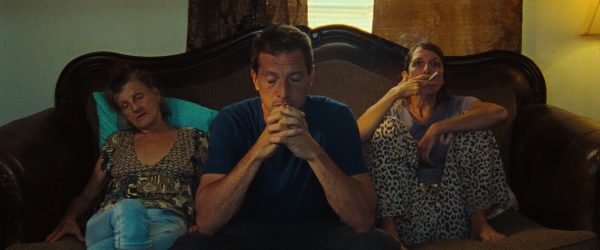
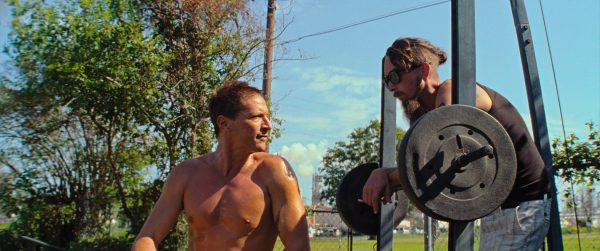
After a long absence from his hometown of Texas City, porn star Mikey Sabre (Simon Rex, center) returns home to regroup from a run of bad luck with the aid of his estranged wife, Lexi (Bree Elrod, right), and mother-in-law, Lil (Brenda Deiss, left), in director Sean Baker’s dark comedy/drama, “Red Rocket.” Photo courtesy of A24.
Mikey pays a visit to an old high school acquaintance, Ernesto (Marlon Lambert), to see if he can help out. Ernesto’s mother, Leandria (Judy Hill), is something of a local “godfather” of sorts (and a good friend of Lil), who assists locals with all manner of “favors.” Mikey recalls that Leandria at one time employed a network of street pushers to sell weed for her. When he inquires about this, she confirms that the operation is still in place, one that she now runs with her street-tough daughter, June (Brittney Rodriguez). He asks to join her ranks, a request to which she agrees, albeit somewhat reluctantly. However, when he proves to be quite the salesman, thanks again to his smooth-talking ways, she’s reservedly happy with her decision.
Mikey’s happy with the decision, too, since it quickly leaves him flush with cash. He’s quickly able to cover all of the household expenses for himself, Lexi and Lil, which silences most of their prior apprehensions. He even manages to coax Lexi into letting him back into her bed, a decision that soon leaves her satisfied, too. With doubts dispelled, Mikey appears to get himself back on a fairly firm footing in relatively short order. But will things stay that way?
No matter how well he seems to have recovered from his California misfortunes, Mikey just can’t seem to keep his hand out of the cookie jar. He renews old associations and makes some questionable new ones, all of which threaten to place him back in the same circumstances that forced him to leave L.A.
For instance, Mikey begins hanging out with his next door neighbor, Lonnie (Ethan Darbone), an unemployed caretaker for his widowed father (David Maxwell). Lonnie generally seems legit and makes a good running mate for Mikey, but he’s far from innocent, as evidenced by the scams he runs on the side. Then there’s Strawberry (Suzanna Son), a nearly (but not quite) legal flirt who works as a counter clerk at the neighborhood donut shop with whom he strikes up a tawdry physical relationship. Strawberry’s more than willing to avail herself of the former porn star’s advances, especially since she’s more than a little eager to get into the business herself, a career move that Mikey is just as eager to manage.
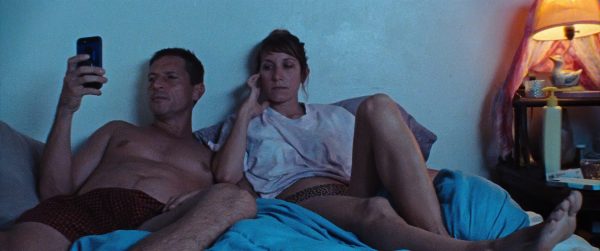
After years of estrangement, adult entertainer Mikey Sabre (Simon Rex, left) and his onetime co-star-turned-wife Lexi (Bree Elrod, right) pick up where they left off in “Red Rocket.” Photo courtesy of A24.
To successfully pull off these escapades, however, Mikey has to resort to his trademark less-than-honorable ways. He never hesitates to lie, steal, cheat or use others to get his way, regardless of the fallout that may come out of these schemes – and regardless of who may be hurt by them, be it him or others. He thus repeatedly brings new meaning to the word “scumbag” as he leaves a trail of havoc and carnage. The question that soon arises, of course, is, will he be able to save his neck and pull off his “solutions” successfully? And what will that mean for him and all those caught up in his wake?
From the foregoing summary, it should be fairly obvious what’s amiss here. Just look at Mikey’s track record. Most reasonable folks would probably look at him and wonder what he’s thinking. The faulty nature of his outrageous schemes and scams should be patently obvious, yet he engages in these harebrained ventures anyway. So what’s that all about?
The ways our lives unfold depend on our thoughts, beliefs and intents, the core concept underlying the conscious creation process, the philosophy that maintains we draw upon these intangible resources in shaping our reality. Given that Mikey willingly pursues these calamities in waiting, there must be some part of him that genuinely believes he can get away with them, no matter how risky, implausible or foolhardy they may inherently be. And, when things fall apart, he always ends up scrambling to try and land on his feet. Miraculously, sometimes he does. But sometimes he doesn’t.
We tend to get the best results with our creations when we operate from a position of integrity and authenticity, but those qualities would seem to be wholly lacking in Mikey’s case. Considering the nature of what he tries to pull off, one could readily argue that there isn’t a shred of evidence that he possesses these traits to any meaningful degree, if at all. And that’s often born out when circumstances blow up in his face.
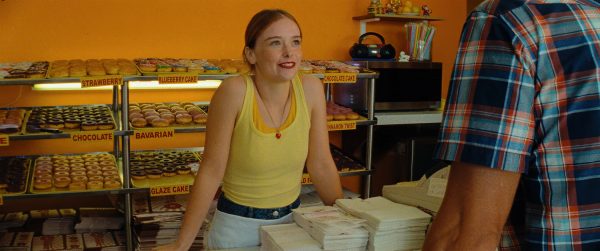
Strawberry (Suzanna Son), the nearly (but not quite) legal flirt who works at a neighborhood donut shop has eyes for a former porn star and what he might be able to do for her in the outrageous new dark comedy/drama, “Red Rocket.” Photo courtesy of A24.
However, in a strange sort of way, I’d argue that Mikey actually is being authentic, no matter how foul some of his endeavors might be, because he may be genuinely yet unsuspectingly pursuing these undertakings as a means to learn some valuable life lessons, most notably those involving principles that he’s otherwise totally lacking. As odd as that may sound, placing an emphasis on our deficiencies can be one of the most effective ways to learn about (and, one would hope, to embrace) what’s missing.
For example, Mikey frequently operates from a standpoint of doing whatever it takes to get what he wants and to save his own hide. This is the practice of un-conscious creation, wherein we focus our beliefs exclusively on achieving our objectives with no regard for the associated consequences, including those that impact others around us. Using this as his principal modus operandi, Mikey often realizes what he’s trying to accomplish but leaves a trail of disaster behind him, one that sometimes even catches up with him. His beliefs are exclusively targeted toward what he desires, even if those close to him are harmed, damage that he casually and callously dismisses, rarely without attempting to make amends for them (unless, of course, if it’s in his own best interests). One might legitimately wonder how he can live with himself like this.
Ironically, many of those in Mikey’s life exhibit comparable qualities at times. Despite their chastisement of the protagonist, many of them engage in pursuits that could be seen as just as dastardly as those of the person they so vocally criticize. Indeed, when it comes to getting what they want, they’re often eager to do whatever it takes to see their goals realized, even if they’re not as obvious or animated as Mikey. Indeed, they frequently and unapologetically bring new meaning to the words “self-serving” and “repulsive,” qualities they possess that are often on par with the object of their sanctimonious ridicule.
Former adult entertainer Mikey Sabre (Simon Rex, left) and his next door neighbor/running mate, Lonnie (Ethan Darbone, right), find ways to have fun and get into trouble in the new dark comedy/drama, “Red Rocket.” Photo courtesy of A24.
There’s certainly nothing noble in attitudes like this. However, in their own weird, backhanded way, they’re also an effective means for getting our own attention, especially among those who get soaked by the backsplash of their own wayward materializations. Such splashes of cold water have the potential to make us aware of our actions and their consequences. They thus present us with opportunities to learn those aforementioned life lessons, such as those associated with absent virtues like responsibility and integrity. When we manifest circumstances that can help to make us aware of these concepts, or when we witness others following suit in their own endeavors, these influences just might start to rub off on us. And, when this happens, it could prompt us to begin changing our beliefs, objectives and outcomes. A change of heart like that can go a long way toward setting us on a new life path, one on which we might begin to find ourselves being repulsed by what we may have done in the past. There’s something to be said for that, even if we take the long way around in discovering that.
It’s at times like that when we come to a powerful precipice in our lives. We have an opportunity for redemption, provided we consciously, willingly and deliberately make an effort to change our nature, our beliefs and our lives. At the same time, we can also ignore this opportunity and potentially face the prospect of stagnating, digging ourselves into a deeper hole and amassing a jackpot of karma points that we’ll inevitably have to work through at some point. By failing at the life lessons that present themselves now, we’ll have to take another shot at them later, a process not unlike repeating a grade in school but usually with tougher conditions, higher stakes and bigger consequences.
Do we really want to do that? I sure wouldn’t. The prospect is rather daunting. In light of that, then, it would behoove us to take the message of this cautionary tale to heart. It’s unclear what Mikey is going to do with his own scenario, but maybe his example will inspire us who feel we need to change our ways while we still have the chance.
Adult entertainer Mikey Sabre (Simon Rex, left) goes on quite a rollercoaster ride – both literally and figuratively – with a flirtatious donut store clerk, Strawberry (Suzanna Son, right), in director Sean Baker’s “Red Rocket.” Photo courtesy of A24.
While the tawdry salaciousness of writer-director Sean Baker’s latest may readily offend the sensibilities of many viewers, the film nevertheless serves up a pointed premise with wickedly biting humor thanks to a loathsome but bumbling protagonist who asks for trouble at every turn. The result is a series of edgy, hilarious encounters whose ample, well-earned laughs make up for whatever might come across as patently disgusting, especially in instances when chickens come home to roost. Reminiscent of the filmmaker’s previous works “Tangerine” (2015) and “The Florida Project” (2017), “Red Rocket” presents us with a gritty, uncensored look at the American underbelly, but with more sustained humor this time out, despite a handful of serious moments included for good measure. The film is admittedly a little long, meandering and episodic at times, but those faults are made up for by a captivating, engaging narrative and the fine performances of Simon Rex, Suzanna Son, and the rest of the picture’s ensemble cast, many of whom are not professional actors. This offering definitely won’t appeal to everyone, and sensitive viewers should probably stay away. But, for those who appreciate originality and inventiveness with a blatantly twisted sense of humor and a clear (though not heavy-handed) cautionary message, this “rocket” may just send you into orbit. The film is currently playing theatrically.
Some might find it surprising that a film like this would earn considerable critical recognition, but “Red Rocket” has done just that. The picture earned a Palme d’Or nomination at the 2021 Cannes Film Festival, the event’s highest honor. It was also named one of the National Board of Review’s Top 10 films of 2021. And, in the Independent Spirit Awards competition, the pictured captured nominations for Simon Rex and Suzanna Son as best leading male and best supporting female, respectively.
Reckless behavior may have elements of fun and excitement associated with it, but it also carries potential consequences, some of which could be quite drastic. While we might enjoy some short-term thrills through such experiences, we could also come away from them burdened by significant weights on our shoulders. Do we really want to do that? If not, we’d better wake up to the reality of our circumstances, adopting a sense of integrity and responsibility and adjusting our beliefs and behavior to avoid such calamities before it’s too late.
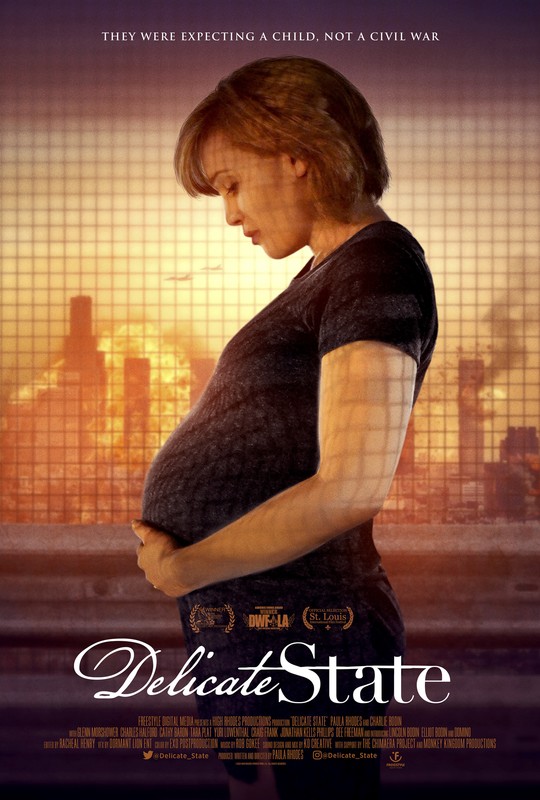
“Delicate State” (2021). Cast: Paula Rhodes, Charlie Bodin, Glenn Morshower, Cathy Baron. Director: Paula Rhodes. Screenplay: Paula Rhodes. Web site. Trailer.
How does one survive when the world is falling apart? What’s more, how does one accomplish that when simultaneously assuming a significant new responsibility? That’s a rather full plate to handle, and making decisions on how to proceed may be difficult, if not overwhelming. Such are the circumstances faced by a young married couple in the disturbing new speculative drama, “Delicate State.”
Imagine if you were parents-to-be, blissfully happy about the impending blessed event. Such is the case for a young middle class couple, Paula (Paula Rhodes) and Charlie (Charlie Bodin). And, because they want to remember as much as they can about the experience, they decide to record a detailed video diary, a gift they one day hope to share with their young one.
In the diary, Paula and Charlie speak to their unborn child as if he or she were already present. They discuss everything, from their feelings about becoming parents to the naming process to their hopes and aspirations for the future. They exude tremendous joy at the prospects that await them, and it shows in virtually every frame of the vlog. But, in the interest of authenticity, they also hold nothing back, such as their concerns when some potentially problematic issues arise with the pregnancy. Through it all, though, they try to put a happy face on matters as much as possible. Little do they know, however, that these are the least of the problems they’ll face as their story unfolds.
Before long, circumstances outside of the pregnancy begin to change drastically. The expectant parents, who reside in a modest residence in an unspecified American city, become increasingly caught up in the cross-fire of civil unrest. Helicopters hover overhead while disturbing nighttime noises break the peaceful silence of their urban neighborhood. Paula and Charlie are concerned but dismiss it as something that will pass. After all, their everyday life and efforts to provide for the newborn’s arrival take precedence, right?
In no time, conditions seriously escalate, with warnings posted on the front door of their home. What’s more, Paula’s sister, Cathy (Cathy Baron), makes a desperate plea for the couple to evacuate to safety. Even with those stern cautions, though, Paula and Charlie remain committed to staying put, digging in to preserve what they’ve built for themselves. And, through it all, they continue recording the video dairy, all the while believing that they’ll be safe. However, such ostrich-like behavior isn’t enough to protect them when the roadblocks go up, riots break out and warplanes begin firing at ground targets.
With full-fledged civil war soon in effect, Paula and Charlie must hurriedly flee for their lives. But where do they go, what do they do and who can they trust? As circumstances worsen and their resources for survival become increasingly taxed by intensifying conditions on multiple fronts, their future becomes ever more uncertain. And, with the baby’s arrival fast approaching, will they be able to fulfill their promise of safely delivering the child into the world, one in which their very survival is far from guaranteed?
When faced with difficult choices, it may be tempting to select the one that’s most palatable, one that seems it will cause us the least disruption and discomfort. But will that outcome ultimately pan out? We can hope for that as much as we want, but there’s no guarantee it will result. And no matter what we believe, that mindset may lead us down some paths that prove more arduous than we thought.
This is important to bear in mind, considering that our beliefs form the basis of our reality, the product of the conscious creation, process, the philosophy that maintains we draw on these resources in manifesting the existence we experience. But, in implementing this practice, we must retain sight of exactly what those beliefs are, for they will ultimately shape what materializes, generally with remarkable fidelity. And that’s where our beliefs can potentially get us into trouble.
For example, there’s a fine line between holding out hope and wishful thinking. The former is realistic and grounded, largely because it’s optimistic despite an implicit understanding that the desired outcome may not unfold, keeping expectations realistic. It’s essentially a restatement of the notion of hoping for the best while preparing for the worst. The latter, however, tends to be grounded in desperation, where the result is unrealistically deemed a foregone conclusion with no regard for the possibility that outcome might not happen. And, should that occur, the disappointment can be devastating.
The parents-to-be in this story don’t appear to have a good handle on knowing the difference. That’s especially true for Paula, who’s so caught up in her pregnancy that she’s willing to overlook what’s going on around her. It’s as if she and Charlie simply want to wish away the impending conflict because of their personal considerations, but the coming war involves circumstances bigger than they’re able to effectively address. So what are they to do?
While it’s understandable that Charlie and Paula want to successfully deliver their newborn, they can’t ignore what’s transpiring around them. This raises the significance of two important considerations that they must examine – denial and discernment.
Denial is seldom healthy, yet, like everything else we consider in life, it’s a belief – and a powerful one at that. It often digs in its heels and wreaks havoc with our lives and expectations, primarily because it’s based on false assumptions of what’s going on and how those events will affect us. And, the worse conditions get, the stronger our denial beliefs tend to take hold. Unfortunately, as time passes, we tend to see an escalation in the negative impacts affecting us. Before long, we, like Paula and Charlie, may find ourselves overwhelmed and unsure about what to do. At times like that, desperation tends to set in, prompting us to engage in acts based on paranoia and panic, beliefs that frequently make difficult situations even worse.
This spotlights the value of discernment. It’s a valuable tool that can help us to assess our beliefs and resulting circumstances. It helps enable us to circumvent the difficulties that can arise when escape routes are blocked and jet fighters begin firing on our residences. Of course, in order to make use of it, we must take it seriously, no matter how much we might not want to. When we see warning signs emerge, for instance, we must recognize them for what they’re trying to tell us. The official notices posted on the couple’s front door, the impassioned plea made by Paula’s sister and frantic televised news reports are all evidence that we’re trying to tell ourselves something, cautions we should genuinely take seriously.
Nevertheless, the question raised here is, “Will we take them to heart?” The power of denial often makes it easy to dismiss them. What’s more, being able to read these warnings for what they are usually requires us to make use of our intuition, something else that many of us readily disregard out of hand, largely because it involves impressions that often seem illogical and irrational, making them inherently untrustworthy. Indeed, even with such scary calamities going on around us, we may still be skeptical, asking ourselves, “How can these things be happening to us in what is supposed to be an innately civil society?”
While this question may seem patently oblivious under the circumstances, it’s by no means unrealistic given the nature of our prior experience. However, when we’re faced with situations that threaten our safety and well-being – not to mention that of the unborn children who still reside in their mothers’ wombs and are nevertheless susceptible to the fallout of these dangers – this is no time to ask such rhetorical questions. This is something that the residents of Bosnia and Lebanon and Iraq and any number of other nations have no doubt had to ask themselves when bombs started going off overhead and on the streets of their once-tranquil neighborhoods. That’s especially true of the mothers who were carrying innocent unborns at the time of those calamities, a point that director Paula Rhodes sought to illuminate in making this film. Indeed, if it could happen in the urban centers of these other nations, who’s to say it couldn’t happen here as well, especially in a society that has become increasingly polarized and antagonized? What would we do if it were to happen here?
This raises the value of acting practically. And that would include some unconventional acts on our part, such as listening to our intuition, no matter how seemingly outlandish some of its messages might be. They could well play a vital role in protecting us, enabling us to forge beliefs that allow us to devise realistic solutions for survival under unrealistic conditions. It’s a possibility we might not want to face, but addressing it could spell the difference between keeping us – and our offspring – alive at a time when they’re seriously being threatened.
In fact, the simple act of staying alive under such circumstances could have a profound impact that we may not fully appreciate or understand at the time. Children often represent our hope for the future, the ones who will help to shape a better world for our posterity. And being able to see that they have that chance is crucial to that possibility unfolding. It’s something that enables us to have faith in that idea becoming an eventuality. Faith, like denial, is also a belief and, again, a powerful one at that. But, if it’s to have a chance at succeeding, it needs to have a chance at existing in the first place, and that’s where we need to make the effort to see that our hopes have an opportunity to materialize to begin with.
In many ways, this echoes the foregoing discussion about the difference between hoping for the best and wishful thinking. We should genuinely strive to have faith in manifesting a safe and successful outcome. But, to make that happen, we must take a practical and realistic approach, doing whatever it takes to yield that result, to genuinely birth a future (including those who will shape it) in which what we hope to achieve will indeed become fully realized.
After a somewhat slow and slightly unfocused start, writer-actor-director Paula Rhodes’s debut feature soon changes lanes and spins a chilling tale that grows ever-more compelling as it unfolds, leaving viewers on edge as they witness developments taking place in a simulated real-time context, thanks in large part to the vlog approach used in telling this story. The picture brings an added touch of realism to the narrative as it was filmed during the actor-director’s own pregnancy, accompanied by real-life husband Charlie Bodin as the protagonist’s co-star. The result is a startlingly eclectic mix of unnerving terror and relentless hope fused into one story with an all-too-familiar sociopolitical backdrop. Credit the inventive work of this primarily two-person crew and cast in bringing this film to life, handily one of the most unusual releases I’ve seen in some time. It inspiringly gives us hope yet also offers us a potent cautionary tale that we had better take seriously if we expect our society to survive – or otherwise run the risk of lawless, uncontrolled collapse. The film has been playing the film festival circuit but is now also available for streaming on a number of online platforms.
Under seemingly insurmountable circumstances, we may be faced with the hard choice of receding into our shells or taking deliberate action to see our way clear out of the chaos. Neither option may be particularly easy or appealing, but shirking our responsibilities and hiding solves nothing, perhaps even complicating matters further. It calls for courage and conviction, but it also takes being real with ourselves, assessing what we’re up against with resolute honesty and realistic discernment. Let’s hope we rise to the occasion.
Tune in for the latest Cinema Scribe segment on Bring Me 2 Life Radio, Tuesday, February 8, at 2 pm ET, available by clicking here. And, if you don't hear the show live, catch it later on demand on Spreaker, Spotify, Apple, iHeartRadio, Google Podcasts, Castbox, Deezer, Podchaser and Jiosaavn.
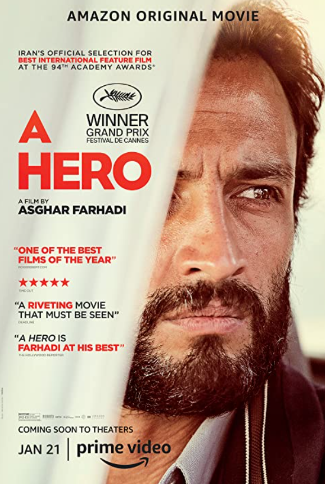
To truly leave a mark on one’s life, it pays to do so with a genuine sense of integrity, one that accurately reflects one’s authentic self. Such is the essence of heroism, the stuff of which legends big and small are made. But, regardless of the magnitude behind these tales, they all have one thing in common – they’re stories rooted in truthfulness, untainted by secondary considerations that can dilute or undermine the validity of the alleged primary intent. Those are among the issues raised in the new Iranian morality play, “A Hero” (“Ghahreman”).
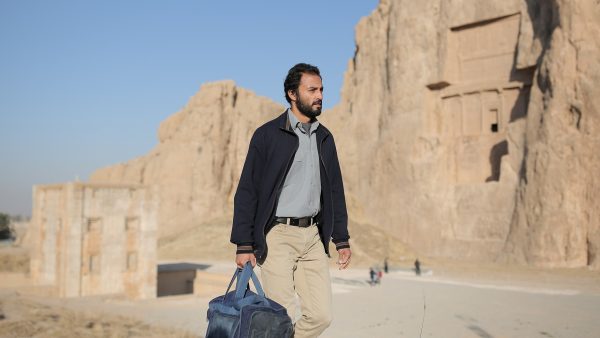
Rahim Soltani (Amir Jadidi) can’t seem to catch a break. The onetime-painter/calligrapher is doing time in prison in Shiraz, Iran for his failure to repay a loan that he was planning to use for starting his own business. However, his creditor, Bahram (Mohsen Tanabandeh), was so displeased with what he saw as Rahim’s fiscal irresponsibility that he brought a lawsuit against him that led to his conviction and jailing. As a result, Rahim now spends his days behind bars, with his only relief from the tedium of prison being occasional short-term leaves to visit his family. He wants out of prison permanently, but the hopes of that happening are slim, despite his good behavior and active efforts aimed at helping improve the quality of prison life for his fellow inmates.
Hopes of changing all that arise while Rahim is on one of his temporary releases. Rahim and his girlfriend, Farkhondeh (Sahar Goldoust), devise a plan that they hope will lead to a potential permanent reprieve. When Farkhondeh finds a lost bag filled with gold coins, Rahim proposes using them to help pay off his debt to Bahram. The coins won’t cover the entire sum, but they represent a sizable portion of it, enough so that Rahim hopes it will show good faith and encourage Bahram to urge officials to invoke leniency toward him.
Unfortunately, Bahram is not persuaded by the offer; it’s all or nothing as far as he’s concerned. Needless to say, Rahim is disappointed at the prospect of having to return to prison when his current leave is up. And, in the meantime, he and Farkhondeh must decide what to do about the coins. Do they keep them or try to return them to their rightful owner? While the temptation to keep them is strong, Rahim decides he should try to give them back to whomever they belong.
Rahim takes steps to reunite the coins with their owner, but, with his leave coming to an end, he’s unable to see his plan through. He entrusts completion of the task to his sister, Malileh (Maryam Shahdaei), and brother-in-law, Hussein (Alireza Jahandideh), with whom he had been staying while on leave. And, almost miraculously, it’s not long before the believed rightful owner (Fatemeh Tavakoli) shows up to collect them. She correctly identifies how and where the coins were lost, even including an accurate description of the bag in which they were found. But, before handing over the coins, the owner asks Malileh for discretion in the handling of this situation, claiming that her easily angered husband knows nothing about them and that she fears retribution from him if he were to find out about their existence, conditions to which Malileh readily agrees. And, with that, the owner takes her coins and leaves.
Not long thereafter, word of the coin retrieval reaches the prison. Officials, including the warden, Mr. Salehpour (Mohammas Aghebati), and cultural activities director, Mr. Salehi (Farrokh Nourbakht), are so proud of the praiseworthy act that Rahim orchestrated that they want to spread the word far and wide about their institution’s hero (not to mention the role their rehabilitation efforts inevitably played in helping to create an individual of such good character). Salehpour and Salehi arrange for media interviews that boast of Rahim’s good deed, including televised re-enactments of the event in question. However, those interviews and re-creations don’t exactly match up with what actually happened, primarily giving Rahim more credit than he actually deserved, accolades he makes no effort to deny.
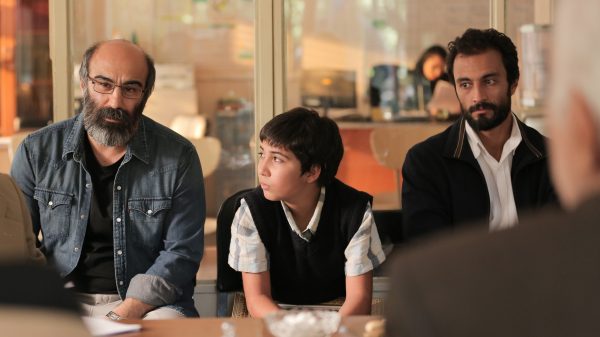
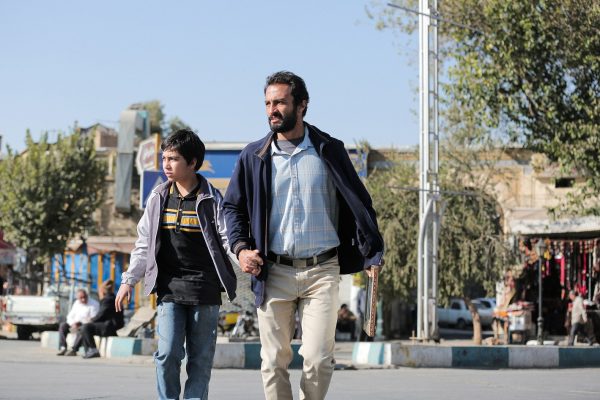
This is especially true when the possibility of Rahim’s celebrated heroism translating into parole begins looming larger. Rahim longs to be free so he can marry Farkhondeh and once again become a productive, contributing member of society. He also wants to be able to spend more time with his son, Siavash (Saleh Karimaei), an adolescent with a severe stutter and occasional behavioral problems who has been living with his aunt and uncle during his father’s imprisonment. And the possibility of all of that happening is becoming so strong that he can practically taste it.
As word of Rahim’s altruism spreads, the public becomes so taken with his story that he becomes a local celebrity. The praise earns him an open-ended leave from prison and formal recognition by a respected local charity, which raises money to help Rahim pay off his debt. The organization even helps him to secure a job, guaranteeing him an ongoing income.
But, as events continue to play out, questions arise about the validity of Rahim’s story. That’s especially true when he undergoes a screening interview for his new job conducted by a no-nonsense interrogator, Mr. Nadeali (Ehsan Goodarzi), who wants to verify the facts of Rahim’s claims. In particular, Mr. Nadeali is interested in speaking with the owner of the returned coins, but, when Rahim, Malileh and Hussein go looking for her, she’s nowhere to be found, raising all manner of questions about the truthfulness of this supposedly heroic tale. Those matters become further complicated when doubts arise about everything that Rahim claimed to have done in connection with the coins’ retrieval, prompting the entire situation to spiral out of control – and causing the onetime-hero’s reputation to become irreparably tarnished.
Indeed, the circumstances here truly would seem to bear out the notion that no good deed goes unpunished. At the same time, though, does that rule out the possibility of redemption? That remains to be seen, especially when one takes a close look at the specifics involved in scenarios like this. Rahim should be careful not to lose hope; things may yet work out in his favor. He just might wind up a hero after all.
When looking at Rahim’s situation, one can’t help but wonder why circumstances always seem to dump on him. It always appears as though Murphy’s Law is constantly dogging him; if something can go wrong, it invariably does, perpetually making his life difficult. But, upon close scrutiny, one could contend that it’s not entirely surprising that matters turn out as they do. And, for what it’s worth, the causes originate with him and his beliefs, the building blocks of his existence thanks to the conscious creation process, the philosophy that makes this possible.
Even though Rahim routinely proclaims how much he values his integrity, it seems as though there’s an underlying caveat attached to that notion. Indeed, while publicly preening about the benevolence behind his gesture, Rahim also quietly holds on to a secondary intent that isn’t entirely authentic nor compatible with the first: He hopes that his honesty will lead to his parole and his ability to get his life back on track. Now, while there’s nothing inherently wrong with wishing for the emergence of such developments, secretly hoping that his magnanimity will serve as a springboard to their appearance nevertheless taints the supposedly sincere altruism that he professes to believe in. Those beliefs, in turn, are reflected in the reality that subsequently manifests, one in which the purity of the notions he claims to embrace has become blemished by the secondary considerations resident in his consciousness. Indeed, we must truly be careful what we wish for.
This, of course, raises questions about Rahim’s ability to genuinely walk his talk. It’s something that even he subconsciously doubts at times as evidenced by simple gestures like facial expressions. During interviews, for example, Rahim frequently exhibits sidelong glances that suggest he’s being less than truthful about what he’s saying, and those responses begin triggering doubts about his story and its details. Is it any wonder, then, that his claims would come under scrutiny? What’s more, is it any surprise that his experience turns out as it does? It shouldn’t, given the mixture of intents that underlie its creation. After all, that’s how conscious creation fundamentally works.
In light of how events turn out here, one can’t help but wonder how Rahim became embroiled in these circumstances to begin with, all the way back to when he became imprisoned in the first place. If he was being less than honest with himself and others when initially taking out the loan, for example, then is it a surprise that his supposed plans didn’t unfold as hoped for? Then there was the incident when he was unsure about whether or not to return the coins. And, of course, there were the ongoing “accommodations” that he had to make in telling his heroic story as doubts arose about its validity.
This would all suggest that Rahim’s potential inability to be clear with himself about his beliefs and intents could pose an issue for him in accurately manifesting the reality he hopes to achieve. Even more fundamentally, it raises questions about what exactly constitutes the nature of his true beliefs and authentic self. This thus gives Rahim – and anyone else similarly situated – much to ponder. Profound introspection is definitely called for here.
Still, despite the difficulties Rahim has experienced in these areas, he nevertheless appears to retain aspirations about wanting to live the life of a hero. He may feel desperately disappointed with the way things have turned out in this scenario, both in terms of addressing these particular circumstances and fulfilling his overarching objective. But that doesn’t mean other opportunities won’t present themselves to him, especially if he wants to see that objective brought to fruition. He would seem to see heroism as his destiny, what conscious creators refer to as their value fulfillment. But, in order to make that happen, he must conceive of the conditions (and their underlying beliefs) that enable such an outcome. And, as his most recent experience has shown, he must make sure that his beliefs are authentic, unencumbered by considerations that could potentially undermine or distort what he’s hoping to achieve. After all, that’s what a hero should hope for, particularly one seeking redemption.
It’s gratifying that there’s a film from Iranian director Asghar Farhadi that I can at last genuinely recommend. This morality play, typical of many of the filmmaker’s works, weighs the consequences of honorably doing the right thing or personally benefiting from someone else’s apparent misfortune. As Farhadi’s best work, this production engages viewers with its carefully crafted deliberate ambiguity and heartfelt emotion for a protagonist who can’t seem to catch a break. Even with that, though, the film still bears some of the hallmarks that typically undermine this director’s pictures – a narrative that’s a little too obvious, longwinded ethical discussions that could stand some judicious editing, a script that could be improved with greater subtlety – but, thankfully, those issues are far less pronounced here than in his other works. It’s taken Farhadi some time to at last get things right, but, fortunately, he has done it here. We can only hope that he continues along this path in future productions. The film is available for streaming online.
As with many of Farhadi’s other films, “A Hero” has received a number of accolades. At the 2021 Cannes Film Festival, the picture won the Grand Prix Award and the François Chalais Award and received a Palme d’Or nomination, the event’s highest honor. It also captured two awards from the National Board of Review for best foreign language film and best original screenplay. In addition, it earned nominations for best foreign language film in the Critics Choice Award and Golden Globe Award competitions.
Aspiring to become a hero is one of the most noble pursuits in which we can engage. It embodies qualities we’d all like to believe we can possess and exhibit to a world in need of inspiration. But it’s not something to be approached casually or without adequate preparation, particularly when it comes to assessing the attributes a hero must exemplify. It truly is a process of getting real, one in which we need to scrutinize how genuinely we personify the traits that go into validating the exalted designation we seek. That in itself is a heroic act, but, should we ultimately and legitimately attain the sought-after goal, we can take pride in the accomplishment – and become the heroes we’ve always aspired to be.
In this second installment of my wrap-up for the best – and worst – of 2021, I specifically look at documentary releases. And, considering how lame 2021 was for new narrative film offerings, all I can say is thank goodness for this movie genre, as it was far and away the cinematic saving grace of the year.
Unlike narrative features, where I struggled to come up with a Top 10 list, as I noted in my previous best and worst list blog entry, I had no such trouble with the documentary genre. In fact, this class of movies had so many excellent offerings that I had difficulty limiting myself. This was a refreshing change from 2020, when well-made documentaries were hard to come by. It’s interesting to note that even most of those that round out the bottom of this year’s documentary list were far from awful; they just weren’t as good as those that came out on top as this year’s stellar offerings (and I could only come up with 7 films that deserved to be on that list!).
I was also pleased to find that 2021’s documentary releases generally did not fall prey to the undeserved overhyped issue that befell many of their narrative counterparts. Those that were well received by critics were deserving of the accolades they were bestowed. It’s comforting to know that genuine integrity managed to persist in at least one segment of the film reviewing community in 2021.
Here’s what I believe are 2021’s best documentary offerings. Again, I have not seen absolutely everything that has been released in this genre (a virtual impossibility), but I have screened most of the leading contenders and have summarized my favorites – and least favorites – here. If there are documentaries missing from this year’s lists about which you’d like to know how I assessed them, please visit this site’s Quick Cuts page, which includes summaries of all of the 2021 releases I viewed.
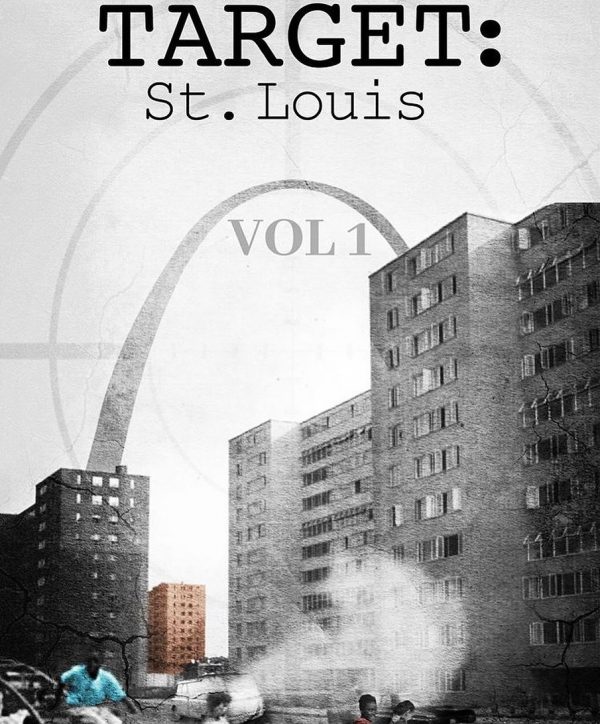
If watching this damning indictment of reprehensible clandestine activities by the US government in the 1950s and ’60s doesn’t leave you thoroughly appalled, you must not have a conscience, a soul or a shred of humanity in your being. Director Damien D. Smith’s debut documentary feature tells the story of how the US military, in conjunction with various defense contractors, intentionally exposed residents of a predominantly African-American housing project in St. Louis to repeated open air dustings of toxic chemicals to determine what effects the substances would have on them, all without their knowledge or consent. The result was a host of serious illnesses, including rampant forms of cancer, that affected individuals at the time and many years later. What’s more, these practices were even revealed in the government’s own declassified documents, but, because of legal technicalities, victims were effectively unable to sue any of the parties involved. Through interviews with survivors of the testing, as well as researchers and advocates working to bring the truth to light, the filmmakers have produced a shocking release that is bound to leave viewers incensed about what transpired – especially when it’s revealed that this sort of deplorable Third Reich-style form of experimentation may be only one such example of what our government had done (or could still be doing). This is a powerful wake-up call to the atrocities of environmental racism, folks.
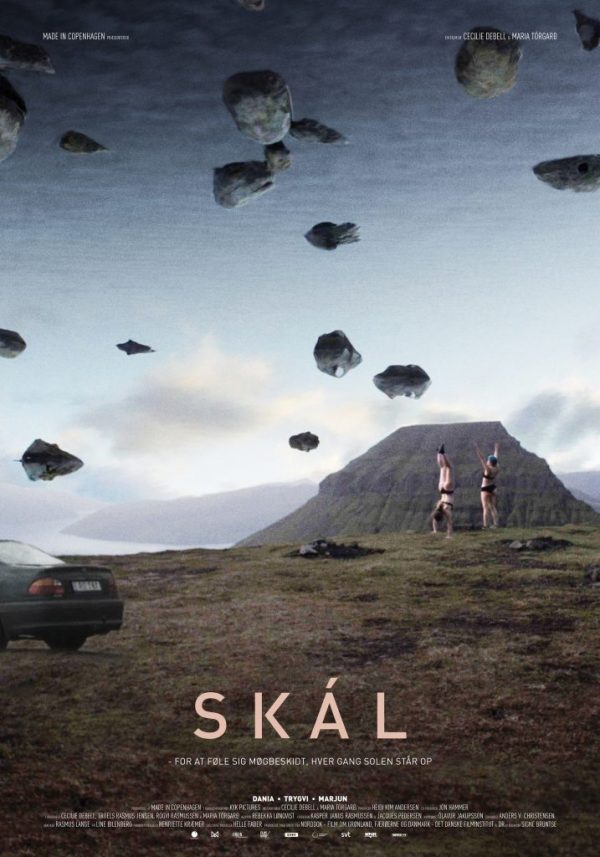
Though billed as a documentary, this captivating release plays more like a docu-drama or even a big screen version of reality TV. The film tells a modern-day Romeo and Juliet story of sorts about Dania, a young, aspiring poet from a conservative Christian community who falls for an outspoken, outlandish rap artist, Trygvi, whose shock-provoking lyrics are the antithesis of the values his once-sheltered girlfriend was raised with. Despite their differences and the pressure inflicted upon them through less-than-subtle parental misgivings, the couple steadily grows ever closer, especially as Dania becomes more comfortable in poetically expressing her conflicted feelings about genuine faith and the pitfalls of needlessly restrictive religious conventions. At the same time, the film also explores coming of age matters and issues a clarion call for the need for personal freedom and self-expression in an environment where such elements are fundamentally limited. Directors Cecilie Debell and Maria Tórgarð thus present an honest love story with deep spiritual and individualistic implications, narrative elements often lacking in similar offerings. The film’s truly breathtaking cinematography is a sight to behold, showing off the beauty of the Faroe Islands in ways seldom seen, combined with heartfelt, intimate depictions of personal moments, making for an unusual blend rarely featured in many movies, let alone those in the documentary genre. My only problem with this release is that so many of the most significant moments seem so perfectly captured that it almost makes me wonder about the validity of their authenticity, that they play more like scripted material than spontaneously caught events. That aside, though, this thoughtful, insightful release provides viewers with much to ponder, backed by gorgeous images and presented through a bevy of touching moments. What more could audiences ask for out of a documentary?
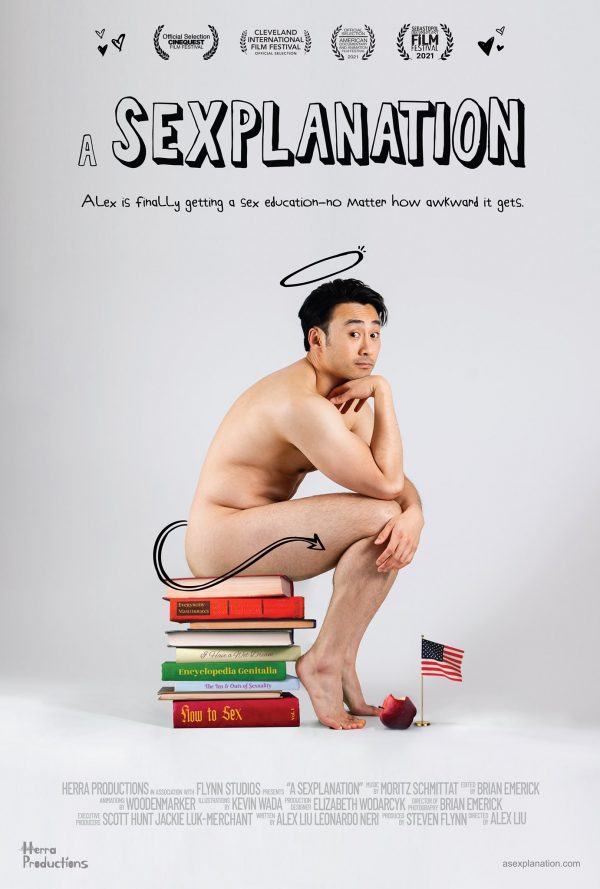
In a culture so pervasively obsessed with sex as ours is, it’s amazing that it’s simultaneously so hung up and ignorant about the subject. That’s an intriguing paradox filmmaker Alex Liu wanted to explore. So, at age 36, the gay Asian-American director decided to make a documentary about it, one that he hoped would shed some light on this for society at large, not to mention himself, too. As someone who grew up with a shameful outlook about sex, both in terms of his individual orientation and regarding the subject in general, he wanted to get to the bottom of this conundrum, especially in light of his apparently robust libido as an adult. In getting to the root of this matter, he interviews a wide range of experts on sexuality and those who have contributed to shaping our collective views on the subject, including researchers, educators, counselors, scientists and religious figures, as well as family members, friends, and everyday men and women on the street across all ages, ethnicities and sexual orientations. The result is an eye-opening cinematic experience, one that offers significant insights and enlightened solutions for addressing willful bashfulness and ingrained ignorance, all served up in a delightfully whimsical, frequently humorous offering punctuated with clever animation and frank though lighthearted conversations. The filmmaker’s debut feature is a real treat that leaves little to the imagination while pointedly but tactfully informing audiences on so many different fronts.
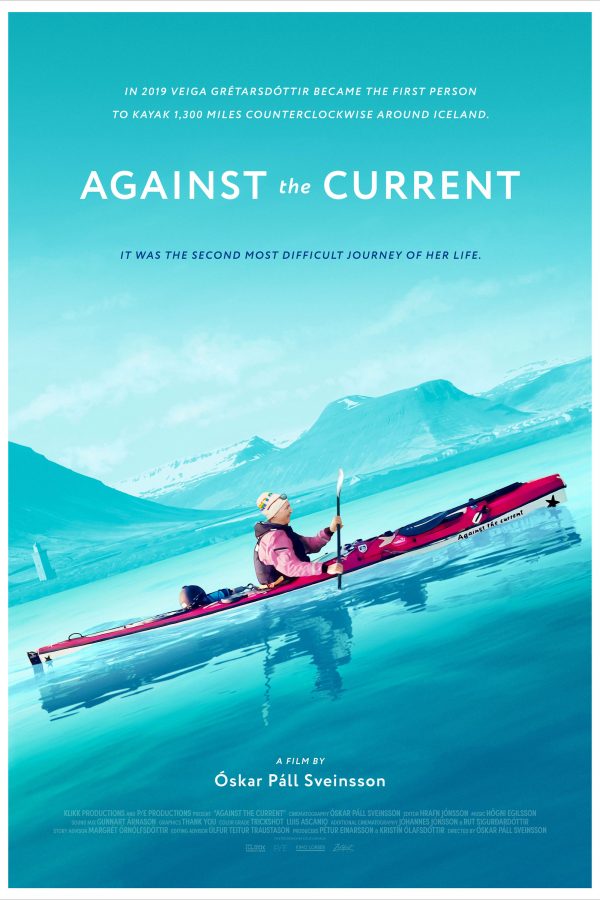
To truly prove ourselves, sometimes we must pursue goals that are seriously over the top, quests that most of us would view as seemingly impossible, possibly even foolhardy. So it was for Icelandic kayaker Veiga Grétarsdóttir when this courageous transgender athlete decided to circumnavigate her island home by traveling counterclockwise, going against the current. When asked why she would undertake such a dangerous and potentially deadly venture, she replied that she had been going against the current all of her life and that this felt like something she needed to do to help raise awareness for the transgender community and organizations that support it. What resulted from this 103-day endeavor, as chronicled in director Óskar Páll Sveinsson’s sensitive and gorgeously filmed documentary, is a journey of self-discovery on multiple fronts – and one not limited to the waters off the coast of Iceland. This offering is an inspiring and uplifting piece of filmmaking, one sure to stir the spirit, tug at the heart and encourage us all to fulfill potential we never knew we had.
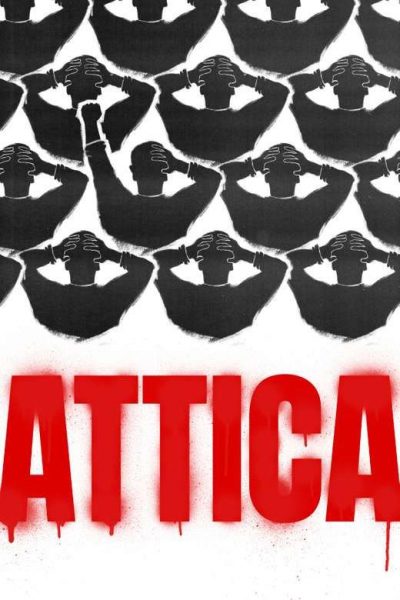
I’ll come right to the point about this searing documentary – it’s a very difficult watch, even for those with steely tolerance and sensibilities. Director Stanley Nelson’s chronicle of the five-day 1971 prison riot at New York’s maximum security Attica Correctional Facility holds nothing back, arguably the most graphic and uncompromising depiction of what turned out to be a horrific event for all concerned, the largest (and most deadly) such uprising in US history. The film thoroughly and meticulously explores what led to the incident and how it all unfolded through a wealth of archive footage and interviews with those who were there – inmates, government officials, members of law enforcement, journalists, negotiators, observers and relatives of those who lost their lives. While arguments might be made that the insurgents deserved what they got, as this film so pointedly illustrates, incarceration is no excuse for brutally and inhumanely treating criminals like animals, both during their imprisonment or in whatever punishment they receive for their actions. “Attica” exposes what happened with an unrelenting candor that sugarcoats nothing, revealing an unmitigated, wanton, largely racist assault by officials driven by retribution and a penchant for maintaining order at any cost, no matter how egregiously barbaric. Admittedly, the film could have benefitted from more material on what was learned from the experience and any developments or reforms that have come out of the event. But, on balance, this is a tragic history lesson and a damning indictment of rigid, unyielding, retributive law and order policies that can’t be condoned, no matter what the circumstances.
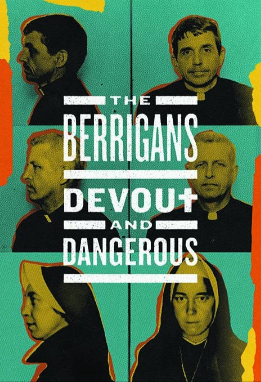
In times of war and great social challenges, it can be difficult to remain devoted to one’s principles – no matter how strongly we feel about them – when prevailing circumstances threaten to curtail our freedoms and our ability to express our feelings about them. Yet there are often courageous, unflappable individuals who refuse to let such conditions stop them, as evidenced by the protests led by activists Philip and Daniel Berrigan and Elizabeth McAllister. In this superb documentary about the lives of these three heroic figures (two priests and a nun who defiantly walked their talk when it came to their Catholic values), director Susan Hagedorn chronicles the efforts of these anti-war advocates who destroyed draft records as a means of protesting US involvement in the Vietnam War, as well as their subsequent activities in the civil rights movement and the early days of the AIDS crisis. They paid dearly for their actions, spending considerable time in prison, but they could not ignore their conscience in carrying out these acts of deliberate rebellion. Through a wealth of archive materials and contemporary interviews with family members and those who worked with them (such as actor Martin Sheen and Pentagon Papers whistleblower Daniel Ellsberg), these three activists brilliantly come to life, both as advocates for their causes and as compassionate, committed individuals, all captured in a highly personal way. This material is supplemented with voiceover narrations of the brothers’ writings read by Liam Neeson and Bill Pullman, adding an intimate and thoughtful dimension to their portrayals. We owe much to these virtuous champions, and this eminently moving tribute makes that abundantly clear.
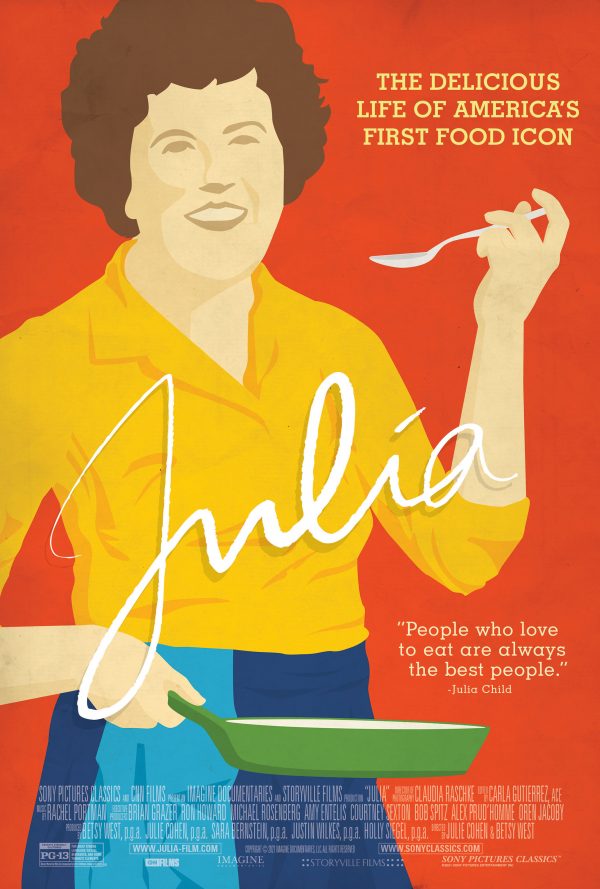
Who would have thought that a middle-aged woman with a lilting voice and eccentric mannerisms would become a pop culture icon? But that’s precisely what happened with chef Julia Child, who brought the joy of cooking and eating into the mainstream at a time when most Americans gave it precious little thought. Through the publication of her seminal cookbook Mastering the Art of French Cooking and her myriad television appearances, she brought a new appreciation for the art of the kitchen into the lives of many, serving as meticulous instructor, courageous mentor and eclectic culinary tour guide. In the process, she also single-handedly gave birth to the television cooking show and lent ample credibility to the value of the struggling public television network. And, through it all, the public was treated to the antics of a truly American original, one whose animated and quirky presentation style was as delicious as what she was preparing in her kitchen. What’s more, audiences are introduced to Julia the individual, the secretary who worked for the OSS in Asia during World War II, the romantic who fell madly in love with her adoring husband, the activist who was an ardent voice for the pro choice movement and AIDS victims, and the generous supporter of aspiring chefs. Directors Julie Cohen and Betsy West serve up a sumptuous buffet of archive footage, recent interviews with friends and colleagues, and gorgeously filmed food that will send viewers on a beeline to the nearest gourmet restaurant upon leaving the theater. Fans of Julia and the art of cooking owe it to themselves to see this lovingly assembled tribute to an icon who accomplished and contributed so much and made it look easy – and fun.
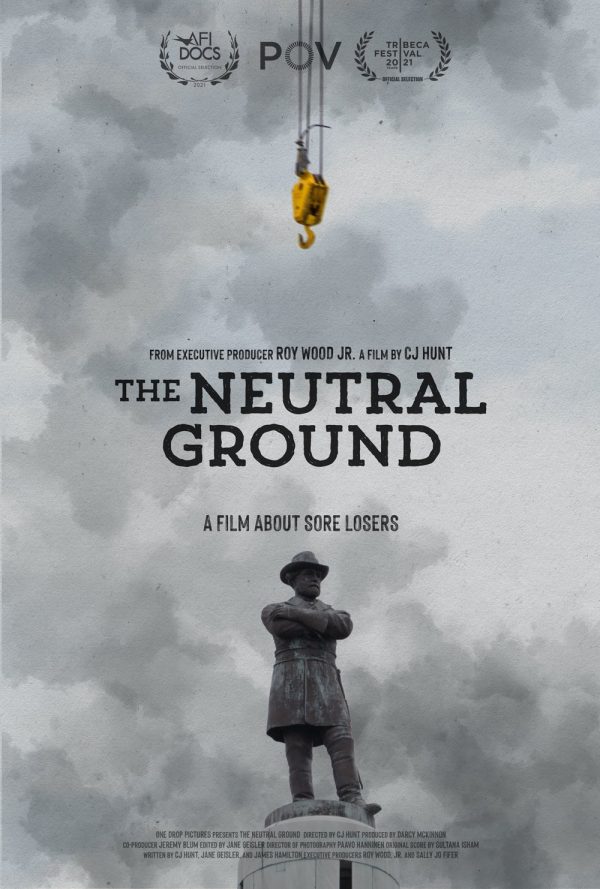
Aptly subtitled “A Film About Sore Losers,” this superb debut documentary feature by director C.J. Hunt draws upon a modern-day Battle of New Orleans – one centered on the contentious removal of four statues glorifying the Confederacy approved by a vote of the city council – as a means to set the record straight behind what its proponents were actually commemorating with these landmarks, namely, the celebration of a failed social system based on sanctioned slavery and white supremacy. In exposing the false narrative that has kept this myth alive, sentimentally known as “The Lost Cause,” the filmmaker tells a story that’s both stunningly comic and utterly tragic. Hunt’s skillful questioning and editing techniques effectively blow the lid off the ignorance, cynicism and hypocrisy of those who still believe in the virtues of the losers of the Civil War and how their public symbols, such as the statues in question (and many others like them), perpetuate the values of a system that treated fellow humans as property and inferior beings. As the premiere episode of the 2021 season of the PBS series POV, this excellent offering is a fine viewing choice, both as a work of filmmaking and as an enlightening and educational vehicle that every American should see.
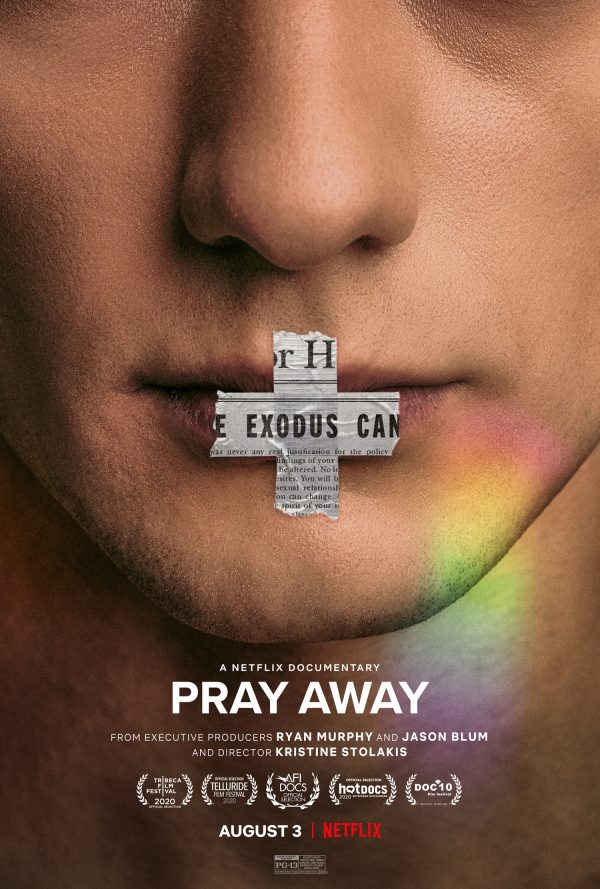
One of the most noble endeavors that documentary filmmaking can pursue is the exposure of reprehensible behavior. So it is in director Kristine Stolakis’s debut feature, a damning indictment of the practice of conversion therapy, a largely Christian-based program created by mostly undereducated “counselors” aimed at “helping” gay individuals renounce their orientation in favor of a “preferred” traditional heterosexual lifestyle. In depicting the psychological damage inflicted on therapy participants by so-called former gays (many of whom later abandoned their own counseling and later resumed their homosexual lifestyles), the director holds little back in shining a bright light on this horrific and unenlightened way of looking at life. Watching this film should rightfully infuriate anyone – gay or straight – for the unspeakable emotional atrocities perpetrated by this movement, which is neither helpful nor effective nor even Christian.
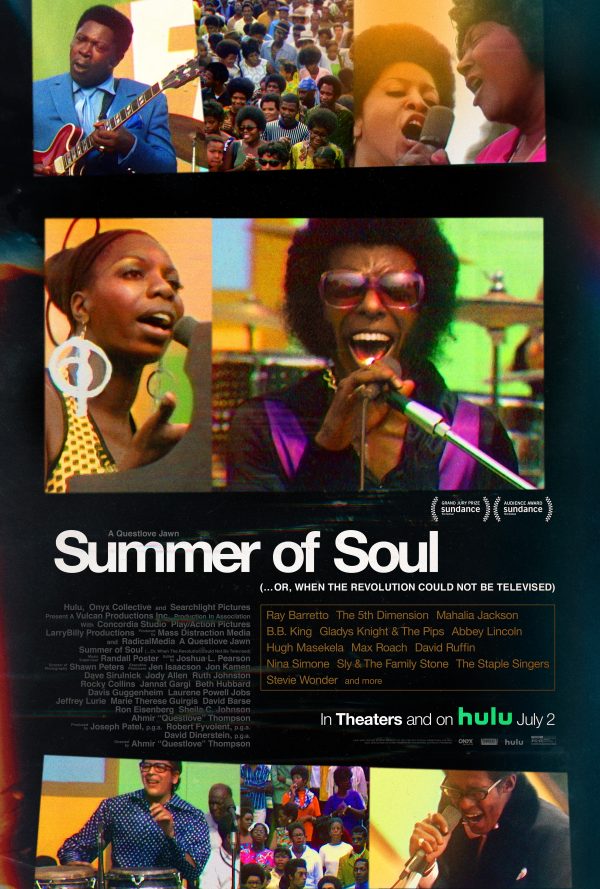
1. “Summer of Soul (...Or, When the Revolution Could Not Be Televised)” (USA)
During the summer of 1969, at the same time as Woodstock, another event of nearly equal magnitude took place in New York City, the Harlem Cultural Festival, a celebration of Black and Latino music, comedy and culture. And, like Woodstock, it, too, was filmed. Unfortunately, after the festival concluded, it was promptly forgotten, the film was stashed away, not to be seen, due to a lack of interest by distributors and television networks to make it public. Fortunately, that footage, which has been preserved in remarkable condition, has been resurrected, and the festival has been brilliantly brought back to life by this entertaining, educational and moving documentary. In this film, director Ahmir-Khalib “Questlove” Thompson has assembled an extraordinary selection of performances by the likes of Stevie Wonder, B.B. King, the Fifth Dimension, Gladys Knight & the Pips, Sly & the Family Stone, David Ruffin, Hugh Masekela, Nina Simone, the Staples Singers and Mahalia Jackson, to name a few. The performances are augmented by commentary from a number of attendees and performers, as well as contributors offering their insights on the festival’s social and cultural impact, including Chris Rock, Jesse Jackson, Al Sharpton, Lin-Manuel Miranda and Charlayne Hunter-Gault. The film is more than just an entertainment vehicle, though; it’s a time capsule into the period, examining the impact that the summer of 1969 had on Black culture, activism and empowerment. Questlove presents viewers with a tribute to the festival and the times, while simultaneously reawakening us to issues that still deserve attention all these many years later, pointedly reminding us that those who do not learn from history are destined to repeat it – and that we had all better be listening to more than just the music.
“The Chinese Miracle,” with its astounding economic growth in a relatively short time, has inspired awe around the globe, and the nation’s zealous adherence to “the Chinese Dream” has contributed significantly to that outcome. Similar in nature to the American Dream, the Chinese version is driven by a belief in hard work and dedicated diligence as a pathway to affluence. But, as director Jessica Kingdon’s excellent new documentary effectively shows, is that dream attainable or illusory? The film clearly depicts China’s relentless drive for perfection and success in all endeavors, showing how supposed opportunities for advancement are available at virtually all levels of the economy. However, do those opportunities genuinely translate into hoped-for outcomes, or are they merely ploys to squeeze out peak performance from naïve underclass workers who believe the promise and are willing to do whatever it takes to get ahead? Meanwhile, the film also illustrates the opulent degree of privilege that comes with wealth, but is this something that everyone can realistically share in, despite assurances to the contrary? The picture’s inventive cinematography, frequently backed only by the movie’s engaging score and minimal dialogue (an approach reminiscent of prior visually focused documentary works like “Koyaanisqatsi” (1982) and “Samsara” (2011)), shows more than tells in conveying these themes, immersing viewers in imagery designed to profoundly depict these intents. For all these strengths, though, the narrative tends to stray somewhat at times, especially toward the film’s end, but that’s easily overlooked in the picture’s overall context. What’s perhaps most significant, however, are the parallels between what’s transpired in China and what appears to be unfolding here in the US as it begins modeling itself more after its overseas competitor as a means to keep pace. And that should be a caution to all of us before we fall prey to illusory notions ourselves.
Getting a handle on an icon can be a difficult challenge, especially when it’s one so simultaneously larger than life and enigmatic as film legend Charlie Chaplin. Yet directors Peter Middleton and James Finney do a more than admirable job of bringing “the little tramp,” filmdom’s first bona fide superstar, to life through this well-crafted tribute that balances the genius and the failings of its complicated protagonist, one who was both inscrutably reclusive yet right at home in the limelight. With a wealth of film clips, archive behind-the-scenes footage, interviews with those who knew Chaplin, and re-creations of significant events in his life and career, this made-for-Showtime documentary provides more than just a rote chronicle of the comedian’s life; it offers insight into how his work often reflected his early life in London’s working class underbelly, as well as how and why he was later often seriously misunderstood when it came to his progressive social and political viewpoints. The film is admittedly a little slow to find its traction at first, but, once it hits its stride, it’s a mesmerizing piece of cinema, one that’s sure to hold viewer interest, even among those who usually have little interest in silent movies. A surprisingly good work that exceeds expectations.
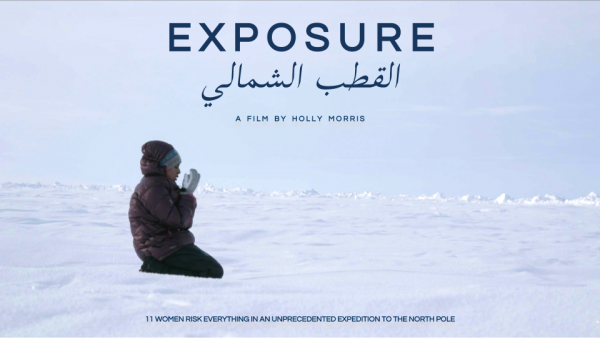
Reaching the top of the world is far from an easy task, even under the best of conditions. But, in an era of climate change, in which the warming of the planet is causing the ice that must be traversed to reach the North Pole, that undertaking has become eminently more perilous. Director Holly Morris’s excellent, up-close documentary chronicles the 2018 adventures of an all-female expedition crew, detailing the challenges and dangers involved in such an inherently risky venture. This project, aimed at helping to draw attention to environmental issues and the possibilities afforded by women’s empowerment initiatives, is a historic one also in that it could well be the last of its kind due to the increasing dangers posed by such journeys. The film’s stunning cinematography and its highly personal treatment of the crew members’ individual stories makes this an intriguing and compelling watch about one of the planet’s last-remaining – and potentially fastest-disappearing – frontiers.
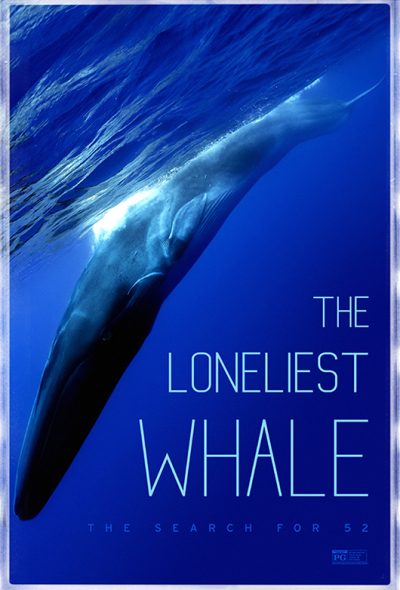
14. “The Loneliest Whale: The Search for 52” (USA)
The search for connection is something that we all understand, not only as a social practice, but also as a personal and collective need. So, when we hear about an individual who is unable to fulfill that requirement, we’re often saddened by this deficiency, regardless of whether this circumstance involves a human or some other creature. Such is the case for a believed-hybrid whale that sings its songs on a unique frequency, making it fundamentally unable to communicate with its peers and causing it to be labeled as the ultimate social outcast. This has thus led to the emergence of a mythology sentimentally celebrated in story and even song, all backed by an abundance of empathy for this loner of the deep, a creature that has come to be known as “the loneliest whale.” The search for this elusive cetacean provides the focus of filmmaker Joshua Zeman’s captivating documentary, which shares the story of this solitary specimen and the long-shot expedition launched to find it. The film generally tells the tale in a beautifully filmed and engaging manner, though it has unfortunate tendencies to slip off into tangents that are awkwardly introduced and to insert annoying, somewhat self-aggrandizing observations from the director/narrator, intrusions that needlessly impede the flow of the narrative. Nevertheless, this offering also draws a number of relevant and pertinent parallels between the human condition and that of the lonely whale and its kindreds, metaphorical parables that we had all better heed if we hope to save the whales – and ourselves.
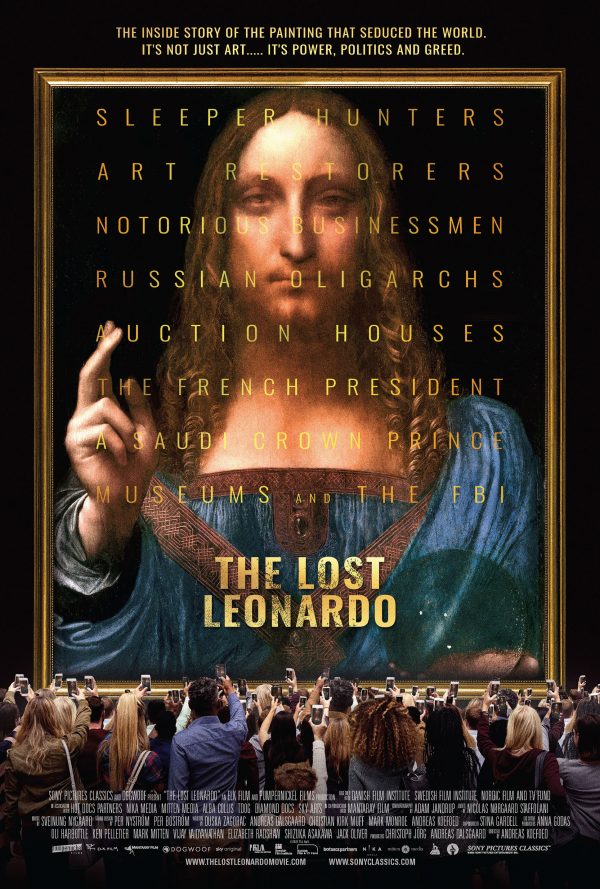
When a missing masterpiece allegedly surfaces, there’s tremendous celebration and supreme doubt. Is it legitimate or phony? That’s the question that was raised when Leonardo da Vinci’s believed-lost Salvatore Mundi surfaced, raising the possibility that a work by one of the world’s masters had been miraculously resurrected. There was considerable skepticism about its authenticity, and, once it was believed to be genuine, a firestorm over its future ownership arose, one that was riddled with shady monetary considerations and even concerns related to geopolitical capital. Such are the dynamics of director Andreas Koefoed’s superb documentary chronicling the events associated with this artistic find, told in the form of a mystery/thriller with intriguing twists and turns, along with an ante that’s continually upped, resulting in an auction price that fetched the highest amount ever paid for a work of art. Lovers of fine art and cinematic intrigue will no doubt enjoy this engaging and thoroughly entertaining work.
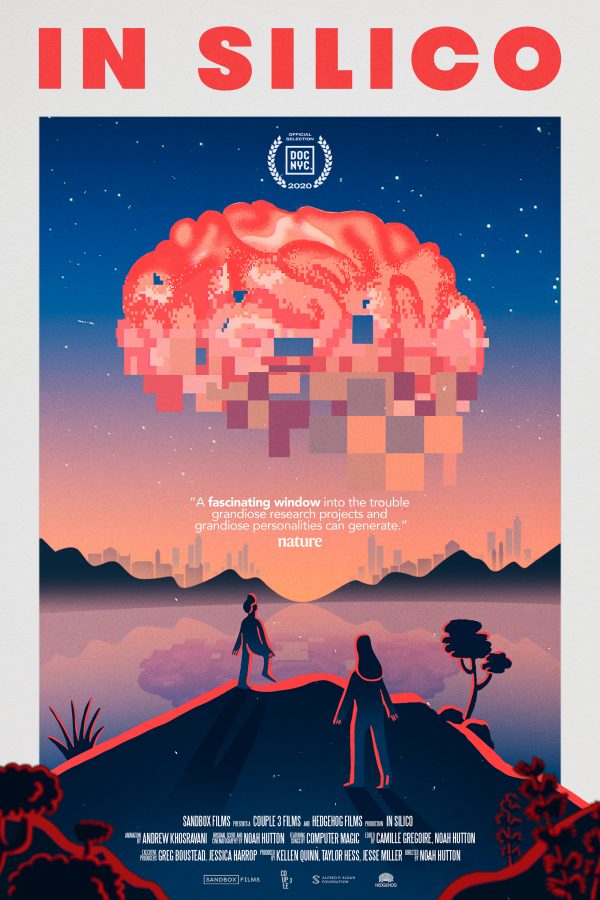
The brain is a truly remarkable phenomenon of nature, but how much do we really know about how it was created and how it functions? Filmmaker Noah Hutton, a longtime student of neuroscience, always wanted to make a movie about the subject, and he found his inspiration after seeing a TED Talk by visionary researcher Henry Markram. The inventive investigator came up with a revolutionary proposal to design a computer-generated model of the brain to understand its workings, one created “in silico,” a scientific study approach that fuses biology and electronic technology. Hutton opted to follow Markram’s 10-year project to pursue that audacious goal, one launched with tremendous enthusiasm but one that also came under considerable criticism, particularly when monetary matters became involved. This engaging documentary details an array of highly technical topics in an easily relatable way, while also painting a candid portrait of the highly competitive (and sometimes less than civil) world of bidding for research funding. The film also examines “the big questions” of whether the study of these issues rightfully falls within the scope of science or philosophy (or some combination of the two) and whether such ethereally tricky conundrums can even be quantified or properly evaluated given our current level of knowledge and understanding. Hutton, Markram and other commentators give us all much to think about, and they do so in plainspoken terms, bringing the relevance down to an everyday level and not letting the subject linger in the realm of inaccessible theoretical speculation. Quite an impressive outcome for an ambitious decade-long film project.
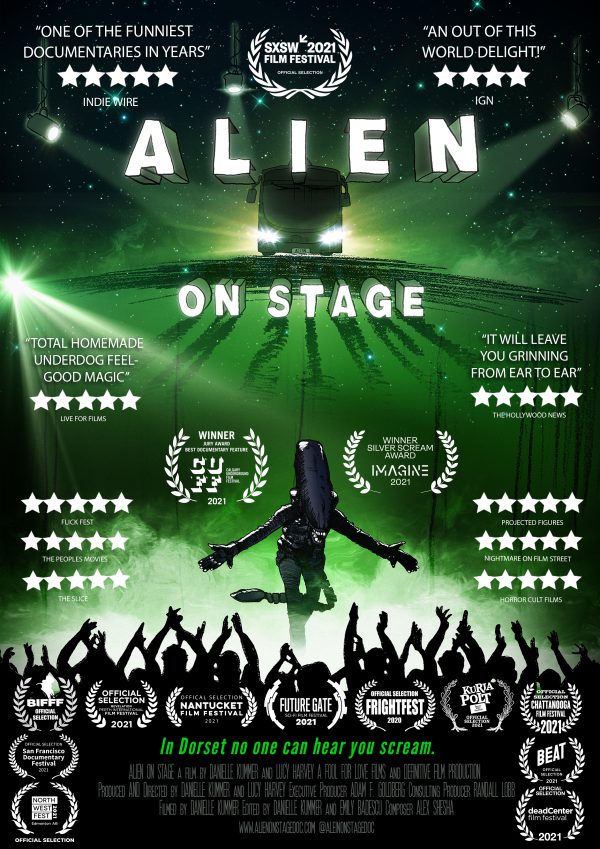
When an amateur British theater company decides to do something different for its annual holiday charity production, the crew goes out on a limb to stage material that’s truly out of this world – a theatrical adaptation of Ridley Scott’s sci-fi cinematic classic, “Alien.” As audacious as this undertaking might be, however, the play’s initial run in the company’s hometown of Dorset is a flop. But, when the show catches the attention of documentary directors Lucy Harvey and Danielle Kummer, the company’s fates change dramatically. The filmmakers help the amateur troupe secure an opportunity to stage a performance of the play in London’s West End – and to a sold-out crowd at that. Thus begins this chronicle of an unlikely production brought to life both on stage and in this hilariously offbeat documentary. While the film could use a little more background about the principal players, this wickedly funny saga about a horror classic transformed into a campy romp provides meticulous behind-the-scenes detail, intercut with footage from the film original to provide context and comparison. Most of all, though, this is a fitting tribute to all the underdogs out there who are willing to stick their necks out and attempt the untried, all the while having fun and ultimately attaining unexpected yet much deserved success.
How frustrating it must be to have talent – and a tremendous gift to give the world – only to be thwarted by bureaucratic red tape and needless, outdated government restrictions. So it has been for many Cuban artists looking to showcase their talents abroad. Fortunately, though, there have been some lucky breakthroughs, such as those that occurred during a narrow window from 2015 to 2017, when cultural exchange relations between the US and Cuba were briefly relaxed, enabling artists like the Vocal Vidas – a Cuban a capella quartet – to slip through a visitation window that allowed the talented foursome to give three performances in Los Angeles. The process was not an easy one to negotiate, as the window of opportunity was in the process of closing, but the Vidas were able to pass through in time, to the benefit of everyone who saw them perform live and to those viewing this documentary about their storied odyssey. Directors Ivaylo Getov and Jeremy Ungar have assembled a delightful chronicle of their journey, including footage of their performances, as well as the complex process of securing visitation visas to perform in the US. The film features ample footage of their singing, both in the US and Cuba, as well as insights into their respective lives, both as performers and as individuals struggling to get by in the fiscally strapped island nation. A truly delightful, uplifting, inspiring watch.
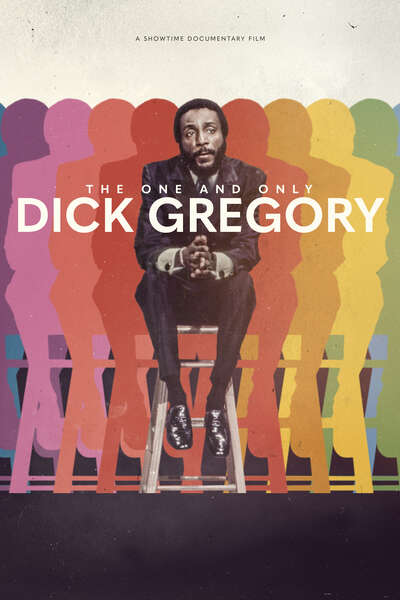
Comedian/activist/health advocate Dick Gregory (1932-2017) lived quite an amazing life, as depicted in this detailed biography. With a wealth of archive footage of Gregory’s standup performances, his civil rights activism and his efforts to promote healthier living, backed by an array of interviews with those who knew him and performers whom he inspired, director Andre Gaines’s debut feature presents an in-depth look at this prescient icon’s storied life. In addition to appearances by Gregory’s wife, children, publicist and biographer, the film also includes insightful conversations with actor/comedians Chris Rock, Dave Chappelle, Kevin Hart, Wanda Sykes, Rob Schneider, Nick Cannon and Harry Belafonte. While the picture provides a thorough treatment of Gregory’s activism, it nevertheless could have placed a little more emphasis on his comedy, given that the clout he built up as a successful entertainer was what made his later, more meaningful work possible. That aside, however, this excellent offering provides viewers with a fitting tribute to a remarkable talent and an impressive human being who brought true meaning to the word – and practice – of integrity.
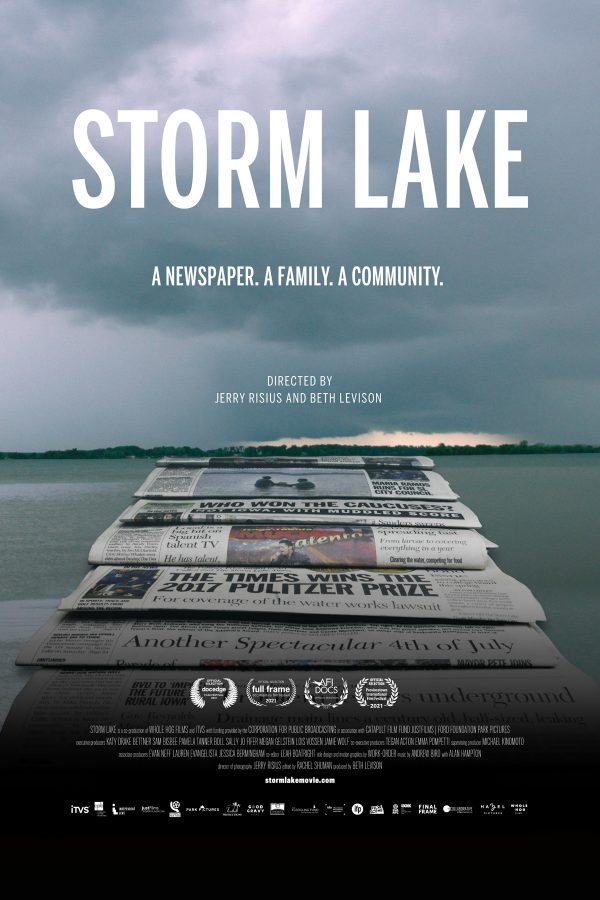
In an age of ever-growing media consolidation and agenda-driven corporate journalism, it’s comforting to see that good old-fashioned reporting is managing to stay alive in small town newspapers like The Storm Lake Times, the subject of this endearing documentary. As publications of this type continue to disappear in droves, the public is losing the kind of personalized local coverage that we all need to stay informed about our communities. But, fortunately, periodicals like this family-owned, Pulitzer Prize-winning, twice-weekly Northwestern Iowa newspaper are sustaining the tradition, despite the deck being heavily stacked against them. Directors Beth Levison and Jerry Risius document the challenges and joys associated with keeping an operation like this alive, as well as the range of big and small stories that the paper covers, from the foible-filled 2020 Iowa caucuses to the COVID outbreak at a nearby meat packing plant to the crowning of grade school pig festival queens and grandma’s favorite recipes. As a former journalist, I must admit to being somewhat partial to material like this, but its heartwarming tone is genuinely engaging, presenting a slice of Americana that may be disappearing but that can still be savored through a cinematic experience like this. This film was the winner of the American Film Institute Documentary Film Festival’s Audience Award for best feature as voted on by event attendees.
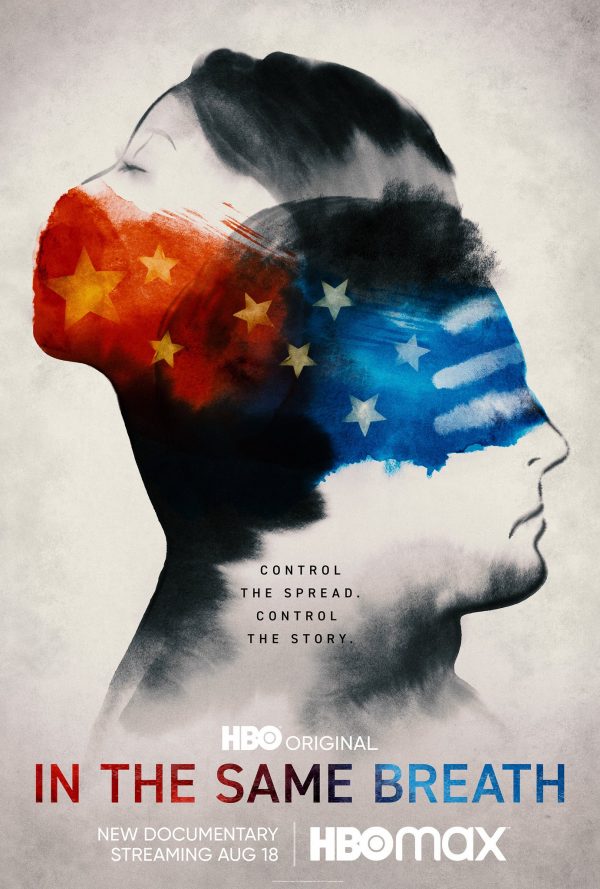
Making a documentary about the COVID-19 pandemic has got to be one of the most challenging ventures a filmmaker can undertake, especially given the fact that it’s still ongoing. What’s more, there are so many aspects to focus on that it’s undoubtedly difficult to know where to place proper emphasis. And, when one adds to that the ever-shifting sands of available and credible information (particularly from officials in China, site of the pandemic’s origin, and the US), it’s difficult to know what to believe. Such are the hurdles that director Nanfu Wang faced in making this film. Certain elements are sensitively and expertly handled, such as the impact of the pandemic on victims, their families and the health care workers tending to their needs, painfully sad segments guaranteed to move viewers to tears. However, the slope is considerably slipperier when it comes to addressing governmental responses to the virus. Is the ineffectual handling of the crisis due to incompetence, a lack of preparation and/or blind denial, or is something more nefarious at work, given the hardline, authoritarian, propagandist proclamations that, arguably, are being issued on both sides of the globe? On this front, the director seems less sure of herself, hedging her bets and seemingly holding back from saying what she really wants to say. That’s unfortunate given that Ms. Wang is generally not one to waffle, as previously seen in hard-hitting releases like “One Child Nation” (2019). Here, however, she seems to resist throwing down the gauntlet, an approach that dilutes her message – and weakens the film – at a time when a definitive perspective is needed more than ever.
Sometimes you think you know someone and later find out that he/she turns out to be something totally different. So it is to a surprising degree with Helen Keller (1880-1968), the renowned blind and deaf author and lecturer who is perhaps best known for her work as an ardent advocate for those with disabilities. However, as director John Gianvito’s documentary about the iconic figure reveals, Keller was also a radical socialist, one who unabashedly lambasted the capitalist-militarist system and zealously fought for the rights of women, laborers, minorities and the impoverished. She championed the Russian Revolution and was a member of the International Workers of the World, actions that eventually brought her under surveillance by the FBI. This is not to suggest that she was unpatriotic, but she strongly felt that the American system was broken in many ways and needed to be significantly reformed to bring about fairness, justice and equality. Years later, however, when she saw how socialist ideals had been corrupted by parties like the Soviets, she backtracked somewhat, not from a theoretical standpoint but definitely from a practical one, a move that probably contributed to the downplaying of her prior views and her reputation as an activist social reformer. The film does a fine job in bringing all this to light, and its singularly distinctive approach makes this one of the most stylish documentaries to be released in some time. However, I can’t say I agree with some of the filmmaker’s stylistic choices, such as the use of lengthy quotes presented as on-screen graphics requiring considerable viewer reading – enough to try the patience of even those who generally feel comfortable reading subtitles. There is also some inconsistent treatment in the presentation of the material, keeping the film from striking a consistent tone and rhythm. In the end, “Her Socialist Smile” may prove eye-opening in many ways, and the path chosen for delivering those revelations may indeed be a distinctive one, but the overall production feels somewhat off-kilter as a piece of filmmaking, one whose noble attempts at doing something different don’t quite click as well as they could have.
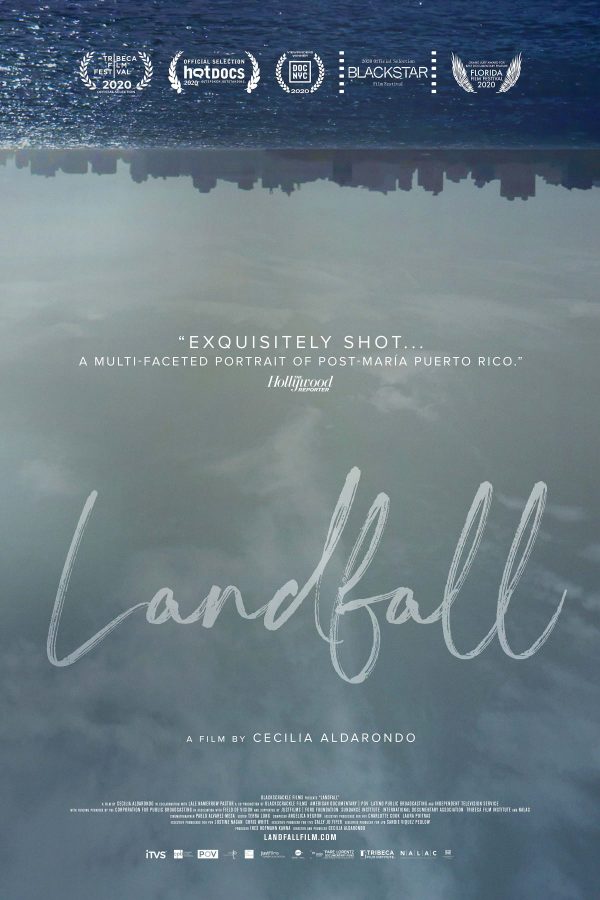
When presenting a story on film, it’s generally more effective to show, rather than to tell, viewers what’s unfolding on screen. Unfortunately, this documentary about everyday life in Puerto Rico between the 2017 landfall of Hurricane Maria and the island’s 2019 ouster of its governor because of his ineffectual crisis response simply doesn’t get the job done. Director Cecilia Aldarondo’s second documentary feature consists of a lot of talk and not much in the way of compelling footage depicting the disaster that devastated the island and the suffering left in its wake. This is compounded by the inclusion of ample extraneous and unrelated footage, further diluting the narrative. What’s more, the film also places more emphasis on the territory’s economic, political and social services turmoil than on the storm, which, despite their profound impact (some of which had been going on before the hurricane hit), is difficult to depict (and doesn’t make for particularly engaging cinema). I believe there was a sincere intent here to tell the story of the twin calamities that have seriously affected Puerto Rico; the problem is that it just wasn’t carried out terribly effectively.
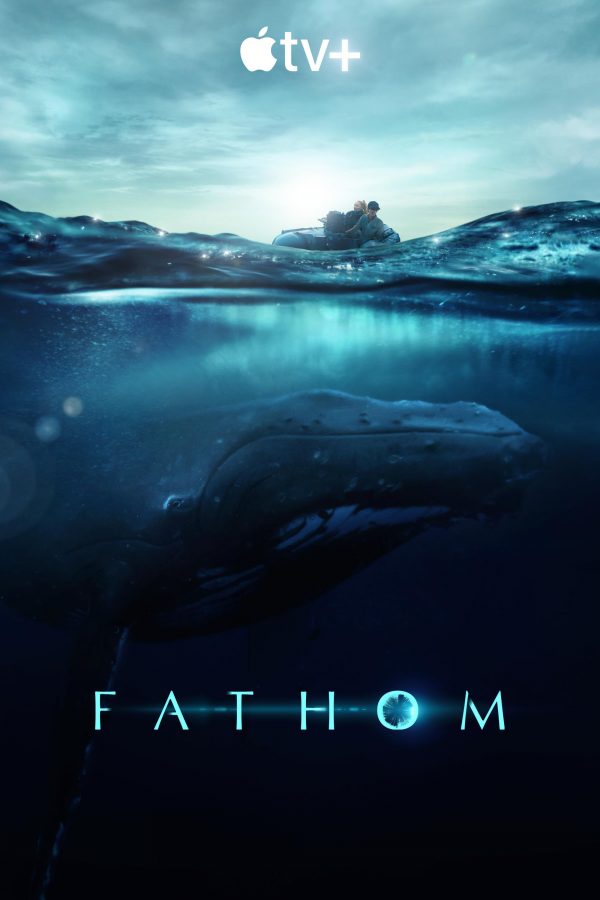
As fascinating as the premise is, this documentary about researchers investigating the intricacies of humpback whale song communications fails to follow through on its mission. Director Drew Xanthopoulos’s second feature outing has lofty goals in its exploration of a subject that seeks to mix science, philosophy and even metaphysics, but the picture’s execution is mishandled, causing many of the film’s more engaging aspects to become obscured by excessive (and largely unexplained) tech speak, as well as uninteresting extraneous material that does little more than pad the content. To its credit, this offering is beautifully shot in the ocean wildernesses of Alaska and French Polynesia, backed by an ethereal score, and it truly shines when it delivers its profound conclusions through insightful voiceovers. Unfortunately, there’s too little of what works best and too much of what distracts viewers from the core narrative, and that’s regrettable considering that these wondrous creatures truly deserve better.
Despite an intriguing premise, director Greg Barker’s latest documentary feature about medical professionals and med students seeking to reform the American health care system is a disappointingly unorganized offering in which its many insightful ideas are presented in a somewhat scattershot fashion, preventing them from being suitably developed as the narrative jumps around from topic to topic. Clearly this is a film that seeks to showcase the passionate efforts of committed idealists in exposing the impact that issues like poverty, racism and an uncontrolled profit motive have had in negatively affecting the quality of care that patients receive, not to mention the exorbitant costs involved as well. However, it seems that, just as one of those subjects is being introduced and developed, the thrust of the picture abruptly skips off in another direction, creating a less than coherent storyline. What’s more, due to the documentary’s shooting schedule (which began in 2019), the narrative does something of a left turn with the onset of COVID in 2020, changing the direction even further from how the film began, making for an even greater sense of overall discontinuity. This project is sorely in need of going back to the editing room for retooling to let the ideas raised in this production stand out better so that they receive the unfettered attention they truly deserve.
There are slices of life, and then there are slices of life. Director Alice Diop’s attempt at capturing one such slice is the stuff of this documentary that, unfortunately, is little more than a contrived exercise in trying to translate “Fanfare for the Common Man” into a cinematic experience. This offering seeks to elevate the everyday and ordinary to an exalted level of grandeur, but the subjects the filmmaker chooses are, for the most part, patently mundane and uninteresting. The link connecting them (and only marginally at best) is a train line that runs from north to south through the City of Paris. However, there’s precious little tangible connection between the subjects and the glue that supposedly binds them other than a few station shots and periodic glimpses of train cars running by in the background. The result is a failed, disjointed release that makes one long for when the credits will finally roll.
When director Isidore Bethel’s relationship with an older man sours, he takes a break from things and relocates from Mexico City to Chicago to make a film that, from the very beginning of the production, has no apparent sense of direction. It’s a trait more than amply apparent in the finished product, too. And, as revealed in phone conversations during the course of the picture, the filmmaker’s mother absolutely hates it (and astutely so). This meandering stream of consciousness “documentary” consists mostly of director interviews and encounters with people off the street regarding matters of sex, love, intimacy and relationships, backed by musings of cluelessness and ennui, all linked by Mike Mills-styled bridge sequences. In the end, however, the picture essentially ends up being little more than a vehicle for potential hook-ups involving the filmmaker. There’s plenty of masturbation going on here, too, both of the intellectual kind and otherwise. Sadly, this is yet another example of pretentious, unfocused material erroneously being passed off as alleged high art. Thankfully, Mom sees through it all and doesn’t hesitate to call out her self-indulgent son, absolutely nailing it when it comes to assessing exactly what’s going on in this feeble excuse for a film. Indeed, as once again becomes apparent, “Mom truly knows best.”