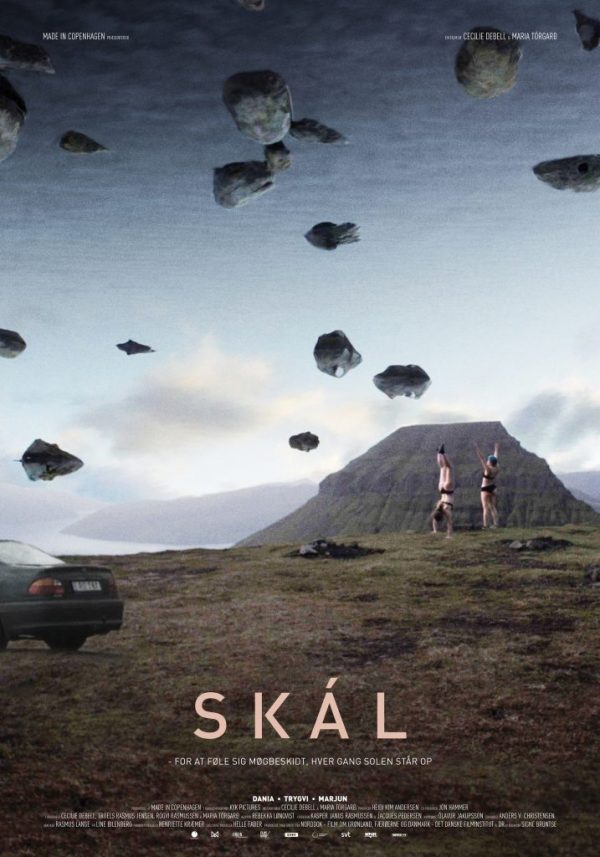
Reviews of "The Worst Person in the World," "The Tragedy of Macbeth" and "Skál," as well as previews of a podcast and a 2021 Top 10 movie list, are all in the latest Movies with Meaning post on the web site of The Good Media Network, available by clicking here.
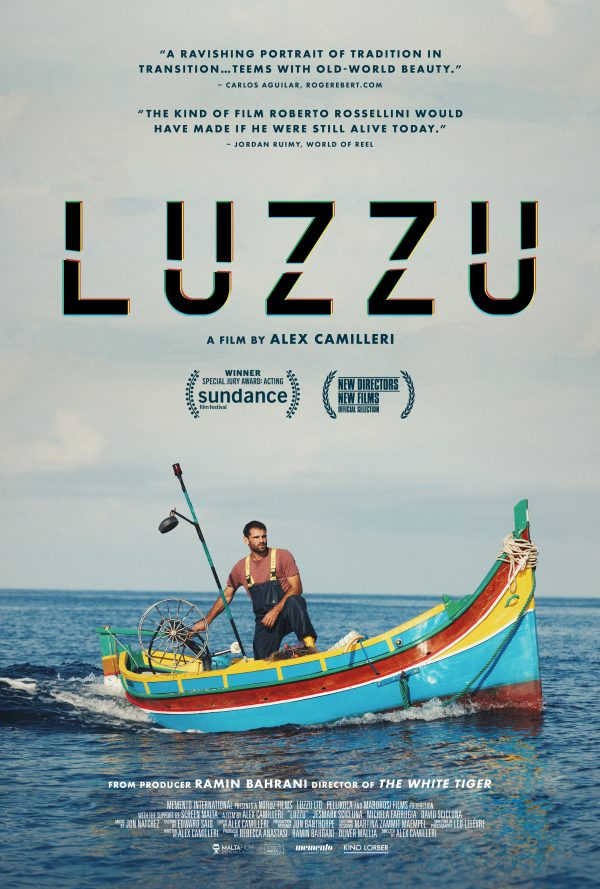
Reviews of "Don't Look Up," "Swan Song" and "Luzzu," as well as a magazine article preview, are all in the latest Movies with Meaning post on the web site of The Good Media Network, available by clicking here.
In the run-up to this year's awards ceremonies, Hollywood is releasing some of its best work of the year. So what's worth seeing, and what can be skipped? Find out on this month's edition of The Good Media Network’s Frankiesense &More video podcast with yours truly and special guest host Danielle Findlay. Tune in Thursday January 27 at 1 pm ET on Facebook Live, available by clicking here, for a lively discussion of new releases worth seeing. And, as always, you can always catch the show on demand!
“Skál” (“Cheers”) (2021). Cast: Dania O. Tausen, Trygvi Danielsen, Marjun Drós Tausen Poulsen. Directors: Cecilie Debell and Maria Tórgarð. Web site. Trailer.
Where would we be without personal freedom? The prospect is rather daunting, especially once we consider what we’d lose. Its absence can prove particularly detrimental during certain times in our lives, such as adolescence and young adulthood, when we’re just beginning to grasp the possibilities that the world can offer us. And that can be made even worse if we’re shielded from being able to see those options in the first place. Such are the circumstances that an aspiring poet discovers for herself when she emerges from longstanding isolation in the thought-provoking new documentary, “Skál” (“Cheers”).
Leading a sheltered, isolated life can provide one with a significant degree of comfort, safety and certainty. Knowing how things are – and how they’re allegedly (and steadfastly) supposed to be – serves to remove much of the doubt, ambiguity and insecurity that those lacking such unshakable conviction often experience. Attaining such a state of being is comparatively easy, too, when one lives in a tight-knit conservative Christian community in which everyone looks after one another. And that’s particularly true in a sparsely populated remote location like the Faroe Islands, an autonomous North Atlantic enclave of the Danish Commonwealth located nearly equidistant between Scotland, Iceland and Norway.
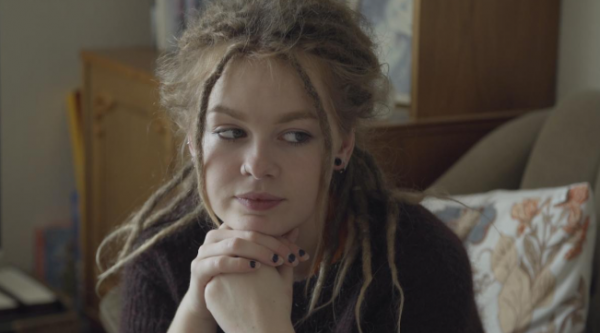
Those multiple layers of seclusion have kept 21-year-old Dania O. Tausen confined to a fairly limited range of existence and experience. Frequent reinforcement of her community’s spiritual and ethical values, especially by her loving but less than open-minded parents, has led Dania to unquestioningly embrace notions like “Either you believe in Jesus or you believe in Satan. There’s no in between.” And, for most of her life, she’s willingly gone along with what she was taught. In fact, her devotion is so strong that she has often been prominently featured as a singer at the congregation’s services and special events, making her one of the community’s better-known members.
But is this truly enough? When we’re in our youth, we often go through a time of exploration and introspection, examining our world, our beliefs and what we want out of life. And, when we’re exposed to a wide range of options and ideas that come from outside the existence we’ve typically known, it can have a profound impact on us, leading us to a change of heart on many fronts. Indeed, the age-old adage “How are you going to keep them down on the farm once they’ve seen Paris?” frequently rings true. That’s certainly the case for Dania when she moves out of her family’s residence and takes a place with her friend Marjun in Tórshavn, the capital and largest city in the Faroes, a locale where she’s exposed to an array of secular influences far different from anything she’s ever known.
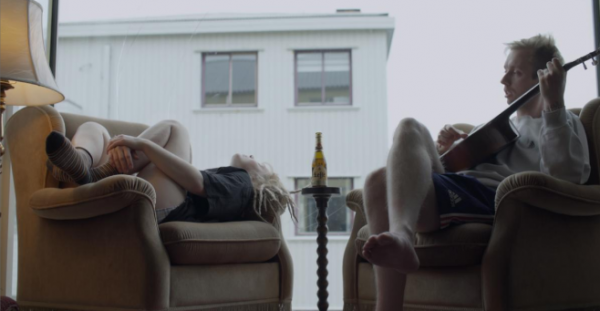
Aspiring poet Dania O. Tausen discovers a wide new world when she leaves the conservative Christian community in which she was raised in the new Faroese coming of age documentary, “Skál” (“Cheers”). Photo by Cecilie Debell, courtesy of Made in Copenhagen.
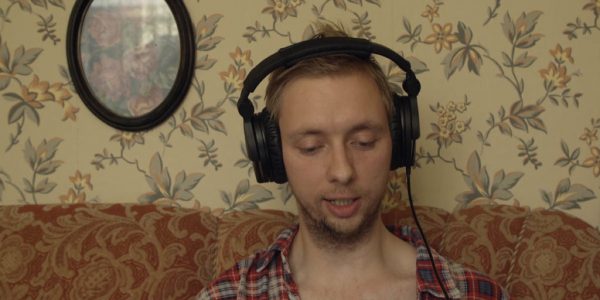
Dania’s schooling, for example, introduces her to a wide range of people and ideas not at all like anything from her upbringing. Socially she begins engaging in activities like going to clubs. And, romantically, she meets and begins dating a popular hip hop artist, Trygvi Danielsen, who performs under the name Silvurdrongur (Silver Kid) and composes songs containing in-your-face lyrics on subjects that Dania’s family and congregation are likely to find more than a little objectionable.
Needless to say, these changes in Dania’s behavior prompt her religious peers to question her faith. They wonder whether she has come under the influence of negative forces. Her parents in particular are especially worried. Has she been lost to them? Has she indeed fallen prey to the clutches of Satan?
These concerns are inflated further when Dania begins writing a collection of poems addressing issues like teenage rebellion, anxiety and freedom, all of which openly question the conventional values she was raised with. Her upbringing is thus placed under the microscope, and her poems develop quite a following among contemporaries when they’re published in a book titled Skál (Cheers), a work that becomes a local best seller and a staple in the Faroese educational system. In many ways, the poetry anthology is a testament to the feelings of a restless generation that hungers for greater degrees of expression in their art, their lives and their spirituality.
As Dania achieves this newfound notoriety, she explains herself to the skeptics, saying that she does not wish to abandon her faith or her community. Rather, she merely seeks to help it evolve, encouraging a greater degree of tolerance, freedom and a willingness to allow individuals (especially younger ones) wider latitude in being themselves. Dania, Trygvi and Marjun all want to be accepted for who they are, not who they’re expected to be, a birthright to which they believe everyone is entitled. Admittedly, this is a tough sell in this North Atlantic Bible Belt, where religion plays such an ingrained role in virtually every aspect of daily life and social interaction. But Dania believes that she needs to make a statement to enable the residents of this remote archipelago to feel less restricted in their outlooks, their behavior and even their physical appearances.
Hip hop artist Trygvi Danielsen, who performs under the name Silvurdrongur (Silver Kid), may seem rather unassuming, but his works are anything but that as seen in the new Faroese coming of age documentary, “Skál” (“Cheers”). Photo by Cecilie Debell, courtesy of Made in Copenhagen.
Can this goal be accomplished, or will residents of the Faroes be forced to continue living double lives as closeted free spirits in a closed-off society? That’s the challenge she and her kindreds face. And, if nothing else, their efforts at least have helped to get the process started. The clashes between young and old, tradition and progress, and secular and spiritual considerations are all on the line in this initiative. One can only hope that equitable compromises can be reached. Cheers to those who seek to accomplish this.
While I generally attempt to make a sincere effort at respecting the views and beliefs of others, I must also confess that there’s a notable exception to that attitude, one that invariably crops up from time to time – my inability to respect the views of those who insist on refusing to respect the beliefs of others. And, from what I see in this film, there are those in Dania’s community who hold fast to that outlook, a perspective I find disquieting.
Because of that, I applaud the efforts of Marjun, Trygvi, and, especially, Dania to proudly be themselves, to live their lives in the ways they see fit, despite the objections of others. Perhaps that’s because their views readily align with my own. Their outlooks, based on zealously embracing wide latitude when it comes to self-expression in all its forms, are integral to the conscious creation process, the philosophy that maintains we manifest the reality we experience based on the power of our beliefs, no matter what they may be and what they may be intended to materialize. And, given that there are infinite possibilities in the range of belief options, that also means there are infinite permutations for what they can ultimately yield. That wide range of possibilities flies in the face of the rigid dogma of conventional thinking, such as that of many traditional religious organizations, in terms of what they espouse, what they consider acceptable, and what their followers are supposed to compliantly adopt and avoid.
Freeing oneself from such restrictions carries a multitude of implications, both philosophically and practically, with impact that can be seen on many fronts. That’s especially true during the coming of age phase of our lives, for the attitudes we embrace then will set a template that we often employ for the remainder of our days. It’s something that can significantly affect the quality of our lives from that point forward.
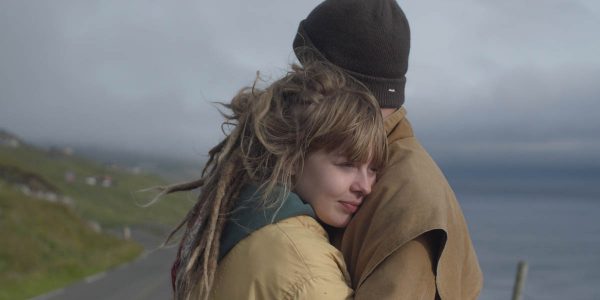
After leaving the conservative Christian community in which she was raised, aspiring poet Dania O. Tausen (left) moves to Tórshavn, the capital and largest city in the Faroe Islands, where she meets an array of colorful individuals, like rapper Trygvi Danielsen (right), in the captivating new documentary, “Skál” (“Cheers”). Photo by Cecilie Debell, courtesy of Made in Copenhagen.
Embracing beliefs that enable us to give ourselves permission to broaden our horizons generally makes it possible to vanquish restrictions and limitations, obstacles that can hinder our creative freedom, prevent the emergence of our authentic selves, and curtail our capabilities for achieving satisfaction and fulfillment. That’s a lot to lose, but, if we don’t stalwartly step forward and claim such personal sovereignty for ourselves, that’s what is very likely to happen.
Consider some of the ramifications. In both a general and specific sense, it can stifle our creativity. This is true in a range of areas, from creating tangible works of art to developing inventive problem-solving skills to envisioning the manifestation of conceptions never before dreamed of. Think of where we might be without those skills at our disposal.
On a personal level, the lack of these conditions in our lives can do much to take most of the enjoyment out of life. Areas like romance, freedom of expression and the ability to pursue chosen lifestyles can all be hampered when we’re reined in (or allow ourselves to be). Where’s the fun in that?
Then there are life’s bigger questions. Without the ability to exercise our ambitions, we can severely limit ourselves when it comes to matters that are bigger than us as individuals. Examples include tolerance, evolution, innovation, integrity, and personal and social growth and development. Where would we be individually and collectively without those influences in our lives? Indeed, without them, we have a sure-fire recipe for stagnation on our hands, and where would that leave us?
In light of that, we could learn much from what Dania, Trygvi and Marjun are attempting to do. There’s much on the line, so much so that the implications may even be bigger than what they can fully appreciate. But what’s important is that they’re doing it. Cheers to them – and to their success.
Like a modern-day Romeo and Juliet, poet Dania O. Tausen (foreground) and rapper Trygvi Danielsen (background) share an unlikely, somewhat forbidden romance in “Skál” (“Cheers”), the debut documentary collaboration from directors Cecilie Debell and Maria Tórgarð. Photo by Troels Rasmus Jensen, courtesy of Made in Copenhagen.
Though billed as a documentary, this captivating release plays more like a docu-drama or even a big screen version of reality TV. The film’s philosophical, romantic, artistic and coming of age elements are skillfully interwoven, creating a beautiful tapestry featuring an array of gorgeous colors and patterns, especially given the diverse backgrounds of its protagonists and the breathtaking backdrop for their story. Directors Cecilie Debell and Maria Tórgarð present an honest love story with deep spiritual and thought-provoking undercurrents, narrative elements often lacking in similar offerings. The film’s truly stunning cinematography is a sight to behold, showing off the seldom-seen beauty of the Faroe Islands. And, when combined with the picture’s heartfelt, intimate depictions of personal moments, the filmmakers serve up an unusual cinematic blend rarely featured in many movies, let alone those in the documentary genre. My only problem with this release is that so many of the most significant moments seem so perfectly captured that it almost makes me wonder about the validity of their authenticity, that they play more like scripted material than spontaneously caught events. That aside, though, this thoughtful, insightful release provides viewers with much to ponder, backed by gorgeous images and genuine warmth, quite an irony for a story set in such an otherwise-chilly locale.
Unfortunately, at this time, it may take some effort to find “Skál,” as it’s primarily been playing the film festival circuit. Nevertheless, it’s an offering worth seeing, one that earned it the Chicago Film Festival’s Gold Hugo Award as the top selection in the event’s International Documentary Competition.
Personal freedom is a virtue we must never take for granted. It’s something we must commit to preserving and be willing to fight for when others try to restrict our access to it. That becomes especially apparent when we consider the many roles it plays in our lives. Indeed, we run the risk of a seriously diminished existence if we fail at this task – and that would take away a lot of what makes life worth living.
Tune in for the latest Cinema Scribe segment on Bring Me 2 Life Radio, Tuesday, January 25, at 2 pm ET, available by clicking here. And, if you don't hear the show live, catch it later on demand on Spreaker, Spotify, Apple, iHeartRadio, Google Podcasts, Castbox, Deezer, Podchaser and Jiosaavn.
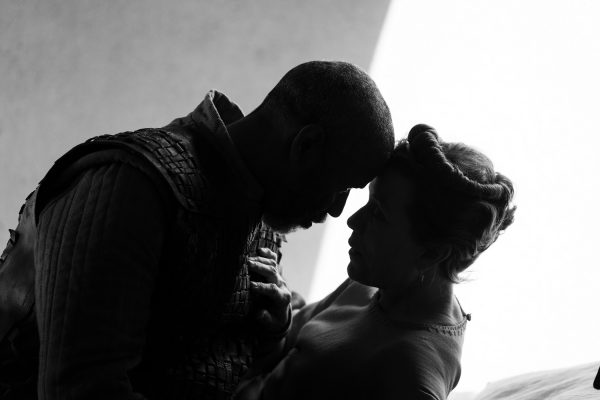
As they scheme to advance themselves, Macbeth, Thane of Cawdor (Denzel Washington, left), and his headstrong, ambitious wife, Lady Macbeth (Frances McDormand, right), devise a heinous plan to ascend to the throne of Scotland in director Joel Coen’s adaptation of William Shakespeare’s epic saga, “The Tragedy of Macbeth.” Photo courtesy of A24.
“The Tragedy of Macbeth” (2021). Cast: Denzel Washington, Frances McDormand, Brendan Gleeson, Corey Hawkins, Kathryn Hunter, Bertie Carvel, Harry Melling, Moses Ingram, Ethan Hutchison, Miles Anderson, Alex Hassell, Matt Helm. Director: Joel Coen. Screenplay: Joel Coen. Play: William Shakespeare, The Tragedie of Macbeth. Web site. Trailer.
Getting ahead in life is certainly admirable, but what happens when that drive gets seriously out of hand? Can we stifle the mayhem that’s sure to result? That’s especially problematic when the fate of a nation and its leadership are at stake. Such is the case in the latest film adaptation of a timeless classic, William Shakespeare’s “The Tragedy of Macbeth.”
As one of Shakespeare’s best-known works, it’s hard to believe that there’s anyone who’s not already familiar with the plot of this tragic saga. Having been presented countless times on stage and screen, with roughly 30 movie versions in one form or another, this timeless tale has established itself as one of the most notable works in literary, theatrical and cinematic history. Nevertheless, for the benefit of the uninitiated, here’s what has made this story so enduring.
Having recently defeated the allied forces of Ireland and Norway in a failed attempt to attack their native Scotland, two of the homeland’s distinguished generals, Banquo (Bertie Carvel) and Macbeth, the Thane of Glamis (Denzel Washington), are praised for their bravery and fighting skills. As they make their way home to receive their accolades from Scottish sovereign King Duncan (Brendan Gleeson), they encounter a trio of witches, one of whom (Kathryn Hunter) imparts three prophecies. The enigmatic seer tells Macbeth that he will soon receive a new title and, subsequently, become King of Scotland. Banquo, meanwhile, learns that he will not assume the throne but will one day become the father of a lineage of future Scottish kings.
The duo then leaves to continue their journey, skeptical about what they just heard. However, before long, they encounter Ross (Alex Hassell), another Scottish nobleman, who informs Macbeth that he has just been named the Thane of Cawdor, a revelation thereby affirming fulfillment of the first prophecy. With this information, Macbeth gives new credence to the prophecies and begins musing about the possibility of becoming king, though uncertainties linger.
Upon arrival at the court of King Duncan, Macbeth learns that the monarch plans to visit him at his castle, Inverness. Macbeth believes that the new title and royal visitation stand him in good stead with the sovereign; as a kinsman of the king and his recent good fortune, he believes he’s in line to become heir apparent. However, Macbeth then learns, much to his dismay, that Duncan has named his elder son, Malcolm (Harry Melling), as his successor.
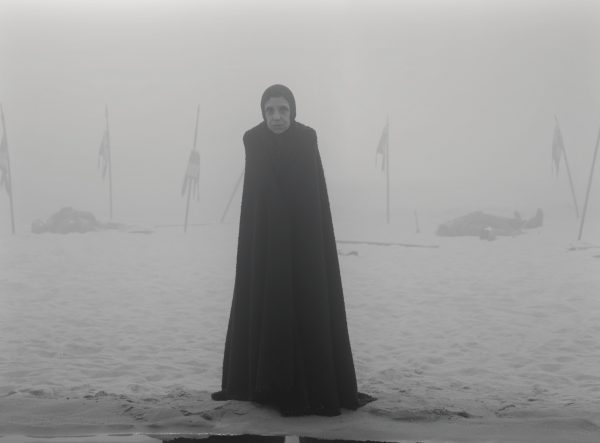
Prophecies imparted by an enigmatic witch (Kathryn Hunter) spark a trail of carnage in the latest film adaptation of William Shakespeare’s epic saga, “The Tragedy of Macbeth,” now available for streaming online. Photo courtesy of A24.
The aspirant royal is quietly enraged at the decision but is still not entirely sure how to proceed. He soon changes his mind, however, when he tells his wife, Lady Macbeth (Frances McDormand), about the witches’ prophecies and recent developments. Macbeth’s determined, headstrong spouse has no reservations about her husband pursuing his destiny, and she shames him into action when she challenges his will to succeed. Upon Duncan’s visit, she urges Macbeth to murder the king in his sleep and put the blame on his personal chamberlains, a frame that initially holds up. Duncan’s death also prompts Malcolm and his younger brother, Donalbain (Matt Helm), to flee to England in fear of their lives, both as potential targets for murder and as suspects in their father’s demise. And so their hasty departure leaves the door open for Macbeth, as one of Duncan’s kinsmen, to ascend to the throne.
Despite Macbeth’s apparent “success,” his plan soon begins to falter, especially with the arrival of Macduff, the Thane of Fife (Corey Hawkins), at Inverness. Suspicions arise, forcing Macbeth into a string of heinous acts to maintain his cover story. But, to complicate matters further, Macbeth and his wife begin seeing apparitions and having hallucinatory experiences that play on their guilt. Ambition, it seems, has started to get the better of them, leading the illegitimate monarch down a path of tragedy even greater than the atrocities he and his spouse have already committed.
Most of us would likely agree that ambition is truly a virtue, one to which we all seek to aspire. However, when left unchecked, it can readily get out of control. And, in many instances, there’s often a fine line between what would be considered legitimate determination and what is looked upon as flagrant, maniacal behavior.
So what’s the difference between the two? It comes down to our beliefs, for they drive how circumstances unfold and, in turn, how our reality manifests. This is the function of the conscious creation process, the philosophy that maintains we tap into these intangible resources in materializing the existence we experience, for better or worse. And, in Macbeth’s case, his beliefs are decidedly geared toward the latter.
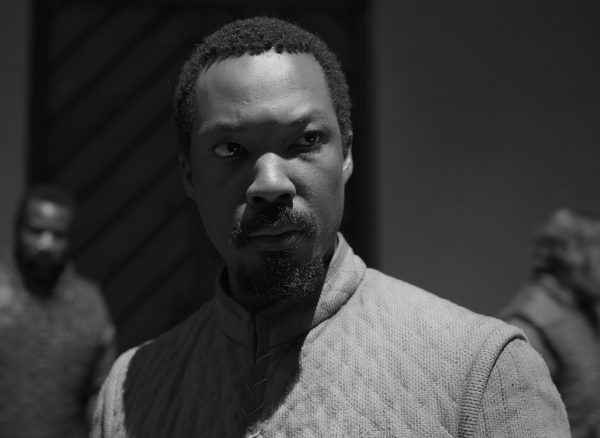
Macduff, Thane of Fife (Corey Hawkins), has suspicions about events leading to the recent ascendancy of Scotland’s new monarch in director Joel Coen’s adaptation of “The Tragedy of Macbeth.” Photo courtesy of A24.
Once Macbeth realizes there’s a possibility the witch’s prophecies might come true and learns that he’s not the favorite to become king, he undergoes a shift in attitude, one that percolates into his beliefs. Even though he’s conflicted by uncertainties at the prospect of ascending to the throne, that doubt is swept away when his wife cajoles him into taking action. A new, determined set of beliefs falls into place, providing him with a template on how to proceed. It’s a radical plan, to be sure, but he sees it as a viable option to attain what he wants, and he doesn’t hesitate to follow through on it.
Detestable though they may be, Macbeth’s actions illustrate that conscious creation can make anything possible. But is killing one’s sovereign the wisest course for advancing one’s ambitions? When we pursue such paths as this, we engage in the practice of un-conscious creation, a scenario in which we seek the fulfillment of our aspirations at all costs, regardless of the consequences and with no regard for whatever fallout may ensue. It’s a perilous practice in that we may indeed get what we’re looking for but at a price, one that yields outcomes in a distorted form and rife with unexpected, unintended side effects. This, in turn, often requires the implementation of additional adjustments to make up for those issues, frequently on short notice and drastic in nature. One need only look at Macbeth’s experience after Duncan’s murder to see this at work.
Results like this most often occur when we attempt to “push the Universe.” As our divine collaborator in the conscious creation process, the Universe (or God, Goddess, All That Is or whatever other term best suits you) works with us to bring about the outcomes we have in mind, based on the nature of our beliefs. And those outcomes reflect those intents with remarkable fidelity, right down to the smallest detail, something we should never lose sight of.
In Macbeth’s case, he wants to be king, but that’s an attainment that can be reached in many different ways, again depending on one’s beliefs. The fulfillment of this goal, for example, could be reached by simply waiting for Duncan to live out his life, potentially leaving the door open to Macbeth’s ascendancy upon the sovereign’s death. By contrast, it can also be achieved by the kinds of nefarious means that Macbeth and his wife cook up to bring about the outcome quickly and decisively, but with a hefty set of unforeseen strings attached. And, of course, many other options are available, too, depending on the underlying beliefs involved.
Given the path Macbeth follows, one can’t help but wonder why he and his wife believe they need to follow the course they do. Do they feel a sense of urgency, a need to strike while the iron is hot? Are they afraid that Macbeth’s window of opportunity is fleeting in light of Duncan naming Malcolm as his successor? Or is there some other consideration at work that’s resulted in the abbreviated time table?
Were Macbeth and his wife to open their mind to other possibilities, they might realize that they’re not locked into the path they’ve chosen. For example, given the infinite number of probabilities that conscious creation makes possible, they’re not saddled with the witch’s prophecies as their only option. Those pronouncements represent just one of countless roads open to them. Of course, the strength of their beliefs in that particular possibility dictates what will unfold. And, because of that, this illustrates why we must exercise tremendous care in the beliefs we choose to embrace and what they’re likely to yield, a cautionary tale if there ever were one.
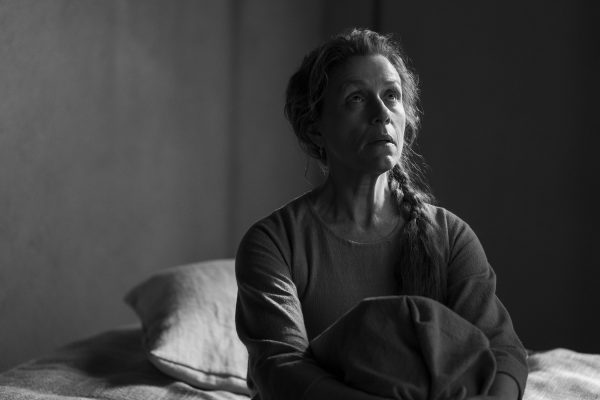
Overcome with guilt, Lady Macbeth (Frances McDormand) begins seeing apparitions and having hallucinatory experiences related to her role in the murder of the King of Scotland in the latest film adaptation of William Shakespeare’s “The Tragedy of Macbeth.” Photo courtesy of A24.
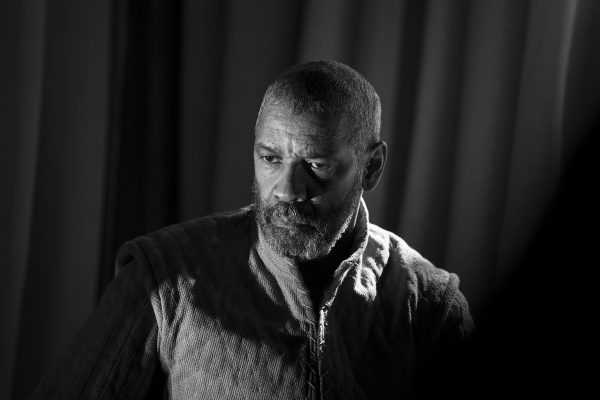
Once-respected Scottish general Macbeth, Thane of Cawdor (Denzel Washington), experiences a tremendous fall from grace when he pursues an overly ambitious plan to ascend the throne of Scotland in director Joel Coen’s “The Tragedy of Macbeth.” Photo courtesy of A24.
While William Shakespeare’s legendary tragedy has been translated to the screen more times than one can count, this version from director Joel Coen does remarkable justice to the material, especially in technical terms. The film’s stark, exquisite black-and-white cinematography and stylish production design, reminiscent of German expressionism, are positively stunning, suitably complemented by deft film editing and the ethereal score of Carter Burwell. The superb ensemble cast delivers, too, particularly protagonist Denzel Washington and supporting players Corey Hawkins and, especially, Frances McDormand. If I were to find something missing here it would be that the picture isn’t as emotionally engaging as it could have been, with its cold, distant ambiance putting up an often-imposing wall between narrative and viewers. There’s nothing inherently wrong with that, given the filmmaker’s take on this story, but it admittedly keeps the audience at arm’s-length more than some cinephiles may feel comfortable with. Still, the timeless quality of this tragedy nevertheless comes through, making this one of the best cinematic offerings of 2021. The film is playing in limited theatrical release and is available for streaming online.
“Macbeth” has been lavished with praise, especially for Washington’s outstanding lead performance, earning best actor nominations in the Golden Globe, Screen Actors Guild and Critics Choice Award competitions. The film’s superb cinematography has also drawn considerable attention, earning a Critics Choice Award nomination and an award from the National Board of Review, which also bestowed honors for best adapted screenplay. In addition, the picture was named one of 2021’s top films by the American Film Institute and the National Board of Review. Other accolades are almost certain to follow.
When things of a malevolent nature get a foothold in fertile ground, they can grow incredibly powerful, particularly when fed with energy capable of sustaining them. This is true both for tangible items, like pathogens, as well as intangible ones, like beliefs and ideas – which, in turn, can cross over into the corporeal realm and wreak havoc in their various newfound physical forms. It’s at that point when, as the witch observes, “something wicked this way comes.” But the chaos and carnage that can emerge from such circumstances need not be a foregone conclusion if we temper our beliefs with prudence and wisdom. Had Macbeth done so, he might well have realized a different fate, a lesson we’d all be wise to take to heart.