Tuesday, June 22, 2021

In Honor of Pride Month

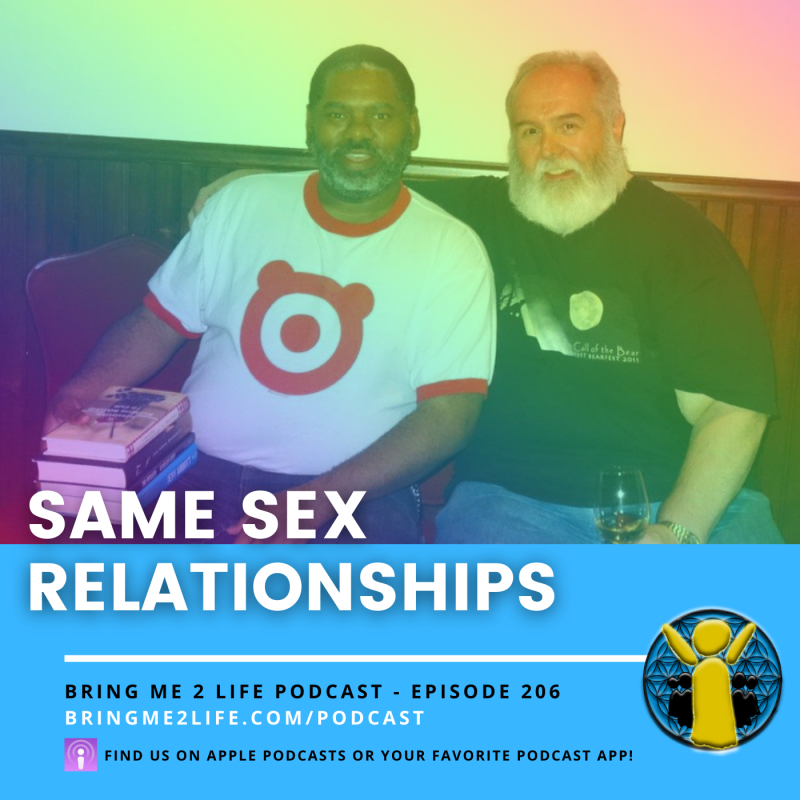
In celebration of Gay Pride Month, join my partner, Trevor Laster, and me for a fun and insightful interview about the dynamics of same-sex relationships on the Bring Me 2 Life radio podcast with host Selo Closson, beginning June 22. To listen, click here and select Episode 206. And, for a preview, click here. The broadcast will also be available on these additional formats: Spreaker, Spotify, Apple, iHeartRadio, Google Podcasts, Castbox, Deezer, Podchaser and Jiosaavn.


Monday, June 21, 2021

Swine Before Pearls on The Cinema Scribe

Tune in for the latest Cinema Scribe segment on Bring Me 2 Life Radio, Tuesday, June 22, at 2 pm ET, available by clicking here. And, if you don't hear the show live, catch it later on demand on Spreaker, Spotify, Apple, iHeartRadio, Google Podcasts, Castbox, Deezer, Podchaser and Jiosaavn.


Sunday, June 20, 2021

‘Dead Pigs’ connects the dots of daily living


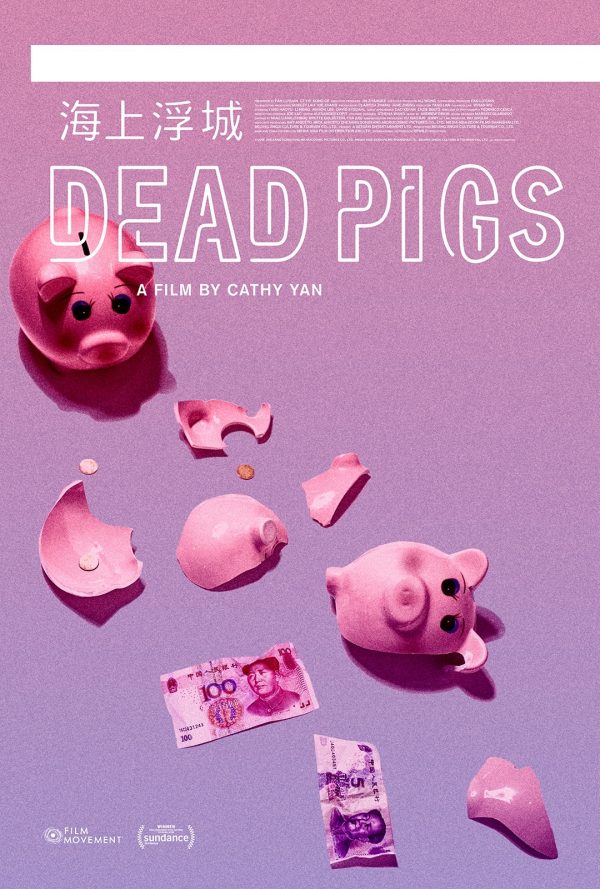
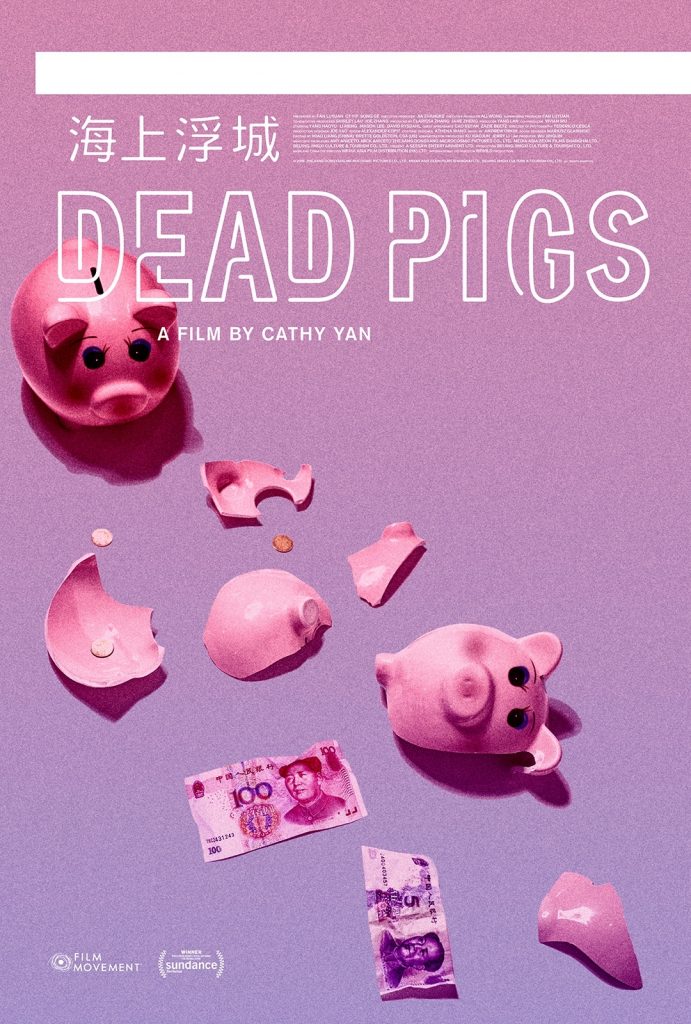
“Dead Pigs” (2018 production, 2021 release). Cast: Vivian Wu, Haoyu Yang, Mason Lee, Meng Li, David Rysdahl, Zazie Beetz, Cao Kefan.  Director: Cathy Yan. Screenplay: Cathy Yan. Web site. Trailer.


There’s more that binds us than meets the eye, and the strings that connect us may take some surprisingly unexpected forms. It may not be possible to anticipate the impact they’ll have, either, but we should nevertheless make an effort to remain conscious about their existence, for the developments that arise from them can be quite striking – and startling. So it is for a collection of seemingly unrelated parties in the recently released fact-based Chinese comedy-drama, “Dead Pigs.”


In 2013 near Shanghai, China, thousands of dead pigs were found mysteriously floating down the Huangpu River, a phenomenon that eventually spread nationwide. The cause? No one knew initially, but the story created a sensation that captivated the public’s attention and dominated the headlines of various news organizations. This strange incident prompted an array of related events, some of them seemingly removed from this enigmatic source, but all of them ultimately tied to the perplexing aquatic swine. And those ancillary tales provide the basis for the interrelated stories in this quirky comedy-drama:


  • Pig farmer Old Wang (Haoyu Yang) is feeling quite pleased with himself. He fancies himself part of the “new China,” one who’s eager to get in on the money grab going on throughout the country. Having done well for himself in his farming operations, and with a little money borrowed on the side, he feels confident enough to invest in a new business venture and to go on a spending spree of sorts, purchasing an expensive virtual reality system. However, he soon comes to realize that the investment was a scam, leaving him out of the money, the repayment of which he now owes to shady lenders. And, to make matters worse, like many other farmers, his pigs are now beginning to die. He’s become so destitute that he doesn’t even have the funds to properly dispose the porcine carcasses, so, like many of his peers, he begins dumping them in the river. Unfortunately, he now has “creditors” breathing down his neck, and their collection practices aren’t exactly borrower-friendly.
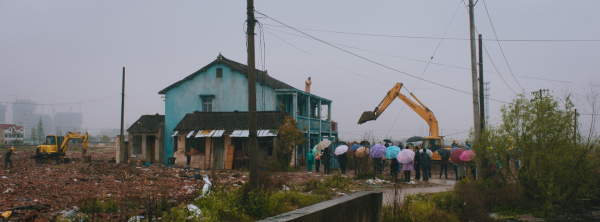
  • Old Wang’s sister, Candy (Vivian Wu), lives in the middle of what appears to be a landfill. She occupies the family home, a property that has been the Wang homestead for three generations and the only building still standing in what was once a thriving residential neighborhood. The reason the structure stands alone is that all of the neighboring buildings have been torn down to make way for a new property development being constructed by the Golden Happiness real estate group. Unlike all of the other homeowners who have vacated the neighborhood, Candy has refused to sell, despite ever-increasing offers from a developer eager to get on with construction. However, that may be about to change as Golden Happiness places increasing pressure on her to leave, a campaign ramped up when the organization contacts Candy’s cash-strapped brother, who apparently has title rights to the property on par with his stubborn sister. Will the siblings be able to reach an amicable agreement?
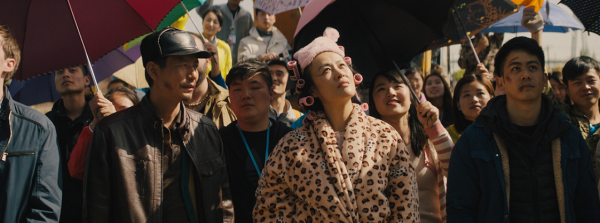
Holdout homeowner Candy Wang (Vivian Wu, center), accompanied by her brother, Old Wang (Haoyu Yang, left), and her nephew, Wang Zhen (Mason Lee, right), watch as an aggressive demolition crew seeks to tear down her property for development in the quirky Chinese comedy-drama, “Dead Pigs.” Photo courtesy of Film Movement.


  • Old Wang’s son, Wang Zhen (Mason Lee), has his share of challenges. He works as a busboy at an exclusive club with many demands placed on him. And it’s a job where his attention is distracted by one of the regulars, a beautiful young rich girl, Xia Xia (Meng Li), who is dating (albeit somewhat reluctantly) a wealthy, middle-aged businessman, Liu Jun (Cao Kefan), head of the Golden Happiness group. Xia is quietly smitten with Wang Zhen, too, though their differences in economic and social status make for a tentative involvement, despite the mutual attraction.
  • In addition to his romantic issues, Wang Zhen has trouble with his dad. The relationship has always been one-sided, with Old Wang making many demands on his son, particularly financially, a situation that has made Wang Zhen somewhat resentful, despite the obligations he feels compelled to fulfill. Wang Zhen has tried to compensate for this by purposely deceiving Old Wang about his economic status, making himself appear to be far more successful than he actually has been. Of course, now that Old Wang is cash poor, he doesn’t hesitate to ask his allegedly wealthy son for more money, funds that Wang Zhen doesn’t have. To help make up for that deficit, Wang Zhen embarks on a practice of staging phony traffic accidents to extort cash from the unsuspecting drivers. But, despite sending more money to his father, Wang Zhen is in line to become an unwitting target from Old Wang’s lenders, a move aimed at forcing the old man to pay up – and one that increases the tension between dad and his sister.
  • The Golden Happiness group is pleased to avail itself of the services of architect Sean Landry (David Rysdahl), an American expat looking to make a name for himself in Chinese real estate. His charismatic nature wins over the locals, helping his star to rise within the organization. This, in turn, helps him catch the eye of Angie (Zazie Beetz), a model groomer who recruits Sean to pose as “an exotic foreigner” at high-profile corporate events, making him even more visible in the Chinese business community. In fact, his employer taps this charisma to aid in negotiations aimed at closing on an important piece of property – the Wang family homestead. Will Sean be able to finally convince Old Wang to transfer the family property – for an extremely lucrative price – that his sister has long refused to sell?
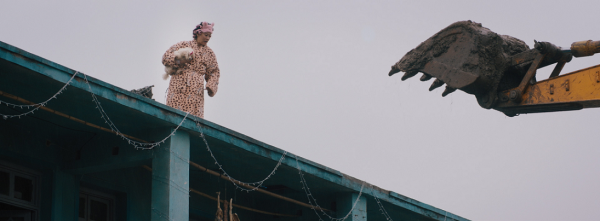
With demolition equipment at arm’s length, homeowner Candy Wang (Vivian Wu) climbs atop the roof of her generations-old family home to make a stand against an aggressive work crew in director Cathy Yan’s 2018 debut feature, “Dead Pigs,” now available for streaming online. Photo courtesy of Film Movement.


Such are the intertwined storylines that play out as pigs continue to float down the river. How will they be resolved? That depends on how the players live out their respective roles. But one thing is for certain – the connections that unwittingly bind them all can’t be ignored, as they all contribute to the resolution of each scenario.


It’s often quite baffling to see how seemingly disparate events can be connected to one another. People, places and things far removed from one another by qualities like time, distance or relevance shouldn’t be tied to one another – or so it would seem – yet somehow they are, and a number of films in recent years have shown how that’s indeed possible. Consider the examples set in movies like “Grand Canyon” (1991), “Short Cuts” (1993), “Magnolia” (1999), “American Beauty” (1999), “Crash” (2004), “Babel” (2006), “Disconnect” (2012), “Cloud Atlas” (2012) and “Monsters and Men” (2018), and it becomes much easier to see how connections arise and emerge, tying seemingly unrelated elements to one another. Interestingly, in some ways, these films artistically reflect the scientific principle of quantum entanglement, which maintains that removed and seemingly unrelated atomic particles can indeed operate in unison when one might think they probably shouldn’t, a concept Albert Einstein referred to as “spooky action at a distance.” And so it is for how events unfold in “Dead Pigs.”


However, when considered philosophically, this shouldn’t come as a surprise. Many metaphysical doctrines maintain that everything in reality is innately connected, like the threads of a tapestry. Indeed, one can’t pull on one of those strands without all of the others being inherently affected in some way or another. That’s especially true when it comes to the conscious creation process, the philosophy that maintains we manifest the existence we experience through the power of our thoughts, beliefs and intents. And, when those notions become intertwined, connections among them develop, yielding co-creations that have wide-ranging effects. This would thus help to explain how the flotilla of dead pigs wending their way down the Huangpu River can ultimately have effects on a holdout homeowner, a financially destitute farmer and a lovesick busboy seeking to impress his often-disapproving father.


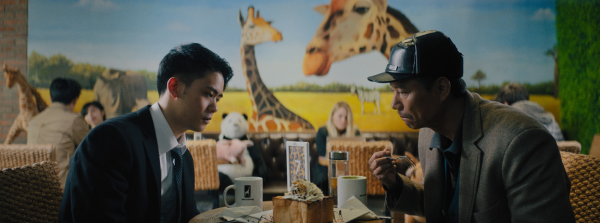
Busboy Wang Zhen (Mason Lee, left) seeks to impress his stern, often-critical father, Old Wang (Haoyu Yang, right), as being more successful than he really is in “Dead Pigs.” Photo courtesy of Film Movement.


Because of these connections, it’s important for us to recognize how the manifestations associated with them come into being. No matter how much we might like to disassociate ourselves from some of these materializations, they still all originate with us, reaching out from our inner being and into the physical world, where they interact with their fellow manifestations. And understanding this is crucial, for it places an intrinsic responsibility upon each of us to create with accountability and integrity. Should we fail to do so, we end up witnessing the kinds of snafus that appear in this film.


This is especially important where the creations impact our well-being in sensitive areas, such as finances, and it’s true both individually and collectively. In many regards, the various story threads in this picture – which are indeed rooted in fact – illustrate the economics of life in the new China, both on the microcosmic and macrocosmic level. The experiences of the well-to-do and those looking to become part of the well-to-do are represented here, and their illustration through this film reflect what the citizens of the People’s Republic are experiencing. The haves vs. the have-nots may be a well-worn cinematic narrative, yet its persistence in art demonstrates how persistent the template is in real life as well. The disparities are indeed troubling, too, which should prompt us to ask ourselves, why do we keep creating them? If the moral and ethical impact is so upsetting, how can we allow it to continue, even if it’s new to this venue? Why don’t we simply change the beliefs to change the outcomes? And, if we don’t or won’t, what does that say about us?


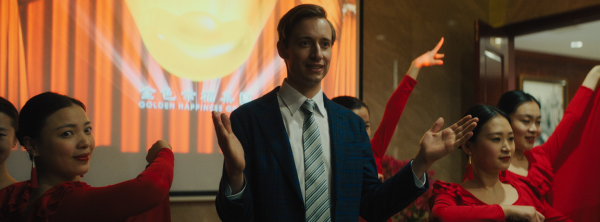
American expat architect Sean Landry (David Rysdahl, center) seeks to make a name for himself in real estate development in a burgeoning Shanghai in the fact-based comedy-drama, “Dead Pigs.” Photo courtesy of Film Movement.


It’s ironic that this story originates with the death of pigs, too. In Chinese astrology, the pig is the sign associated with wealth and abundance. Yet here the pigs are dying in huge numbers. What does that say symbolically about the ability of the average citizen to live “the Chinese dream”? With so much opportunity seemingly available, one might assume that there’s plenty to go around for everybody, but does the reality really match the aspiration? One might say apparently not, which brings us back to the beliefs we’re collectively putting out there. If we want the aspiration to ring true, the beliefs that make it possible need to be put in place to start with. And, when the cause of the pigs’ deaths is at last revealed, there’s an even greater irony at work here, especially when it comes to the present course of the accumulation and distribution of wealth, not only in China but indeed in the entire capitalist world.


In reaching that point, we must, of course, assess what works and what no longer does. That means making astute decisions about what to hold onto and what to let go of. And that, in turn, means going back and taking another look at the beliefs aimed at manifesting what materializes, both individually and collectively. That may be a tricky process, to be sure, but when one looks at what China has been able to achieve so far in such a short time, there’s a clear will to succeed. Making sure that the process continues as desired, though, may take some more work – efforts that stem from the origins of what’s envisioned in the first place and then following through accordingly.


When a holdout homeowner is confronted by a demolition crew sent by aggressive real estate developers, the standoff draws a crowd and becomes a major news story in director Cathy Yan’s “Dead Pigs.” Photo courtesy of Film Movement.


The delightful narrative of this fact-based comedy-drama is loaded with whimsical twists and turns, hearty belly laughs and just the right amount of understated campiness, combining to make a thoroughly entertaining mix. It also gives viewers much to ponder in terms of fairness, change, and the welfare of both individuals and society at large. Director Cathy Yan’s recently released debut feature admittedly sags at a few points in the second half, but that’s a small price to pay for everything else this charming and quirky picture has to offer.


“Dead Pigs” was well received when it debuted at film festivals in 2018, but it failed to receive a distribution deal until only recently, prompted in large part by the success of director Yan’s subsequent feature, “Birds of Prey” (2020). Fortunately, the film is now available for streaming online.


Life can appear to throw us some pretty odd curves at times, but sometimes they’re necessary to get our attention, particularly when it comes to addressing matters requiring long overdue restitution. We might not like what happens nor what these materializations are attempting to show us, but they are often vital to help us set things to right. We had better hope we’re paying attention, too. If not, we may be saddled with a slurry of deceased swine – and an even bigger mess to clean up.


Copyright © 2021, by Brent Marchant. All rights reserved.

Friday, June 11, 2021

‘Supernova’ debates holding on vs. letting go

“Supernova” (2020 production, 2021 release). Cast: Colin Firth, Stanley Tucci, Pippa Haywood, Peter MacQueen, Nina Marlin, Ian Drysdale, Sarah Woodward, James Dreyfus. Director: Harry Macqueen. Screenplay: Harry Macqueen. Web site. Trailer.


Knowing when to hold on and when to let go can be a frustrating, anxiety-ridden exercise, especially under highly charged conditions. The feelings involved might even leave us emotionally paralyzed, unable to make a decision in either direction, simply because we’re left overwhelmed and locked in place. But doing nothing is not a viable option, either; decisions have to be made to address what we’re up against. So it is in the affecting romantic drama, “Supernova.”


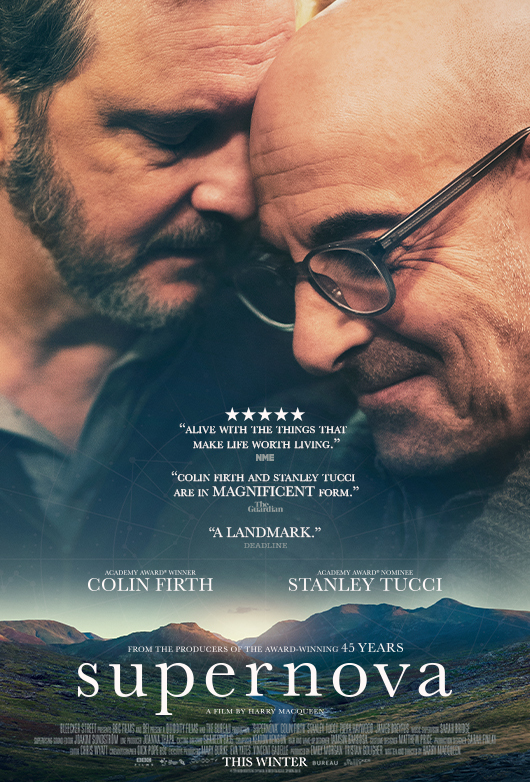
Longtime gay couple Sam (Colin Firth), an accomplished English concert pianist, and Tusker (Stanley Tucci), a transplanted American novelist, have led a happy and fulfilling life together in the UK.  In many ways, the partners have lived a storybook existence replete with material comfort, professional success and personal satisfaction. And, as they enter their sunset years, they look forward to more contented times together in retirement. But life, it seems, has other plans for them.


When Tusker begins experiencing memory-related issues, a visit to the doctor confirms the couple’s worst fears – he’s suffering from the onset of dementia. Although he appears to be in reasonably good control of his faculties, looks can be deceiving. He soon comes to realize that his old astute self is beginning to slip away and at a quickly accelerating rate, circumstances that trouble him deeply. For instance, when he experiences difficulty in tasks as simple as donning and buttoning a shirt, he grows worried that his ability to care for himself – and even to recognize what that entails – is disappearing far faster than he ever would have imagined.


But Tusker is not the only one who is worried; Sam is profoundly concerned that the love of his life is vanishing before his eyes. He vows to do whatever it takes to provide proper care and support to his life partner, though, admittedly, that commitment is somewhat rooted in denial and wishful thinking. The effort becomes increasingly arduous for him, both in terms of the caregiving requirements and the need to willingly set aside his own interests, such as continuing to give public performances. And that, in turn, further troubles Tusker; as the recipient of such devoted assistance, he can’t bear to see his beloved make such a significant sacrifice, believing it to be a noble though futile exercise given the future that he knows lies ahead.


To help alleviate the difficulties associated with their circumstances, Sam and Tusker embark on a road trip in their aging recreational vehicle to tour the English lake country. Their excursion takes them back to some of their favorite old haunts, giving them a chance to relive fond memories and to partake in cherished pursuits, such as star gazing. The trip also includes a stop at Sam’s childhood home, which is now under the care of his sister, Lilly (Pippa Haywood), her husband, Clive (Peter MacQueen), and their daughter, Charlotte (Nina Marlin). The visit to the family homestead provides an opportunity to spend time with friends and relatives and serves as a stopover on their way to an intimate recital engagement that Sam considers to be his farewell performance.


The trip ostensibly seems like a pleasant enough diversion, an opportunity for Sam and Tusker to share warm, loving times and to reflect on their relationship and life together. However, the journey is not without its share of tension as well. For example, there’s always the possibility that Tusker may inexplicably wander off and become lost, unwittingly subjecting himself to the untamed conditions of the English wilderness. And then there are some heated discussions between the partners about the handling of their current crisis, most of which emerge during the recording of taped conversations aimed at chronicling the progression of Tusker’s condition.


As their trip unfolds, the viewpoints of each partner become ever more polarized. Sam digs in, committing himself to a course of action that will become increasingly demanding and stressful; his love for his partner governs his convictions, no matter how difficult their fulfillment will inevitably become. Tusker, meanwhile, does all he can to try to spare Sam’s feelings, to keep him from pursuing a path that he knows will be emotionally draining and physically exacting, all in the name of an unavoidable eventuality that could very well leave him a broken man with little hope for the future. What’s more, Tusker has little interest in biding his time waiting for that scenario to play out, especially if it’s going to leave him in a depleted state, one far removed from the vibrant and vital individual he used to be.


This seemingly irreconcilable conflict increasingly intrudes on what is supposed to be a happy time together. But, as the stalemate escalates, circumstances take an unexpected turn, one that threatens to worsen conditions further, perhaps even to the point of jeopardizing whatever remaining future the relationship might have. How will that unfold? That’s what Sam and Tusker will have to find out for themselves.


The onset of an ordeal like a health crisis is never easy. Such situations leave us wondering why they happen and, even more puzzling, how to respond to them. They often represent a disruption to the routine and circumstances we’ve long known and grown accustomed to, throwing us into uncomfortable uncertainty. And they leave us wondering how to proceed into an unclear future.


So it is for Sam and Tusker. They’re at a point where they need to decide what to do, a time of choosing where the answers are far from easy or obvious. To search for resolution in a scenario like this, they must examine their beliefs, for those thoughts, feelings and intents will shape what unfolds. Such is what results from the conscious creation process, the philosophy that maintains our reality emerges from these intangible roots.


Keeping sight of the foregoing notion is crucial in a situation like this, given the gravity of the circumstances and the emotionally charged nature of the beliefs involved. But devising solutions is frequently difficult because of the overpowering degree of the feelings involved. In fact, they may be so powerful that we can’t readily identify or sort out our beliefs, leaving us unable to make clearly defined decisions. Our power of choice is indeed one of our most precious birthrights, but, when it becomes compromised by considerations that significantly hinder our ability to make effective use of it, we may find ourselves foundering in murky manifestation waters. This can leave us without direction at a time when it’s needed most.


The uncertainty that Sam and Tusker face affects them in multiple ways. For starters, there’s the uncertainty associated with the progression of Tusker’s illness: How will it unfold? What time table is involved? What effects will he experience, and how will they impact his day-to-day existence and his relationship with Sam? Then there’s the uncertainty that Tusker will face as he sees himself slip away, losing sight of the person he had been and the radically changed individual he will become: How will he be able to cope with that? What effects will that have on his awareness of the person who he becomes? And what will that do to him emotionally, intellectually and physically? Finally, there’s the uncertainty regarding the future of their relationship: What will become of it? How will it affect each partner? And, in particular, what impact will this scenario have on Sam as the likely survivor? What kind of future will he have without his partner, and will he be able to carry on by himself in all of the various aspects of his life?


Despite the many uncertainties they face, there are some identifiable considerations that Sam and Tusker must bring themselves to face. Most important among them is the question of knowing when to hold on and when to let go, as the progression of Tusker’s illness will inevitably force a resolution to it. The question becomes, how do the partners want to address it? Ultimately there are numerous options here, but which one will they mutually agree upon as being acceptable?


At the film’s outset, Sam wants to do everything he can for his partner, no matter how difficult it may be. Tusker, meanwhile, is reluctant to put his significant other through something so draining and demanding and to put himself through such a deteriorating ordeal. And, as noted previously, that’s essentially a stalemate – not the kind of stressful circumstance that a couple might want to put themselves through at a time when the number of their days together appears to be dwindling. So what’s the next step?


This is where the question of holding on or letting go becomes especially relevant. Both partners must take a hard look at their beliefs about what they want for themselves both individually and collectively. What will work best for them all around? Again, there are many options to choose from, and they must not be afraid to exercise that power of choice, no matter how difficult it may be.


Considering how events are unfolding, it’s certainly difficult to make elaborate plans for the future, especially since it’s highly uncertain how matters will play out. This is where Sam’s wishful thinking needs to be addressed. His hopes that life will somehow continue on as he and Tusker have always known it reflect the role that denial plays in his beliefs, an unrealistic outlook given what he’s up against. He needs to realize, understand and accept the direction in which circumstances are headed and make adjustments in his beliefs as necessary. But will he?


One way in which both Sam and Tusker could make things easier on themselves is to focus on what’s going on in the present moment, for that is the true point of power. Just as we cannot control a past that has come and gone, neither can we control a future that has yet to arrive. However, in the present, we can direct how we want our existence to materialize through the power of our beliefs, and that may be what matters most, especially in charged situations like these.


This is important when loved ones can see that their remaining time together is growing short. One would think that they’d like to make the most of it, savoring the moments over which they’re able to have direct control in how it unfolds. Those moments can thus end up being some of the most memorable and cherished times together, especially since they’re the ones on which they can have immediate impact. The blessings that emerge in these precious interludes should be given top priority, without regard for what may or may not result in the time to follow.


Of course, this is not to suggest that we should ignore the future either. Sam needs to give some thought to what he’d like to do when he’s by himself, even if only in terms of general principles. Given the sorrow he feels over Tusker’s deterioration, it would appear that he’s already making plans to shut himself down when he’s on his own, as evidenced by his declaration that his upcoming recital will be his farewell performance. Those feelings are certainly understandable, but are they realistic? After all, Sam appears to be in reasonably good health and could well have many years yet ahead of him, and reclusive isolation doesn’t seem to be a worthy option. Even Tusker is troubled by this outlook; he loves Sam’s musical virtuosity and is saddened by the prospect of his partner giving it up for good just because of a loved one’s death.


In light of that, then, Sam must be careful about the groundwork he puts into place while Tusker is still alive. There’s no reason for him to give up on living just because of his partner’s passing. That, of course, depends on what Sam starts to do now. And that, in turn, depends on what both he and Tusker do now as well, since those plans and actions will govern what plays out over time. We can only hope that they make the right choices and employ their beliefs judiciously.


The storyline in this film is, admittedly, a somewhat tried and true formula, though it has some new life infused into it here with its same-sex couple protagonists and its gorgeously filmed road trip backdrop. To be sure, the film’s heartwarming and heartbreaking narrative feels a bit too restrained at times and somewhat stretched out in the final act, but it always comes across as sincere and eminently moving. What stands out most, though, are the stellar performances of Firth and Tucci, who deliver magnificent portrayals and exhibit a remarkable, heartfelt, amazingly genuine chemistry throughout. It’s also refreshing to see a gay-themed film that addresses the kinds of everyday issues that the rest of the world deals with and not just relying on storylines drawn from a handful of familiar subjects that have been endlessly overdone. “Supernova” may not be everything that it could have been, but it certainly is an engaging, heart string-tugging offering that’s well worth the time.


The film had been considered a strong contender at the start of the 2020 movie awards season, but it never lived up to expectations, capturing honors and nominations only at a few film festivals. Its theatrical release date was also delayed due to the COVID-related closure of moviehouses last fall. However, it did have a brief theatrical release earlier this year, followed by an aggressive online streaming program on multiple platforms, where the film can be found currently.


When a star reaches the end of its life, it frequently flares up and goes out in a brilliant blaze of glory known as a supernova before being extinguished forever. A similar analogy can be made for how many of us exit the physical plane, metaphorically mimicking the demise of those solar orbs. In many ways, it’s a fitting conclusion given that we’re essentially made up of elements that originated in those celestial bodies. However, unlike those blazing globes of light that seem to so freely and naturally enter into their end stages, we may not be as acutely aware of when our time has come, which can make our transition difficult. Yet, if we’re willing to tap into our consciousness and examine the beliefs that are directing the course of our events, we, too, may be able to follow the examples set in the heavens and go out in our own blazes of glory. And what a brilliant sight that would be.


Copyright © 2021, by Brent Marchant. All rights reserved.

Monday, June 7, 2021

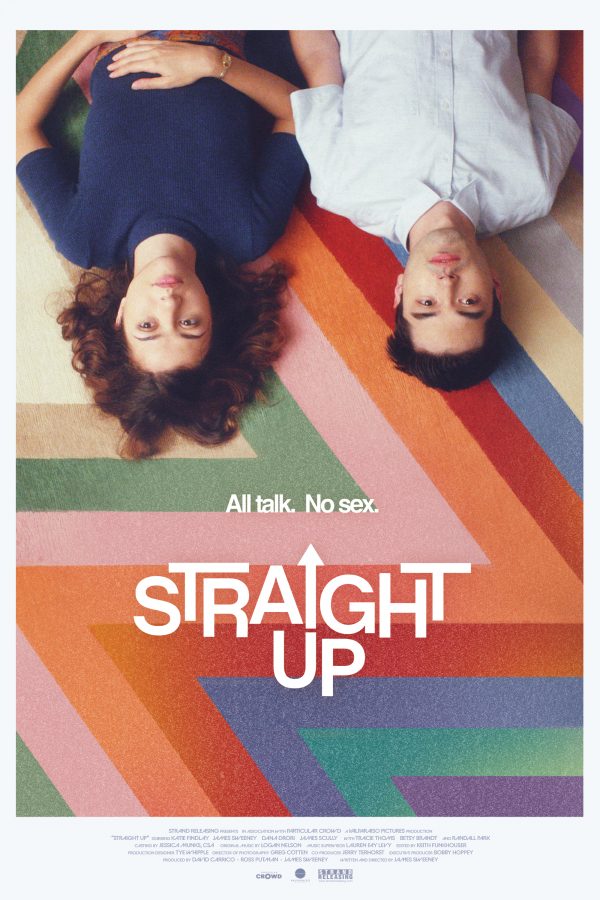
'Straight' Talk on The Cinema Scribe

Tune in for the latest Cinema Scribe segment on Bring Me 2 Life Radio, Tuesday, June 8, at 2 pm ET, available by clicking here. And, if you don't hear the show live, catch it later on demand on Spreaker, Spotify, Apple, iHeartRadio, Google Podcasts, Castbox, Deezer, Podchaser and Jiosaavn.


Thursday, June 3, 2021

This Week in Movies with Meaning

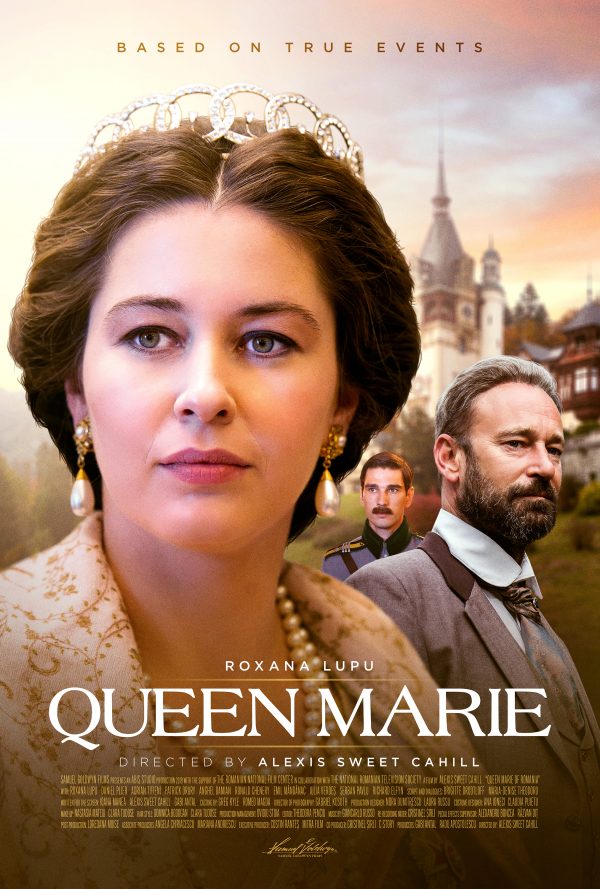
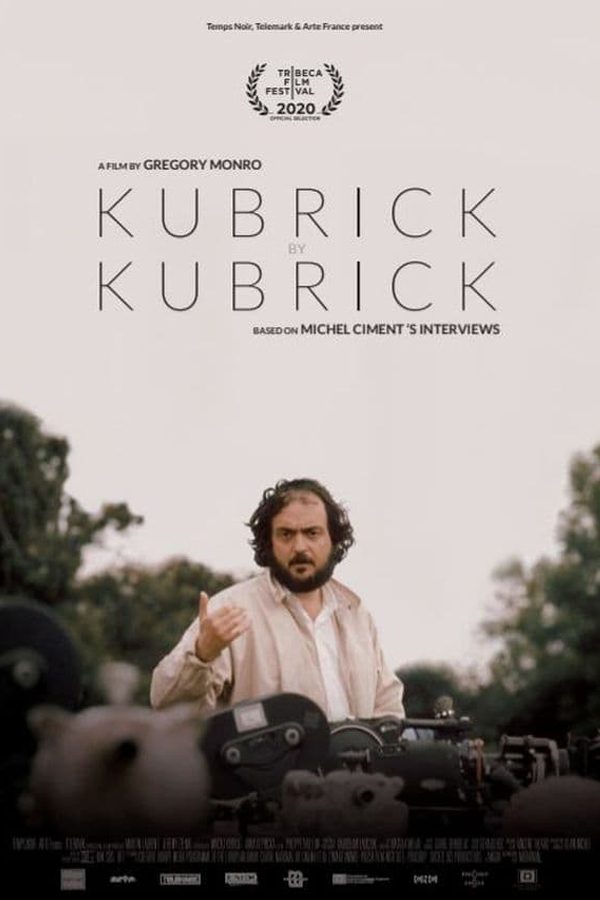
Reviews of "Queen Marie" and "Kubrick by Kubrick," as well as a magazine article preview, are all in the latest Movies with Meaning post on the web site of The Good Media Network, available by clicking here.


Wednesday, June 2, 2021

Become a Modern Warrior!

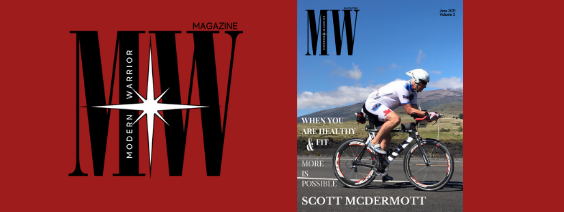
How do we create the life we want? Find out by reading "Movies for Developing and Living Life Your Way" in the latest issue of Modern Warrior magazine. For more about this uplifting new online publication, click here.