


“Driveways” (2019 production, 2020 release). Cast: Lucas Jaye, Hong Chau, Brian Dennehy, Christine Ebersole, Jerry Adler, Stan Carp, Bill Buell, Sophia DiStefano, Jeter Rivera, Jack Caleb, James DiGiacomo, Robyn Payne, Samantha Jones, Fernando Mateo Jr. Director: Andrew Ahn. Screenplay: Hannah Bos and Paul Thureen. Web site. Trailer.
When we’re stuck in a rut, it feels like change will never come. In severe cases, it’s as if we’re at the bottom of a deep pit from which escape is unimaginable. But circumstances need not remain that way, and making adjustments doesn’t have to be traumatic – provided we give ourselves permission to allow it. Such is the challenge brought up for review in the gentle domestic drama, “Driveways.”
When the older sister of middle-aged single mother Kathy (Hong Chau) passes away, she’s forced into traveling out of town with her eight-year-old son, Cody (Lucas Jaye), to clear out her sibling’s home to get it ready for sale. The two sisters haven’t been close since childhood, so Kathy knows little about the adult sibling she hasn’t seen in years. Consequently, taking on such a task for a virtual stranger is not something she’s especially looking forward to. And that dread becomes all the more onerous when she discovers that her sister April was a pathological hoarder. Suddenly the undertaking becomes far more burdensome than Kathy ever imagined. However, as the heir to April’s estate – and her only living immediate family member – Kathy dutifully but reluctantly launches into what seems like an overwhelming venture.
[caption id="attachment_12009" align="aligncenter" width="350"]
As taxing as this task may appear, though, cleaning out April’s home is not the only challenge Kathy faces. She must also tend to Cody’s fragile emotional state. The sensitive, lonely youngster is growing up without a father and has few friends, and, now that he’s indefinitely living in a new town where he knows no one, he feels even more isolated. That situation becomes even more apparent when his mom informs him that they have to move into Aunt April’s house because their motel is quickly becoming too expensive for a long-term stay. Kathy’s and Cody’s circumstances haven’t been particularly encouraging for some time, and their future is beginning to look increasingly uncertain – and ever more bleak.
Not all is lost, though. In short order, Cody meets his late aunt’s neighbor, Del (Brian Dennehy), a kindly, widowed Korean War veteran. Even though Del has a few buddies (Jerry Adler, Stan Carp, Bill Buell) with whom he plays bingo at the local VFW post, he, too, is alone much of the time. His only other relative, his daughter, Lisa (Samantha Jones), lives across the country and rarely visits, so he welcomes the company afforded by the new arrivals. Del is especially taken with Cody, who helps the aging senior feel young at heart. Cody, in turn, enjoys having a grandfatherly figure in his life, the kind of positive, supportive male role model who has long been absent from his day-to-day routine. And, even though the neighborhood is home to peers closer in age to Cody (Sophia DiStefano, Jeter Rivera, Jack Caleb, James DiGiacomo), he still seems to prefer the company of someone who understands him, appreciates his presence and willingly helps to guide him on the ways of the road of life in a manner that his contemporaries are incapable of doing.
Kathy benefits from Del’s presence, too. In addition to having someone who can help her raise her son, she learns to begin trusting people again, something she obviously hasn’t been able to do for a long time (at least since the time she was left a single mother with no family support). She’s almost shocked at the kindness offered by strangers like Del and her socially awkward but well-meaning neighbor, Linda (Christine Ebersole). But, when she can see that their gestures are genuine and don’t have agendas tied up with them, she learns to let her guard down and graciously accept their help. Before long, this new neighborhood in which she finds herself begins to feel like a home, a startlingly welcome development if there ever were one.
[caption id="attachment_12010" align="aligncenter" width="350"]
Thus begins a warm, gentle story of friendship and connection that comes at a time when it’s least expected yet most needed. The premise here is a simple one, yet it’s astounding how it seems so incredibly foreign – not only to the characters in the film, but likely in the minds of many of the picture’s viewers. It’s sad that we’ve reached a point where something once considered the norm has become an almost inconceivable concept to many of us (even more so in the age of quarantining and social distancing). In that regard, then, this could be just the kind of story we need these days to help reacquaint us with, and to reaffirm, the merits of this kind of neighborly fellowship, a reminder that could prove valuable once we emerge from our lockdown cocoons and rejoin the world of the living (whenever that happens).
Of course, if we want that to happen, we must work at cultivating it, to intentionally create it for ourselves as the foundation of our existence. And that’s something attainable through the conscious creation process, the philosophy that maintains we shape the reality we experience through the power of our thoughts, beliefs and intents. If we indeed wish to live in a world where such qualities are commonplace and attainable, we must forge and adhere to notions rooted in those principles, backed by the metaphysical resources that make them tangibly achievable. In short, we must embrace the power of the possible to see it realized.
Kathy, Cody and Del all seem to have wanted this for some time, but, for whatever reason, they didn’t allow themselves to believe in its veracity or attainability. However, as their circumstances changed, so, too, did their perspectives and the beliefs underlying them. Even if they never heard of conscious creation or what it makes possible, on some level they must have tapped into its principles and fostered changes in line with them, regardless of whether or not they were consciously aware of doing so at the time. And, before they knew it, they found themselves in the midst of what they had been seeking for quite a while. From all appearances, it doesn’t appear they object to the changes, either.
[caption id="attachment_12011" align="aligncenter" width="350"]
Invoking change can be a daunting prospect, and that fear in itself can be enough to keep it from happening. The same is true for doubt and contradiction, which arguably could be said to have played roles to lesser degrees here. However, by failing to address these hindrances, especially in terms of how they impact the effectiveness of our conscious creation efforts, we’ll never achieve any kind of meaningful change. Kathy, for example, truly dreads having to take on the task of clearing out her sister’s home, but, if it weren’t for addressing that obligation, she, Cody and Del never would have been able to reap any of the benefits associated with having assumed that responsibility. Nothing ventured, nothing gained.
By overcoming the limitations that hold us back – no matter what cause they’re rooted in – we can achieve great things for ourselves, and the experience of the three principals in this film bear this out. They provide us with an excellent example to draw from in seeking to bring about meaningful change in our own lives. We’d be wise to pay attention.
[caption id="attachment_12012" align="aligncenter" width="350"]
This gentle, touching story exudes warmth, growing ever stronger as the picture progresses. Director Andrew Ahn’s latest effectively illustrates how to fill a huge void in our lives without succumbing to exercises in schmaltz or obvious manipulation. Though some of the picture’s themes are familiar, they’re often handled in unconventional ways and always addressed with deft skill and subtlety. There are a few story elements that could have used a little further development, and the ending – though effective – seems to come about somewhat abruptly. However, these minor shortcomings aside, “Driveways” is a genuine pleasure, especially for its performances, most notably that of Dennehy in one of his last roles, a virtual love letter to his fans. This fine offering is most worthy of its two 2019 Independent Spirit Award nominations for best first screenplay and best female lead (Chau). The picture is now available for streaming online and on cable TV.
There are times when the world feels like a terrible, scary, uncaring place whose trials and tribulations can seem relentless. But, just as easily as it got that way, it can be transformed to something more preferable as long as we can envision and are willing to enable the possibility. As this film illustrates, if a lonely little boy can accomplish such a change, it should be a snap for those of us who have more worldly experience and an ability to imagine alternatives. And it just may be possible that the solution is as close as our own driveway.
Copyright © 2020-2021, by Brent Marchant. All rights reserved.
“Driveways” (2019 production, 2020 release). Cast: Lucas Jaye, Hong Chau, Brian Dennehy, Christine Ebersole, Jerry Adler, Stan Carp, Bill Buell, Sophia DiStefano, Jeter Rivera, Jack Caleb, James DiGiacomo, Robyn Payne, Samantha Jones, Fernando Mateo Jr. Director: Andrew Ahn. Screenplay: Hannah Bos and Paul Thureen. Web site. Trailer.
When we’re stuck in a rut, it feels like change will never come. In severe cases, it’s as if we’re at the bottom of a deep pit from which escape is unimaginable. But circumstances need not remain that way, and making adjustments doesn’t have to be traumatic – provided we give ourselves permission to allow it. Such is the challenge brought up for review in the gentle domestic drama, “Driveways.”
When the older sister of middle-aged single mother Kathy (Hong Chau) passes away, she’s forced into traveling out of town with her eight-year-old son, Cody (Lucas Jaye), to clear out her sibling’s home to get it ready for sale. The two sisters haven’t been close since childhood, so Kathy knows little about the adult sibling she hasn’t seen in years. Consequently, taking on such a task for a virtual stranger is not something she’s especially looking forward to. And that dread becomes all the more onerous when she discovers that her sister April was a pathological hoarder. Suddenly the undertaking becomes far more burdensome than Kathy ever imagined. However, as the heir to April’s estate – and her only living immediate family member – Kathy dutifully but reluctantly launches into what seems like an overwhelming venture.
 Middle-aged single mother Kathy (Hong Chau) faces a number of challenges on the road to happiness in the heartwarming drama, “Driveways,” now available for streaming online and cable TV. Photo courtesy of FilmRise.[/caption]
As taxing as this task may appear, though, cleaning out April’s home is not the only challenge Kathy faces. She must also tend to Cody’s fragile emotional state. The sensitive, lonely youngster is growing up without a father and has few friends, and, now that he’s indefinitely living in a new town where he knows no one, he feels even more isolated. That situation becomes even more apparent when his mom informs him that they have to move into Aunt April’s house because their motel is quickly becoming too expensive for a long-term stay. Kathy’s and Cody’s circumstances haven’t been particularly encouraging for some time, and their future is beginning to look increasingly uncertain – and ever more bleak.
Not all is lost, though. In short order, Cody meets his late aunt’s neighbor, Del (Brian Dennehy), a kindly, widowed Korean War veteran. Even though Del has a few buddies (Jerry Adler, Stan Carp, Bill Buell) with whom he plays bingo at the local VFW post, he, too, is alone much of the time. His only other relative, his daughter, Lisa (Samantha Jones), lives across the country and rarely visits, so he welcomes the company afforded by the new arrivals. Del is especially taken with Cody, who helps the aging senior feel young at heart. Cody, in turn, enjoys having a grandfatherly figure in his life, the kind of positive, supportive male role model who has long been absent from his day-to-day routine. And, even though the neighborhood is home to peers closer in age to Cody (Sophia DiStefano, Jeter Rivera, Jack Caleb, James DiGiacomo), he still seems to prefer the company of someone who understands him, appreciates his presence and willingly helps to guide him on the ways of the road of life in a manner that his contemporaries are incapable of doing.
Kathy benefits from Del’s presence, too. In addition to having someone who can help her raise her son, she learns to begin trusting people again, something she obviously hasn’t been able to do for a long time (at least since the time she was left a single mother with no family support). She’s almost shocked at the kindness offered by strangers like Del and her socially awkward but well-meaning neighbor, Linda (Christine Ebersole). But, when she can see that their gestures are genuine and don’t have agendas tied up with them, she learns to let her guard down and graciously accept their help. Before long, this new neighborhood in which she finds herself begins to feel like a home, a startlingly welcome development if there ever were one.
 Lonely eight-year-old Cody (Lucas Jaye) takes comfort in the companionship of his video games in director Andrew Ahn’s latest, “Driveways.” Photo courtesy of FilmRise.[/caption]
Thus begins a warm, gentle story of friendship and connection that comes at a time when it’s least expected yet most needed. The premise here is a simple one, yet it’s astounding how it seems so incredibly foreign – not only to the characters in the film, but likely in the minds of many of the picture’s viewers. It’s sad that we’ve reached a point where something once considered the norm has become an almost inconceivable concept to many of us (even more so in the age of quarantining and social distancing). In that regard, then, this could be just the kind of story we need these days to help reacquaint us with, and to reaffirm, the merits of this kind of neighborly fellowship, a reminder that could prove valuable once we emerge from our lockdown cocoons and rejoin the world of the living (whenever that happens).
Of course, if we want that to happen, we must work at cultivating it, to intentionally create it for ourselves as the foundation of our existence. And that’s something attainable through the conscious creation process, the philosophy that maintains we shape the reality we experience through the power of our thoughts, beliefs and intents. If we indeed wish to live in a world where such qualities are commonplace and attainable, we must forge and adhere to notions rooted in those principles, backed by the metaphysical resources that make them tangibly achievable. In short, we must embrace the power of the possible to see it realized.
Kathy, Cody and Del all seem to have wanted this for some time, but, for whatever reason, they didn’t allow themselves to believe in its veracity or attainability. However, as their circumstances changed, so, too, did their perspectives and the beliefs underlying them. Even if they never heard of conscious creation or what it makes possible, on some level they must have tapped into its principles and fostered changes in line with them, regardless of whether or not they were consciously aware of doing so at the time. And, before they knew it, they found themselves in the midst of what they had been seeking for quite a while. From all appearances, it doesn’t appear they object to the changes, either.
 The company of widowed Korean War vet Del (Brian Dennehy, left) provides comfort to lonely eight-year-old Cody (Lucas Jaye, right) in “Driveways.” Photo courtesy of FilmRise.[/caption]
Invoking change can be a daunting prospect, and that fear in itself can be enough to keep it from happening. The same is true for doubt and contradiction, which arguably could be said to have played roles to lesser degrees here. However, by failing to address these hindrances, especially in terms of how they impact the effectiveness of our conscious creation efforts, we’ll never achieve any kind of meaningful change. Kathy, for example, truly dreads having to take on the task of clearing out her sister’s home, but, if it weren’t for addressing that obligation, she, Cody and Del never would have been able to reap any of the benefits associated with having assumed that responsibility. Nothing ventured, nothing gained.
By overcoming the limitations that hold us back – no matter what cause they’re rooted in – we can achieve great things for ourselves, and the experience of the three principals in this film bear this out. They provide us with an excellent example to draw from in seeking to bring about meaningful change in our own lives. We’d be wise to pay attention.
 The company of a grandfatherly figure, widowed Korean War vet Del (Brian Dennehy, right), provides comfort to lonely eight-year-old Cody (Lucas Jaye, left) in director Andrew Ahn’s “Driveways.” Photo courtesy of FilmRise.[/caption]
This gentle, touching story exudes warmth, growing ever stronger as the picture progresses. Director Andrew Ahn’s latest effectively illustrates how to fill a huge void in our lives without succumbing to exercises in schmaltz or obvious manipulation. Though some of the picture’s themes are familiar, they’re often handled in unconventional ways and always addressed with deft skill and subtlety. There are a few story elements that could have used a little further development, and the ending – though effective – seems to come about somewhat abruptly. However, these minor shortcomings aside, “Driveways” is a genuine pleasure, especially for its performances, most notably that of Dennehy in one of his last roles, a virtual love letter to his fans. This fine offering is most worthy of its two 2019 Independent Spirit Award nominations for best first screenplay and best female lead (Chau). The picture is now available for streaming online and on cable TV.
There are times when the world feels like a terrible, scary, uncaring place whose trials and tribulations can seem relentless. But, just as easily as it got that way, it can be transformed to something more preferable as long as we can envision and are willing to enable the possibility. As this film illustrates, if a lonely little boy can accomplish such a change, it should be a snap for those of us who have more worldly experience and an ability to imagine alternatives. And it just may be possible that the solution is as close as our own driveway.
Copyright © 2020-2021, by Brent Marchant. All rights reserved.
“The Weasel’s Tale” (“El cuento de las comadrejas”) (2019 production, 2020 release). Cast: Graciela Borges, Oscar Martínez, Luis Brandoni, Marcos Mundstock, Clara Lago, Nicolás Francella, Luz Cipriota, Anwar Yoma, Manuel Martínez Sobrado, Ayelén Dotti, Nicolás Fiore, Adriana Marcela Garibaldi, Dana Gabriela Basso. Director: Juan José Campanella. Screenplay: Juan José Campanella, Augusto Giustozzi, Darren Kloomok and José A. Martínez Suárez. Source Material: Augusto Giustozzi and José A. Martínez Suárez, screenplay, “Los muchachos de antes no usaban arsénico” (“The Boys Before Didn’t Use Arsenic”). Web site. Trailer.
 Once-famous leading lady Mara Ordaz (Graciela Borges) desperately tries to hold on to past glory during her sunset years in director Juan José Campanella’s “The Weasel’s Tale” (“El cuento de las comadrejas”). Photo courtesy of Outsider Pictures.[/caption]
 Once-famous leading lady Mara Ordaz (Graciela Borges, right) is an easy mark for smooth-talking con man Francisco Gourmand (Nicolás Francella, left) in the deviously delicious dark comedy, “The Weasel’s Tale” (“El cuento de las comadrejas”), now available for online streaming. Photo courtesy of Outsider Pictures.[/caption]
 Con artists Francisco Gourmand (Nicolás Francella, right) and Bárbara Otamendi (Clara Lago, second from right) believe they can easily hustle skeptical marks Norberto Imbert (Oscar Martínez, center), Martín Saravia (Marcos Mundstock, second from left) and Pedro De Córdova (Luis Brandoni, left) in the new dark comedy, “The Weasel’s Tale” (“El cuento de las comadrejas”). Photo courtesy of Outsider Pictures.[/caption]
 The rundown estate of four aging movie industry icons becomes a target ripe for con artists in the new dark comedy, “The Weasel’s Tale” (“El cuento de las comadrejas”), now available for online streaming. Photo courtesy of Outsider Pictures.[/caption]
 Con artists Francisco Gourmand (Nicolás Francella, second from right) and Bárbara Otamendi (Clara Lago, left) believe they can easily hustle skeptical marks Norberto Imbert (Oscar Martínez, second from left), Martín Saravia (Marcos Mundstock, center right) and Pedro De Córdova (Luis Brandoni, right), as well as easy target Mara Ordaz (Graciela Borges, center left), in the new dark comedy, “The Weasel’s Tale” (“El cuento de las comadrejas”). Photo courtesy of Outsider Pictures.[/caption]
“The Weasel’s Tale” (“El cuento de las comadrejas”) (2019 production, 2020 release). Cast: Graciela Borges, Oscar Martínez, Luis Brandoni, Marcos Mundstock, Clara Lago, Nicolás Francella, Luz Cipriota, Anwar Yoma, Manuel Martínez Sobrado, Ayelén Dotti, Nicolás Fiore, Adriana Marcela Garibaldi, Dana Gabriela Basso. Director: Juan José Campanella. Screenplay: Juan José Campanella, Augusto Giustozzi, Darren Kloomok and José A. Martínez Suárez. Source Material: Augusto Giustozzi and José A. Martínez Suárez, screenplay, “Los muchachos de antes no usaban arsénico” (“The Boys Before Didn’t Use Arsenic”). Web site. Trailer.
Operating from a standpoint of integrity can be difficult enough under the best of conditions, but, when extenuating circumstances adversely impinge upon it, that can make matters much more challenging. Indeed, it can be hard to remain respectable and forthright when conditions become demanding or menacing, threatening our interests or even our survival. But even making an honorable attempt at doing so can assuage any ill feelings we might have about our level of conscientiousness, yielding results that could prove ennobling or even rewarding. Such are the circumstances facing a group of vulnerable seniors in the new dark comedy, “The Weasel’s Tale” (“El cuento de las comadrejas”).
Life is not what it used to be for a quartet of aging Argentinean movie industry veterans. The once-famous cinematic icons live together under tenuous conditions on a rundown rural estate outside of Buenos Aires, making ends meet mainly through pension income, their entertainment fortunes having been frivolously squandered. And, even though the four colleagues have known each other for years, they frequently get on each other’s nerves, trading barbs and pushing their fellow residents’ respective buttons.
 Once-famous leading lady Mara Ordaz (Graciela Borges) desperately tries to hold on to past glory during her sunset years in director Juan José Campanella’s “The Weasel’s Tale” (“El cuento de las comadrejas”). Photo courtesy of Outsider Pictures.[/caption]
So who make up this cantankerous foursome? The matron of the household is Mara Ordaz (Graciela Borges), a glamorous former leading lady who spends most of her time watching her old films when she’s not overacting for her housemates or grasping to hold on to her reality (not unlike Norma Desmond (Gloria Swanson) from “Sunset Boulevard” (1950)). Mara is married to Pedro De Córdova (Luis Brandoni), a wheelchair-bound former actor who strived for (but never attained) the fame of his wife, especially once he was injured in a serious car accident; he now spends his days plying his talents as a would-be painter and sculptor, displaying about as much virtuosity at this as he did as an actor. The long-married couple is joined by Norberto Imbert (Oscar Martínez), an acerbic-tongued director of several of Mara’s past projects who now has a penchant for shooting the wildlife (mostly rats and weasels) overrunning the estate, and Martín Saravia (Marcos Mundstock), a once-brilliant screenwriter who fell on hard times after producing a controversial left-leaning documentary during the Argentine Dirty War of the 1970s, leaving him blacklisted and forced to pen inane projects like “Gertrude the Goose is on the Loose.” Norberto and Martín came to live in the house years ago when Mara extended an invitation to them to move in with their respective wives, Stella (Adriana Marcela Garibaldi) and Elvira (Dana Gabriela Basso), Mara’s sister and best friend, respectively. But, when Stella and Elvira mysteriously disappeared and died, Norberto and Martín stayed on, even if not formally invited to do so.
The estate on which Mara, Pedro, Norberto and Martín live is almost as much a character in the story as the four principals. It may not be much to look at, and it may be falling apart, but it is nevertheless home to its argumentative residents, even if they frequently complain about it – and one another. Yet, quite unexpectedly one day, it takes on a new significance that no one saw coming.
During one of their many grousing sessions, Mara, Pedro, Norberto and Martín receive unexpected visitors. While sitting on their front porch, the foursome is greeted by the arrival of two young, well-dressed visitors driving a nice car, Francisco (Nicolás Francella) and Bárbara (Clara Lago). They claim to be lost and running late for an important meeting in Buenos Aires. They ask to use the phone to get directions, and, when Bárbara makes her call, she learns that the meeting has been canceled.
 Once-famous leading lady Mara Ordaz (Graciela Borges, right) is an easy mark for smooth-talking con man Francisco Gourmand (Nicolás Francella, left) in the deviously delicious dark comedy, “The Weasel’s Tale” (“El cuento de las comadrejas”), now available for online streaming. Photo courtesy of Outsider Pictures.[/caption]
While all this unfolds, Francisco suddenly realizes whose company he and Bárbara find themselves in. As a longtime fan of Mara’s work, Francisco gushes about her movies, lavishing her with praise that she eats up. And the more Mara swoons over the unsolicited compliments, the more Francisco and Bárbara skillfully manage to slip in additional requests for favors, most notably to tour the house and surrounding property. Mara gladly obliges, but the others smell a rat and turn a skeptical eye toward their uninvited guests.
The longer the visit goes on, the more Francisco sweet-talks Mara about her work and her talent – and how she should really consider making a triumphant return to the silver screen, something she has been secretly desiring for years. To do that, however, Francisco suggests that she needs to raise her public profile more, returning to the spotlight and becoming more visible, the sort of thing that can only be accomplished by living in a place where she can be more readily seen – like Buenos Aires. He recommends that she sell her house and move to the city, something that he can oh so conveniently help her with, given that he works in the real estate development business.
With Francisco having hit all the right notes, and given Mara’s contempt for her housemates, she decides to begin the process of putting the estate on the market. Mara blithely goes along with everything that Francisco and Bárbara recommend, raising the eyebrows of Pedro, Norberto and Martín. Not only do they fear that Mara is falling for a trap, but they also have concerns for what a sale of the house would mean for them. Where would they live? How would it affect them financially? And how would it change the lives that they seem to have grown comfortable with?
 Con artists Francisco Gourmand (Nicolás Francella, right) and Bárbara Otamendi (Clara Lago, second from right) believe they can easily hustle skeptical marks Norberto Imbert (Oscar Martínez, center), Martín Saravia (Marcos Mundstock, second from left) and Pedro De Córdova (Luis Brandoni, left) in the new dark comedy, “The Weasel’s Tale” (“El cuento de las comadrejas”). Photo courtesy of Outsider Pictures.[/caption]
Thus begins an intricate game of cat and mouse as everyone seeks to protect their own interests, no matter what it takes. As Francisco and Bárbara work their scam with Mara’s complicity, Pedro, Norberto and Martín look to protect their stake in the game. And, as the sales process unfolds, new wrinkles develop in which long-hidden secrets are revealed, prompting everyone on both sides of the deal (and, in some cases, even on the same sides) to manipulate one another. They dig up dirt on one another and accumulate potentially damning evidence to throw everything out of whack. Personal, professional and criminal matters surface, weaving a tangled web whose successful disentanglement grows ever more questionable as time passes.
How will this all play out? That’s what remains to be seen. But viewers can be sure that there will be ample twists and turns along the way, some of which are rooted in the present and others of which dredge up the past, all the while pitting generational factions and alleged colleagues against one another. It’s quite a ride to a wild conclusion.
When adversity rears its ugly head in our lives, we may believe it to be patently unfair. By contrast, there are the optimists among us who insist that we can make lemonade from those proverbial lemons. But how exactly do we go about that? The notion may be easy to say but far more problematic to accomplish.
In many instances, it comes down to the attitude we take when we approach the problem. And that attitude is governed by what we believe. That’s important to recognize, because our beliefs are the driving force behind the conscious creation process, the philosophy that maintains we manifest the reality we experience based on what thoughts and intents we hold.
 The rundown estate of four aging movie industry icons becomes a target ripe for con artists in the new dark comedy, “The Weasel’s Tale” (“El cuento de las comadrejas”), now available for online streaming. Photo courtesy of Outsider Pictures.[/caption]
So are there any particular types of beliefs that are most useful in a scenario like this? If the players involved in this game want to realize the outcomes they seek, they had better approach them with beliefs rooted in integrity and living up to one’s responsibility. But, given the scurrilous nature of the characters here, that could prove to be quite a tall order.
The residents of the rural estate obviously have much to lose, and the ante is continually upped as the story progresses. There’s much more to be lost than merely a piece of property, and everyone has his or her own vested stake in the unfolding of events. But, when they operate from a standpoint of desperate self-interest and are willing to do almost anything to protect what they have – even if it means lying to or even potentially shafting those whom they supposedly care about – that sense of integrity and responsibility fly out the window. By not upholding such crucial qualities in their beliefs – knowing full well that this is essential to successfully achieving their hoped-for results – they increase the likelihood of failure or, at the very least, distortions of what they seek. For seniors with much to lose, that could be disastrous.
As unfortunate as that could be, however, the situation for the con artists could be even worse. Given that their schemes are rooted in deception, integrity and accountability are absent from the outset. Francisco and Bárbara may think themselves eminently clever with what they perceive as an airtight plan, but, when they match wits with those who sincerely seek to preserve what they stand to lose, they’re suddenly up against opponents who do have integrity and responsibility factored in to their plans right out of the box. Care to take bets on who will come out on top in a conflict like this?
Mara, Pedro, Norberto and Martín have an added advantage that comes from working collectively. Their cooperative approach represents a co-creation, one in which the power of their beliefs are amplified by their mutual efforts. With four against two, those are some hefty odds in their favor. What’s more, even though they may be well on in years (and seemingly easy to take advantage of), they have far more life experience than their younger counterparts, a potent and valuable resource that they can tap to come up with creative solutions (and the beliefs that support those initiatives) when matching wits with their less practiced adversaries. Indeed, as playwright David Mamet observed, “Old age and treachery will always beat youth and exuberance.” Francisco and Bárbara would be wise to bear that in mind.
 Con artists Francisco Gourmand (Nicolás Francella, second from right) and Bárbara Otamendi (Clara Lago, left) believe they can easily hustle skeptical marks Norberto Imbert (Oscar Martínez, second from left), Martín Saravia (Marcos Mundstock, center right) and Pedro De Córdova (Luis Brandoni, right), as well as easy target Mara Ordaz (Graciela Borges, center left), in the new dark comedy, “The Weasel’s Tale” (“El cuento de las comadrejas”). Photo courtesy of Outsider Pictures.[/caption]
To be sure, there are a number of nasty influences afoot on each side of the equation in this tawdry little story, and no one is truly innocent. Nevertheless, considering what’s at stake, each player in this scenario must assess what needs to be done in light of his or her interests, examining the seriousness and magnitude of what stands to be gained or lost and how earnestly each is willing to pursue or protect what’s up for grabs. And that’s where those potentially thorny issues of integrity and accountability once again raise their stern and exacting heads. Good luck to all involved.
This devilish little dark comedy is a delicious guilty pleasure filled with tasty twists and turns, nicely seasoned with snappy writing, creative photographic effects, superbly campy performances, a spot-on soundtrack and a story line where cinema imitates life (and vice versa). Director Juan José Campanella’s latest offering sizzles throughout, nicely paced and crisp in virtually every frame, including those that cleverly poke fun at the movie industry through the picture’s narrative. The look and feel of the film and the tone of the story draw upon influences from a wide array of other movies, including “Sunset Boulevard” (1950), “Grey Gardens” (2009), “Knives Out” (2019) and “The Ladykillers” (1955), all making for a hilarious and visually appealing morality play that’s a bona fide joy from start to finish. “The Weasel’s Tale” is available for streaming online.
Remaining faithful to our sense of personal integrity can be challenging, much like trying to abide by the dictates of a conscientious taskmaster. But taking steps to make that happen can prove highly rewarding, even in dicey circumstances. It’s worth making the effort, too; if we don’t, we might find ourselves uncomfortably trying to weasel our way out of a tight spot.
Copyright © 2020-2021, by Brent Marchant. All rights reserved.
“The Outside Story” (2020). Cast: Brian Tyree Henry, Sonequa Martin-Green, Sunita Mani, Olivia Edward, Asia Kate Dillon, Suzette Gunn, Rebecca Naomi Jones, Michael Cyril Creighton, Matthew Maher, Hannah Bos, Maria Dizzia, Jordan Carlos, Lynda Gravatt, Paul Thureen, Nadia Bowers, David Zayas (voice). Director: Casimir Nozkowski. Screenplay: Casimir Nozkowski. Web site. Trailer.
Solitude can have its virtues, especially when we’re trying to complete a personally significant project or engage in meaningful introspection. But, if we’re not careful, it can become a little too comfortable if we allow it to persist for too long, making it difficult to get out of that trap. Knowing when to let go and rejoin the world of the living is crucial to avoid losing ourselves, a point driven home loud and clear in the new romantic comedy-drama, “The Outside Story.”
Charles Young (Brian Tyree Henry) really needs to get out more. The 30-something free-lance creator of celebrity tribute reels for a classic cinema cable channel hasn’t left his Brooklyn apartment for some time. Though a self-avowed homebody, like his live-in girlfriend, Isha (Sonequa Martin-Green), he’s carried it to an extreme of late, trying even Isha’s patience. In fact, the tedium has gotten to her so much that she recently engaged in a bit of an extracurricular dalliance that prompted the break-up they’re now going through. But, even with such a big change pending, Charles hasn’t changed his routine – that is, until fate forces his hand.
[caption id="attachment_11990" align="aligncenter" width="350"] Free-lance film editor Charles Young (Brian Tyree Henry) tries just about everything to get back into his Brooklyn apartment when he’s accidently locked out in the heartwarming new comedy-drama, “The Outside Story.” Photo by Brandon Munoz.[/caption]
Given how seldom Charles leaves his apartment, it should come as no surprise that he might inadvertently overlook something as simple as remembering to take his keys with him when he goes out – which is precisely what happens. Needless to say, he desperately tries to get back in. And, with an aging celebrity on his deathbed (which means the possibility of a looming work deadline), Charles needs to find a way into his apartment to finish his work and keep his job.
He seeks help from his landlord, Tony (David Zayas), who’s unavoidably unavailable. He calls his friend, Neil (Matthew Maher), to see if he still has the duplicate set of keys he gave him, another fruitless effort. He even tries contacting Isha to see if she can help, yet another lost cause. With all his obvious options exhausted, he thus has to start getting creative, exploring untried possibilities, actions that open doors he never dreamed of.
For perhaps the first time ever, he introduces himself to the neighbors who share his Brooklyn walkup to see if they can help. First he meets top-floor tenant Andre (Michael Cyril Creighton), a free-spirited “player” who’s preparing to host two Scandinavian guests, Soren (Paul Thureen) and Sylvia (Nadia Bowers), for what is hoped will be a fun-filled visit (Charles’s ill-timed interruptions notwithstanding). Then he meets his upstairs neighbor, Elena (Olivia Edward), a shy young piano virtuoso who lives with her overly controlling mother, Juliet (Maria Dizzia). Though he makes new acquaintances through these encounters, they’re unable to help Charles get back in his apartment.
[caption id="attachment_11991" align="aligncenter" width="350"] When Isha Ellis-Winters (Sonequa Martin-Green) plans to move out of the apartment she shares with her live-in boyfriend, both of their lives get tumultuously turned upside-down in director Casimir Nozkowski’s debut feature, “The Outside Story.” Photo by Brandon Munoz.[/caption]
As the locked-out film editor grows progressively more frustrated, he tries more aggressive ways of getting back inside, some of which attract the attention of authorities, such as New York Traffic Police Officer Slater (Sunita Mani). Despite his suspicious behavior, Charles finds a surprisingly sympathetic ear in the young beat cop, helping him in ways he wasn’t expecting (except, of course, in the way that ultimately matters most). He receives additional aid from neighbors in adjoining buildings, such as spry senior Sara (Lynda Gravatt) and expectant mom Paige (Hannah Bos). The kindness of “strangers” leaves quite an impact on him, so much so that he begins returning the favor to those who assisted him. The experience thus brings Charles not only out of his apartment, but also out of his shell.
But, despite such kind gestures, the question remains, will Charles be able to get back in his apartment? Will he get to keep his job? And what’s to become of him and Isha now that she’s ready to move out? There’s more to be resolved here than just figuring out a way to open a locked door.
As the film opens, anyone can see that Charles is clearly stuck in a rut (and one that’s become mighty cozy for him, I might add). Yet, despite his acknowledgment of being one who prefers the comforts of home, he’s almost become a recluse, a hermit who’s perfectly content to curl up with his movies and his film editing equipment and never leave the house. In doing so, though, he’s lost touch with so much – the outside world, people and now even his beloved Isha. Is that any way to live?
[caption id="attachment_11992" align="aligncenter" width="350"] Young piano virtuoso Elena Rose (Olivia Edward) makes an unexpected new friend when her downstairs neighbor is inadvertently locked out of his apartment in the delightful new comedy-drama, “The Outside Story.” Photo by Brandon Munoz.[/caption]
Charles seems to have convinced himself that what lies between the walls of his apartment is somehow enough, and those beliefs have shaped the self-contained reality he now experiences thanks to the conscious creation process, the philosophy that maintains we tap into these resources to manifest the existence around us. Charles may have never heard of conscious creation or what it can do, but, in crafting the world he now lives in, he seems to have harnessed his beliefs and mastered its principles more than sufficiently.
But is this enough? As conscious creators are well aware, we can employ the process to attain whatever we seek, and, given the infinite palette of possibilities available to us, it seems inconceivable that we’d want to limit ourselves in such a narrow manner. It’s a safe bet that Charles understands this on some level, too, even if he’s not fully aware of it. And it could be that’s what prompts him to “inadvertently” lock himself out of his apartment. He knows he needs to rejoin the world of the living, even if he’s too stubborn to admit it (as evidenced in several of his conversations with others in the film), so he must use his beliefs to “trick” himself, to create circumstances in which he forces his own hand to bring about that aforementioned goal.
[caption id="attachment_11993" align="aligncenter" width="350"] When she witnesses suspicious behavior outside a Brooklyn apartment building, New York Traffic Police Officer Slater (Sunita Mani) steps in to investigate in “The Outside Story.” Photo by Brandon Munoz.[/caption]
By opening himself up to new possibilities, Charles discovers a panorama of life that has been hidden to him for far too long. He overcomes the self-imposed limitations that have been keeping him confined. He pulls himself up out of his rut. And he finds that there’s more to living than just the four walls around him. He begins to evolve, to embody the conscious creation principle that we’re all in a constant state of becoming. He may be merely taking baby steps at this point, but that’s better than no progress at all, especially when he begins to see how much there is to gain – and how little there is to lose.
The benefits of rejoining the world are immeasurable. It provides us with opportunities for joy, wonder, self-discovery and personal growth, among others. Taking some time to look up from our work and beyond our confines can reveal so much that’s otherwise obscured from us. That’s particularly true when it comes to the connections between us and our fellow human beings. We miss out on so much when we fail to avow the ties that bind all of us to one another. It can keep us from forging meaningful links that can benefit both us and others, perhaps even leading to isolation and mistrust if intentionally disregarded.
[caption id="attachment_11994" align="aligncenter" width="350"] After multiple unsuccessful attempts to get back inside his apartment after accidentally being locked out, free-lance film editor Charles Young (Brian Tyree Henry) becomes dejected while still hoping for a miracle in “The Outside Story.” Photo by Brandon Munoz.[/caption]
The importance of all this can’t be overestimated under prevailing conditions. Given the isolation that the COVID-19 lockdowns have caused, many of us have become prisoners in our own homes with little outside contact. But that outside world still exists, and, even if we’re not interacting with it in quite the same way as before, there are ways in which we can still preserve our connections to one another, and we should do all we can to retain sight of that. Such efforts are not only important now, but they will also be crucial when the world reopens once again. We must make conscious efforts to not let the practices we’ve adopted in the interim to become permanent, for, if we do, we run the risk of losing more than we can possibly imagine. Charles’s story is a reminder of that, and we should all bear it in mind. City dwellers, like the isolated Brooklynite here, should pay particular attention to this, given the reclusive tendencies that often come with urban living – but don’t have to.
In watching “The Outside Story,” it’s amazing how much can come from so little. While the premise of the film is simple, director Casimir Nozkowski successfully manages to make the most of the material in this delightful yet thoughtful romantic comedy-drama. Though occasionally predictable and slightly episodic, this charming release nevertheless touches and entertains on multiple fronts, all brought to life by an excellent lead performance by Brian Tyree Henry, perhaps the best of his career. It’s truly astounding how a story as rudimentary as this can remind us of some of life’s more important (and often overlooked) little truths – especially when we take the time to look up and examine the world around us once in a while. The film has primarily been playing the festival circuit, so finding it may take some effort. However, this uplifting charmer is well worth it, so don’t miss it if you have the chance.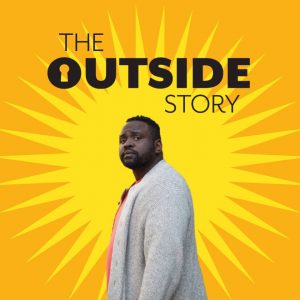
Sadly, we may not realize how much we miss the world until it’s no longer on our radar. And, even then, we may grow so accustomed to the change that we might forget what we’ve lost. That’s indeed a shame, considering how much there is to lose. But that’s not to say we can’t get it back, either. It could take some effort on our part, but, given what we have to gain, it’s worth it. Just ask Charles.
Copyright © 2020-2021, by Brent Marchant. All rights reserved.

