“The Bare Necessity” (“Perdrix”) (2019 production, 2020 release). Cast: Swann Arlaud, Maud Wyler, Fanny Ardant, Nicolas Maury, Patience Munchenbach, Alexandre Steiger, Bastiste Kerroué. Director: Erwan Le Duc. Screenplay: Erwan Le Duc. Web site. Trailer.
How often have you wanted to rid yourself of the unnecessary elements of your life, removing the clutter and seriously focusing only on what’s most important? Like cleaning an overstuffed closet, it’s something many of us say we have to get around to doing one day but somehow don’t manage to find the time – that is, until our hand is forced and we have to do it out of necessity. Wouldn’t it be easier if we made peace with the idea and just went ahead with it of our own volition? Maybe so, but in getting to that point, even the most conscientious among us may find that we need a little inspiration to get started, an issue raised in the delightfully quirky new French romantic comedy, “The Bare Necessity” (“Perdrix”).
Sassy free spirit Juliette Webb (Maud Wyler) is looking for a new home. The independent thirty-something has been on her own since her teens when she and her parents decided they didn’t need one another any more. So, over the ensuing years, she has wandered about Europe (mostly her native France) with all of her worldly possessions – mostly a detailed collection of personal journals – in the back seat of her car. Being unburdened by lots of extraneous stuff, she has been able to remain sufficiently mobile. In fact, her vehicle is about the only material possession on which she absolutely relies. So, naturally, it comes as quite a shock when it’s stolen.
[caption id="attachment_11744" align="aligncenter" width="350"] French Police Captain Pierre Perdrix (Swann Arlaud, left) takes a statement from free spirit Juliette Webb (Maud Wyler, right) after her car is stolen from a rural rest area by a naked woman in the quirky new romantic comedy, “The Bare Necessity” (“Perdrix”). Photo courtesy of UniFrance.[/caption]
While driving through the sleepy, sparsely populated Vosges Mountains, Juliette stops at a rest area to collect her thoughts and do a little journaling. However, while sitting on a bench not far from her car, she witnesses a naked woman hop into the vehicle and take off, leaving her stranded in what seems like the middle of nowhere. Now what?
Juliette makes her way to the nearest town, visiting the local gendarmerie to file a report about the theft. There she meets the local police captain, Pierre Perdrix (Swann Arlaud), a genial but often put-upon sort who spends virtually all of his time attending to the needs of others, devoting little attention to himself. There’s his eccentric officers, such as Michel (Alexandre Steiger), a lovelorn gay man smitten with the captain. And then there’s his dysfunctional family – his mother Thérèse (Fanny Ardant), a widowed radio talk show host whose amorous advice call-in broadcast no one listens to; his brother Ju Ju (Nicolas Maury), a scientist unnaturally obsessed with earthworms; and his pre-teen niece Marion (Patience Munchenbach), who’s dissatisfied with her living arrangements and is looking into boarding schools. And now there’s Juliette, who, with no place to stay, shows up unannounced on Pierre’s doorstep, inviting herself in for meals and lodging while the investigation of her stolen car unfolds.
Juliette’s unreserved, often-irritating demeanor doesn’t sit well with Pierre’s family. The captain often finds her abrasive as well, but, curiously, he seems comparatively more tolerant than the others. Nevertheless, she still proves to be a handful, especially in light of all of the other challenges he’s having to deal with, such as a band of World War II history buffs planning to re-enact the town’s liberation from the Germans, a production including tanks and other military vehicles. And then there’s that thieving naked woman who stole Juliette’s car; as it turns out, she belongs to a local group of radical nudists who run around naked robbing others of their possessions (usually their clothes) to stress the notion of our need to strip down to our “bare essentials.” Clearly, Pierre’s plate is full. Maybe he could stand to empty it a bit.
[caption id="attachment_11745" align="aligncenter" width="350"]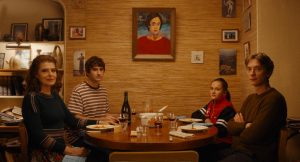 Besides the responsibilities of his job, French Police Captain Pierre Perdrix (Swann Arlaud, right) must deal with the issues of his needy family, including his mother Thérèse (Fanny Ardant, left), his brother Ju Ju (Nicolas Maury, second from left) and his niece Marion (Patience Munchenbach, second from right), in the offbeat new romantic comedy, “The Bare Necessity” (“Perdrix”). Photo courtesy of UniFrance.[/caption]
And that, it seems, may be why Pierre finds himself growing progressively more intrigued by Juliette as he spends more time with her. He’s taken with her sense of free-spiritedness, because it’s something he lacks and could certainly use in his life. He also appears to grow increasingly infatuated with her, especially when he takes steps to loosen the shackles that hold him back. But will he truly let go of what’s weighing him down? Can he detach from the neediness of his family, his co-workers and his community? That remains to be seen.
When we seek to change our lives, we often recognize the need, but not necessarily the means, to accomplish it. Because of that, we need some kind of inspiration to get the process started, to provide us with clues and show us the way. Without it, we’re likely to stay stuck where we are, dissatisfied and unfulfilled.
So it is for Pierre. He claims to be satisfied with his life, but is he really? There is plenty of evidence to the contrary, yet he doesn’t seem to know how to get off the dime – that is, until circumstances around him begin to take a different turn. Those influences plant seeds to initiate change. But, in actuality, the inspiration to launch that effort began with him, even if he didn’t recognize that fact. It first appeared in his thoughts, beliefs and intents, the building blocks of the conscious creation process, the philosophy that maintains we draw upon these tools in shaping the reality we experience. And now that he has drawn these inspirational manifestations into his life, they can begin to do their work to encourage their creator to begin moving his life in a new direction.
[caption id="attachment_11746" align="aligncenter" width="350"] The independence of free spirit Juliette Webb (Maud Wyler, right) rubs off on uptight Police Captain Pierre Perdrix (Swann Arlaud, left) as he seeks to establish a more liberated attitude for himself in director Erwan Le Duc’s debut feature, “The Bare Necessity” (“Perdrix”). Photo courtesy of UniFrance.[/caption]
So just what are those influences? For starters, there are the radical nudists, advocates for stripping away what we don’t need and getting back to basics. The naked rebels may not have impacted Pierre personally, but, since he’s the local police captain, he has an awareness of their presence through his investigations of their alleged crimes. That places them and, more importantly, their ideology squarely on his radar. And, given that their core message is perfect for someone who needs to follow suit (even if not literally), this places Pierre in a position to take a cue from what they have to say.
Then there’s Juliette, whose approach to life echoes the radical nudists. But, since she has more direct contact with Pierre than the local disrobed warriors, Juliette has a greater opportunity to prompt the good captain into shifting his outlook and changing his life. Through his ongoing interaction with the unconventional nonconformist, he begins to see what’s weighing him down and holding him back. He comes to realize that he can’t solve the problems of others. In fact, and even more importantly, he recognizes that it’s not his responsibility to do so; that’s on them, and whether or not they choose to act on those questions is up to them, not him.
That’s important when one sees just how much Pierre has put his needs on the back burner to take care of others. For instance, since no one listens to his mother’s radio call-in show, he willingly phones the host to let her believe that people are actually listening. Then there are his self-absorbed co-workers, who seem to be more consumed with their respective hobbies than they are with doing police work, leaving him to handle most of the day-to-day operations while they pursue their personal interests. And, of course, there’s Juliette, who dumps all of her needs on him during the search for her missing car.
However, in Juliette’s case, there’s a different agenda at work. She may come across as helpless, but it’s also apparent she’s quite self-sufficient, especially in light of the fact that she’s been on her own since her teens. Her seeming neediness is designed to inspire Pierre into taking action to change his life – to annoyingly nudge him into placing his own concerns first for once, to stand up and proclaim “Enough already!” This is reinforced, albeit contrarily, by her often-cavalier attitude, showing Pierre just how to go about asserting himself. Her intent thus differs from the others in Pierre’s life, all of whom are willing to remain feeble, dependent upon him to take care of them.
[caption id="attachment_11747" align="aligncenter" width="350"] The beauty of France’s Vosges Mountains provides a stunning backdrop for the on-again, off-again romance of free spirit Juliette Webb (Maud Wyler, left) and uptight Police Captain Pierre Perdrix (Swann Arlaud, right) in the new romantic comedy, “The Bare Necessity” (“Perdrix”). Photo courtesy of UniFrance.[/caption]
By eliminating such clutter from his life, Pierre has an opportunity to rid himself of what no longer serves him. It enables him to evolve as an individual, to assert his true self – steps aimed at giving him a more fulfilled life. When stripped of the needless flotsam, he can be the person he truly wants to be – and has probably wanted to be – for a long time. It’s indeed amazing what a little inspiration can do.
It should be noted that the influences here can work in reverse, too. Pierre’s stability, for example, rubs off on Juliette, who has essentially been running away from her past for years, both literally and figuratively. By claiming that she can take care of herself (except, of course, when her car gets stolen), she walls herself off from interacting with others. But is such isolation all it’s cracked up to be? Given her willingness to spend so much time with Pierre, despite her proclamations of independence to the contrary, it appears that she may be ready to stop running and settle down. So, just as she inspires Pierre to be less tied down, he, in turn, encourages her to take a closer look at the benefits of meaningful connection. One hand washes the other, and both benefit from the bargain. Maybe happily ever after is possible after all.
This quirky French romantic comedy about the mating dance of an unlikely duo takes viewers down a variety of unexpected paths, easily one of the film’s greatest strengths. Through the pair’s on-and-off exploits together, viewers meet the gendarme’s eccentric family and co-workers, as well as the community’s many colorful residents. And, as their various stories unfold, the picture serves up a variety of meditations on love and life, particularly in the areas of boundaries, holding on and letting go. While filmmaker Erwan Le Duc’s debut feature is sometimes a little too enamored with its own quirkiness, the film’s deadpan humor and off-the-wall narrative pleasantly tickle the funny bone with writing and directorial styles reminiscent of Woody Allen, Wes Anderson and David O. Russell, all with an absurdist French twist. Add to that gorgeous cinematography, and you’ve got a deliciously underrated cinematic delight. This offering may not appeal to everyone, but those who like their rom-coms with an unconventional edge will relish the wit and wisdom of this little-known release. The film has been available for limited first-run online streaming, though its online run may have ended in many areas, so searching for this title may take some work, but it’s an effort definitely worth it.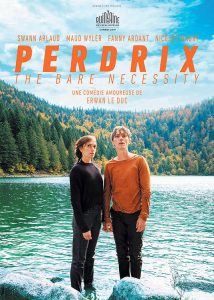
As most of us have probably found, it’s easy to allow our possessions to take on a life of their own. That includes not only our material goods, but also relationships, responsibilities and obligations that we have somehow allowed to attach to us and remain that way, even after they no longer serve a useful purpose. But, when we can see how eliminating them will enable us to streamline our lives and open up space for new, better and more fulfilling things to enter our existence, we’d be wise to jump at the chance and avail ourselves of it. The bare necessities of life might initially strike us as rather Spartan, but they also often provide us with the greatest satisfaction. And who can argue with that?
Copyright © 2020, by Brent Marchant. All rights reserved.


Friday, September 11, 2020
‘Bare Necessity’ inspires us to strip away the clutter


Thursday, September 10, 2020
This Week in Movies with Meaning



Tuesday, September 8, 2020
‘Fatima’ extols the virtues of faith
“Fatima” (2020). Cast: Harvey Keitel, Sônia Braga, Joaquim de Almeida, Goran Visnjic, Stephanie Gil, Alejandra Howard, Jorge Lamelas, Lúcia Moniz, Marco D’Almeida, Joana Ribeiro, João Arrais, João D’Avila, Figueira Cid, Elmano Sancho, Carla Chambel, Iris Cayatte, Ivone Fernandes-Jesus. Director: Marco Pontecarvo. Screenplay: Valerio D’Annunzio, Barbara Nicolosi and Marco Pontecarvo. Web site. Trailer.
Faith is something that’s exceedingly difficult to characterize. It doesn’t have any palpable, easily identifiable qualities. It won’t conveniently fit into a neat little package. And it’s not something that can be readily recognized at a passing glance. But, for those who understand and appreciate it, its existence is undeniable, no matter how intangible it might be and how difficult it may be to convince disbelievers of its veracity. Indeed, it’s something that must be accepted on a different level, something that likely defies everything we believe is necessary to constitute verifiable manifestation, a question hotly debated in the new faith-based historical drama, “Fatima.”
On May 13, 1917, an incident took place that changed the world. In a field outside the rural community of Fátima, Portugal, three young shepherd children experienced a visionary visitation by a figure claiming to be the Virgin Mary (Joana Ribeiro). During the apparition, Mary imparted a series of insights to the three witnesses, 10-year-old Lucia Santos (Stephanie Gil) and her two younger cousins, Francisco (Jorge Lamelas) and Jacinta (Alejandra Howard). In addition, she shared information about their individual destinies, as well as instructions about what they must do in the wake of her visit (most notably, to pray the rosary more diligently and to return to the apparition site every month at the same time for the next six months). It was a remarkable event that would carry staggering implications for months and years to come.
[caption id="attachment_11731" align="aligncenter" width="350"] As they witness an apparition claiming to be the Virgin Mary in Fátima, Portugal in 1917, three young shepherd children, Francisco (Jorge Lamelas, left), Jacinta (Alejandra Howard, center) and Lucia (Stephanie Gil, right) look on in awe and wonder in the new faith-based offering, “Fatima.” Photo © 2020, courtesy of Picturehouse.[/caption]
Over the years, the incident would become well known around the globe, a miraculous occurrence for the faithful and a source of considerable disbelief for the skeptical. It would also be the inspiration for a number of books on both sides of the issue, including six memoirs written by the eldest of the witnesses, Sister Lucia (Sônia Braga), who would leave Fátima at a young age and go on to live her life as a Carmelite nun. As Mary’s designated representative, Sister Lucia was charged with conveying the word about the heavenly Mother’s divine messages. And so, in 1989, as yet another book was being written, this time by a skeptic, Professor Nichols (Harvey Keitel), Sister Lucia met with the author to discuss his impending work, recounting the experience in detail, reflecting on her role in it and attempting to enlighten the disbeliever about the meaning of it all.
Through a series of flashbacks, viewers witness the unfolding of Lucia’s odyssey over the period from May to October 1917. In addition to re-creations of the subsequent visitations, the film explores a variety of other developments occurring simultaneously. Of greatest concern was the reaction to the revelations of the three young witnesses. As Lucia, Francisco and Jacinta sought to explain what they saw, they were met with tremendous ridicule, most notably from Lucia’s mother, Maria (Lúcia Moniz), who harshly criticized her daughter for making up blasphemous stories. She scolded Lucia for telling false tales about the heavenly Mother, lies that she was convinced would bring divine retribution upon their family. In particular, Maria was worried about the safety of her only son, Manuel (João Arrais), who was off fighting with the Allies in World War I, a conflict that was taking a heavy toll on the young men of their community. Maria believed that Lucia’s lies could bring harm and sorrow.
What’s more, Maria was worried about what others in Fátima might think. After all, why would Mary choose someone like Lucia, an ordinary peasant girl, for a role as significant as this? Lucia’s claims, Maria feared, would make her daughter look foolish – perhaps even evil – in such a devout community as theirs.
[caption id="attachment_11732" align="aligncenter" width="350"] Sister Lucia (Sônia Braga), who witnessed alleged apparitions of the Virgin Mary as a child, devotes her life to her faith as a Carmelite nun in the wake of her experience in the new fact-based religious drama, “Fatima.” Photo by Armanda Claro, © 2020, courtesy of Picturehouse.[/caption]
Others concurred with Maria, such as Mayor Arturo de Oliveira Santos (Goran Visnjic), who believed that Lucia’s claims might foster public discord. As a representative of Portugal’s relatively new and somewhat shaky secular state, he was concerned with keeping order and preventing the outbreak of public hysteria. He repeatedly spoke with Maria to rein in her daughter and her proclamations, rantings that he considered sheer superstition.
Through it all, though, Lucia, Francisco and Jacinta never backed down. Whenever confronted, be it by Maria, the Mayor or even the head of the Roman Catholic diocese, Monsignor Quaresma (João D’Avila), they held to their stories. In fact, the depth of their conviction was so deep and so convincing that it earned the respect of Lucia’s father, António (Marco D’Almeida), the Mayor’s wife, Adelina (Iris Cayatte), and the local parish priest, Fr. Ferreira (Joaquim de Almeida). They even received a healthy stamp of approval from a psychiatrist (Figueira Cid) hired by the Mayor to try and get the children committed.
Perhaps most importantly, though, the children began developing a band of followers, devotees who genuinely believed Lucia, Francisco and Jacinta were witnessing miracles through each of the succeeding visitations. The children were frequently approached – indeed, over time, swarmed – by petitioners seeking to learn if the heavenly Mother had information or insights for them, particularly where missing or deceased loved ones (especially soldiers) were concerned. Such developments further raised the ire of the skeptics, but, when the crowds swelled enormously, there was little they could do to hold back the throngs of seekers looking for divine connection. This was especially true at the subsequent visitations, which attracted growing crowds and took on an almost carnival-like atmosphere, with rosary vendors eagerly selling their wares to those seeking to demonstrate their efforts at greater piety.
[caption id="attachment_11733" align="aligncenter" width="350"] Professor Nichols (Harvey Keitel), a skeptical author working on a new book about the 1917 Marian apparitions at Fátima, Portugal, prepares to interview the sole surviving witness to the event in the new faith-based historical drama, “Fatima.” Photo by Armanda Claro, © 2020, courtesy of Picturehouse.[/caption]
In these subsequent visits, the witnesses received additional information from the apparition, most notably prophecies that would come to be known as the Three Secrets of Fátima. The first secret was a terrifying depiction of hell, one that was foretold would impact those who failed to show proper respect to God. The second predicted that the war would end soon but that an even more horrific conflict would arise if mankind failed to stop offending God (particularly those in the newly Communist, godless Russia) by not sufficiently demonstrating their reverence to the divine. The third was to remain undisclosed until Lucia was instructed by Mary to divulge it, something that she was told would not happen until far into the future (though it was nevertheless depicted to her in a vision where a Pope and his party were walking through the destroyed streets of Rome, eventually coming upon an assassin who shot the Holy Father at point blank range).
Needless to say, the faithful were overjoyed to hear the news that the war would be ending soon, information that helped swell the crowds even more at later visitations. But, despite the vast number of faithful, there were still many skeptics who wanted definitive proof of the heavenly Mother’s identity. The children imparted this sentiment to Mary at the final visitation in October 1917, asking her if she could perform a miracle to prove her claim of divinity. And that request was apparently granted when many of the 70,000 gathered for the event witnessed the Miracle of the Sun, an incident in which the glowing orb allegedly danced and zig-zagged across the sky, even descending to the horizon, and emitting light in an array of different colors. Suddenly the statements of the children didn’t seem so far-fetched after all.
As should be obvious by now, faith (or a lack thereof) is at the core of this story. And that’s crucial, since it can work wonders, no matter how we describe or understand it, be it religiously, spiritually, philosophically or even in terms that don’t necessarily include such loftier components, such as plain old everyday kitchen table wisdom. No matter how we look at it, faith is perhaps best considered in terms of the degree of stock we place in our thoughts, beliefs and intents, for those powerful tools shape the reality we experience, the guiding principle that governs the philosophy of conscious creation.
[caption id="attachment_11734" align="aligncenter" width="350"]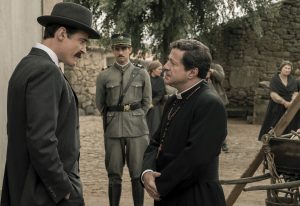 Mayor Arturo de Oliveira Santos (Goran Visnjic, left) and parish priest Fr. Ferreira (Joaquim de Almeida, right) debate opposing views about the legitimacy of the 1917 Marian apparitions of Fátima in director Marco Pontecarvo’s latest, “Fatima.” Photo by Claudio Iannone, © 2020, courtesy of Picturehouse.[/caption]
Given the backgrounds of the Fátima witnesses, it’s highly unlikely that they ever heard of conscious creation, especially since they didn’t know how to read or write before their apparition experiences. Nevertheless, they did understand the concept of faith, the principle that essentially infuses one’s thoughts, beliefs and intents with the energy that brings them into activation, be it in a traditional religious or conscious creation context. They drew upon this notion to spread the word of God as they understood it to help bring humanity back into alignment with its spiritual essence, a means to promote a greater degree of peace and understanding in a world desperately in need of it. Even if one doesn’t necessarily agree with the religious underpinnings of their message, who can realistically argue with the merits of the wider goal their work was meant to achieve?
It’s ironic that their story of the visions was so vehemently doubted. Considering that Lucia, Francisco and Jacinta were raised to be devoted followers of the Church and the teachings of Jesus, it’s more than a little incongruous that those who shepherded them into these beliefs had such doubt of their own. Indeed, where was the faith of those who supposedly so strongly championed it in the first place? How could they profess to believe these notions when they refused to accept evidence allegedly confirming them? Was this hypocrisy? Or did they not possess the faith that they said they had in the first place?
In situations like this, sometimes it takes incredible circumstances to reaffirm one’s conviction in something as fundamentally incredible as faith itself. That may take the recounting of a fantastic tale from a seemingly unlikely source for the point to be made and for the connection to be re-established. But, then, faith is often seen as something inherently fantastic, so what more fitting way would there be to convince someone of its existence than a fantastic tale imbued with its essence?
[caption id="attachment_11735" align="aligncenter" width="350"] Maria Rosa Santos (Lúcia Moniz) seriously questions the claim of her young daughter that she witnessed an apparition of the Virgin Mary, contending that she’s made up attention-getting blasphemous stories, in the new faith-based drama, “Fatima.” Photo by Claudio Iannone, © 2020, courtesy of Picturehouse.[/caption]
I should add once more that, even if one doesn’t agree with the specific religious notions expressed here, that does not invalidate the existence and power of faith. To do otherwise, clichéd though it may be, is tantamount to tossing out the baby with the bath water. Do we really want to do that when it comes to something that can help to work miracles? We should be sure to think twice before acting too rashly.
While it’s better than most faith-based offerings, unfortunately, “Fatima” doesn’t always hit its marks as effectively as it could have. Its spiritual teachings and messages are often shrouded in vague statements, unanswered questions and unexplained imagery, and its central faith-oriented focus is relentlessly overshadowed by repetitive interrogations of the young witnesses to the Marian visitations, overemphasizing the skepticism of doubters and giving the film more of a secular tone than a spiritual one. The picture makes up for this somewhat with generally fine performances and surprisingly good production values, but, at its core, the film leaves often viewers more muddled than enlightened when it comes to what it’s attempting to say. With better handling, director Marco Pontecarvo’s latest really could have been a breakthrough offering for this genre, but, as it stands, it’s merely a modest improvement over previously released films of this type, a missed opportunity for a class of pictures seeking greater respectability, credibility and acceptance. The film is playing in limited theatrical release and is available for first-run online streaming.
When we lose our faith (or think that we have), sometimes we need reminders to help get us back on track. But we must be careful not to overlook or ignore those synchronistic prompts when they appear, for doing so may delay the fulfillment of their purpose or, even worse, push us into a deeper state of disbelief. That could be a tragedy, keeping us from seeing the miracles around us – not to mention the happiness and satisfaction that faith can bring.
Copyright © 2020, by Brent Marchant. All rights reserved.
Monday, September 7, 2020
Check Out The Cinema Scribe on Its New Day

Saturday, September 5, 2020
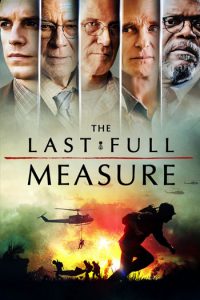
‘The Last Full Measure’ seeks to rectify justice denied
“The Last Full Measure” (2020). Cast: Sebastian Stan, William Hurt, Ed Harris, Samuel L. Jackson, Christopher Plummer, Peter Fonda, Diane Ladd, Bradley Whitford, Amy Madigan, John Savage, Jeremy Irvine, Alison Sudol, Linus Roache, Dale Dye, Ser’Darius Blain, James Jagger, Zach Roerig, Ethan Russell, Cody Walker, Richard Seymour Cawthorne, LisaGay Hamilton, Asher Miles Fallica, Rachel Harker, Hannah Black. Director: Todd Robinson. Screenplay: Todd Robinson. Web site. Trailer.
An old adage maintains “Better late than never.” But is “late” truly acceptable? In many cases, it’s used as an all-too-convenient excuse for careless oversights, intentional snubs or even willful, agenda-driven and often-indefensible denunciations. It’s at that point when efforts to make up for those shortcomings often emerge, some of which slowly fall by the wayside but others of which succeed to rectify instances of “justice delayed is justice denied.” So it was for a band of zealous advocates who fought for the recognition deserved by a deceased war hero in the moving, fact-based drama, “The Last Full Measure.”
On April 11, 1966, troops from the U.S. Army’s 1st Infantry Division were ambushed while carrying out Operation Abilene, a mission that proved to be one of the deadliest campaigns of the Vietnam War. During the course of the fighting, the soldiers were surrounded and the division’s medic was injured, leaving the troops without anyone to attend to the wounded. The Air Force was called in to assist, with Pararescueman William H. “Pits” Pitsenbarger (Jeremy Irvine) volunteering to replace his Army counterpart. He was lowered from a helicopter into the middle of a firefight, where he heroically proceeded to care for 60 injured soldiers – even giving up an opportunity for his own evacuation – before being killed in action himself.
[caption id="attachment_11720" align="aligncenter" width="350"] Air Force Pararescueman William H. “Pits” Pitsenbarger (Jeremy Irvine) comes to the rescue of Army troops caught in a deadly ambush in Vietnam in 1966 when their medic is injured and unable to tend to the wounded in the engaging, heartfelt drama, “The Last Full Measure,” now available for home viewing. Photo courtesy of Lionsgate.[/caption]
In the wake of Pitsenbarger’s valiant efforts, he was posthumously awarded the Air Force Cross. However, his veteran colleagues and family members believed he deserved more, namely, the Medal of Honor, the military’s highest distinction. But, as the process to secure this honor played out, the request was inexplicably turned down. His supporters were mystified and launched a campaign to appeal the decision. They desperately wanted to see Pits receive his due, but, for 32 years, their efforts went for naught. Defense Department staff were repeatedly assigned to the case but with no success (most likely due to a lack of vigilant effort to see it through).
That all changed in 1998. Scott Huffman (Sebastian Stan), a young rising star in the Defense Department, was assigned to look into the request for a medal upgrade, a task he was reluctant to take on. As a Pentagon fast tracker, he was more concerned with his own career development than he was with taking on what was essentially seen as a thankless, dead end assignment (and one in which he had no prior experience at that). But, with the gentle but persistent prodding of his boss (Bradley Whitford) to at least make the semblance of an effort, he half-heartedly began an investigation into Pitsenbarger’s case.
Huffman initially met with Pitsenbarger’s staunchest advocate and fellow soldier, Tom Tulley (William Hurt). Huffman explained that medal upgrades were rare and that the likelihood of it happening in this case was slim, especially after 32 years. However, Tulley saw through Huffman’s attempts to shirk his responsibilities and guilted him into investigating further. Tulley related Pitsenbarger’s story in detail, making an impassioned plea to look into the matter for his colleague’s aging and ailing parents, Frank (Christopher Plummer) and Alice (Diane Ladd), both of whom wanted to live to see their son properly honored.
Reluctantly, Huffman traveled to Ohio to meet with Tulley and Pitsenbarger’s parents. They encouraged him to speak with several of Pits’s surviving colleagues to obtain new testimony to strengthen the case in favor of the upgrade. And so, before long, Huffman paid visits to a trio of veterans who witnessed Pitsenbarger’s heroism firsthand, Billy Takoda (Samuel L. Jackson), Jimmy Burr (Peter Fonda) and Ray Mott (Ed Harris). During these visits, Huffman learned more about Pitsenbarger’s courage under fire. He also heard their own stories, particularly with regard to the horrors they experienced and the ghosts that still haunted them.
[caption id="attachment_11721" align="aligncenter" width="350"] Pentagon staffer Scott Huffman (Sebastian Stan, left) and Army veteran Tom Tulley (William Hurt, right) seek to secure a posthumous Medal of Honor award for a fallen hero killed during a deadly ambush in Vietnam in 1966 in director Todd Robinson’s latest, “The Last Full Measure,” now available for home viewing. Photo courtesy of Lionsgate.[/caption]
Through this experience, Huffman’s attitude slowly changed. He began to see the merits in upgrading the honor. He developed an uncharacteristic compassion for his subject. And he forged a bond with Frank and Alice, including a desire to see their wish realized. These attributes were further bolstered by a trip to Vietnam to meet with another of Pitsenbarger’s colleagues, Chauncey Kepper (John Savage), who took up residence in the embattled nation after the end of the war. Kepper, who penned a glowing recommendation for Pitsenbarger, explained that his testimony must have been lost during the 1975 Fall of Saigon, when many U.S. military records on file in Vietnam were destroyed or abandoned. Huffman learned that Kepper’s account, along with additional new revelations, could significantly help to pave the way for the fallen soldier. This heartfelt encounter also galvanized Huffman’s resolve to see things through, a radical shift in his outlook and personal character.
But, even with this new evidence, Huffman still faced huge hurdles to overcome. In the course of his investigation, he discovered that the denial of Pitsenbarger’s medal was tied to a cover-up of dirty little military secrets. And, on top of that, he also had to make an appeal to a Congressional sponsor for the request – in this case, a Senator (Dale Dye) who was involved in Operation Abilene and may have had an unwitting connection to the cover-up that prevented the awarding of Pitsenbarger’s honor, a longstanding conspiracy that Huffman later learned had been shamefully sustained by someone he had considered an ally.
Would justice be served in this case? And what would the outcome of this effort mean to Huffman and to Pitsenbarger’s family and friends? Clearly there was a lot at stake – and a lot to be gained – including for those who the hero touched but never met on the battlefield.
The inexcusable delay in recognizing the valiant behavior of William Pitsenbarger is indeed mind-boggling. The bureaucratic incompetence was bad enough, but the fact that this honor was denied for dishonorable reasons is infuriating. Thankfully, the efforts of his advocates to see this miscarriage of justice rectified is genuinely inspiring. Their belief in his selfless gallantry and their commitment to see his heroics properly recognized reflect a fervent conviction to realize this aspiration. It’s indeed one of the most commendable examples of the conscious creation process at work, the philosophy that maintains we employ the power of our thoughts, beliefs and intents in manifesting the reality we seek.
While the efforts of Pitsenbarger’s advocates may have taken some time to produce results, their ongoing commitment to the materialization of their goal is undeniable. Their faith in their beliefs to see the initiative realized demonstrates just how powerful these notions can be, even over an extended period of time and in the face of seemingly insurmountable obstacles. Such conditions can be frustrating, to be sure, but arduous circumstances need not doom our efforts. As long as we don’t lose sight of that, the possibility of success is always attainable.
[caption id="attachment_11722" align="aligncenter" width="350"]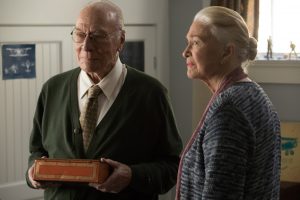 Frank Pitsenbarger (Christopher Plummer, left) and his wife, Alice (Diane Ladd, right), the ailing and aging parents of a Vietnam War hero, seek the fulfillment of a dream to see their late son posthumously granted the Medal of Honor, the military’s highest distinction, in the fact-based drama, “The Last Full Measure.” Photo courtesy of Lionsgate.[/caption]
To fulfill an objective like this, we must be prepared to overcome our fears and live heroically. That could understandably be viewed as a daunting prospect, but Pitsenbarger’s backers had an inspiring example to draw from in overcoming this hurdle – his own battlefield behavior. When others may have turned tails and run, the intrepid airman stayed the course, remaining committed to his mission and even passing up an opportunity to evacuate for his own safety, despite the pervasive dangers. That’s significant, for, if such actions don’t inspire us to our own heroism, what will?
The fulfillment of a goal like this also calls for a willingness to surmount limitations, and, for those who fought for Pitsenbarger’s recognition, there were many to overcome. The bureaucratic maze, the lost records of his heroics, the intentional efforts to squelch the truth and the frustration of attrition alone may have been enough to discourage even those with the best of intentions. It can be exceedingly difficult to remain committed, for example, when we’re directly told that our efforts are likely to be futile, as Huffman tells Tulley in their initial meeting. However, breakthroughs of almost any kind never come about without an attempt to penetrate barriers. That may require tremendous tenacity, but, when armed with this quality, it may be possible to knock down such walls, even changing the hearts and minds of those who erect such hindrances in the first place.
Developments like these can go a long way toward encouraging such situations to evolve – and favorably so at that. One need only look at the evolution Huffman undergoes as this story plays out. It’s heartening to see how someone who began this effort disinterestedly because it impinged upon his own self-serving ends can become transformed over time. It’s a process that makes him a better man, a better husband and father to his wife (Alison Sudol) and son (Asher Miles Fallica), and, above all, a better soul to those in need of the newfound wellspring of compassion that emerges from within him. The inspiration that prompts his own transformation, in turn, enables him to return the favor for others, paying it forward so that others may benefit.
And this, by extension, beautifully illustrates the innate connectedness that we all share. Through Huffman’s efforts, we get to see how his work touches so many others, including countless people he had never met before – and even after – this experience. Like strands stretching out in all directions, the inherent linkage that binds us all becomes obvious, showing just how profoundly and effectively we’re all able to touch one another. Of course, none of that ever would have happened were it not for the initial efforts put forth by Pits himself. He may have died 32 years before he received his recognition, but his impact carried on all through that time – and beyond – affecting individuals he never met but who were touched by his presence, a stirring observation offered by Air Force Secretary Whit Peters (Linus Roache) at Pitsenbarger’s award ceremony.
[caption id="attachment_11723" align="aligncenter" width="350"] Army veteran Billy Takoda (Samuel L. Jackson) presents witness testimony to strengthen the case for a Medal of Honor award for a heroic fallen colleague in “The Last Full Measure.” Photo courtesy of Lionsgate.[/caption]
Imagine what kind of world we could have if we all held beliefs in line with such thinking. The horrors of conflicts like Vietnam could easily become a thing of the past. In fact, the effort behind such manifestations could be transmuted into something meaningful, such as the establishment of a butterfly sanctuary set up by Chauncey Kepper on the very site where Operation Abilene took place, a moving discovery Huffman makes while on his visit to Vietnam. That’s something to think about as we move forward and ask ourselves what kind of an existence we want to manifest for ourselves. Must we stay locked into outmoded conventions that no longer serve us? Or can we do better? We need not remain stuck as long as we’re willing to change our beliefs about what we seek to create.
I should note that I am generally not a huge fan of war films, but “The Last Full Measure” is a definite exception. The picture doesn’t hesitate to depict the hell that is war. And it doesn’t spare viewers the emotional fallout that its participants underwent, including the younger selves of Pitsenbarger’s colleagues (Ser’Darius Blain, James Jagger, Zach Roerig, Ethan Russell, Cody Walker) and his survivors, such as his parents and his devastated girlfriend, Jenny, who mourned his loss both in her youth (Hannah Black) and on into middle age (Rachel Harker). Yet, despite these painful images, the film also honorably recognizes the valor and generosity of those who were willing to make the ultimate sacrifice for the well-being of our fellow man. What’s more, it makes an eloquent case for considering the possibility of moving beyond conflict, to look at alternate ways for resolving our disputes. Should we succeed at that, we would be able to pay the ultimate tribute to soldiers like William Pitsenbarger for helping enlighten us to a path that need not include the barbarity they had to endure.
Sadly, “The Last Full Measure” is a movie that really got the shaft: Between being released in theaters in the cinematic wasteland that is typical of January (instead of the genuinely more fitting year-end awards season window) and a barrage of smarmy negative reviews by ever-so-cynical critics who are probably too young to remember the horrors of Vietnam (if they were even born during that time), this moving, heartfelt, fact-based story earns every bit of respect and emotion that it brings out of its viewers. With an excellent ensemble cast featuring superb performances by William Hurt, Samuel L. Jackson, Ed Harris, Christopher Plummer and Peter Fonda (in his final performance), this stirring tale tells a compelling, no-nonsense story about heroism, valor, sacrifice, compassion and inspiration and the quest to see those qualities properly lauded. Be forewarned that the film contains graphic images that may not be suitable for more sensitive viewers, but, to be fair, the picture never becomes gratuitous in its depictions of wartime events. To be sure, this offering, now available for home viewing, certainly deserved better than it got, both in terms of its distribution schedule and its critical reception. And that’s ironic, for this release ultimately suffered from the same unfortunate treatment as its principal subject, a wrong that truly should be made right. One can only hope that it finds a devoted audience in its secondary distribution venues – and brings honor to those who genuinely deserve the recognition.
In Abraham Lincoln’s Gettysburg Address, the President paid tribute to fallen Civil War soldiers by noting that they “gave the last full measure of devotion” to their nation. His statement has echoed through the ages, eloquently summing up what the brave did for their country. And, in circumstances such as these, it’s only fitting that they be honored for their efforts and commitment. To do less is indeed an injustice. That’s when the rest of us need to step in and take up the cause to see that their heroism is sufficiently praised, recognizing that their sacrifices were not unduly ignored.
Copyright © 2020, by Brent Marchant. All rights reserved.
Wednesday, September 2, 2020
‘Song Without a Name’ pleas for justice, reform
“Song Without a Name” (“Cancíon sin nombre”) (2019 production, 2020 release). Cast: Pamela Mendoza, Tommy Pàrraga, Lucio Rojas, Maykol Hernández, Ruth Armas, Lídia Quispe, Jhazmin Mamani, Lourdes Villareal, Carlos Victoria, Luis Menezes, Boris Severola, Gabriela Velásquez, Yiliana Chong, Janet Gutarra, Melvin Quijada, Ronald Saravia, Jenny Torres. Director: Melina León. Screenplay: Melina León and Michael J. White. Web site. Trailer.
Life in a land riddled with injustice, intolerance and inequality – conditions that many of us can relate to these days – is ripe for change. But the birth pangs of bringing about such reform are often as difficult to endure as the problems that sparked their institution. And, to complicate matters further, these ordeals are often felt both across society and personally, compounding the pain and suffering experienced at the individual level. So it once was for a troubled Latin American nation and its citizens as seen in the new fact-based drama, “Song Without a Name” (“Cancíon sin nombre”).
Peru was a nation beset by many problems in the 1980s. Volatile political turmoil, accompanied by terrorist activity, rampant corruption and runaway inflation, made coping with everyday life difficult, dangerous and expensive, especially for the poor. Those who lived in the country’s rural mountainous regions, such as the native Quecha villagers, had it particularly hard, barely eking out a living selling vegetables and other basic commodities. What’s more, their limited educational backgrounds made it easy to take advantage of them. For example, they were readily hustled by unscrupulous employers who convincingly talked them into underpaying jobs or joining radical groups under the promise of “finding work.” But these employment scams and terrorist recruiting tactics were far from the most horrendous atrocities being perpetrated at the time, as a 20-year-old expectant mother, Georgina Condori (Pamela Mendoza), would come to find out for herself.
[caption id="attachment_11710" align="aligncenter" width="350"]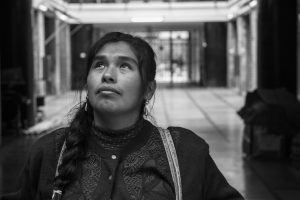 Expectant but destitute mother Georgina Condori (Pamela Mendoza) believes she’s found the answer to her prenatal care needs when she comes upon a free clinic in economically ravaged Peru in the 1980s in the dramatic new fact-based saga, “Song Without a Name” (“Cancíon sin nombre”). Photo courtesy of Film Movement.[/caption]
Georgina’s story, based on actual events, is indeed a tragic one. To make ends meet, she sells potatoes in a village market, while her partner, Leo (Lucio Rojas), does whatever he can to earn money, no matter how shady the propositions. However, given their limited income and the ever-increasing cost of everything, Georgina quietly worries about what will happen when she gives birth. As it is, she can’t even afford prenatal care.
But, while working at the marketplace one day, Georgina receives what she believes is the answer to her prayers. She hears a radio ad for a clinic in Lima that offers pregnant mothers free obstetric services. She sees this as a perfect opportunity to get the care she needs.
Georgina makes the trip to Lima to visit the clinic, where she’s examined by a doctor (Boris Severola) who tells her that she and the baby both appear to be perfectly healthy. He then tells her that all she need do is come back when she’s ready to deliver. And, a few days after returning to her village, she goes into labor. She makes the arduous and now-painful journey back to Lima, where she gives birth moments after arriving at the clinic. Exhausted from her trip and the birthing process, Georgina is encouraged to rest while the staff attends to the newborn. But, when she awakens from her rest, her baby is nowhere to be found. Georgina asks to see the child, but she’s told that the baby girl has been taken to a hospital to ensure her health – a story that proves to be an outright lie. And, when the new mother pushes the issue, she’s rushed out of the clinic by the staff “nurses” (Yiliana Chong, Janet Gutarra), told that she has to go home.
Distraught and inconsolable, Georgina doesn’t know what to believe. She makes repeated visits to the clinic, which is now apparently shuttered. She approaches authorities, nearly all of whom either dismiss her as delusional or obligatorily take her statement with no intention of pursuing the matter. And Leo is of little help, doing little more than paying lip service to his partner’s anguish. Finally, and in an act of desperation, Georgina visits the offices of the newspaper La Reforma in hopes that someone will listen to her story.
[caption id="attachment_11711" align="aligncenter" width="350"]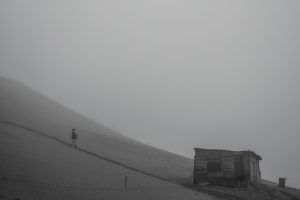 Life in Peru’s rural mountainous regions may be beautiful to look at but difficult to manage, especially for the nation’s poor indigenous villagers, as seen in director Melina León’s feature debut, “Song Without a Name” (“Cancíon sin nombre”). Photo courtesy of Film Movement.[/caption]
Although initially treated dismissively, Georgina’s story gets the attention of reporter Pedro Campos (Tommy Pàrraga). He takes pity on the young mother, realizing that she’s being victimized by a self-serving society lacking in compassion and basic morality. He understands her situation, because, like Georgina, Pedro is part of a marginalized community himself: As a gay male who lives a largely closeted life in the face of an extremely homophobic culture, he feels disenfranchised, unable to be himself or to explore his budding relationship with a flamboyant actor, Isa (Maykol Hernández). Together, Pedro and Georgina begin looking into what happened to her baby.
Before long, Georgina meets two other women who experienced similar fates, Sara (Jhazmin Mamani) and Josefina (Lourdes Villareal). They describe appointments at free clinics not unlike the one Georgina visited, attended to by a doctor matching the description of the physician who took care of her. And they go on to tell how their newborns were mysteriously taken from them, without explanation, shortly after their births. Based on this information, as well as leads from other sources, Pedro uncovers an infant trafficking business, one in which babies are sold to overseas parents looking to adopt, all with the assistance of a complicit judge (Carlos Victoria). Pedro’s coverage of the story publicly exposes the ring, but, even with that, a crucial question still remains: What happened to Georgina’s daughter?
Surviving conditions like those that prevailed in Peru in the 1980s is never easy, no matter where one may live. The political, social and economic turbulence that permeated virtually every aspect of everyday life was itself patently unsettling. But, when personal tragedies like the one Georgina faced are added to the mix, they make life innately intolerable. How does one cope? Indeed, why must someone endure such excruciating circumstances?
[caption id="attachment_11712" align="aligncenter" width="350"] To help make ends meet, Quecha villager Georgina Condori (Pamela Mendoza) sells potatoes in the local marketplace in “Song Without a Name” (“Cancíon sin nombre”), now available for first-run online streaming. Photo courtesy of Film Movement.[/caption]
The philosophical among us would assert that there are always reasons (albeit not readily apparent) for undergoing such experiences. But others are just as likely to contend that no one should have to suffer fates like this. So why do such tragic misfortunes occur?
Situations like these desperately demand justice and reform. No one should have to endure such indignities. But, if conditions are to ever change, they must be brought into the light of day for all to see, and those caught up in such scenarios must have the wherewithal to expose them for what they are. Bringing such outcomes into being takes considerable courage and effort, initiatives that call for a firm belief in one’s convictions to make that happen. And the power inherent in those beliefs is important, for it drives the manifestation of hoped-for results, products of the conscious creation process, the philosophy that maintains these metaphysical building blocks shape the reality we experience.
As Georgina and Pedro work to uncover the truth of her baby’s disappearance, they put their heart and soul into their work. They fervently believe that they can achieve what they set out to do, with a commitment to see it through. And, even if they have never heard of conscious creation, it’s obvious that their efforts embody the philosophy’s principles and that they have a mastery over them as they proceed with their venture. That’s crucial in light of what’s on the line, both on a personal level (i.e., locating the missing children) and on a grander scale (i.e., bringing about much-needed justice and reform for society at large).
[caption id="attachment_11713" align="aligncenter" width="350"]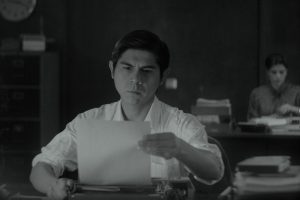 Journalist Pedro Campos (Tommy Pàrraga) seeks to expose corruption through his work with La Reforma newspaper during Peru’s politically and economically turbulent times in the 1980s in “Song Without a Name” (“Cancíon sin nombre”). Photo courtesy of Film Movement.[/caption]
To be sure, the intrepid investigative duo has their work cut out for them, given how skillfully the traffickers have concealed their scheme and the logistics that make it work. For instance, by constantly shifting the locations of their clinics, they manage to stay ahead of inquisitors and victims, an effort fortuitously aided by the complicity of corrupt authorities. They also manage to sustain quite a “market” for their precious commodity by deceitfully yet successfully convincing adopting parents overseas that they have an ample number of children available for placement, young ones who have been “orphaned” by the deaths of family members killed in terrorist incidents and other calamities. And the criminals are so firmly rooted in their beliefs in these notions that they’re able to get away with it. Most of us would be appalled by this utter perversion of the conscious creation process, yet its ongoing materialization nevertheless demonstrates the tremendous power inherent in our beliefs and what they can make possible, for better or worse.
As the film depicts, this is a story that calls for change on multiple fronts. Not only does it plea for breaking up the trafficking ring and appeasing the sorrow of victims like Georgina, Sara and Josefina, but it also exposes the ugly homophobic hatred inflicted upon Pedro and Isa, victims of an intolerant, out-of-control uber-macho culture. Both situations call for the plights of the disenfranchised to be addressed, to institute protections for those most in need of it. And, by calling attention to such disgraceful social ills, champions of their reform have an opportunity to enlighten the public and push for change.
[caption id="attachment_11714" align="aligncenter" width="350"]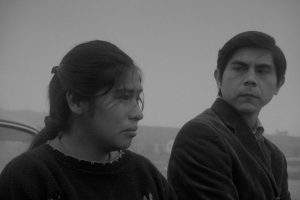 The unlikely duo of peasant villager Georgina Condori (Pamela Mendoza, left) and investigative reporter Pedro Campos (Tommy Pàrraga, right) seek to expose an infant trafficking ring in 1980s Peru in director Melina León’s feature debut, “Song Without a Name” (“Cancíon sin nombre”). Photo courtesy of Film Movement.[/caption]
It’s because of horrendous circumstances like these that those seeking to change them must invoke and ardently commit to beliefs aimed at bringing about meaningful justice and reform. This is true in any situation where such change is called for. By having the courage and conviction to follow through with what it takes to realize that outcome, we have an opportunity to eradicate such atrocious circumstances. The example they set is one that can indeed inspire us all when faced with ordeals in need of comparable rectification.
This fact-based but atmospheric tale of Peru’s political, social and economic turmoil of the 1980s provides a unique take on a shocking news story told from a highly personal, exceedingly inventive perspective. With an excellent lead performance by Pamela Mendoza, gorgeous black-and-white cinematography and an ethereal original score, director Melina León’s debut feature tells a captivating story all its own while simultaneously paying homage to Latin American political thrillers (most notably Chilean-based offerings like “Missing” (1982) and “Spider” (“Araña”) (2019)), as well as tales of minority disenfranchisement and exploitation (such as Mexico’s “Roma” (2018)). Admittedly, the film could use a little more back story for context, and it sometimes tries to do a little too much, with some story threads not fleshed out as thoroughly as they could be. Overall, though, this is a fine initial offering from another promising new talent, a filmmaker who clearly demonstrates a great deal of vision and imagination in telling a story that could have easily been presented much more conventionally in lesser-skilled hands. The film is available for first-run online streaming.
Implementing justice and reform is often a difficult and frustrating process. The problems that prompt these initiatives are often so insidious, so entrenched and managed by forces that are so imperceptible that even the most zealous advocates of these efforts are often on the verge of becoming discouraged. Yet, considering the stakes involved, it’s also just as hard to walk away from these campaigns, no matter how Quixotic they may seem. It’s at times like these when the truly committed must steel their resolve, digging deep down into the recesses of their beliefs to see matters through so that those in need of the fundamental fairness they lack may have access to it, all thanks to those who have the courage and fortitude to never give up.
Copyright © 2020, by Brent Marchant. All rights reserved.
Tuesday, September 1, 2020
Join the Dudes!