“Smuggling Hendrix” (2018). Cast: Adam Bousdoukos, Fatih Al, Vicky Papadopoulou, Özgur Karadeniz, Georgia Constantinou, Toni Dimitriou, Marios Stylianou, Andreas Phylactou, Charlambos Charlambou, Pepper. Director: Marios Piperides. Screenplay: Marios Piperides. Web site. Trailer.
What can we learn from our pets? Actually, quite a lot, as long as we’re paying attention. The trick, of course, is looking behind what they’re trying to show us, to see the real meaning behind their actions. But, if we do so, we might reap some tremendous benefits. So it is with a four-legged furry mentor in the charming new comedy, “Smuggling Hendrix.”
On the divided Mediterranean island of Cyprus, where combative Greek and Turkish factions have been living under a somewhat uneasy truce for more than four decades, life can be complicated, even when attempting to accomplish the simplest of tasks. That’s what a shaggy, unemployed musician, Yiannis (Adam Bousdoukos), discovers when his dog, Jimi (Pepper), goes astray. The scruffy pooch, named for legendary guitarist Jimi Hendrix, may be lovable, but he can also be quite mischievous. And, unfortunately, because of the island’s bureaucracy, regulations and long-simmering mistrust among residents, something as seemingly simple as retrieving a lost pet becomes an unbelievably complex, incredibly maddening experience.
This situation is especially frustrating for Yiannis, given that he’s three days away from leaving the island to start a new life in Holland. He’s tired of things never working out, not to mention the daily hassles of living in Nicosia, the country’s divided capital city. So it goes without saying that he doesn’t need these kinds of annoyances as he attempts to wrap up his affairs before departing.
So how does this situation come to pass? While running last-minute errands and walking Jimi, Yiannis unexpectedly encounters a number of people he’s trying to avoid – Kika (Vicky Papadopoulou), his ex-girlfriend with whom he had a difficult breakup; Pambos (Toni Dimitriou), a loan shark from whom he borrowed funds to make an unsuccessful album and who now wants to collect on his debt, backed by the support of his hired muscle, Antonis (Marios Stylianou); and his feisty landlady (Georgia Constantinou), to whom he owes five months’ back rent. He does his best to evade them, hiding out in an antique shop. But, while waiting things out, Jimi breaks free and escapes. The dog starts running the streets, fleeing from Nicosia’s Green-controlled sector to the cordoned off Turkish territory.
[caption id="attachment_10614" align="aligncenter" width="300"] Shaggy, unemployed musician Yiannis (Adam Bousdoukos, left) discovers the pettiness of bureaucratic regulations when he tries to bring his retrieved dog, Jimi (Pepper), across the border from Turkish-controlled territories to Greek-controlled lands on the divided island of Cyprus in the endearing new comedy, “Smuggling Hendrix.” Photo courtesy of The Match Factory.[/caption]
On the surface, Jimi’s little escapade may not seem like a big deal, but getting him back is, because traveling from one sector of the city to another isn’t especially easy. To move between territories, visitors must pass through two checkpoints, one staffed by national authorities and one manned by United Nations peacekeepers. Even though this process generally only requires showing one’s papers, there are other kinds of restrictions involved. Since the Greek-controlled territory of Cyprus belongs to the European Union, anyone returning to lands under EU auspices must abide by the Union’s restrictions. And, since the Turkish-controlled area of Nicosia is part of a self-proclaimed independent state that virtually no one officially recognizes (including EU member states), anyone returning to Union-governed territories must abide by the organization’s various entry protocols, some of which can be rather stringent, as Yiannis soon finds out for himself.
To retrieve Jimi, Yiannis crosses from the island’s Greek sector to the breakaway Turkish Republic of Northern Cyprus. And, miraculously, he finds his beloved canine surprisingly quickly. However, in attempting to return to his homeland, he’s told by authorities that he can’t bring the dog back over the border. Doing so would violate EU quarantine restrictions against the importation of potential biological health hazards from an unrecognized nation. Yiannis pleads his case, noting his impending departure from the island, but to no avail. So now what?
Unwilling to abandon Jimi, Yiannis sets about devising a plan to smuggle his dog back into the Greek-controlled territory, but that proves easier said than done. Thanks to a series of additional incidents, Yiannis’s plans routinely go awry. Along the way, circumstances bring him into contact with Hasan (Fatih Al), a Turkish mechanic who reluctantly agrees to help arrange an expensive, clandestine cross-border passage for Jimi with the aid of a shady drug dealer, Tuberk (Özgur Karadeniz). When that doesn’t work out, Yiannis then seeks to make alternate arrangements that unwittingly draw him into the company of those he’s trying to avoid – Kika, Pambos, Antonis and his landlady, all of whom make his life even more difficult. And, of course, there’s Jimi, whose antics continue to frustrate his owner. Meanwhile, the clock is counting down to Yiannis’s scheduled departure. Will everything work out in time?
To call this situation a comedy of errors would be an understatement. But, at the same time, it also draws attention to a number of more serious matters worthy of profound consideration, particularly the underlying beliefs that brought them into being. As products of the conscious creation process, the philosophy that maintains we manifest the reality we experience through the power of our thoughts, beliefs and intents, these issues ultimately arise from us, making us the ones responsible for their materialization and inherent qualities, including any alterations that are deemed necessary to make them more to our liking.
Most notably this is true where the island’s political situation is concerned. Cyprus is a divided nation, one saddled with self-imposed borders that keep its inhabitants apart from one another, each faction believing it has a right to its lands, rights of self-governance and so forth. Such a separation didn’t arise by osmosis, though; it was created, brought into being by beliefs of those on each side of the barricades. Ironically, though, the Greek and Turkish residents depicted in the film each routinely insist upon the intrinsic brotherhood that binds them, that, in the end, they’re all members of the same human race.
But, if that’s true, then why the borders? Why are the island’s artificial boundaries set up to keep these supposed brothers apart? Lurking behind the superficial proclamations of unity lies an innate mistrust that has spawned and continues to enforce this division.
At the same time, though, everyone in the story seems to love Jimi. They all seem to be able to agree that affection for a pet transcends the social and political boundaries that separate individuals from one another. So, if everyone can agree on that where an animal is concerned, then why can’t they do the same when it comes to their outlooks toward their fellow man? Jimi helps to unite the humans where he’s concerned, setting an example for them to do the same with one another – provided they avail themselves of it.
But, if that’s going to happen, then a belief change is obviously in order, something that may not be as easy to achieve as one might hope. If the parties can’t agree on something as simple as the requirements for bringing a pet across the border, then what hope is there for the feuding factions to come together in peace and harmony? It’s by no means impossible, but the change must begin with the beliefs each side holds. One can only hope Jimi provides them with some inspiration to do so.
For a suitable reconciliation to occur, for each faction to truly come together as the brothers they claim to be, they must join forces in an act of co-creation, one driven by commonly held cooperative beliefs. It’s a point the film drives home repeatedly where the Cypriot political situation is concerned, with Jimi serving as the catalyst for attempting to draw his divided human countrymen together. The misadventures they jointly share reveal the petty ridiculousness driving the circumstances that keep them apart, conditions that both separate man from dog and fellow man from fellow man. Indeed, if we’re all one big human family, this niggling estrangement seems pretty silly in the end – and, ironically, it takes man’s best friend to help show us the errors of our ways and the beliefs behind them.
In addition to the harmony Jimi’s actions promote, he also exemplifies the spirit of individual freedom. His escape embodies the exhilaration of being unleashed, allowed to run free, both literally and figuratively, to pursue what he wants. This is something most of us long to do but often feel we are unable to experience due to the many ties that bind us. Yiannis clearly wishes for this, for example, as evidenced by his desire to be free of the aggravations of life on Cyprus, not to mention his longing to break the chains that tie him to his past. If that’s to happen, though, he must believe in the possibility, an option that just might happen if he follows Jimi’s lead. Good luck to him and all those who desire to cut loose and run like the wind.
This delightful tale about a scruffy pooch showing us the needless difficulty involved in bringing us together as a unified people is funny, touching and heartwarming. Though a little too political at times, the film nevertheless does an excellent job of explaining a contentious situation that hasn’t received much attention in quite some time, while simultaneously casting a bright light on the need to resolve a dispute that has gone on far too long. Most of all, though, the charm and whimsy that provide the basis of this story make for enjoyable and endearing viewing, showing the lengths some of us, thankfully, are willing to go to for something as elemental as protecting the welfare of our four-legged friends. If only we could do the same for those who walk upright.
“Smuggling Hendrix” has primarily been playing the film festival circuit. Check the picture’s web site for further details.
When our furry friends behave in line with our wishes, we reward them with treats. But who rewards us? Well, we can’t expect our four-legged pals to return the favor, but, if we follow their leads and the examples they set for us, maybe we can reward ourselves with morsels yummier than the best dog biscuits imaginable. And, when we see just how tasty those treats can be, that will really give us something to bark about.
Copyright © 2019, by Brent Marchant. All rights reserved.


Monday, March 25, 2019
‘Smuggling Hendrix’ unleashes the call for freedom, harmony


Sunday, March 24, 2019
This Week in Movies with Meaning


Wednesday, March 20, 2019
‘Styx’ tackles morality on the high seas
“Styx” (2018 production, 2019 release). Cast: Susanne Wolff, Gedion Odour Wekesa, Felicity Babao (voice), Alexander Beyer (voice). Director: Wolfgang Fischer. Screenplay: Wolfgang Fischer and Ika Künzel. Web site. Trailer.
When confronted with difficult situations, most of us probably do our level best to do the right thing. Were we to do otherwise, we’d likely have trouble living with ourselves, so earnestly taking steps to accommodate the circumstances often comes naturally, almost like a knee-jerk reaction. But what do we do when we’re faced with something particularly troubling, a scenario in which we’re up against seemingly impossible odds? Such circumstances push us to take a hard look at ourselves to see just how far we’ll go, a conundrum faced by a woman with her back against the wall in the new high seas drama, “Styx.”
To get away from the high-stress conditions of her everyday life, Rieke (Susanne Wolff), a determined, self-assured emergency room physician, embarks on a long-cherished dream of sailing solo from Gibraltar to Ascension Island in the south central Atlantic. The independently minded thirty-something German doctor has spent a great deal of time preparing for the trip, equipping her yacht with ample supplies and charting her course in exacting detail. It would seem she’s ready for just about any contingency, a wise decision given what she’s planning to undertake.
Despite the potential challenges that await her, Rieke looks forward to her journey. She’s eager to see the remote, little-visited island, particularly its distinctive vegetation, most of which was imported after one of its first visitors, Charles Darwin, reported that it had little of its own native plant life. In many ways, Ascension subsequently evolved as a sort of botanical laboratory, making it one of the most unusual and unique environments on the planet. It promises to be quite the adventure. But, not long after Rieke sets sail, the adventure proves to be more than what she bargained for.
[caption id="attachment_10602" align="aligncenter" width="300"] German emergency room physician Rieke (Susanne Wolff) sets off on the adventure of a lifetime when sailing solo from Gibraltar to Ascension Island in the gripping new oceanic saga, “Styx.” Photo courtesy of Beta Cinema.[/caption]
As Rieke sets out on her voyage, she basks in the beautiful weather and looks forward to smooth sailing. However, upon making radio contact with the communications officer of a nearby freighter (Alexander Beyer), she learns that a storm lies ahead, necessitating her to batten down the proverbial hatches. And, when the bad weather hits, it proves to be quite a challenge to stay afloat, not only because of its intensity, but also because it strikes at night. But, nature’s fury aside, Rieke manages to keep her craft upright and survives to sail on.
Not long after the storm passes, however, Rieke encounters another challenge: she spots a decrepit African refugee ship that’s taking on water and slowly sinking, with an estimated 100 passengers aboard. She reports the overloaded vessel to the Coast Guard, asking the officer (Felicity Babao) what she should do. The officer thanks Rieke for reporting the incident but sternly orders her to take no further action, warning her that getting involved could conceivably make the situation worse. She also tells Rieke not to worry, assuring her that Coast Guard assistance is on the way.
The officer’s response doesn’t sit well with Rieke. As she watches the sinking sink from afar, she witnesses its passengers growing ever more desperate, some of them even leaping into the water in futile hopes of escaping the doomed vessel. Her instinctive desire to help kicks in, but, again, she’s advised to steer clear, despite the increasingly dire drama unfolding before her. And the more time passes with no sign of a Coast Guard rescue party, Rieke grows progressively frustrated. She maintains a discrete distance but feels compelled to take action. After all, as a doctor, she believes she’s got to do something for those who are clearly suffering.
[caption id="attachment_10603" align="aligncenter" width="300"]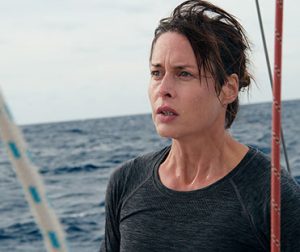 Upon the sighting of a sinking African refugee ship, solo sailor Rieke (Susanne Wolff) struggles with what course of action to take in director Wolfgang Fischer’s award-winning new release, “Styx.” Photo courtesy of Beta Cinema.[/caption]
Before long, Rieke’s hand is called when one of the refugees jumps ship and begins swimming toward her boat. The sickly, injured teenager (Gedion Odour Wekesa) struggles to reach her vessel, collapsing once he’s on deck. Rieke attends to his medical needs, hoping to stabilize his condition. And, as she awaits her patient to respond to treatment, she agonizes over officialdom’s quite obvious indifference to the plight of those in need of help.
However, even if she wanted to get more directly involved, there’s little that Rieke could realistically do to assist the other refugees. Her sailboat is far too small to accommodate all of the remaining passengers. And, considering this limitation, how could she possibly be the one to decide who gets saved and who doesn’t? Yet standing by and doing nothing is no answer, either. Rieke struggles to devise a solution, a problem that’s made more complicated when her patient regains consciousness and hysterically demands that she do something.
With no sign of the Coast Guard coming to the refugees’ aid, Rieke finally takes matters into her own hands. To say what she does would reveal too much, but suffice it to say that her truly innovative solution carries a tremendous cost for those involved. Nevertheless, impossible situations often call for improbable approaches to arrive at agreeable outcomes.
Such are the circumstances that characterize this morality play on the high seas. It’s a story driven by an array of ideas, reflected through the beliefs held by each of the principal players, both seen and unseen. And how the scenario plays out is directly dependent on those various notions, for they form the basis of the conscious creation process, the philosophy that maintains we manifest the reality we experience through the power of our thoughts, beliefs and intents.
This multifaceted saga most obviously involves the fate of the refugees, but there are other aspects of this tale that are just as important, even if not as plainly apparent. Where the primary story thread is concerned, there are multiple belief outlooks in play – those of the authorities, whose concern is questionable at best, those of Rieke, which are clearly driven by compassion, and those of the refugees, who have ostensibly created through these conditions a test of character for their would-be rescuers. Resolution will depend on which beliefs hold sway, a circumstance that fundamentally means multiple outcomes are ultimately possible, one of the core concepts that defines the functioning of the conscious creation process.
[caption id="attachment_10604" align="aligncenter" width="300"]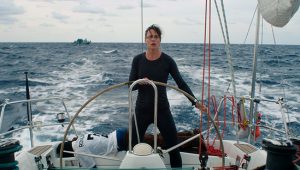 While attending to an injured African refugee (Gedion Odour Wekesa, laying on deck), physician and sailor Rieke (Susanne Wolff, standing) struggles to help those in need while awaiting help from a noticeably absent Coast Guard rescue party in “Styx.” Photo courtesy of Beta Cinema.[/caption]
Based on the conversations and events here, sadly, the attitudes of officialdom are quite telling, presumably reflective of the beliefs underlying them. The authorities are only too willing to assist an affluent White European woman but unconcerned in coming to the aid of a group of Black African refugees, women and children included. Politically correct rhetoric and pronouncements aside, the actions of officials here thus speak volumes about what their real views are.
But this question is not the only issue put to the test in this situation. Rieke’s personal character is challenged by what’s unfolding around her, forcing her into addressing issues like transformation, innovation, sacrifice and salvation, both for those she’s trying to help as well as for herself. How she views the events at hand will determine her responses, which, in turn, will further alter her beliefs and what subsequently stems from them. It’s a very fluid situation as she assesses the conditions and attempts to come up with solutions for attending to them. It not only calls forth traits she already possesses, but it also pushes the emergence of others, including some of which she may have previously been unaware, enabling her to evolve in ways she may not have envisioned when she embarked on her journey. She may find that surprising. But, then, given her projected destination – Ascension Island, a locale distinguished by its own exploration of the concept of evolution – her character-testing experience with the refugees is an ironically fitting reflection of that idea where she’s concerned personally.
This is particularly noteworthy where the question of responsibility is concerned. Rieke is already well versed in this subject given her profession. However, with what she’s up against on the high seas, this notion gets pushed to a new level. In this case, her actions veer into the territory of taking a stand to make a difference, forging a safety net essentially from scratch, despite the perilous potential consequences, in light of an apathetic bureaucracy that fails to live up to its own responsibility. In doing so, she needs to surpass the limitations at hand, drumming up new solutions to suit the unparalleled circumstances she now faces.
In addition to these considerations, the film is loaded with religious symbolism fitting to the story. First there’s the title, “Styx,” a reference to the river the deceased traversed in journeying to the Underworld in Greek mythology, an appropriate symbol for a life and death situation taking place on water. From the story itself, there’s Rieke’s experience with the storm, an event that serves as her own “dark night of the soul” experience, one in which she’s tested on the resilience of her faith in herself and in the assumed support of the Universe. And then there’s Rieke’s stated destination, “Ascension” Island, a place whose name reflects the transformative nature of her journey, a designation that metaphorically embodies the divine ascendancy attained by Christ after a life of salvation and compassion toward others, acts that Rieke unhesitatingly engages in herself when circumstances warrant. These narrative enhancements aren’t intended to evangelize audiences, but they add nuance to the story, strengthening the film’s prevailing viewpoints, ultimately making for a more powerful and more meaningful picture, one worthy of the introspection it was designed to engender.
Despite some occasional pacing issues, this fact-based, richly symbolic drama sizzles with quiet intensity against the backdrop of beautiful ocean scenery. The picture’s thoughtfully constructed script leaves viewers with much to ponder, some of it inspiring, some of it unsettling, but you’re sure not to come away from this one feeling neutral. Susanne Wolff’s superb portrayal of a woman pitted against the perils of nature and the difficulty of hard choices is riveting from start to finish. Director Wolfgang Fischer’s minimalist approach suits the story perfectly, especially when enlivened by its positively gorgeous cinematography. There’s a good chance that this consuming release will leave you drained, and incensed, but also, one would hope, uplifted.
“Styx” has primarily been screening on the film festival circuit, where it has garnered numerous awards and nominations. A limited theatrical release is currently under way as well; check your local film listings and the film’s web site for details. And, by the way, those who dislike reading subtitles should note that, even though this is a German-Austrian co-production, most of the dialogue is in English.
Our ability to take the interests of others into account is often seen as one of the traits that separates us from the animals. Self-interest is assumed to be substituted by selflessness. But, as this film shows, that may not always be the case; it’s a point on which we might well fail. Thankfully, though, there are those who believe in living up to that loftier aspiration, even when the going gets tough. That’s one of those qualities that defines us as humans – and that puts the “human” in “humanity.” Let’s hope we never lose sight of that.
Copyright © 2018-19, by Brent Marchant. All rights reserved.
Tuesday, March 19, 2019
Tune in for The Cinema Scribe


Monday, March 18, 2019
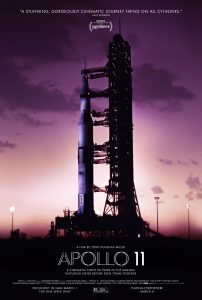
‘Apollo 11’ stirs the pride of accomplishment
“Apollo 11” (2019). Cast (Archive Footage): Neil Armstrong, Buzz Aldrin, Michael Collins, President Richard Nixon, President Lyndon Johnson, President John F. Kennedy, Walter Cronkite, Gene Kranz, Clifford E. Charlesworth, Charles Duke, Deke Slayton, Bruce McCandless II, Jim Lovell, Janet Armstrong. Director: Todd Douglas Miller. Web site. Trailer.
There was a time when the idea of reaching for the stars was a goal that was being pursued literally. It filled us with a pride, enthusiasm and a spirit of adventure. It’s also something we seem to have lost in the years since then. Thankfully, though, there’s a new documentary that reminds us of that time, reigniting those feelings, at least for the time we’re seated in the movie theater, the stirring account of a truly historic space flight, “Apollo 11.”
In 1961, when President John F. Kennedy proposed the goal of sending a man to the moon and safely returning him to the Earth, the nation zealously rallied behind this ambitious initiative in a way rarely seen in the country’s history. It was looked upon as an enormous challenge, one full of unknowns and risks. But it was embraced with tremendous enthusiasm and an irrepressible “can do” attitude. And, after years of effort, determination and sacrifice, that noble prospect was about to be realized in 1969 with the historic launch of the Apollo 11 mission.
In July of that year, astronauts Neil Armstrong, Buzz Aldrin and Michael Collins embarked on their epic journey, backed by an army of flight engineers and technical and support staff, along with the collective encouragement of the American people and the citizens of the world. The pre-launch fervor was palpable and infectious. The fate of the intrepid trio was on everyone’s mind, with countless spectators assembled at the Kennedy Space Center and in front of their TV sets to witness the much-anticipated start of this incredible expedition, arguably the most significant event in the history of mankind.
[caption id="attachment_10593" align="aligncenter" width="300"] As it lifts off from the Kennedy Space Center, the Saturn V rocket carrying the crew of the first manned mission to the moon soars into the heavens as seen in the excellent new documentary, “Apollo 11.” Photo courtesy of Neon.[/caption]
Amidst great fanfare and set against the backdrop of a pristine azure sky on July 16, the enormous Saturn V rocket carrying the Apollo 11 crew blasted off into the cosmos. Onlookers stared in awe as the craft soared into the heavens. Thus began the heroic saga that a generation had awaited, its fulfillment nearly at hand.
Over the next four days, Apollo 11 made its way toward a rendezvous with its destiny. On July 20, the Eagle lunar lander separated from the spacecraft’s command module for its descent to the moon, where astronauts Armstrong and Aldrin took humanity’s first steps onto the surface of another world, truly a giant leap for mankind.
This remarkable documentary chronicles the moment-by-moment events that made up this legendary mission. Relying only on footage and audio recordings from the time, the film shows viewers what happened exclusively through the accounts of witnesses to the saga. Some of these materials will no doubt appear familiar, but others present details less known or not seen before. But, as impressive as this film is, what’s equally extraordinary is what’s shown and not told – the boundless captivation associated with this grand undertaking.
“Apollo 11” depicts this venture as the great endeavor it truly was, one whose occurrence resulted from an unparalleled effort by those directly involved in it and those who lent their backing to see it happen. This collectively inspired and manifested event is, arguably, the pinnacle of mankind’s accomplishments. It’s also a shining example of the conscious creation process at work, the philosophy that maintains we materialize the reality we experience through the power of our thoughts, beliefs and intents. And, given the joint nature of this undertaking, it shows the enormous power of co-creation, one that shows what we as a species are capable of when we pool our resources, both materially and metaphysically.
[caption id="attachment_10594" align="aligncenter" width="300"]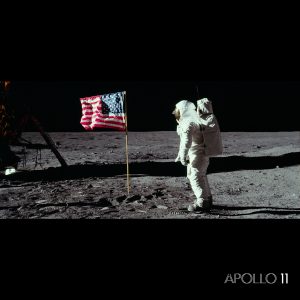 Standing on the surface of the moon, astronaut Neil Armstrong takes in the magnitude of this giant leap for mankind in the riveting new documentary, “Apollo 11.” Photo courtesy of Neon.[/caption]
Given the magnitude of this mission and the larger program of which it was a part, it’s indeed remarkable to see what was accomplished, especially in light of the limited and far less sophisticated technology of the time. However, what’s even more astonishing is that this tremendous attainment originated with an idea, an intangible notion far removed from the physical fulfillment of this sought-after goal. In fact, that this accomplishment was eventually realized at all is truly mind-blowing, but, then, that also demonstrates the tremendous power inherent in our beliefs. If we can harness them to achieve something as astounding as this, imagine what else we might use them for. Such a realization, if employed routinely and jointly, could be used to solve the world’s problems and create grand new conceptions, leading us to other accomplishments as enviable as any footstep taken on the lunar surface.
The effort was not without its potential pitfalls, though. One of the chief hurdles for program participants was to overcome any fears they might have. With many having been test pilots, they were generally accustomed to taking envelope-pushing risks. However, given that this program’s undertakings involved largely untried technology, there were ample uncertainties going in, as evidenced by the various failures and tragedies that occurred along the way. To maintain forward momentum, those incidents had to be seen for what they were – learning experiences from which mistakes were to be ascertained and eliminated for the future. But confirmed beliefs in personal courage were essential in paving the way for such an outlook, an essential ingredient in the run-up to the Apollo 11 mission.
[caption id="attachment_10595" align="aligncenter" width="300"]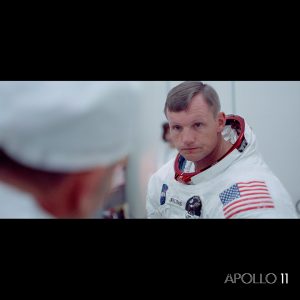 Astronaut Neil Armstrong prepares for his epic journey to the moon in the superb new documentary of this historic event, “Apollo 11.” Photo courtesy of Neon.[/caption]
Of course, overcoming fears means overcoming a limitation, something that everyone associated with the space program and the Apollo 11 mission needed to do on a regular basis on a number of fronts. Getting to the moon wasn’t going to happen by playing it safe or thinking conventionally; it took fresh ideas and the implementation of never-before-tried conceptions, both of which called for pushing the boundaries of imagination and belief formation to come up with the means to make this cherished dream possible.
As noted before, though, the most significant element that made this venture work was everyone pulling together as a team. Having a collective goal can work wonders in uniting people, bringing them together for a jointly shared vision. Landing a man on the moon was perhaps one of the greatest examples of such a grand pooling of efforts. For those of us old enough to remember that time, it was something in which we all took pride, the kind of mutual undertaking we haven’t seen since – and that we could use today. Initiatives like building a border wall just aren’t in the same league as something as audacious as planting ourselves on another world.
This expertly crafted account of this epic mission is quite a film. It effectively captures the look and feel not only of the event, but also of the times in which it took place, effectively evoking feelings that are both nostalgic and prideful. It reminds viewers of a time when the country truly was great and its people had something to believe in, words to the wise for those of us living in a time that’s a mere shadow of what it once was.
Inspiration can be a tremendous motivator. Let’s hope that the encouraging example set in “Apollo 11” helps to restore those feelings, emboldening us to think, live and believe audaciously once again. And, this time, maybe we’ll reach those stars after all.
Copyright © 2019, by Brent Marchant. All rights reserved.
Friday, March 15, 2019
This Week in Movies with Meaning
Reviews of "Captain Marvel," "Birds of Passage" ("Pájaros de verano") and "The Extraordinary Journey of Celeste Garcia" ("El viaje extraordinario de Celeste García") are all in the latest edition of Movies with Meaning on the web site of The Good Media Network, available by clicking here.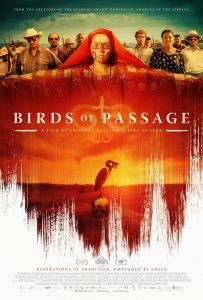


‘Captain Marvel’ celebrates coming into our own
“Captain Marvel” (2019). Cast: Brie Larson, Samuel L. Jackson, Ben Mendelsohn, Jude Law, Annette Bening, Lashana Lynch, Clark Gregg, Gemma Chan, Djimon Hounsou, Lee Pace, Akira Akbar, Azari Akbar, Kenneth Mitchell, Mckenna Grace, London Fuller, Reggie/Gonzo/Archie/Rizzo. Directors: Anna Boden and Ryan Fleck. Screenplay: Anna Boden, Ryan Fleck and Geneva Robertson-Dworet. Story: Nicole Perlman, Meg LeFauve, Anna Boden, Ryan Fleck and Geneva Robertson-Dworet. Web site. Trailer.
Many of us have likely had experiences where we walk around in a fog wondering who we really are. Whether it’s determining the nature of our calling or the scope of our talents or some other consideration, from time to time we’ve all gone through episodes like this where we feel we’re lost and unable to find our way. There may be clues to help point the way, but they may be vague, fragmented or seemingly unrelated to one another, offering little assistance and perhaps confusing matters even more. Our best hope in situations like this is that a clear path will reveal itself to set us on our way, enabling us to become who we were meant to be. Such is the case with a hero in training seeking to discover herself and live up to her full potential, the central thrust of the thrilling new action-adventure saga, “Captain Marvel.”
On the planet Hala, home world of a race of noble warriors known as the Kree, Starforce cadet Vers (Brie Larson) is troubled by her dreams. These nighttime visions feature people and events that are ostensibly unknown to her but that also possess a strangely vague familiarity. That’s particularly true when it comes to images of a charismatic middle-aged woman who makes recurrent appearances. But the lack of ready answers to this conundrum bothers Vers; as someone who’s quickly riled and easily motivated to get to the bottom of matters, she grows restless with the lack of definitive resolution.
[caption id="attachment_10574" align="aligncenter" width="300"] Superhero extraordinaire Captain Marvel (Brie Larson) sees her tremendous powers emerge thanks to a series of incredible events and profound introspection in the blockbuster new adventure, “Captain Marvel.” Photo by Film Frame © Marvel Studios, courtesy of Walt Disney Studios Motion Pictures USA.[/caption]
Unsure what to do, Vers turns to her mentor and commander, Yon-Rogg (Jude Law), for advice. He recommends that she work on controlling her emotions (before they control her), especially in light of the magnitude of her ample special powers, such as an ability to blast powerful proton ray bolts from her fists. So, to attain the self-control and peace of mind she seeks, he encourages her to take an audience with the Supreme Intelligence, a fusion of consciousness and A.I. that governs and advises the Kree, particularly in matters of discovering and understanding their true selves.
Vers agrees with her mentor’s suggestions and decides to seek the S.I.’s counsel. This protean, enigmatic energy-based entity communicates with its petitioners by assuming the form of the individual each of them subconsciously most admires. For Vers, the S.I. takes the shape of the woman from her dreams (Annette Bening), affirming for her that this stranger is apparently someone for whom she holds a deep-seeded respect. But for what purpose?
Vers comes away from the experience no more enlightened than when she went in, although the visit apparently triggers enhanced recall of her repressed memories, which obviously must be important to her, even if she can’t determine their significance or pinpoint the source of their origin. She attempts to set the issue aside as she prepares for her next military assignment, a rescue mission to retrieve a Kree spy captured by the Skrulls, a race of shape-shifters with whom her people are at war. However, while carrying out her duties, Vers is captured by the Skrulls’ commander, Talos (Ben Mendelsohn). But, as someone is not one easily detained, the resourceful cadet makes her getaway when an opportunity presents itself, fleeing in an escape pod that sends her barreling toward a mysterious planet designated C-53, otherwise known as Earth.
[caption id="attachment_10575" align="aligncenter" width="300"] Starforce Leader Yon-Rogg (Jude Law) provides much-needed guidance to a wary cadet in the exciting new superhero release, “Captain Marvel.” Photo by Film Frame © Marvel Studios, courtesy of Walt Disney Studios Motion Pictures USA.[/caption]
Separated from her peers in a place called Los Angeles in the year 1995, Vers desperately seeks to reunite with her fellow warriors. But, given their faraway location and the “primitive” communications technology of the planet on which she now finds herself, arranging a rendezvous takes some doing. And, considering that the cadet’s less-than-discreet arrival has drawn considerable attention from authorities, Vers scrambles to establish a low profile, not an easy task with both government officials and Skrull insurgents in hot pursuit.
In the midst of the chaos, Vers encounters Nick Fury (Samuel L. Jackson), an agent of a clandestine government organization known as S.H.I.E.L.D. (Strategic Homeland Intervention, Enforcement and Logistics Division). Given the extraordinary events unfolding around them, Fury is unexpectedly drawn into an investigation that’s far above his pay grade. Nevertheless, he’s so intrigued that he seeks to assist Vers in whatever way he can. Drawing upon his high-level clearances, Fury helps Vers gain access to secret government facilities where the mystery behind her dream images is slowly revealed.
“Vers,” as it turns out, is a variation on the name she went by when she lived the life of an earthly human, Carol Danvers, a test pilot who was killed in a crash six years earlier. What’s more, upon further investigation, Vers/Carol learns that the mysterious woman from her dreams was Dr. Wendy Lawson, a Kree aeronautics scientist also killed in a crash, who came to Earth in human form to secretly work on developing technology that she believed would end the war in which her people were bitterly embroiled. But, as significant as those discoveries are, they pale in comparison to the biggest one of all – the reason why Dr. Lawson was working on her technology in the first place, a revelation that makes clear much of what Vers has long believed about her world and her people is far from the truth.
[caption id="attachment_10576" align="aligncenter" width="300"] Starforce cadet Vers (Brie Larson, left) and S.H.I.E.L.D. agent Nick Fury (Samuel L. Jackson, right) embark on an incredible earthly adventure in the year 1995 in the spellbinding new superhero release, “Captain Marvel.” Photo by Film Frame © Marvel Studios, courtesy of Walt Disney Studios Motion Pictures USA.[/caption]
Armed with this information, Vers/Carol commits to seeing through Dr. Lawson’s goal. She joins forces with her onetime best friend, fellow test pilot Maria Rambeau (Lashana Lynch), along with Fury and several other unexpected allies (including Dr. Lawson’s specially gifted cat, Goose (Reggie/Gonzo/Archie/Rizzo)), to carry out this mission. It’s an undertaking that ushers forth an array of unexpected new developments for two worlds at war. But, on a personal level, it also brings about significant changes in the protagonist herself, empowering new attributes that are truly something to marvel at.
The incredible journey of this remarkable woman is truly something to see, not only in terms of the extraordinary nature of the circumstances, but also with regard to the personal transformation she undergoes. Her true self emerges from her inner depths, surfacing to take its rightful place in her world. It’s a process that calls upon Vers to take an introspective look at who she really is, an endeavor requiring her to grasp the beliefs that define her character. Understanding those notions is fundamentally important, for they shape the reality of who she is and what she experiences, cornerstone principles of the conscious creation process, the philosophy that maintains we tap into our thoughts, beliefs and intents to manifest the existence around us.
[caption id="attachment_10577" align="aligncenter" width="200"] Skrull commander Talos (Ben Mendelsohn) takes on his worthy enemies, the Kree, in the self-titled origin story of superhero “Captain Marvel.” Photo by Chuck Zlotnick © Marvel Studios, courtesy of Walt Disney Studios Motion Pictures USA.[/caption]
During her time on Hala, Vers has only a vague sense of who she is. It bothers her, too, which is why she so earnestly seeks to create the conditions that will eliminate that uncertainty. This explains her experiences with the Supreme Intelligence, her repressed memory recall and her eventual journey to Earth, all of which set up the opportunity for the truth to emerge – and for her true nature to come out.
This process involves not only a revelatory understanding of her present circumstances; it also requires her getting in touch with a past of which she knows virtually nothing. It calls for her to get in touch with experiences deeply buried in another time, not only the events themselves, but also her beliefs about them. Accessing these feelings provides valuable insights into her younger self, first as a child (London Fuller) and then as an adolescent (Mckenna Grace). Vers/Carol sees who she was, an adventurous spitfire who was often discouraged from partaking in activities in which girls weren’t supposed to engage, an attitude routinely promoted by authority figures, such as her father (Kenneth Mitchell).
[caption id="attachment_10578" align="aligncenter" width="300"] Test pilot Carol Danvers (Brie Larson, right) and her best friend, Maria Rambeau (Lashana Lynch, left), seek to soar to new heights in the thrilling new action-adventure saga, “Captain Marvel.” Photo by Film Frame © Marvel Studios, courtesy of Walt Disney Studios Motion Pictures USA.[/caption]
As discouraging as these positions were, though, young Carol refused to let them hold her back. She believed in herself and her abilities and didn’t hesitate to act upon them in materializing the existence she experienced. It’s what enabled her to become a test pilot, for example. And, in a less than conscious way, it’s also what allowed her to become a Starforce cadet, even though she wasn’t fully aware of what she was getting herself into. But, as difficult as this path was, it’s also what brought forth the ultimate expression of her true self as a seeker of peace and a protector of the downtrodden, her emergence as a superhero, Captain Marvel.
Captain Marvel’s accomplishments go beyond her feats of heroics; they reveal her as a character who can do more than just beat up the bad guys. They also reveal her as someone who is a shining beacon of compassion, one who cares profoundly for the needs and well-being of others, particularly those who are unable to adequately fend for themselves. But, even more importantly, they show her as an example of someone who deeply inspires others, particularly those of her gender, such as Maria’s preteen daughter Monica (Akira Akbar), a youngster cut from the same cloth as her beloved Auntie Carol.
[caption id="attachment_10579" align="aligncenter" width="300"] Plucky feline Goose (Reggie/Gonzo/Archie/Rizzo) proves to be quite a formidable ally and adversary in the superhero action-adventure, “Captain Marvel.” Photo by Chuck Zlotnick © Marvel Studios, courtesy of Walt Disney Studios Motion Pictures USA.[/caption]
All of these attributes are reflective of the conscious creation principle known as value fulfillment, the concept that we live our lives as our best, truest selves for the betterment of ourselves and the world around us. Vers/Carol/Captain Marvel has much to offer us – and herself – by allowing her innate qualities to come to the surface. This aspect of the protagonist’s story is perhaps as important as anything she does to vanquish the evildoers, revealing what truly makes a superhero “super.”
Hands down, “Captain Marvel” is the best superhero movie I’ve seen in quite some time. It’s excellent in every regard – well written and well acted, without an overreliance on action or special effects gimmickry to carry the story. Oscar-winning actress Brie Larson, while best known for her dramatic turns in films like “Short Term 12” (2013) and “Room” (2015), seamlessly steps into the role of superhero, capably supported by a cast of colorful supporting players who add humor, intrigue and warmth to a well-constructed narrative. Frankly, I don’t care how well or how poorly this offering fits into the larger Marvel Comics Universe mythology or the overall marketing strategy of the franchise; I judge a film on its individual merits, and, on this score, this picture succeeds brilliantly on every front. This release does what a movie of this genre should – entertain, inspire and leave viewers feel as though they’ve genuinely gotten their money’s worth from the theatrical experience.
[caption id="attachment_10580" align="aligncenter" width="200"] Former test pilot Carol Danvers-turned Starforce cadet Vers emerges as a formidable superhero in the self-titled origin story of “Captain Marvel.” Photo by Chuck Zlotnick © Marvel Studios, courtesy of Walt Disney Studios Motion Pictures USA.[/caption]
Breaking through the barriers that keep us from seeing, understanding and appreciating the truth about ourselves can be a genuinely fulfilling experience. It allows us to assess and draw upon our own unique set of personal capabilities, skills and talents that have the potential to do a lot of good in the world – and beyond. The example offered here provides us with a tremendous source of inspiration to see this through – and to attain goals that are super in every sense of the word.
Copyright © 2019, by Brent Marchant. All rights reserved.