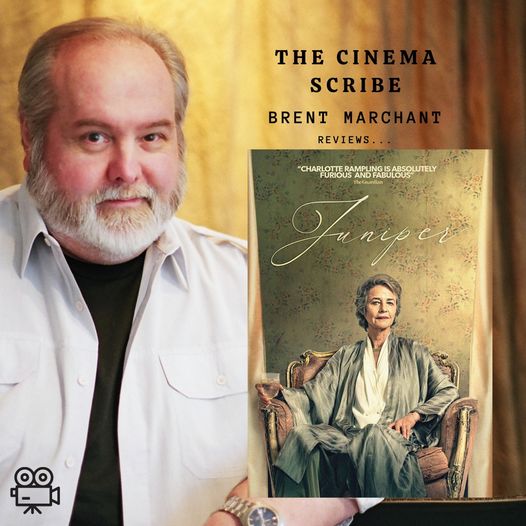
Tune in for the latest Cinema Scribe segment on Bring Me 2 Life Radio, beginning Tuesday April 25, available by clicking here. You can also catch it later on demand on Spreaker, Spotify, Apple, iHeartRadio, Google Podcasts, Castbox, Deezer, Podchaser and Jiosaavn.
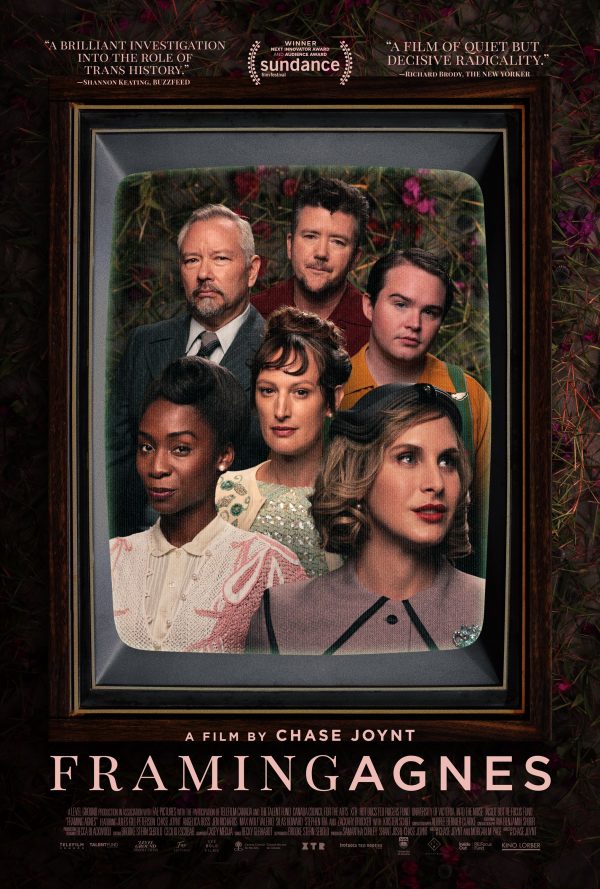
“Framing Agnes” (2022). Cast: Chase Joynt, Zackary Drucker, Jen Richards, Angelica Ross, Silas Howard, Max Valerio, Stephen Ira, Jules Gill-Peterson. Archive Footage: Christine Jorgensen, Carmen Carrera, Laverne Cox, Katie Couric, Joan Rivers, Mike Wallace, Dr. Harold Garfinkel. Director: Chase Joynt. Screenplay: Chase Joynt and Morgan M. Page. Web site. Trailer.
Consequently, those who have sought to pursue their unique identities as members of transgender society have largely received short shrift. To be sure, their inclusion in LGB society may have helped to promote tolerance, acceptance and the promotion of civil rights for these individuals, but has it done the same for encouraging understanding of what trans persons want, who they are and what their community stands for?
Some would contend (and rightly so) that many in transgender society have only started to come above board in their own right over the past few years, and their recognition as a separate, distinct community is a comparatively recent development. However, it could also be argued that this may never have happened were it not for the pioneering (albeit quietly understated) efforts of transgender community members and their supporters who have sought to validate their existence, culture and identity. Those courageous individuals laid the foundation to make this possible, and the purpose behind this film is to recognize those efforts in helping to bring these advances into being.
“Framing Agnes” is a bold, innovative attempt to both chronicle the history of the trans community and to depict what its members experienced personally as its and their stories unfolded. This is accomplished through an inventive collection of archive footage of an early researcher in this field, re-creations of interviews with research subjects (portrayed by a cast of all trans performers), observations of those performers regarding their views on the present-day status of their community and the insights of a noted trans writer/historian. This compilation makes for an enlightening, eye-opening watch, one that sheds valuable historical and contemporary light on an often-misunderstood segment of society.
Agnes (Zackary Drucker, right), a pioneer in the transgender movement, prepares to participate in the re-creation of a UCLA research study interview presented in the form of a simulated 1960s-style TV talk show with a fictional host (Chase Joynt, left) standing in as a surrogate for Dr. Harold Garfinkel, the leader of the university investigation, as seen in the engaging new documentary, “Framing Agnes.” Photo courtesy of Kino Lorber.
That misunderstanding most likely began in 1953, when American Christine Jorgensen (1926-1989) returned home from Denmark after undergoing what was one of the first successful gender reassignment surgeries. The former George Jorgensen had hoped to discreetly slip back into the US and live a quiet life. However, when she arrived at New York’s LaGuardia Airport, she was met with a throng of media hounds who paid her more attention than the Danish royal family, who were aboard the same flight. Jorgensen immediately became a celebrity, but her story was treated with titillating sensationalism, limiting her ability to be herself and to help accurately educate the public about the transition she had undergone. Because of this, she was unable to earn a living by doing anything other than making public appearances, a path that eventually led her to become a singer, stage actress and night club entertainer. She also became the de facto poster child for her people, unwittingly setting the standard that much of society drew upon in looking at trans community.
While Jorgensen helped put the transgender community in the public eye, her experience was anything but typical of what she and others like her had hoped would come out of it. The sensationalistic treatment accorded her became what the public expected when it came to writing and reporting on this subject. But, for many of those who were considering the transition option at that time, this is not at all what they wanted. They saw these prospective experiences as private matters to be handled with tact and discretion. They saw themselves in need of undergoing treatment for what they viewed as “a mistake of nature,” not as an invitation to be treated like a carnival side show act. However, with the risk of such cheap, tawdry exploitation always hanging over them, they wanted no part of it and didn’t always know where to turn – and to whom – to get genuinely meaningful guidance.
This situation caught the attention of researchers at UCLA in the early 1960s. Led by Dr. Harold Garfinkel, these investigators wanted to learn more about gender reassignment prospects, including their reasons for pursuing this treatment and their feelings about living life as transgender individuals. And so studies were launched to interview subjects on this topic and to help them get the assistance they needed to realize their goals, such as obtaining access to hormone therapy treatments in advance of any surgeries that might have been performed.
The findings of those studies were compiled, but they essentially disappeared for many years. However, when transgender community historians like Jules Gill-Peterson began searching for these materials, not only did they find interview transcripts, but they discovered a wealth of documents and other evidence of these studies, most of it perfectly preserved. Almost overnight, an extensive history of the early days of transgender research surfaced, opening a door to investigations of the subject that had been thought lost for good.
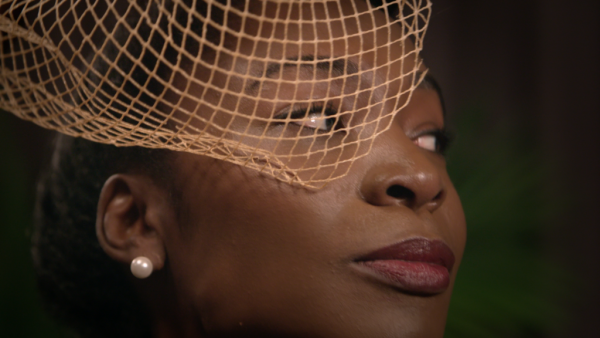
Georgia (Angelica Ross), an African-American pioneer in the transgender movement, discusses the difficulty of managing dual personal challenges in mid-20th Century America in writer-director Chase Joynt’s award-winning documentary, “Framing Agnes,” now available for streaming online and home media. Photo courtesy of Kino Lorber.
So who were these interview subjects, and what did they bring to the research? That’s much of what this film focuses on. It introduces viewers to six individuals who took part in the study through re-creations of their interviews. But, instead of presenting these conversations in a clinical setting, they’re staged through a simulated period piece black-and-white TV talk show (a la The Mike Wallace Interview) with the program’s host (Chase Joynt) serving as a surrogate for study leader Harold Garfinkel. The host questions the subjects about an array of topics, including their experiences prior to and after their transitions, the challenges they faced throughout this process, what was behind their decisions to move forward with the change, how these events have affected their lives and feelings about themselves, and what they’ve experienced in the wake of their transformations.
As the movie’s title suggests, the principal interview subject is a trans woman named Agnes (Zackary Drucker), whose presence pops up repeatedly in the research papers. As the story goes, Agnes was anxious to gain access to the hormone treatments and surgical practices that are integral to the transition process, neither of which were readily available at the time for a variety of reasons. Agnes was so determined, in fact, that she allegedly lied her way into obtaining the procedures she needed. However, receiving these treatments is essentially all she wanted out of this, the means to get on with living the kind of life she had envisioned for herself. And this reasoning is believed to account for her virtual disappearance after her transformation, almost becoming a sort of urban legend within the transgender community. Nevertheless, the interview transcripts show that she was a real individual and that she shared her story as part of the study, an experience that proved quite revelatory in the annals of trans community history.
Agnes was not alone, though. There was also Barbara (Jen Richards), who spoke candidly about what she underwent both before and after her transition, particularly in terms of society’s rigid gender role expectations for both trans individuals and those who willingly accepted their birth genders; and Georgia (Angelica Ross), an African-American trans woman who spoke about what it was like for a person of color to go through this at a time when she and others like her were also wrestling with the challenges of the Civil Rights Movement; and Denny (Silas Howard), who, like many individuals in the early days of the trans movement, sought to have his community’s own identity recognized in itself and not just as a specialized adjunct arm of the gay community, a challenge that continued long after the trans movement’s initial establishment; and Henry (Max Valerio), a trans male who sought to establish his identity at middle age; and Jimmy (Stephen Ira), a transgender teen from rural America whose exceptionally open-minded parents (for the time) arranged for him to see specialists to help him explore transition options when most of their peers wouldn’t even consider talking about the possibility, particularly where their children were concerned.
These stories reveal a rich, eye-opening tapestry of conditions and circumstances that the pioneers in the transgender community experienced as a result of their racial backgrounds, chronological ages, motivations for undergoing the process, personal backgrounds and various other considerations. Indeed, the uncovering of their experiences through the interview sequences clearly illustrates that these individuals were far different from what many in society thought about them then (and, to a certain extent, even now). Misconceptions about what supposedly characterized the members of this community are largely swept away. Revelations about the everyday life dealings that they, like other members of society had to contend with, rise to the surface, showing that their lives truly weren’t as inherently “foreign” as many of the uneducated might have thought they were. And the notion that all trans individuals were members of an intrinsically monolithic community with a pervasively uniform mindset proved to be a myth that wasn’t supported by this evidence.
Agnes (Zackary Drucker), a pioneer in the transgender movement, is said to have used whatever means were available to her to obtain access to the scarce treatment and surgical procedures for facilitating her transition, as chronicled in the new documentary, “Framing Agnes.” Photo courtesy of Kino Lorber.
The viewpoints of the actors portraying these figures shed additional light on these matters. Through contemporary interviews with the actors when out of character, viewers learn what they think about the present-day state of the trans community, particularly the ways it has changed since the 1950s and the ways in which it’s still the same, especially when it comes to how those on the outside continue to view it. They, like many community activists, discuss how trans individuals want to be viewed for the individuals that they are and not just as a specialized subset of the larger sexual minority with which they’ve traditionally been associated. These views are further backed up by those of researcher Gill-Peterson, who points out that the widely held fallacies of those who are unfamiliar with the community are no longer true – and never really were to begin with.
The various components that have gone into making up the content of this film may seem like an unusual cinematic combination. Yet, when one considers the information and impressions that they impart collectively, they paint a picture that provides a clearly defined, decidedly different view of what has long been erroneously held by much of society at large. In that way, this documentary makes a powerful statement aimed at changing the hearts and minds about what many of us believe to be true about the nature of a unique community that’s simultaneously different from, and yet also very much like, the rest of the overall society of which it is a part.
The key word in that last sentence is “believe,” for it has the power to define the parameters of what supposedly delineates the character of an entire segment of society, both among those looking at it from the outside, as well as among those on the inside looking out. Beliefs of any kind can indeed become entrenched, thanks to their innate persistence and power, both of which eventually possess the means and momentum to set the limits, impressions and character of the subject matter in question, including something as large as an entire segment of society, especially when enough of us buy into their seemingly inherent validity. Changing these beliefs is always possible, but their mutability can be difficult to adjust once they firmly take root, as the experience and history of the trans community so clearly illustrate.
Such outcomes are the product of the conscious creation process, the philosophy that maintains these intangible resources shape the world around us. Many of us may not be aware of this school of thought, but the output that comes from this is all around us to see, and its entrenchment can become so imbedded that it’s hard to envision things being any other way. And, in the case of society’s outlooks on the nature of the trans community, this has often been just as true among those within it as it was among those on the outside. Insiders may not have wanted this to be the case, but, when they looked around and saw what was surrounding them, it may have often been difficult for them to think otherwise.
That’s why the dissemination of the findings from the UCLA study and this film are so important. Both shine a bright light on the long-held misconceptions about the trans community and how these newly revealed contrary views have been part of its nature and culture from the beginning, even if not widely known. This information presents revelations that could act as the seeds of new beliefs, notions planted in the collective consciousness that yield new ideas among both trans individuals and those on the outside. And we all know what can happen when such new beliefs take root and become established.
Georgia (Angelica Ross), an African-American pioneer in the transgender movement, is said to often felt isolated on multiple fronts when undergoing her personal transformation, as examined in director Chase Joynt’s fascinating new documentary, “Framing Agnes.” Photo courtesy of Kino Lorber.
The emergence of new views of the transgender community in recent years has done a lot to help distinguish it as its own segment of society, even as one separate from the LGB community from which it has long been associated. That’s important – and empowering – to a group of individuals who have sought to overcome their fears and limitations and seek recognition for the intrinsic inclusivity to which they’re entitled. And this film does much to bolster the community’s optimism and enthusiasm on this front, as well as its efforts to support initiatives to help bring about the fulfillment of its objectives. To be sure, the examples offered up here can go a long way toward shifting perspectives and what may ultimately stem from them.
Anyone who believes that he/she has a good handle on understanding a community’s culture and sensibilities is bound to have his/her eyes thrust wide open by this thoughtful, inventive documentary. In creating this offering, the filmmaker seeks to enliven the little-known life experiences of mid-20th Century transgender pioneers (like the title character) and how they blazed trails for those who followed, particularly in terms of being themselves, questioning society’s rigid gender role expectations, and managing their transitions in conjunction with other life challenges, such as racial equality. The mix of narrative components used for exploring these matters makes for an intriguing, enlightening watch, one that moves along at a refreshingly brisk pace thanks to its astute observations and economical 1:15.00 runtime. To be honest, though, as informative as the talk show sequences are, the use of this storytelling device feels somewhat contrived (if not more than a little gimmicky), despite the depth of the revelations to come out of them. Still, there’s ample food for thought packed into this 2022 Sundance Film Festival NEXT Innovator Award winner, much of it illuminating about both this diverse community and the notion of gender itself, regardless of one’s personal leanings.
It’s often been said that one should not judge a book by its cover. That’s wisdom we should all heed, especially when it comes to judging others and our impressions of them. As this documentary so effectively illustrates, there’s a good chance we might well get it wrong, and that misconception could easily persist for a long time, causing who knows how much damage in the process. Thankfully, this film shows how we can overcome that pitfall and approach our assessments with an enlightened new outlook. And, if we were all to employ that notion, there’s no telling what kind of transformation could result.
Tune in for the latest Cinema Scribe segment on Bring Me 2 Life Radio, beginning Tuesday April 11, available by clicking here. You can also catch it later on demand on Spreaker, Spotify, Apple, iHeartRadio, Google Podcasts, Castbox, Deezer, Podchaser and Jiosaavn.
Reviews of "Juniper," "A Life's Work" and "Black Box" are all in the latest Movies with Meaning post on the web site of The Good Media Network, available by clicking here.
“Juniper” (2021 production, 2023 release). Cast: Charlotte Rampling, George Ferrier, Marton Csokas, Edith Poor, Cameron Carter-Chan, Tane Rolfe, Carlos Muller. Director: Matthew J. Saville. Screenplay: Matthew J. Saville. Web site. Trailer.
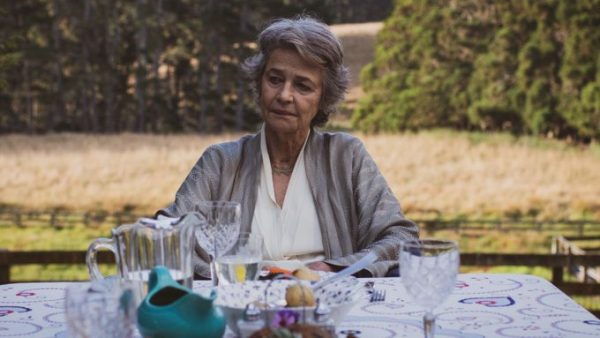
With summer vacation approaching, though, Robert is forced into addressing having his son around for the next few months. However, as Sam prepares to leave school and return home to his family’s farm in rural New Zealand, he learns that there’s going to be an unexpected visitor staying with him and his dad: His aging grandmother, Ruth (Charlotte Rampling), a prickly, salty-tongued former war correspondent. Having suffered a severe broken leg that has seriously hampered her mobility, she needs intense care as she convalesces, so she travels to New Zealand from her home in England to recover.
To say that Ruth is not easy to get along with is indeed an understatement. She’s fiercely independent, swears like a sailor and drinks like a fish, consuming nearly a full bottle of gin daily. She’s cooperative only when she needs to be, and she’s often a handful for her nurse, Sarah (Edith Poor), who provides (or attempts to provide) full-time care. Ruth is not especially thrilled about these arrangements, but, given her health, she doesn’t have much of a choice. She goes along with it, but she doesn’t hesitate to make her displeasure known or to bark out orders when she wants something.
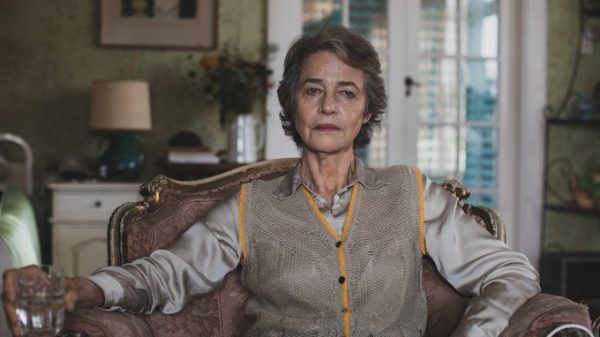
Retired war correspondent Ruth Stevenson (Charlotte Rampling) spends a summer at her son’s family farm in rural New Zealand as she convalesces from a severe broken leg, a prospect about which she has mixed feelings, as seen in writer-director Matthew J. Saville’s debut feature, “Juniper,” now available for streaming online and home media. Photo courtesy of Greenwich Entertainment.
What’s most problematic about these circumstances is that Sam barely knows his grandmother. Even her own son, Robert, doesn’t know or understand her well. Sam and Robert essentially have arm’s-length relationships with Ruth, compounding the emotional distance that already exists between father and son. And no sooner do the three of them settle in for the summer when Robert drops a bombshell: He’s leaving to go to England to settle his mother’s financial affairs, a task that he claims is necessary for her fiscal well-being, not to mention that of his own household. (Despite the family’s sprawling family farm, it’s suggested that the Stevenson family’s finances aren’t in the greatest shape and that, with Ruth’s advancing age and no other apparent heirs on the horizon, Robert stands to inherit what seems to be a sizable sum.) However, as Robert makes this trip, Sam is going to be left in Ruth’s company, with only Sarah present to serve as a buffer between them. Sam’s also expected to assist with Ruth’s care, something that he strongly resists but that both Robert and Sarah insist he become involved in.
Given their respective well-established personalities, Sam and Ruth get off to a rough start. He’s put off by her stern demands, especially when she’s left alone in his care when Sarah handles tasks like running errands. He’s also somewhat appalled by her confrontative outbursts, both with him and with well-meaning others who appear to have her best interests at heart. But, in response, Sam doesn’t hesitate to make his discontent known, either, speaking his mind when he believes Ruth goes too far.
Ironically, however, Ruth develops a liking for her grandson’s feisty nature. She sees a kindred spirit in him. And, over time, Sam recognizes that same trait in Ruth. Indeed, they are a lot alike. Neither of them is willing to hold their tongue. They both like to imbibe. And they share a fondness for the irreverent. As unlikely as it may seem, they forge a bond with one another, a relationship that benefits each of them, despite the unconventional nature of their connection, particularly for a grandmother and grandson.
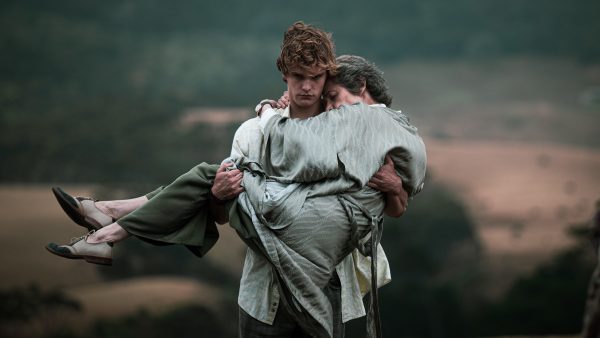
The unconventional bond between 17-year-old grandson Sam Stevenson (George Ferrier, standing) and his grandmother, Ruth (Charlotte Rampling, carried), helps both of them during a challenging summer together, as seen in the engaging new comedy-drama, “Juniper.” Photo courtesy of Celsius Entertainment.
In particular, Ruth helps Sam find himself, especially in terms of bolstering his confidence in speaking his mind and being himself. At the same time, Sam helps his grandmother recapture the spirit of her youth, a potent and perfect tonic for her at a time when her health is taking its toll. They each get something out of their connection when they need it most.
So where will all this lead? That, of course, remains to be seen. The implications of these developments turn far-reaching, especially as events take dramatic turns and Robert makes his return from England. But, no matter what happens, it becomes apparent that everyone benefits from what has occurred over the course of the summer as fall’s chill approaches.
However, this is not to suggest that all is lost. On some level, those who share Sam’s circumstances are bound to believe that there must be others like them out there somewhere, kindreds with whom they can bond, share confidences and find common ground. The key is to seek them out, perhaps putting feelers out into the Universe to draw those individuals into one’s realm of being. Of course, if that’s to happen, it takes believing in the possibility, and that’s crucial given the role that our beliefs play in manifesting the reality we experience. Such is what happens when we make use of the conscious creation process (or, in this case, perhaps more appropriately known by its alternate name, the law of attraction), the philosophy that maintains we shape our existence through the power of our thoughts, beliefs and intents. It’s unclear whether Sam has ever heard of this school of thought, but, considering the unconventional views he holds, it’s entirely possible that he might be willing to embrace it. And, in light of how events play out in this story, one could argue that he has a knack for it, too.
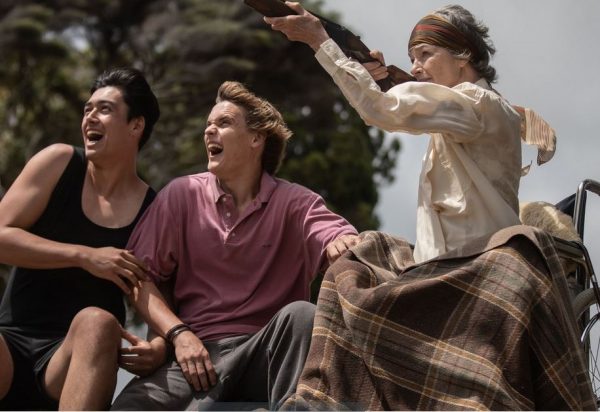
Former war correspondent Ruth Stevenson (Charlotte Rampling, right) shows her grandson, Sam (George Ferrier, center), and his friend, James (Tane Rolfe, left), how to properly handle a rifle for skeet shooting, in writer-director Matthew J. Saville’s debut feature, “Juniper.” Photo courtesy of Greenwich Entertainment.
If nothing else, Ruth’s appearance in Sam’s world would strongly suggest this possibility. Even though they barely know one another upon her arrival, and despite the rocky start to their relationship, they find links that connect them. These bonds may not be the same as what one finds in a typical grandmother-grandson relationship, but the duo is definitely on the same wavelength for the most part. Both are radicals. Both are nonconformists. Both don’t care much for what others think of their views. And they both believe in playing by their own rules, particularly when it comes to enjoying life. One of the best examples of this comes when Ruth asks Sam if he has any friends, to which he says yes but adds that they’re mostly a rowdy, drunken lot, a response to which Ruth observes, “Sounds like my kind of people.”
Of course, despite the qualities they have in common, there are differences, too. Even though Ruth may be a little rough around the edges, she nevertheless insists on a certain degree of orderliness in her life, and she makes sure to convey these notions to Sam. For instance, she insists on buying him new clothes to give him a cleaner, neater appearance (an idea she sells by noting that the new look will give him better luck in attracting girls). Likewise, she’s miffed that the garden surrounding the farmhouse has been allowed to fall into disarray, so she talks Sam and his friends into making it more presentable (of course, she does this by bribing them with the promise of alcohol for their efforts). Some might question the wisdom of such practices, since they come with qualifiers (and somewhat questionable ones at that) to get them accomplished. But, if the tasks at hand get done and their importance sinks in for future reference, can she realistically be faulted for imparting these lessons in this way? The wisdom behind the carrot and the stick certainly springs to mind here, and it would appear to have a definite value when it comes to shaping new beliefs – and outcomes – going forward.
Sam is not the only beneficiary of this relationship, either. As Ruth witnesses his youthful exuberance, she realizes she can learn from that as well. Indeed, as someone who has led a challenging personal life, as well as a professional one in which she has seen firsthand the atrocities that humanity is capable of, the last thing she likely wants in her remaining days is to be saddled with health issues, a limited existence and condescending coddling. But, in watching how her grandson lives his life – and how he gradually goes out of his way to include her in it – she gets back some of that joy of living, partaking in fun, fulfilling activities that provide her with some of the sprightly pleasure that she relished in her younger days. It helps her feel more alive than she has in quite some time. And, with the flame of one’s life flickering ever less brightly, such an attitude can at least help to keep it burning longer than anticipated, providing much-needed light amidst the encroaching darkness.
Through all this, what we have here is an impressive act of co-creation, an inspiring, uplifting exercise in collaboration in which both protagonists participate. By pooling their energetic and belief resources, they manifest something beautiful and beneficial, a scenario in which circumstances help them attain what they were looking for and needed most. We’re all capable of doing the same when we work together harmoniously toward common ends. And, even if those ends may be a little out of the mainstream, as in this case, that doesn’t mean their materialization is any less likely when we put our minds to it.
As an unabashed tippler, former war correspondent Ruth Stevenson (Charlotte Rampling) enjoys her daily dose of a bottle of gin in the new comedy-drama from New Zealand, “Juniper.” Photo courtesy of Greenwich Entertainment.
As “Juniper” so aptly illustrates, individuals seeking to sort out their personal challenges sometimes need to work together to achieve meaningful results. What’s more, strange as it may seem, these situations often call for the formation of unlikely pairings to attain desired outcomes, as writer-director Matthew J. Saville’s debut feature so eloquently demonstrates. In many ways, the relationship between Sam and Ruth is not the kind of connection that one would expect to develop under circumstances like these, a development that gives this story a fresh take on intergenerational relations. At the same time, however, the film’s occasional reliance on a somewhat predictable narrative line and its failure to allow its innate strength to come through as fully as it might have (particularly where the revelation of motivations is concerned) is a little disappointing. Nevertheless, those shortcomings are made up for by the picture’s gorgeous cinematography of rural New Zealand, as well as the excellent break-out performance of Ferrier and the positively outstanding portrayal of Rampling, who handily turns in some of the best work of her career here. “Juniper” may not fully live up to everything it could have been, but it has a lot going for it that’s well worthwhile, especially in its ability to move audience members as the story plays out. Enjoy what makes this moving comedy-drama work, and be sure to keep those hankies handy.
“Black Box” (“Boîte noire”) (2021 production, 2022 release). Cast: Pierre Niney, Lou de Laâge, André Dussollier, Sébastein Pouderoux, Olivier Rabourdin, Guillaume Marquet, Mehdi Djaad, Aurélien Recoing, Grégori Derangère, Anne Azoulay, Marie Dompnier, Octave Bossuet. Director: Yann Gozlan. Screenplay: Nicolas Bouvet, Yann Gozlan, Jérémie Guez and Simon Moutairou. Web site. Trailer.
We all have that little voice in our heads that we call “intuition.” We know it’s there, and sometimes its messages can be quite insistent. But how often do we actually listen to what it has to say? We frequently treat it dismissively, not taking it seriously. Since it lacks a certain tangibility, and because the content of its dispatches often defies logic and rationality, we tend to cast it aside, often at our own peril. However, there are ways to give it more credibility, such as when its messages are backed by physical evidence that bears out its contentions. Suddenly those once-dubious purely intangible notions take on a greater degree of plausibility, ideas genuinely worth heeding. Such is the experience of a gifted listener in the new French thriller, “Black Box” (“Boîte noire”).
Government aviation technician Mathieu Vasseur (Pierre Niney) has established quite a name for himself as a crash investigator. Thanks to his keen sense of hearing, he often uncovers evidence of the causes of these disasters that his peers overlook. That’s because this critical evidence is often auditory in nature, taking the firm of revealing sounds that are deeply buried within the aircrafts’ cockpit voice recorders (CVRs, devices more commonly called the planes’ “black boxes”) that are recovered after the crashes. Mathieu has become so proficient at this that he’s often looked upon as “the go-to guy” when these incidents occur.
However, when a plane on a flight from Dubai to Paris unexpectedly (and inexplicably) crashes, Mathieu is excluded from the investigation team. Mathieu is mystified by the decision, which is handed down to him by his supervisor, Victor Pollock (Olivier Rabourdin), who generally treats his associate as his right-hand man. Something doesn’t add up here, and Mathieu wants to know why the investigation is proceeding without his expertise.
In the ensuing days, circumstances take additional unexpected turns. Mathieu’s supervisor mysteriously disappears, a development that the aviation agency keeps quiet. Meanwhile, public pressure to find the cause of the crash grows, fueled by media speculation, particularly since there was no apparent reason for its downing. So what really happened?
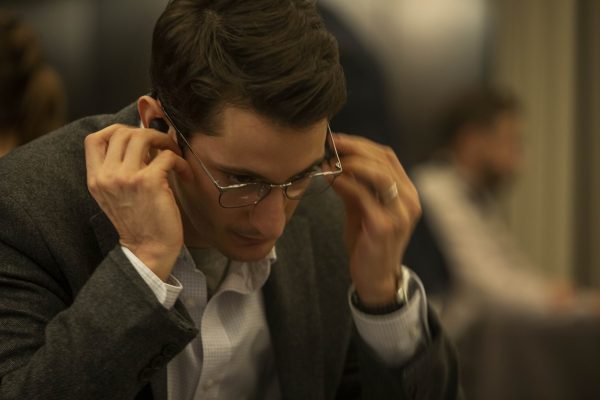
Aviation technician Mathieu Vasseur (Pierre Niney) uses his keen sense of hearing to discover the causes of plane crashes by looking for clues in cockpit voice recorder (CVR) audio, as seen in director Yann Gozlan’s latest, “Black Box” (“Boîte noire”), now available for streaming and on home media. Photo by Thibault Grabherr, courtesy of Distrib Films US.
At this point, the head of the aviation agency, Philippe Rénier (André Dussollier), steps in and takes charge to expedite matters; as the boss, and with his supervisor nowhere to be found, he’s willing to take proactive measures to get to the bottom of things. He wants answers, and he’s at a loss to understand why Pollock didn’t appoint Mathieu to the team in the first place. So, in light of these developments and growing pressure to come up with an official explanation, Rénier assigns his gifted associate to the investigation.
The prevailing theory at the time Mathieu joins the investigation is that the aircraft was brought down by a terrorist on board the plane, based on black box recordings of inflammatory vocal rhetoric in the cockpit. And, on a cursory review, that confrontative audio would seem to support the working theory, something with which Mathieu initially concurs. He and Rénier subsequently appear at a press conference, hoping that this explanation will quell much of the public speculation. But does it?
Mathieu is not so sure of these findings, despite the blessing he appeared to have given it at the press conference. Upon further scrutiny, he begins stumbling upon disquieting evidence of other possible explanations, despite the apparent authenticity of the arguing that was recorded in the cockpit. And it’s that keen sense of hearing that begins tipping him off to other potentially plausible scenarios.
The possible causes that Mathieu uncovers are based on some rather far-fetched conclusions reached after applying his own unique investigatory techniques, especially the information he derives from interviews with a seasoned pilot, Alain Roussin (Grégori Derangère), who doesn’t have particularly kind things to say about the aircraft model in question. But, no matter how outlandish these alternate explanations may seem, they fit the evidence that steadily surfaces. And, the further Mathieu looks, it becomes quite troubling who might be involved in this scenario, including the head of the aircraft manufacturer, Claude Varins (Aurélien Recoing), the head of the company that designed the aircraft’s security systems, Xavier Renaud (Sébastein Pouderoux), and even Mathieu’s wife, Noémie (Lou de Laâge), a onetime government aircraft design analyst who has just landed a lucrative position with Varins’s firm.
When Mathieu presents his evidence to Rénier, the agency head is reluctant to agree with his associate’s findings. But, considering what Mathieu found, Rénier can’t bring himself to summarily dismiss the evidence out of hand. He gives Mathieu permission to keep digging, despite the fact that he knows the investigation might produce conclusions that could result in considerable blowback. But, when the duo considers what could be involved, they’re convinced that the truth must come out, no matter how damning it might be.
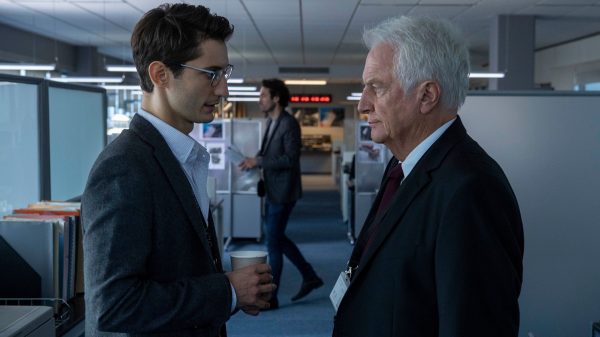
With the support of his boss, aviation agency head Philippe Rénier (André Dussollier, right), crash investigator Mathieu Vasseur (Pierre Niney, left) moves ahead with a troubling inquiry in director Yann Gozlan’s “Black Box” (“Boîte noire”), now available for streaming and on home media. Photo by Thibault Grabherr, courtesy of Distrib Films US.
The implications in all this are staggering. In addition to revealing what may have actually happened to the plane, the question of Pollock’s unexplained disappearance remains. Then there’s Mathieu’s professional credibility, which could be ruined unless he receives backing from objective sources, such as a sympathetic journalist (Anne Azoulay) whose reporting could lend legitimacy to his cause. And, on a personal level, the future of Mathieu’s marriage is also at stake if he were to learn that his wife hasn’t been honest with him.
It’s a lot for Mathieu to process, especially when his life appears to be threatened, too. But, when he “hears” the truth – no matter how unconventional it may seem – can he realistically stay silent and deny it? What’s more, will the many challenges now surrounding Mathieu keep him from believing what he knows to be the truth – and what he must do to reveal it? The events that are unfolding may push him into making hard choices that his work has never prepared him for. Being willing to think unconventionally – including listening to intuitive insights that may be difficult to fathom and abide by – could prove to be essential to his salvation – and his very survival.
This becomes apparent as the crash investigation plays out. While the audio recordings and the intuitively derived beliefs that stem from them provide Mathieu with a good start, he must draw upon the leads provided by other intuitively based beliefs the further he gets into his inquiry. For example, as the once-uninvolved players in this story emerge from the shadows and step to the forefront, Mathieu must foster conclusions about their roles in this scenario by parceling together his findings and formulating beliefs about them in hopes that they’ll lead him to the answers he’s seeking. And, considering his proficiency at managing these beliefs, he’s truly capable at coming up with the evidence he needs to solve the mystery and to protect his own hide in the process.
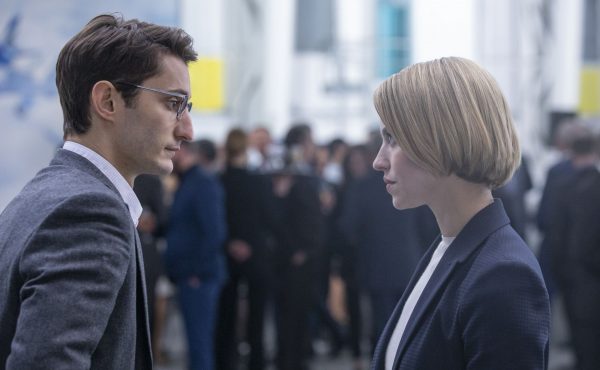
A troubling crash investigation puts pressure on the marriage of aviation technician Mathieu Vasseur (Pierre Niney, left) and his wife, Noémie (Lou de Laâge), a onetime government aircraft design analyst, in the compelling French thriller, “Black Box” (“Boîte noire”). Photo by Thibault Grabherr, courtesy of Distrib Films US.
Even when it comes to deciphering the thorny enigmas of this investigation, Mathieu has a knack for knowing how and where to look to find the evidence he needs. This becomes obvious when he delves into the disappearance of his supervisor. Like a skilled bloodhound, he follows his nose and picks up the scent of the proverbial trail. His intuition provides him with the beliefs he needs to lead him to clues that offer insight into Pollock’s role in the story, a revelation that subsequently unlocks a chain of additional valuable clues underlying the crash mystery.
Using intuition in situations like this is a skill we all innately possess, and Mathieu’s practice of it sets a fine example that we can all draw upon in unraveling the puzzles we face. Considering the multiple ways he employs it, he’s certainly become well-practiced in its use, and there’s no reason that we can’t do the same. However, there are several principles he draws upon in enhancing the effective use of this tool, and we’d be wise to follow suit.
For example, Mathieu obviously places tremendous faith in the value of his intuition, and that’s perhaps the most important enhancement principle to bear in mind. As noted previously, intuition is something that many of us treat skeptically, and that intrinsic doubt, in turn, can undermine its effectiveness. Indeed, if we treat it dismissively, we may lose out on the valuable input it can supply. That can be crucial when we’re faced with handling dicey situations, not unlike those that Mathieu experiences in terms of his credibility and personal safety as this story unfolds.
Likewise, Mathieu has overcome the fears and limitations that are often associated with openly employing tools that may be regarded as unconventional or even preposterous. Oftentimes, when we draw upon resources that are prone to ridicule, we may be hesitant to make use of them to the extent we could, if at all. Not only could that hinder our effectiveness at uncovering the solutions we seek, but it could also put us in jeopardy, personally and professionally. To his credit, Mathieu has no hesitation to make the most of his intuition and what it can do for him, advice we’d be wise to follow.
If nothing else, Mathieu’s experience illustrates that our intuition is nothing to be underestimated, even if it’s something that often takes a back seat to our intellect. While our intellect certainly shouldn’t be undervalued, the same should be said for our intuition as well. Indeed, if it served no purpose, then why do we possess it? It deserves equal treatment at the very least, especially when we’re willing to see what it can do for us. That’s important when the stakes are high, as is the case here. With so much on the line, hearing truly could be believing.
Unsatisfied with the initial investigation of an unexpected and inexplicable plane crash, aviation technician Mathieu Vasseur (Pierre Niney) digs deeper to identify the cause in director Yann Gozlan’s “Black Box” (“Boîte noire”). Photo by Thibault Grabherr, courtesy of Distrib Films US.
When it comes to this picture, the first thought that comes to mind for me is, “Talk about a helluva movie!” Writer-director Yann Gozlan’s stylish, suspenseful thriller follows a plane crash investigation conducted by a diligent, talented aviation technician whose dogged determination won’t let him stop, particularly when a number of suspicious smoking guns begin turning up, some of which hit close to home and begin placing his credibility, and even his personal safety, in danger. Despite a slight tendency to drag a bit in the second hour, this contemporary noir-esque offering gets virtually everything else right. Its inventive cinematography, excellent film editing, engaging soundtrack and fine performances mesh perfectly, and the slow-simmering pace is ideal as clues are meticulously doled out in carefully measured parcels, much like what one might find in the pictures of Alfred Hitchcock, Brian DePalma and Roman Polanski. In fact, in many ways, the structure of this release is strongly reminiscent of Polanski’s chilling and captivating slowburn thriller, “The Ghost Writer” (2010), a comparable edge-of-your-seat offering, to be sure.
For its efforts, “Black Box” captured five 2022 nominations at the Cesar Awards, the French equivalent of the Oscars, with nods for best actor, screenplay, music, sound and editing. In light of its accolades and popularity in France, I’m truly mystified why this picture hasn’t received wider attention or distribution domestically, having played in extremely limited theatrical release in 2022. Thankfully, though, it’s now available for streaming online and home media. If you’re looking to watch something that will hook you and take you on a spellbinding thrill ride, give this one a look; you won’t regret it.
They say that “seeing is believing,” but, as this film so clearly shows, it’s a principle not limited to our visual sense. However, in this case, I’m not talking just about one’s auditory capabilities; I’m also referring to the value of that so-called sixth sense that we all possess but tend to ignore. Our intuition truly merits the same recognition and attention as the other five senses that we take for granted and unquestioningly make use of when it comes to understanding and appreciating our world. And, when we sincerely see what that sixth capability can do for us, we just might be willing to elevate the level of its importance. That could reshape how we view our existence and how it patently manifests, providing new insights that truly could make us committed believers.
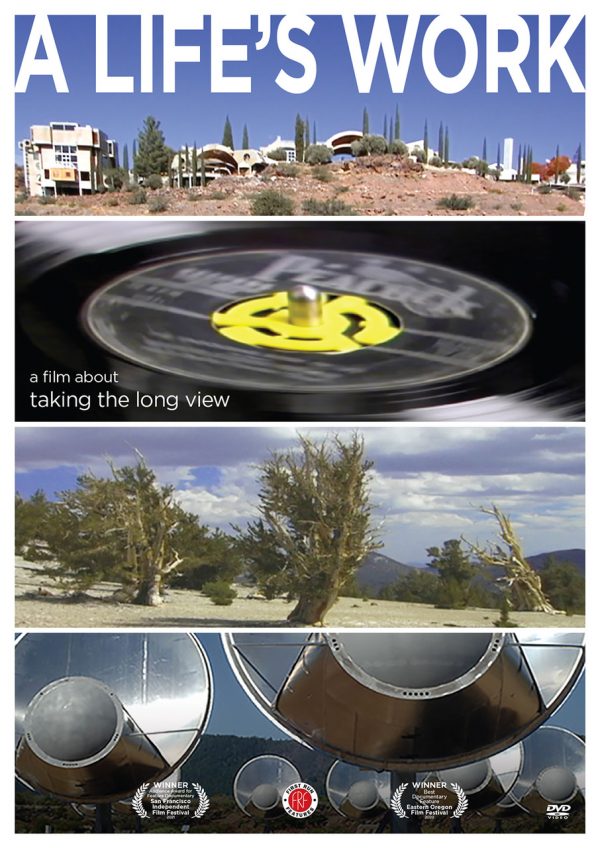
“A Life’s Work” (2020 production, 2023 release). Cast: Jill Tarter, Robert Darden, David Milarch, Jared Milarch, Paolo Soleri, Jeff Stein. Archive Footage: Frank Lloyd Wright. Director: David Licata. Web site. Trailer.
Many of us have trouble seeing into the future, sometimes no more than just a week or so in advance. That lack inherently leaves us wondering what’s next and how to plan for it. As a result, we often tend to go from moment to moment, unaware of what awaits us around the corner until we actually find ourselves in the midst of it. But not everyone operates that way; some of us have the foresight to imagine our world far down the road with elements that reflect our vision for what could lie ahead. This is particularly true when it comes to what we want to accomplish in our lives. The goals in these instances can be quite ambitious, too, frequently involving undertakings that will take a long time to fulfill, sometimes even extending beyond the lengths of our lifetimes. And it’s ventures like these that provide the focus for the inspiring new documentary, “A Life’s Work.”
What do searching for evidence of extraterrestrial life, an African-American gospel music preservation program, a revolutionary architecture project and an organized effort to clone legacy trees have in common? They’re the undertakings profiled in director David Licata’s impressive, uplifting new film. All four of them were launched and managed by individuals who were willing to take a long-term view toward their execution and fulfillment, perhaps for a duration that would likely exceed their own natural lives. They represent projects that many of us would probably look on as unduly daunting and perhaps even hopelessly impractical, especially given that we might never be able to see them completed. However, considering the importance that these innovators attached to these endeavors, they couldn’t bring themselves to step away from them, even if there was a chance that they’d never see them reach their hoped-for conclusions.
Such dedicated efforts thus genuinely represent the chosen life’s work of the visionaries who initiated them. It should go without saying that the commitment required for these undertakings was undeniably substantial, often involving many considerations that went beyond the immediate needs of achieving the desired outcomes. Documenting these endeavors also required a comparable commitment from the filmmaker, who spent 15 years recording the work that went into these enterprises. But, when one considers that the life’s work of these individuals is involved, it should come as no surprise that it would take such a protracted time to bring the record of their efforts into being. And, even with that kind of commitment, it’s not outside the realm of believability to say that the cinematic recounting of these stories itself remains fundamentally incomplete, even after all that time.
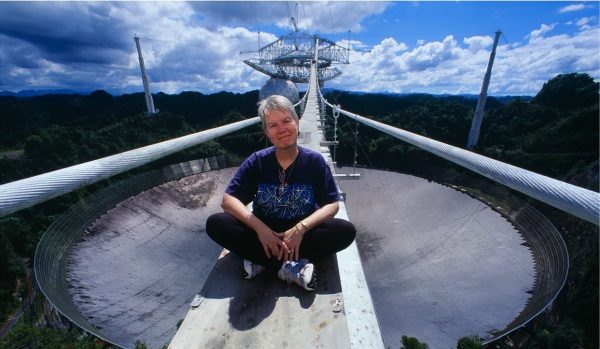
Jill Tarter, longtime (and now-former) head of the Search for Extra Terrestrial Intelligence (SETI), visits Puerto Rico’s Arecibo Observatory as part of the organization’s mission to record and interpret radio telescope signals, as seen in the captivating new documentary, “A Life’s Work,” available on home media and for streaming online. Photo courtesy of First Run Features.
The range of ventures examined in the film is quite diverse, not to mention truly impressive in scope. For starters there’s the work of Jill Tarter, longtime (and now-former) head of SETI, the Search for Extra Terrestrial Intelligence project. This former government-funded program (now supported by private financing) searches the heavens for evidence of life beyond our planet by recording and interpreting radio telescope signals, all in hopes that they might provide clues about what – or who – may be out there. Admittedly, this could represent a long shot attempt at making contact, but, as Tarter maintains, is that any reason not to look? Should this effort pay off, it could open the door to one of the greatest scientific discoveries of all time. That seems to be a worthwhile outcome, no matter how heavily the deck may seem to be stacked against us.
Closer to home but no less important, there’s the effort of Robert Darden to save a portion of our artistic heritage that’s in danger of being lost forever. As the founder of the Black Gospel Music Restoration Project, Darden has earnestly sought to preserve the rapidly disappearing recordings of African-American gospel musicians from years past. According to Darden, an estimated 75% of these recordings has already vanished, never to be recovered. Because of this, he has made it his mission to scour private collections, vinyl record store inventories and other sources to find these works before they’re gone and to secure their transfer to electronic versions so that they may be preserved for posterity.
Preservation is also the theme behind the work of David Milarch and his son, Jared, who, through the Champion Tree Project, have worked tirelessly to collect the DNA of endangered legacy species, such as the American elm and the California redwood, so that it can be replicated to produce viable new saplings. Their hope is to restore the populations of these vanishing species so that future generations may enjoy them. And, given the ecological and potential medicinal applications of these trees, the Milarchs also hope that the preservation of these species can benefit mankind in ways that extend beyond their sheer horticultural beauty.
Just as the Milarchs’ legacy tree preservation efforts are aimed at benefitting our future well-being, so, too, does the ongoing work of architect Paolo Soleri, who spent years constructing his innovative designs prior to his death in 2013. Soleri, a onetime protégé of iconic architect Frank Lloyd Wright, is credited with founding the “arcology” movement, a discipline aimed at fusing the principles of architecture and ecology. Given what he saw as the squandering of resources and land associated with suburban sprawl, Soleri focused his efforts at creating ecologically friendly architectural designs characterized more by “building up” rather than “building out.” He subsequently created a number of designed communities to reflect these notions. Over the past five decades, Soleri and his followers have worked on constructing the first of these communities, the experimental town of Arcosanti, AZ, about 70 miles north of Phoenix. Progress has been slow but steady over the years, with Soleri’s work taken over by protégés like Jeff Stein and his colleagues in the time since the creator’s passing. It’s hard to say whether the work on this community will ever be finished, but, as Stein observes in the film, when is any community ever truly finished? It’s a work in progress, one that reflects the life’s work of not only its originator, but also of those who share his vision and seek to carry on with it.
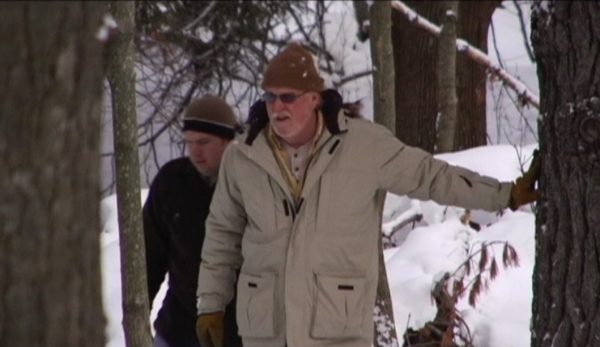
David Milarch (foreground) and his son, Jared (background), search for legacy trees as part of the Champion Tree Project, one of four long-term initiatives profiled in director David Licata’s “A Life’s Work,” available on home media and online. Photo by Wolfgang Held, courtesy of First Run Features.
That last statement essentially embodies the mindset of those who initiated and have continued projects like these and others. Those charged with carrying out these efforts unquestionably see them as their life’s work, and they make no apologies for it, regardless of how critically others might view them. Were it not for individuals like this, however, we might not have realized many of the accomplishments that have been achieved in many fields of endeavor. Perseverance, it would seem, does win in the long run.
Considering the immense scope behind these projects, one might legitimately wonder why anyone would be willing to take them on. But, in these cases (and virtually any others like them), the answer is likely to be the same in each instance – because those embracing them believe that they can be accomplished. It doesn’t matter to them how long it would take, even if they don’t live long enough to see their completion. They believe in the value and viability of these ventures, no matter what, even if some might see them as pursuing Quixotic causes. Rather, these dedicated innovators simply look upon their work as big tasks that need to be tackled for the betterment of humanity.
The beliefs driving these pursuits are quite potent, to be sure. But, as anyone who incisively understands the nature of beliefs knows, they’re powerful and persistent resources. And, when backed by sufficient resolve and faith, they’re tremendous tools that can enable us to accomplish almost anything. Such are the end products of the conscious creation process, the philosophy that maintains we can employ these resources to create the reality we experience, including all of the elements within it. This is not to suggest that such materializations can spontaneously manifest into existence with the snap of one’s fingers, but they can plant the seeds that lead to the sprouting of what they’re ultimately intended to create. The driving forces behind the projects examined in this film may not have heard of this school of thought, but it’s obvious they have conviction behind their beliefs and have mastered the principles that make this philosophy work.
Regardless of how quickly or thoroughly these creations manifest, those seeking to bring them into being nevertheless are convinced they’re achievable. That’s apparent by how long they have allowed themselves to remain committed to their fulfillment. Paolo Soleri, for example, believed in the veracity of the Arcosanti community and continued to work on its development even when faced with severe funding issues. To keep his dream alive, he developed workarounds, such as recruiting volunteer crews to construct the buildings that eventually materialized, despite the obstacles that slowed their progress. He also devised a unique way to raise money by crafting wind bells that were sold in galleries and gift shops to generate much-needed cash. These measures may not have been solutions that immediately sprang to mind to keep the project going, but they worked nonetheless, and belief in their viability ultimately proved correct.
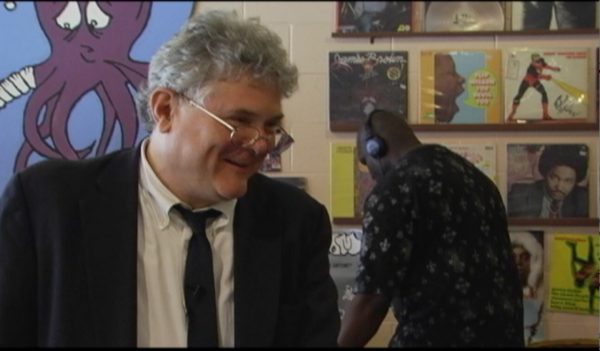
Robert Darden (left), founder of the Black Gospel Music Restoration Project, visits Chicago’s Hyde Park Records in search of buried vinyl treasure, in director David Licata’s debut documentary feature, “A Life’s Work,” a film 15 years in the making. Photo by Wolfgang Held, courtesy of First Run Features.
That kind of thinking has also been driving the SETI project, even though it has yet to produce the definitive proof of its core mission. According to Jill Tarter, the program has experienced issues not unlike what Soleri confronted with the Arcosanti project, namely, maintaining a steady flow of funding. To that end, Tarter has said that one of her chief roles in SETI was to serve as its “head cheerleader,” enthusiastically drawing attention to the cause, the value of its purpose and the need to raise money to keep it going. In many ways, her efforts echoed those of Dr. Ellie Arroway (Jodie Foster) in the 1997 sci-fi offering “Contact” in which a plucky astronomer passionately endeavors to keep her extraterrestrial search program alive at a time when many others were convinced it was foolhardy nonsense, an outcome disproved by the results it ultimately achieved. One could say that Tarter forged ahead with that same kind of optimism and commitment when she headed the real-world version of that program. And her belief in it just may prove correct someday as well.
While the Arcosanti and SETI programs are seeking to chart new ground, the Black Gospel Music Restoration Project and the Champion Tree Project are aimed at preserving creations that are in danger of becoming lost. Because of what could occur to these commodities without adequate attention, the value of preservation-based programs like these is just as great as that behind the aforementioned groundbreaking endeavors. However, even though these projects are not exploring new territory, that’s not to say that the effort required to fulfill them is any less great, which means that the power of the beliefs driving them must also be just as significant.
Robert Darden and David and Jared Milarch understand this, and they employ this thinking in their respective undertakings. They also have a realistic sense about what may or may not be attainable. through their efforts Darden, for example, understands that not every legacy recording can be saved, as evidenced by the loss of 75% of such works that has already occurred. Likewise, the Milarchs appreciate the fact that a number of the legacy trees they pursue no longer possess viable DNA that can be used for cloning, despite the continued existence of specimens of these species. But, then, Darden and the Milarchs don’t let these potential shortcomings deter them in their efforts. As Darden observes in one of his interview segments, the gospel music restoration project may not be able to save everything, but he can take satisfaction from every one of the recordings that it is able to preserve. That’s an accomplishment in itself, even if it doesn’t represent the totality of what had been created at one time. It’s a principle that anyone seeking to preserve any kind of commodity from becoming lost can take pride in, regardless of what’s at stake.
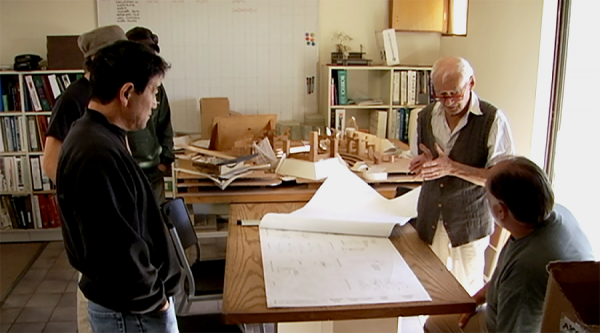
Architect Paolo Soleri (second from right) meets with colleagues to discuss the construction of the experimental Arizona community Arcosanti, as depicted in filmmaker David Licata’s debut documentary feature, “A Life’s Work.” Photo by Wolfgang Held, courtesy of First Run Features.
No matter how much progress is made on projects like these, the fact that they continue, with beliefs underlying and supporting such perseverance, deserves meritorious recognition, particularly for the dedication of those carrying them out. These efforts, in fact, serve to validate the very essence of the power and persistence of our beliefs, and this film celebrates that notion. Let’s hope we never lose sight of that, no matter what projects we may choose to undertake.
How inspiring it is to see committed individuals embark on Herculean tasks like these, even if just for the sheer passion they engender and what they can ultimately contribute to the well-being of mankind. Filmmaker David Licata, who spent 15 years following four such ventures, provides an insightful look at these projects and the implications behind their execution. In telling these stories and assessing the efforts of their progenitors, the director examines not only the particulars behind these endeavors, but also the motivations and commitments driving their creators, as well as the challenges associated with carrying out these undertakings. The film presents a balanced view of each of these projects, told economically and on point, without extraneous padding or irrelevant material, a refreshingly welcome relief considering how many less-than-satisfying recent documentaries have been put together. What’s most significant about this offering, though, is the inspiration that it prompts among viewers. Audience members are treated to a variety of illustrations that truly depict what constitutes “a life’s work” in every sense of the expression. It’s quite uplifting to see what our visions and beliefs can yield, and this film brings that notion front and center for all to see.
Taking the long-term view toward a project can indeed be overwhelming, especially since there’s no definitive guarantee of seeing any reward coming from it. But is that the only reason behind tackling such pursuits? If we were to adopt such a view, it’s likely that much of what mankind has accomplished may have never been realized. Rewards are truly satisfying outcomes to emerge from such efforts, but they shouldn’t be viewed as the starting point for taking on such challenges. If a venture has true value, the rewards will likely result anyway. It’s the work itself that matters, and, when it’s backed by the power of the right mix of beliefs, tremendous outcomes are possible. And that should be the most rewarding aspect to come out of all this.