The older I get, the more the Academy confounds me. When this has happened in the past, I’ve generally been pleased with most of the surprises that arose. This year, however, I was dumbstruck when the winners were announced in a few of the categories, and not necessarily in a good way. Perhaps it was due to the nature of how and when movies were distributed this year because of the pandemic. Perhaps it was due to wishful thinking clouding my judgment. In any event, with this year’s Oscars behind us, it’s time to take a look at how I did on my predictions for the winners in this annual competition, as first outlined in my previous blog.
So how did I do? Regrettably, this is my worst prediction performance since I began doing these blogs – three out of six correct calls. Here are the details:
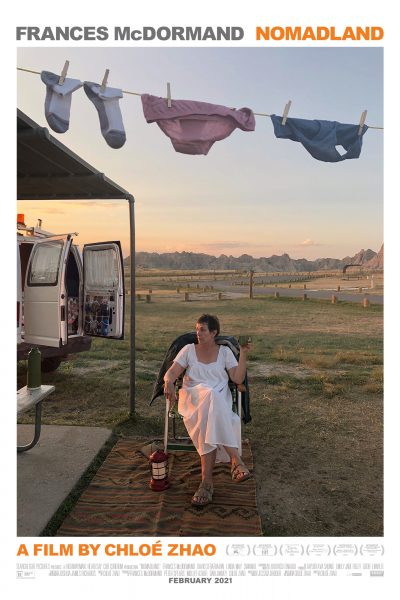
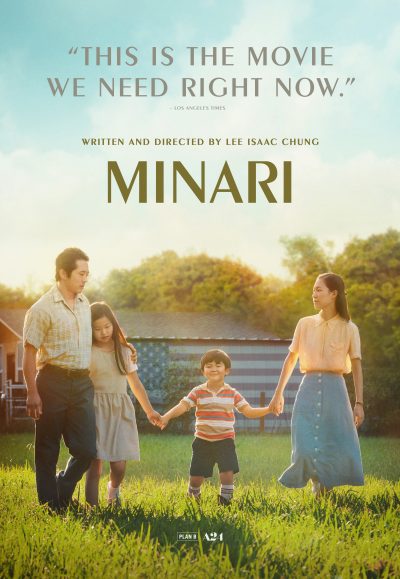
I admit it – I went out on a limb, and I was wrong. As I noted in my predictions blog, even though I recognized that the smart money was on “Nomadland,” I was sensing a shift in the direction of “Minari.” I felt this intuitively, and maybe it was occurring but didn’t attain enough momentum in time. However, “Nomadland” maintained its mojo and managed to come out on top.
While I thought “Nomadland” was a capably made film, I didn’t feel it merited the top prize. That honor truly should have gone to “Minari,” a superb production that, unfortunately, underperformed throughout awards season and never captured the degree of attention it truly deserved. I also believed (and still do) that it has the message the country needs right now – one of hope, love, tolerance and healing, a far more endearing and inspiring than the one the victor sent.
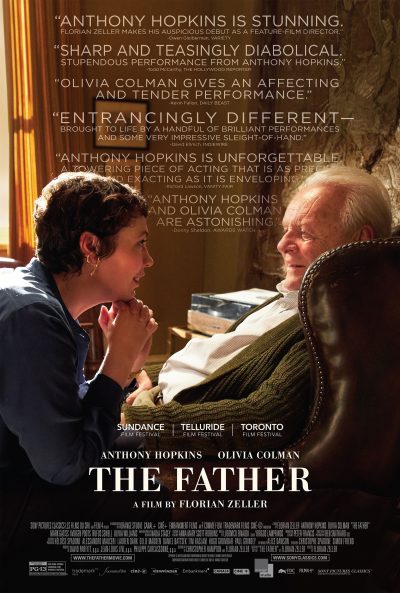
I was shocked when Hopkins’s name was announced. While he certainly gave an excellent performance, and even though he pulled out what appeared to be a surprise win at the BAFTAs several weeks previously, I was convinced that the Academy would honor Boseman, not only based on the strength of his performance and his wins earlier in awards season, but also because this would be the last opportunity the Academy would have to recognize him. Voters dropped the ball.
The Academy’s failure to honor Boseman in the past – even with nominations – was a glaring oversight. But its failure to do so this time is inexcusable. Such slights weren’t allowed to pass, for example, when it came to the Oscar wins for Peter Finch for “Network” (1976) or Heath Ledger for “The Dark Knight” (2008), so how it was allowed to happen here – especially for such a gripping performance – is mind boggling. Shame on the Academy.
As with the lead actor category, I was shocked when McDormand’s name was called. Odds makers believed, as did I, that Mulligan had the best chance of taking home the award. While this category was essentially up for grabs given the results in prior awards season competitions, McDormand was widely regarded by prognosticators as the second least likely candidate to capture this prize, despite her recent win at the BAFTA Awards, a contest in which most of her competitors here weren’t even nominated. The skepticism about McDormand’s chances stemmed from her awards season track record thus far, her recent (and deserved) Oscar win for “Three Billboards Outside Ebbing, Missouri” (2017), and the fact that this was one of her more underwhelming performances, not only compared to those of her fellow nominees, but also in her storied career.
This result baffles me. It was a weird category to call all season long. In all truthfulness, I believed the award should have gone to Andra Day, as evidenced by her win at the Golden Globe Awards, but I didn’t think it likely that she’d emerge as the winner (and handicappers concurred, placing her in the middle of the field). I’m glad to have predictions for this field behind me.
Kaluuya was a clear-cut winner, having run the table in all of the season’s other awards competitions. No surprise here – a deserving victory for a fine performance.
This was another category that was not difficult to predict, given that Youn’s momentum had been steadily building, winning in virtually every competition in which she was nominated leading up to the Oscars. Again, this is another example of the right performer winning for the right performance.
Again, no surprise here. Zhao has claimed the directorial award in every contest this year, despite the fact that Lee Isaac Chung was the more deserving candidate. Hollywood has been wanting to honor Zhao for some time, and now the Academy has followed through on it.
Oscar® and Academy Award® are registered trademarks of the Academy of Motion Picture Arts & Sciences.
“Love and Monsters” (2020). Cast: Dylan O’Brien, Jessica Henwick, Michael Rooker, Ariana Greenblatt, Dan Ewing, Ellen Hollman, Tre Hale, Melanie Zanetti (voice). Tandi Wright, Andrew Buchanan, Pacharo Mzemba, Te Kohe Tuhaka, Hero the dog, Dodge the dog. Director: Michael Matthews. Screenplay: Brian Duffield and Matthew Robinson. Story: Brian Duffield. Web site. Trailer.
Stagnancy can be a drag, not just in terms of the boredom factor, but also for the detrimental effects it can have on our personal growth and development. It leaves us stuck, watching time pass without any meaningful diversions, insights or hope for the future. But doldrums like these need not remain a fixed, unalterable state; we can transform, becoming more than we were and, perhaps more importantly, more than we thought we could be. Such is the case for a lonely, lovelorn young man in the delightfully entertaining new sci-fi comedy, “Love and Monsters.”
When the earth is beset by an environmental and evolutionary disaster, much of humanity is wiped out. That’s because many of the planet’s animals – especially reptiles, insects and crustaceans – undergo radical mutations that turn them into enormous monsters with an insatiable hunger for human flesh. As a consequence, the remaining survivors are forced into makeshift underground bunkers, many of them far removed from one another. And about the only time that the survivors go aboveground is to forage for supplies, the leftover untouched scraps of their former lives available for the taking, a decidedly risky pursuit given the potential perils that await them on the surface.
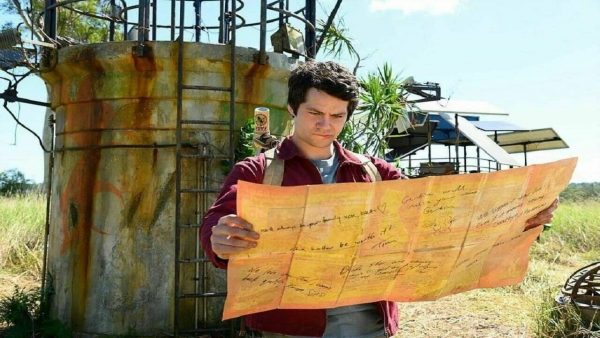
While the bunkers generally provide a good degree of safety, life inside them can grow relentlessly tedious. It’s not entirely unbearable for those who successfully manage to couple up with romantic partners, but, for those left out of such fun and frolic, like twenty-something Joel Dawson (Dylan O’Brien), the solo life can become little more than an exasperatingly frustrating series of cold showers. About the only diversions Joel has are his artwork and access to a ham radio through which he’s able to converse with Aimee (Jessica Henwick), his love interest from the days before going underground. However, as time goes by and Joel finds himself as just about the only unpartnered resident of his bunker community, he realizes that something has to change. He decides to risk the journey to join Aimee at her compound, despite the many dangers he’s likely to face along the way.
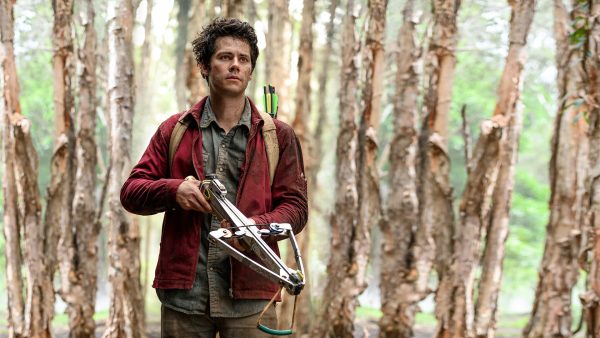
Joel Dawson (Dylan O’Brien) embarks on a perilous cross-country journey to reunite with his long-separated love interest in the enjoyable new family fare offering, “Love and Monsters.” Photo by Jasin Boland, courtesy of Netflix/Paramount Pictures.
When Joel announces his intention to leave, his fellow residents encourage him to stay, saying they need him to help keep the bunker community afloat. They also discourage this venture by tactfully but frankly noting that Joel isn’t exactly the most adept or street smart among their ranks; they wonder how he’ll be able to contend with challenges like huge man-eating frogs and slugs, among other perils. But, convinced that he has to make the attempt at reuniting with Aimee, he embarks on the 80-mile hike into the unknown.
As Joel treks across this foreign terrain, he encounters all of the menacing creatures he was warned about, but he somehow manages to protect himself, quickly learning how to draw upon his wits to keep himself alive. He also chances upon a number of guides to accompany him on his trip, including a loyal canine friend, Boy (Hero the dog/Dodge the dog); an experienced surface dweller, Clyde (Michael Rooker), and his pint-sized companion, Minnow (Ariana Greenblatt); and a damaged but still functional domestic robot, Mav1s (Melanie Zanetti), all of whom offer valuable suggestions for how to get on in the wild and how to maintain faith in his goal despite the many obstacles he faces.
Through this experience, Joel evolves in much the same way as the creatures around him – not so much physically, but certainly in terms of his personal capabilities. He becomes so proficient at survival that he just might make it to Aimee’s bunker. But, in seeking to fulfill his dream, he’ll have to face additional challenges of a different and totally unexpected type, as well as the exploits of a trio of new strangers (Dan Ewing, Ellen Hollman, Tre Hale), all of whom claim to be trustworthy but merit caution. How will it all turn out? Stay tuned.
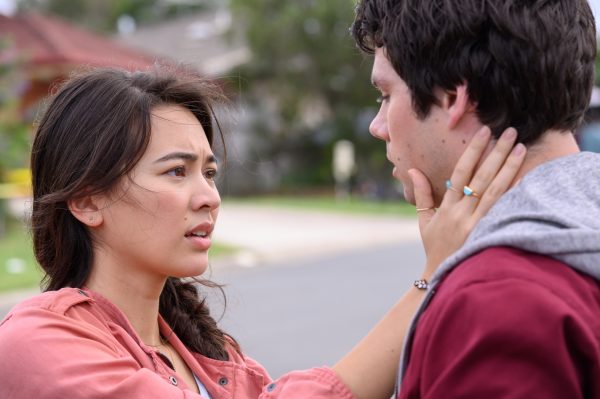
In the days before their protracted separation, budding romantic partners Joel (Dylan O’Brien, right) and Aimee (Jessica Henwick, left) say goodbye in hopes of meeting again in the face of a global calamity in “Love and Monsters.” Photo by Jasin Boland, courtesy of Netflix/Paramount Pictures.
Embarking on a potentially life-changing venture can be fraught with challenges, pitfalls and uncertainty. At the same time, it can also be filled with hope, inspiration and opportunity. The question is, how do we approach such an undertaking? That’s significant, because how we launch into something as audacious as this can have a tremendous bearing on how it pans out. It shapes our frame of mind, which, in turn, forms the basis of our beliefs about the endeavor. And those beliefs provide the foundation for its manifestation, a consequence of the conscious creation process, the philosophy that maintains these intangible building blocks provide the basis for the materialization of the reality we experience.
Considering the odyssey that Joel is commencing, it would be in his best interests if he approached it with an outlook rooted in achieving success. But, if that success is to be realized, he needs to clear the path ahead of him, making a conscious effort to remove any roadblocks that might impede him. And first and foremost among them are the fears and limitations that would hold him back.
If fears are allowed to hold sway in the conscious creation process, they could easily prevent the sought-after outcomes from materializing. They would essentially stop Joel in his tracks, because fear-based beliefs inherently keep us from moving forward with our plans, no matter how well thought out and meticulously orchestrated they may be. If such notions are present in our belief mix, we realistically have to ask ourselves, why would we intentionally apply the brakes to our ambitions before we even get out of the starting gate? Quite simply, they need to go, no matter how tall an order that might represent.
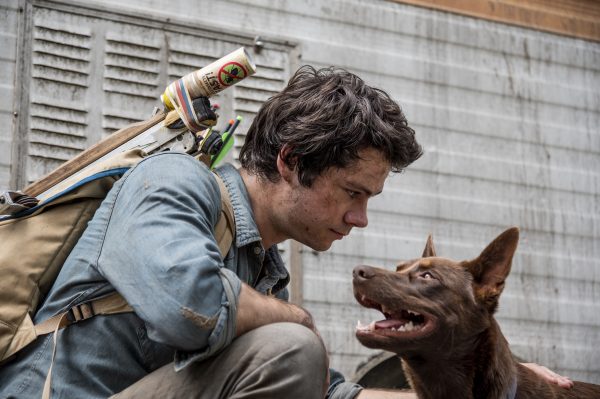
Man’s best friend, Boy (Hero the dog/Dodge the dog), lives up to that reputation when he joins a lovelorn twenty-something, Joel Dawson (Dylan O’Brien), on a dangerous journey to reunite with his girlfriend in director Michael Matthews’s entertaining new release, “Love and Monsters.” Photo by Jasin Boland, courtesy of Netflix/Paramount Pictures.
The same is true of any limitations that might block our way. Limitations are often propped up by excuses, which, in turn, are frequently governed by fears, all of which again illustrates the need for those beliefs to be eliminated. But, when that’s not the case, the perception of limitations as impediments can have the same effect as a fear blocking us from forward progress. In situations like this, then, we must make a concerted effort to devise solutions that allow us to overcome whatever is holding us back. That takes getting creative, considering options to which we may not have previously given any thought. It involves purposely thinking outside the box or pushing the envelope or whatever other motivational speaker cliché that one can draw from. These expressions may be a little trite, but the recommendations behind them are solid in cases like this. After all, if this work involves the conscious creation process, then we’d better get busy and think creatively to come up with workable solutions.
In Joel’s case, he accomplishes this by drawing guides to him who can help show him the way to overcome his limitations. Boy, Clyde, Minnow and Mav1s all offer ideas that he can embrace and adapt to suit his needs. He may not get things right on his initial attempts at employing their suggestions, but that’s how he learns to hone his skills, not only in a tangible sense, but also in refining the beliefs he needs to bring about the results he seeks. And, in his circumstances, that can mean the difference between life and death.
As a corollary to this, Joel also affords himself an opportunity to learn about hidden skills and talents that he never knew he possessed. The circumstances in which he finds himself prompt the need for solutions, frequently of an innovative nature. All of which lends further credence to the notion that necessity truly is the mother of invention. And, besides presenting Joel with answers to his dilemmas, they make him aware of parts of himself that previously went unseen and unexplored. That’s quite a bargain when it comes to matters of our personal growth and development.
On a grander scale, the amalgamation of a number of such experiences enables the advancement of one’s personal evolution. Just as the world around Joel has transformed itself, so, too, does he as he goes through this wondrous adventure. That’s significant, for it affords him an opportunity to exceed his limitations and his expectations (as well as those that others hold of him). By allowing himself to grow and evolve through this venture, he has an opportunity to become more than he was, to transform himself into someone different from when he began his journey. It’s a development very much in line with the spirit of conscious creation, one of whose core principles maintains that we’re all in a constant state of becoming. And, given Joel’s experience, that’s certainly the case here, a shining example of personal evolution that serves as an inspiration to the rest of us.
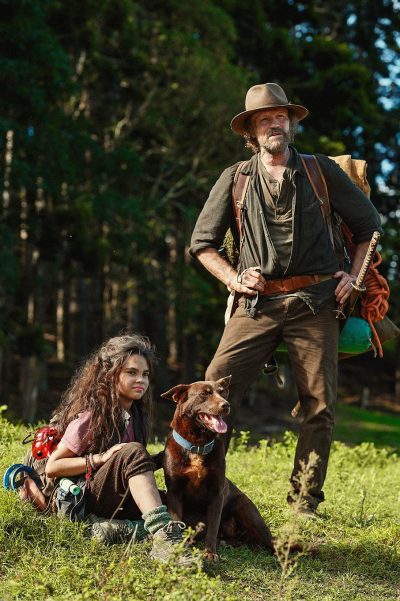
A cross-country hiker making a perilous journey receives valuable support and guidance from an experienced surface dweller, Clyde (Michael Rooker, right), his pint-sized companion, Minnow (Ariana Greenblatt, left), and a loyal canine friend, Boy (Hero the dog/Dodge the dog), in “Love and Monsters.” Photo by Jasin Boland, courtesy of Netflix/Paramount Pictures.
With wild and deadly creatures all around him, intrepid hiker Joel Dawson (Dylan O’Brien) must defend himself by any means possible in “Love and Monsters,” now available for streaming and on home media. Photo by Jasin Boland, courtesy of Netflix/Paramount Pictures.
When we take this principle to its highest expression, we have an opportunity to fulfill our destiny. As expressed in conscious creation terms, this is the embodiment of living out our value fulfillment, the concept of being our best, truest selves for the betterment of ourselves and those around us. Indeed, as Joel’s story unfolds, he comes upon circumstances that provide him with an opportunity to realize this for himself and the others he encounters. It’s his chance to leave a lasting legacy, one that’s beneficial to many, including those in need and some whom he has never met before. That’s quite a change for someone who once spent all his time doing sketches and just thinking about a better future.
It’s always a real treat when a film from which one might not expect much turns out to be a pleasant surprise, and so it is with this charming, fun, entertaining sci-fi/comedy/road trip/young adult romance tale set against the challenges of a crushing but comical monsterpocalypse. This genre-fusing evolutionary saga serves up a delightful story in which the concept of transformation is reflected in more than just the creatures of nature. Though occasionally somewhat predictable, the film is nevertheless filled with many delicious plot twists and developments that are augmented by colorful supporting characters (some of them human, some not), genuinely laugh-out-loud humor, and even a few touching moments that are truly heartfelt but without ever becoming sappy. Then there are the picture’s superb visual effects, which very deservedly earned an Oscar nomination for their clever, inventive, eye-popping designs. While “Love and Monsters” may not have a particularly compelling title, it has much to offer in terms entertainment value and engaging insights, even for younger viewers, qualities that are often hard to come by in fare aimed at such audiences. Even though this release has been quietly flying below the radar for a while, director Michael Matthews’s second feature outing deserves wider attention than it has been getting in light of everything it has going for it.
Sitting on the sidelines, waiting for life to happen, gets us nowhere. If we want our lives to change, we have to be agents of that change, taking steps to nurture and encourage that evolution in hopes that it fulfills our dreams and brings us the reality we want. It’s attainable, but we have to invoke it, with confidence and resolve and without reservation. If someone like Joel Dawson can understand that and make the effort to attain it, then we should be able to as well. And, even if we don’t succeed at it, at least the attempt sure as hell beats being stuck in a bunker all day.
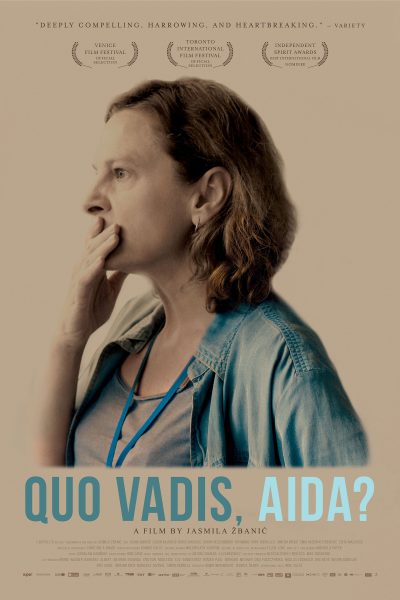
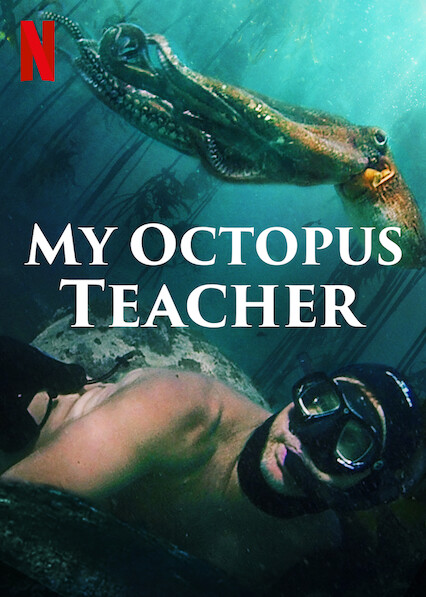
Reviews of "Quo Vadis, Aida?" and "My Octopus Teacher," a pair of blog links, and a podcast preview are all in the latest Movies with Meaning post on the web site of The Good Media Network, available by clicking here.
“My Octopus Teacher” (2020). Cast: Craig Foster, Tom Foster. Director: Pippa Ehrlich and James Reed. Screenplay: Pippa Ehrlich and James Reed. Web site. Trailer.
Discovering ourselves is often a challenging process, especially when we feel lost and have no idea where or how to look for answers. However, if we remain open to options – including those that appear to be coming to us from unlikely sources – we may just find the guidance we seek. So it was for a lost soul searching for himself as depicted in the beautiful and moving new documentary, “My Octopus Teacher.”
At the opening of this highly personal documentary, South African director and cinematographer Craig Foster confesses to feeling lost and severely burned out. While he doesn’t elaborate on the details, he admits to a lack of motivation for taking on new projects. He also laments that, as the father of a young son, Tom, who was beginning his approach to adolescence, he didn’t feel up to the task of providing the paternal guidance that someone at such an impressionable age generally requires. As a result, Craig says he was spending most of his time adrift, looking for the spark to get himself and his life back on track.
Having grown up on the South African seacoast, Craig says he was always strongly influenced by his proximity to the ocean. And, given his love of nature, the subject of many of his previous film projects, he felt a tie to the environment and all its wonders. So, after an extended period of time contemplating how to proceed, he began to sense that a return to the natural world would be just what he needed to revive himself. Little did he know at that point how right he would be.
Craig decided to go snorkeling in the thick kelp forest in the cold ocean waters just off the shore of where he lived. He was in awe of the rich and diverse animal and plant life he encountered. But what captivated him most was an encounter with a small octopus, one that was cautiously defensive at first. However, the longer he interacted with the little mollusk, the more he could see that the octopus was as curious about him as he was about the octopus. Thus began an unusual but heartfelt “relationship” between Craig and his new underwater friend.
As a result of this encounter, Craig says he wanted to know more, so he decided that he would go snorkeling every day to seek out this fascinating creature. And, the more time he spent in the company of the octopus, the more intimate their relationship became, one that would become characterized by qualities that he never expected would arise between a human and an undersea animal.
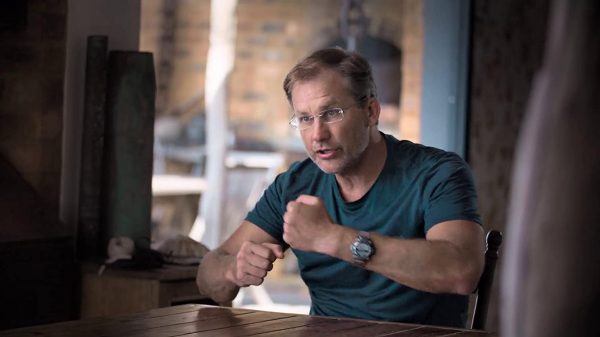
Director Craig Foster discusses how his ongoing encounters with an undersea creature helped change his life in the heartwarming new documentary, “My Octopus Teacher.” Photo courtesy of Netflix and the Sea Change Project.
While some may contend that this is nothing more than a case of anthropomorphism, skeptics would have a hard time convincing Craig otherwise. As the film illustrates, the octopus demonstrates traits like curiosity and trust in ways that are far too humanlike to be dismissed as purely coincidental but unintended animal behavior. That’s particularly true in light of their repeat occurrence; if it happened only once, it might be easy to chalk up the experience to the contentions put forth by the skeptics, but, since such attributes became apparent over and over again, it’s hard to argue with Craig’s observations.
The more time Craig spent with the octopus, the more he could see just how startlingly intelligent it was. For example, when it came to matters of protecting itself, the octopus proved to be a master of camouflage and escape tactics, especially in safeguarding itself against the waters’ native predatory pajama sharks. The same was true of the creature’s hunting technique, coming up with clever means of stalking its prey. From these observations, Craig concluded that the intelligence and inventiveness of the octopus has been grossly underestimated. Indeed, it could be one of the most sentient beings on the planet, though we’ve never noticed that before due to a lack of such up-close interaction.
On top of that, though, Craig observed that there was more to this creature than just its surprising intelligence. He came to find that there was much that we could learn from the octopus, lessons in intangible qualities that many of us would be reluctant to admit could be attributed to an undersea animal. He found that especially helpful to him given what he was going through personally at the time, attributes that he discovered he could make use of in his own life in areas like compassion, acceptance, love and connection. In particular, he drew upon this experience in fostering a stronger relationship with Tom, whom he eventually invited to join him in his daily snorkeling adventures. Through this ongoing odyssey, Craig came to discover that this fascinating little creature would indeed become his octopus teacher.
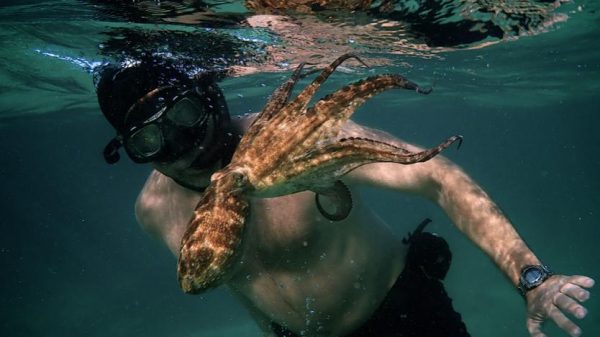
With his new undersea friend by his side, filmmaker Craig Foster embarks on an undersea odyssey that changed his life forever, as seen in the inspiring new documentary, “My Octopus Teacher,” available for online streaming. Photo courtesy of Netflix and the Sea Change Project.
Fortunately for Craig, he got exactly the teacher he needed at exactly the time he needed it. But that’s no surprise considering this manifestation arose as a result of the conscious creation process, the philosophy that maintains we materialize the reality we experience through the power of our thoughts, beliefs and intents. This doctrine maintains that our outer world mirrors our inner selves, bringing into being what we focus upon. Whether or not the film’s protagonist is aware of this philosophy, it’s apparent he’s developed a certain mastery over its principles, enough so that he freely admits to recognizing that the appearance of the octopus and its behavior at that time were reflections of his inner being. And, given his unspoken but nevertheless definitive need for a teacher to help him turn his life around, the octopus – as unlikely as it may seem – fulfilled this requirement.
In observing the animal’s behavior, Craig notes its adaptability to its environment and the circumstances affecting it. He says he learned much from this experience from a pragmatic standpoint, particularly in matters of improvisation and devising solutions to overcome limitations, hallmarks of conscious creation proficiency. But, over time, as he began to more fully understand the nuances of the creature’s actions, he noted the surfacing of more intangible qualities, traits that he previously never would have believed an octopus could possess or exhibit. These were the same qualities that were beginning to surface in Craig himself, reinforcing his observation about his undersea friend serving as a reflection of his own inner being.
To his credit, Craig recognized the parallels and saw how he could apply these notions in his own life. The experience thus became an opportunity to learn important life lessons, particularly in matters of allowing his true self to emerge. This enabled him to take ownership of his personal integrity and make it manifest in his everyday existence, not only in his dealings with the octopus, but also in his experiences on dry land. There’s much to be said for this, even if it came about in a most unexpected way.
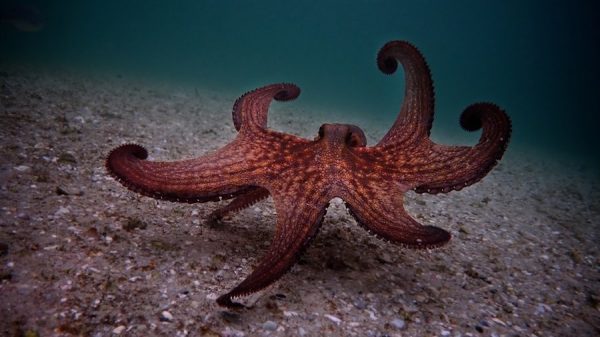
An octopus living off the coast of South Africa provides an interesting study, both personally and professionally, for a filmmaker and naturalist in “My Octopus Teacher.” Photo courtesy of Netflix and the Sea Change Project.
As noted above, Craig says that he learned much about such concepts as connection, love and compassion. And those principles, in turn, translated into significant developments in his daily life, altering his future in important ways that he never saw coming. Perhaps the most significant of these was his establishment of the Sea Change Project, an initiative aimed at promoting greater awareness of oceanic-related considerations, particularly the beauty, sustainability and ecological importance of South Africa’s kelp forest and the creatures that inhabit it. The passion that came out of Craig’s personal undersea odyssey has thus yielded an organization with an earnest mission whose implications are far greater than anything he might have imagined when he began his snorkeling adventure. Who would have believed when this all started that something so seemingly small could lead to something so notably grand in scale?
Through these developments, Craig and the octopus have thus taught many of us how to relate to our world in new, innovative and unexpected ways. That likely was not the seeming intent when this all began, but that is what has grown from it. While Craig was seeking to find himself, he did, but in ways that he probably did not consider as part of his original plan. Nevertheless, when he launched into his effort to find himself, he laid the fundamental foundation for what would emerge, even if he wasn’t aware of the form it would eventually take at that time. The seeds of what ultimately would surface were planted at that point, blossoming into the impressive creation that would one day be born, a product of both his own inventiveness and his personal evolution. This progression of events thus elegantly illustrates the conscious creation notion that we’re all in a constant state of becoming.
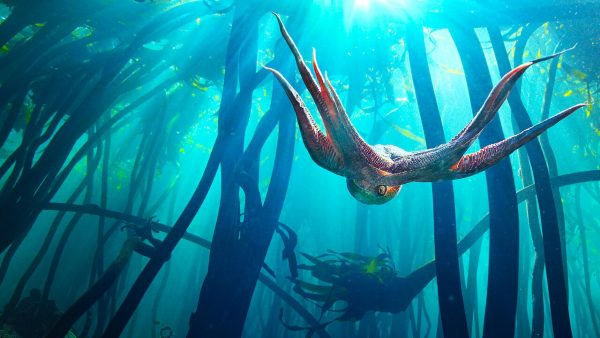
The thick kelp forest off the South African seacoast provides a beautiful backdrop for the life-changing experience of a burned out filmmaker in the heartwarming new documentary, “My Octopus Teacher.” Photo courtesy of Netflix and the Sea Change Project.
In line with the foregoing, Craig thus came to discover his destiny, which, in conscious creation terms, is referred to as his value fulfillment, the principle that maintains we seek to be our best, truest selves for the betterment of ourselves and those around us. Considering what has emerged from this experience, the outward, tangible manifestation of this concept should be obvious, with wide-ranging implications affecting both humanity and our kindreds in the plant and animal kingdoms. But, on a more personal level, it has also enabled Craig to live out his value fulfillment for himself, to become his own best, truest self for his own personal betterment. We should all hope that we can bring ourselves to attain that, considering who and how many of us stand to benefit from it.
Who would have thought that we could learn anything meaningful from an undersea mollusk? Yet, if we’re willing to devote the time and effort to studying the miracles of nature, there’s no telling what we might glean from the experience, both about our subject and ourselves. Such is the remarkable experience of Craig Foster, whose story is beautifully and meaningfully told through this superb documentary. Gorgeously filmed and warmly narrated, this moving offering from directors Pippa Ehrlich and James Reed shows us a world seldom seen, with insights never imagined about a creature we know of but know virtually nothing about. It also profoundly touches us in heartfelt ways, drawing out an array of emotions that might include the shedding of a tear or two. This BAFTA Award-winning release and Oscar nominee is truly a cinematic labor of love, one richly deserving of all the recognition and accolades it has received. The film is available for streaming online.
If one ever had any doubt about the undeniable connections between us and everything in our existence, “My Octopus Teacher” certainly dispels that uncertainty. As this film so beautifully illustrates, it’s quite remarkable how such an outcome can result. We should be grateful for the opportunity to have experiences like this. But, considering how and where they arise from in the first place, we should thank ourselves for having the wherewithal to create them. When we understand that – and when we understand ourselves – we have an opportunity to appreciate who we are and what we’re capable of. And what a miracle that is.
With theaters back open and awards season wrapping up, it's an exciting time for movie fans. Find out about some excellent new selections and my predictions for the winners in the top categories in this weekend's Oscars on Thursday, April 22, on the latest edition of The Good Media Network’s Frankiesense & More video podcast with yours truly and host Frankie Picasso. Tune in at 1 pm ET on Facebook Live for a lively discussion of new releases worth seeing (and some worth avoiding). And, if you don’t see it live, catch it later on demand!
“Quo Vadis, Aida?”(2021). Cast: Jasna Djuričić, Izudin Bajrovic, Boris Ler, Dino Bajrovic, Johan Heldenbergh, Raymond Thiry, Boris Isakovic, Emir Hadzihafizbegovic, Reinout Bussemaker, Teun Luijkx, Juda Goslinga, Jelena Kordic Kuret, Ermin Bravo, Rijad Gvozden, Edita Malovcic, Alban Ukaj, Adi Hrustemovic. Director: Jasmila Žbanić. Screenplay: Jasmila Žbanić. Web site. Trailer.
Some life experiences can involve truly hard pills to swallow. In fact, they can be so arduous to undergo that we may wonder why we’re having to endure such ordeals, especially when they involve elements we find unthinkable. Getting through that kind of torment might seem unbearable, and discovering the “reason” for it could be unfathomable. Under such circumstances, we can only hope that some aspect of clarity reveals itself, as is apparent in the chilling new historical drama, “Quo Vadis, Aida?”
Aida Selmanagić (Jasna Djuričić) is experiencing an ordeal that no one should have to endure. The Yugoslavian civil conflicts have been raging for several years, spilling from one constituent republic to another as the now-fragile union implodes and dissolves. By 1995, as this story begins, strife has made its way to the State of Bosnia and Herzegovina, where Aida lives with her husband, Nihad (Izudin Bajrovic), and her two adult sons, Hamdija (Boris Ler) and Sejo (Dino Bajrovic). She works as a translator for the United Nations peacekeeping force assigned to help protect the region’s citizens from aggressive incursions by invading forces from the neighboring State of Serbia. It’s a stressful job in many regards, but it’s about to get worse – much worse.
Aida and her family reside in the largely Muslim community of Srebenica in eastern Bosnia, not far from the border of Serbia, whose population consists of mostly Orthodox Christians. Srebenica is an area that the UN has declared a safe haven, one that its forces have vowed to protect, a promise that the local mayor (Ermin Bravo) has extreme reservations about. After a number of incidents, community officials have become skeptical about the “assurances” offered by Col. Karremans (Johan Heldenbergh), commander of the predominantly Dutch troops assigned by the UN to handle this task. And, unfortunately, that skepticism soon proves correct when Serb forces under Gen. Ratho Mladić (Boris Isakovic) invade Srebenica, savagely plundering the community and killing residents (especially men) at will.
As Serb forces brazenly stake their claim to their newly conquered territory, troops and local residents flee to the UN military compound outside of town to seek safety. However, there are far more refugees than the compound can handle. Aida, as a UN official, is protected and allowed to remain with the troops and the refugees who successfully managed to arrive before the compound’s gates were closed. However, with the compound’s capacity reached, her family and many of her friends are left to wait outside, their future uncertain. Aida makes a plea with Col. Karremans to allow her husband and sons to enter, but he explains that, unlike her, they are not official UN representatives and cannot be given preferential treatment. And, with Gen. Mladić’s troops now advancing on the compound, the uncertainty of that future grows ever more precarious.
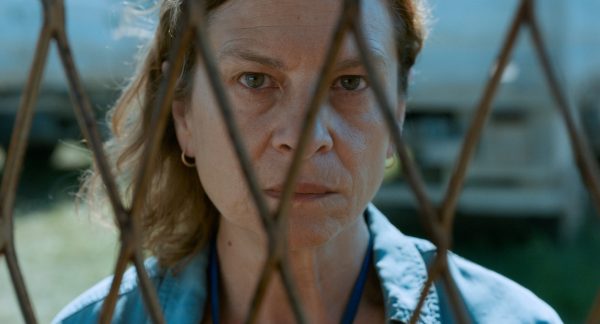
UN translator Aida Selmanagić (Jasna Djuričić) looks out upon an uncertain future during the 1995 siege of Srebenica during the Serbian attack on Bosnia-Herzegovina in director Jasmila Žbanić’s “Quo Vadis, Aida?” Photo courtesy of Super LTD.
With circumstances threatening to spiral out of control, Col. Karremans and his aide, Maj. Franken (Raymond Thiry), desperately contact UN officials for instructions, requests that go unanswered. Given the size of the crowd inside the encampment (with not nearly enough facilities and provisions to address the need), as well as the growing masses assembling outside the compound and the encroaching Serbian troops, the situation is a disaster waiting to happen. With no help forthcoming from above, the UN delegation is forced into negotiating an agreement with Mladić, who has a notorious reputation for not keeping his word.
Mladić promises to provide safe passage for all of the refugees, those both inside and outside the compound. Fleets of buses and trucks soon begin arriving to transport the weary exiles out of the region. However, given Mladić’s track record, there’s ample doubt that he’ll abide by his assurances, especially when he and his brutal enforcer, Joka (Emir Hadzihafizbegovic), begin separating the men from the women and children. And perhaps no one has greater concern about this than Aida, given that her men are in the midst of that human culling.
As the situation grows ever more tense and UN forces are increasingly concerned about their own ability to safely escape, Aida scrambles to find a way to have her family included in the official delegation. She experiences a series of letdowns as each attempt at securing their welfare falls through. One can feel the fear pervading her being as she desperately seeks to protect Nihad, Hamdija and Sejo. But, with time running out, can she do this before it’s too late?
The siege of Srebenica was one of the most devastating incidents of the Yugoslavian civil conflicts, if not the 1990s overall. With the end of the Cold War, the abolition of South African apartheid and any number of other groundbreaking world events, it seemed at the time that the planet was becoming a more peaceful and civilized place. And then this happened – an outpouring of madness at a time when all indications were pointing to humanity heading in a different – and far preferable – direction.
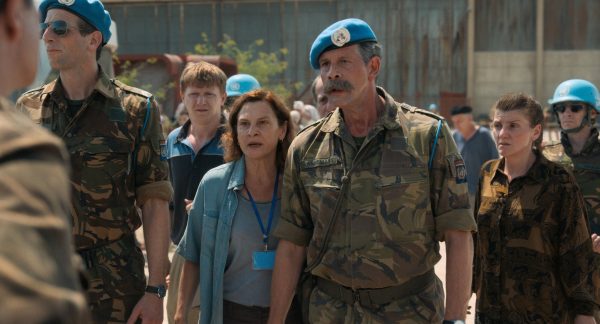
Col. Karremans (Johan Heldenbergh, right), head of the UN peacekeeping force pledged to protect the Bosnian safe haven of Srebenica, addresses the throngs of refugees seeking safety with the assistance of his translator, Aida Selmanagić (Jasna Djuričić, left), in the gripping new historical drama, “Quo Vadis, Aida?” Photo courtesy of Super LTD.
So why did this occur? That’s difficult to ascertain, yet one thing is for sure – it was an event through which both personal and collective dramas played out, much like what happened during other significant group conflicts, such as the world wars, the civil rights movement and a variety of other mass events. This film aptly illustrates how this unfolded in Bosnia, on both levels, with results that impacted individuals directly and group affiliations collectively.
As horrific as these incidents were, it’s nevertheless vital that we recognize how they were brought into being – through the conscious creation process, the philosophy that maintains we draw upon the power of our thoughts, beliefs and intents in manifesting the reality we experience. To be sure, one might legitimately wonder why anyone in his or her right mind would employ this philosophy in such a way, but, as its practitioners understand, it’s a doctrine that works no matter how we apply it, for better or worse. And, as this incident illustrates, the process can yield devastating consequences when implemented recklessly. In fact, what happened here could very well have resulted from a fundamental lack of awareness of that process; those who carried it out were focused solely on the outcome with no regard for how it came into being, particularly the mix of inciting beliefs responsible for its creation, a practice known as un-conscious creation or creation by default. That’s no excuse for what occurred, but it does help to explain why it may have happened.
Becoming conscious of this philosophy may have been one of the principal aims involved in this incident, one of many life lessons to be learned both personally and collectively as a result of this experience. Admittedly, this was an abhorrent and painful way for those lessons to be learned, regardless of the scale and intent through which these events occurred. However, for what it’s worth, and as difficult as this may be to accept, sometimes it takes events of great magnitude for messages like this to sink in. It’s a way of shocking and scaring ourselves so thoroughly that it slays the temptation to want to repeat such practices – or so it’s hoped. Based on how matters have unfolded in our world since 1995, however, it would appear we still have our work cut out for us on this front.
The Srebenica incident also provided an opportunity for a lesson in integrity, both for the UN forces and the Serbian troops, particularly when it comes to matters of keeping one’s word. As events unfold in the film, it’s apparent that both sides need schooling on this subject. The UN delegation, for example, learned a hard lesson about making promises that can’t be fulfilled, an experience essential for future undertakings of this nature. And the invading forces came face to face with what stems from outright lying, as evidenced by the fallout that came in the world’s reaction to the incident. Through conscious creation, we can get our lessons in either the hard way or one that goes easier on us. Based on what transpired here, it’s obvious to see which choices the principal players in this scenario made.
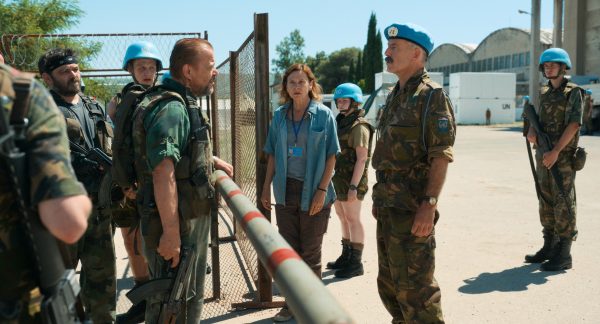
Col. Karremans (Johan Heldenbergh, right), head of the UN peacekeeping force pledged to protect the Bosnian safe haven of Srebenica, and his translator, Aida Selmanagić (Jasna Djuričić, center), meet with Joka (Emir Hadzihafizbegovic, left), chief enforcer of advancing Serbian troops, in director Jasmila Žbanić’s gripping new historical drama, “Quo Vadis, Aida?” Photo courtesy of Super LTD.
The life lessons explored here, though, have to do with more than just the foregoing issues. The mass event described above deals largely with lessons for the collective consciousness, as well as an attempt at the education of the uninformed. However, it also provides an opportunity for significant individual lessons. In Aida’s case, for example, this experience offered her a chance to face fears – big ones – to see if she could overcome them. It also allowed her to test her abilities to push limits, to seek the means to help herself and family out of a desperate situation, one where life and death are clearly on the line. These may not have been the best circumstances to explore these capabilities, but, if they offer the opportunity to push our boundaries, we may eventually look upon them differently as we make our way through the experience.
Some of you reading this may think that this is all hogwash, and good arguments could probably be made for that viewpoint. However, if nothing else, this event nevertheless unfolded for a reason, and I suspect it was to make a statement – that such atrocities are patently unacceptable, no matter what justification might be offered up for them. In the wake of the Holocaust, a clarion call went out proclaiming “Never again.” And, while Srebenica was certainly not on the same scale, the driving forces behind this incident were eerily similar to those that sparked its predecessor. Obviously, we as a species didn’t learn our lesson the first time through, so it took another such incident to draw attention to the inhumanity of these beliefs and actions. Given what’s happened in the time since 1995, it’s apparent that we still don’t get it, either. Until we do, there’s a good chance that these brutalities will continue to occur. How many will it take before the message sinks in? How many times must we manifest events that make statements like this until we at last see that they’re not serving us and that our energies are better put to other uses? From that standpoint, we can only hope that the victims of Srebenica will not have sacrificed themselves in vain.
While awaiting word about the fate of her family, UN translator Aida Selmanagić (Jasna Djuričić) anxiously considers options for securing their safety in the Oscar-nominated international feature, “Quo Vadis, Aida?” Photo courtesy of Super LTD.
The Srebenica Massacre was one of the most horrific incidents of the Bosnian War, and the chilling events that led up to it are presented in unsettling detail in this superb, if troubling, historical account. Told largely from one individual’s perspective, the film follows her ordeal with palpable anguish and a desperate desire to find a way out of harrowing circumstances. Director Jasmila Žbanić’s latest puts viewers in the middle of the unfolding genocide, re-creating the horror and agony experienced by those caught up in it, but it does so without ever becoming graphic or gratuitous, unnerving though much of the narrative may be. The excellent ensemble cast, led by the award-worthy performance of Jasna Djuričić, sells this story so effectively that one can’t help but feel what the victims are going through on a gut level. “Quo Vadis, Aida?” will undoubtedly leave audiences uncomfortable and heartbroken, but it brings to light the unspeakable atrocities that occurred during this conflict in hopes that we never experience them again.
While this offering may not have been released with much fanfare, it has been deservedly lauded by critics. It has also been building an impressive list of accolades, including BAFTA Award nominations for best foreign language film and best director, an Independent Spirit Award nod for best international film, and, most importantly, an Oscar nomination for best international feature, an honor it truly deserves to win. It’s indeed heartening to see a film receive the praise it so richly deserves.
Remembering the past can be a painful experience. Yet the memory of such events generally lingers to remind us of what we went through in the hope that we never have to experience them again. The indelible mark left by such incidents is designed to send us in new directions, a future full of hope, enlightenment and compassion for ourselves and mankind. Let us hope we learn from those experiences and indeed follow those new paths.
Tune in for the latest Cinema Scribe segment on Bring Me 2 Life Radio, Tuesday, April 20, at 2 pm ET, available by clicking here. And, if you don't hear the show live, catch it later on demand on Spreaker, Spotify, Apple, iHeartRadio, Google Podcasts, Castbox, Deezer, Podchaser and Jiosaavn.